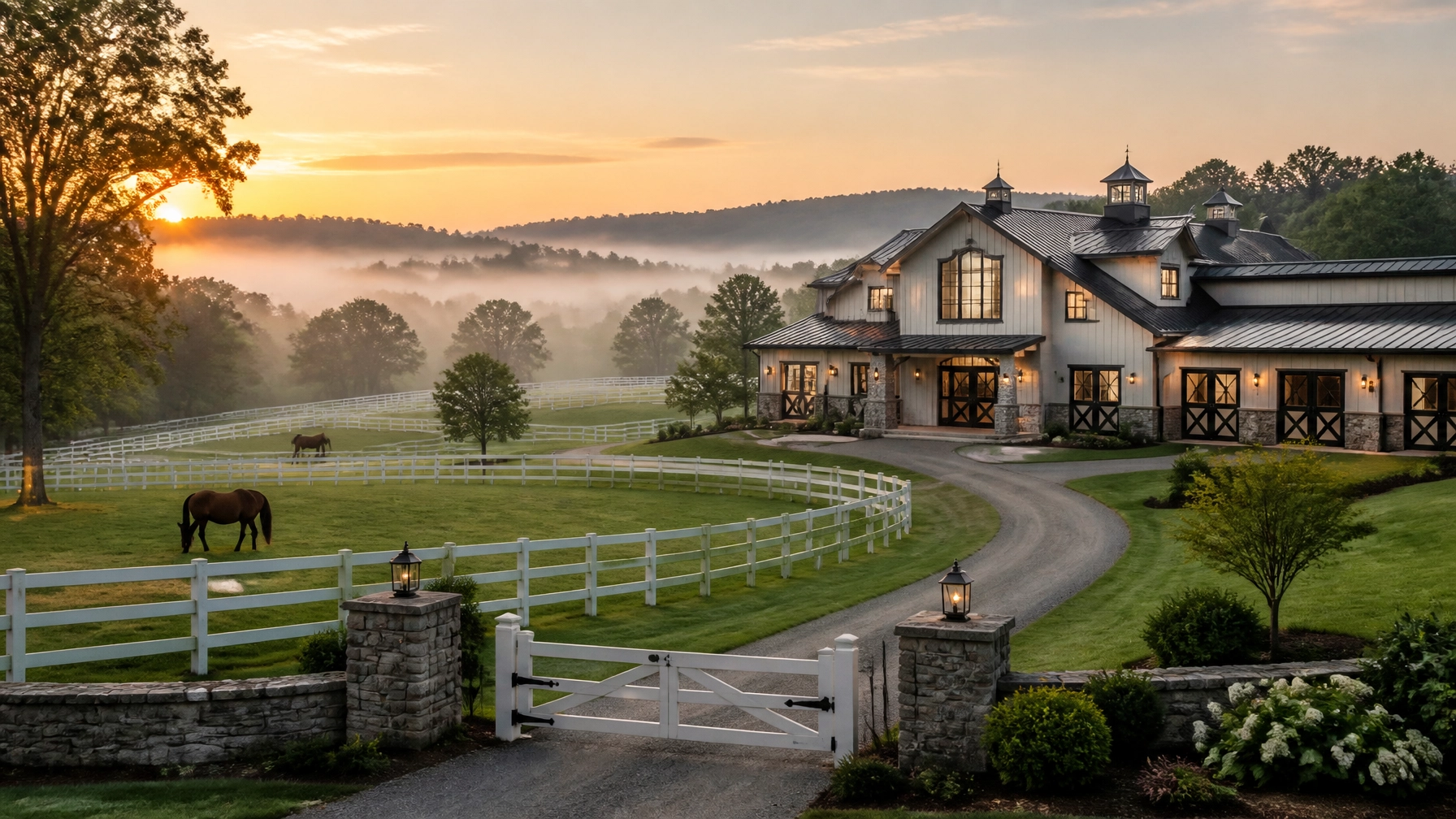
Choosing the right setting for your equestrian lifestyle in the Charlotte Metro area is more than a real estate transaction; it is a commitment to how you want to live with your horses every single day. Whether you are drawn to the absolute solitude of a private acreage in Waxhaw or the social connectivity of a premier development like Summit Farms, the decision hinges on balancing your personal freedom with your desire for shared amenities.
Our team at Carolina Horse Farm Realty specializes in navigating these nuances, ensuring that whether you seek a turn-key estate or a custom build site, your property aligns with your riding discipline and long-term goals.
The Core Choice: Defining Your Equestrian Lifestyle
In the Charlotte region, the "right" property depends on your definition of autonomy versus convenience. We categorize the market into two primary paths: the Private Horse Farm, where you own and manage every square inch, and the Equestrian Community, where individual home ownership is paired with shared professional-grade facilities.
- 78% of our clients cite "long-term land security" as their primary reason for choosing a private farm.
- 45% of new buyers in the Charlotte Metro area now look for community-based amenities to reduce individual maintenance burdens.
- $15,000 to $40,000 is the current average price per acre for equestrian-zoned land in the immediate Charlotte periphery.
The Allure of the Private Farm: Total Sovereignty
For many horse people, the ultimate dream is the private farm. This path offers the highest level of control over your horse's environment, from the type of footing in your arena to the specific grass seed in your pastures.
Unrestricted Management and Customization
When you own a private farm, you are the final authority. There are no HOAs to dictate your barn's color, no board of directors to approve a new run-in shed, and no shared schedules for the arena. If you want to run a boutique training business or host clinics, a private farm is often your only viable option, as many residential communities strictly prohibit commercial activity.
Privacy and Peace
A private farm in areas like Union County or Iredell County offers a level of serenity that is hard to replicate in a subdivision. You control the traffic, the noise, and the visitors. For the competitive rider, this means a focused training environment; for the hobbyist, it means a quiet sanctuary for both horse and human.

The Maintenance Reality
The trade-off for this freedom is 100% responsibility. From fence repairs to manure management and pasture rotation, the workload is yours. We often recommend using our Horse Farm Cost Calculator to factor in these ongoing operational costs before committing to a large-acreage purchase.
The Convenience of the Equestrian Community: Shared Excellence
Equestrian communities, such as the well-regarded Summit Farms, offer a "best of both worlds" scenario for those who want to live with their horses without the logistical headaches of managing a full estate.
Access to Professional Amenities
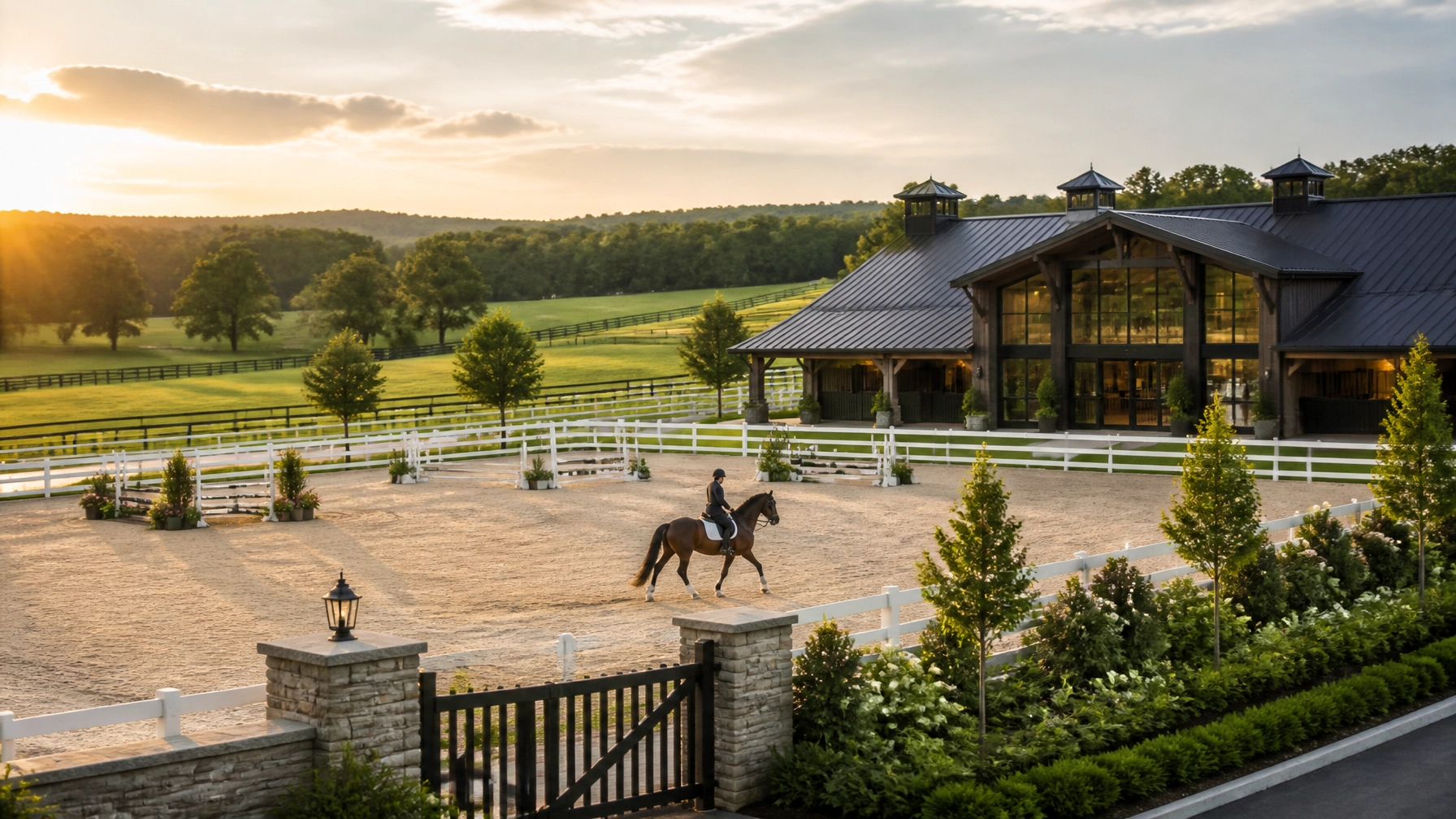
Many individual owners cannot justify the cost of a $250,000 covered arena or a 10-mile private trail system. In an equestrian community, these costs are shared. You gain access to high-quality facilities: often including wash racks, tack rooms, and professionally dragged arenas: that might be out of reach on a private 5-acre lot.
Built-in Social and Safety Networks
One of the greatest benefits of community living is the proximity to like-minded equestrians. Finding a riding partner or someone to check on your horses during an emergency is significantly easier when your neighbors share your passion. Communities are also designed with horse safety in mind, featuring slower speed limits and horse-crossing signage.

The Regulatory Landscape
While communities like Chapel Cove offer luxury living near the water, they often lack the specific zoning for on-site horse keeping found in true equestrian developments. If you choose a community, you must be comfortable with HOAs and CC&Rs (Covenants, Conditions, and Restrictions). These rules ensure property values remain high but may limit your ability to keep a large number of horses or build additional structures.
Key Metrics: Comparing the Two Paths
| Feature | Private Farm | Equestrian Community |
|---|---|---|
| Control | Absolute | Subject to HOA |
| Maintenance | 100% Owner Responsibility | Shared/Contracted |
| Amenities | Private (Self-funded) | Luxury Shared Facilities |
| Social Life | Independent/Isolated | Built-in Riding Community |
| Business Use | Allowed (Pending Zoning) | Usually Prohibited |
| Initial Cost | Higher for Infrastructure | Higher for Land/Dues |
Navigating the Charlotte Metro Market
The Charlotte market is currently in a phase of stabilized growth. According to recent data from the Charlotte Regional Realtor Association, inventory has increased by nearly 39% year-over-year, giving buyers more leverage than in previous seasons.
Strategic Locations for Your Search
- Waxhaw & Marvin (Union County): The premier destination for equestrian properties Charlotte NC, offering high-end estates and excellent soil for pastures.
- Mooresville & Troutman (Iredell County): Known for larger acreage and proximity to Lake Norman, ideal for private farms.
- Fort Mill & Clover (York County, SC): Offers competitive land prices and a strong equestrian culture just across the state line.

Understanding Zoning and Land Use
Before purchasing any horse farms for sale, it is critical to verify the specific zoning for your intended use. Charlotte and its surrounding counties have strict "animal density" rules: often requiring a minimum of two acres for the first horse and one acre for each subsequent horse. Our team understands these local nuances and can help you verify watershed protection overlays and setback requirements that could impact where you place your barn or arena.
Making the Decision: A Strategic Guide
To determine which path is right for you, we recommend asking four essential questions:
- What is my primary discipline? A Grand Prix dressage rider may require the consistent footing of a shared community arena, while a trail enthusiast might prefer the private access of a farm bordering state park land.
- How much "tractor time" do I want? If you enjoy land management, a private farm is rewarding. If you want to spend 100% of your time in the saddle, look at communities.
- Do I plan to board or train others? If your farm needs to generate income, a private property with agricultural zoning is non-negotiable.
- What is my five-year exit strategy? Well-maintained farms in established equestrian communities often have a broader resale appeal to lifestyle buyers, whereas highly customized private farms appeal to a more specific, niche buyer.

Expert Guidance for Your Equestrian Journey
At Carolina Horse Farm Realty, we don't just sell houses; we sell the lifestyle we live every day. We understand the difference between "horse-friendly" and "horse-ready." Whether you are looking to sell your horse farm or are just beginning your search for the perfect equestrian properties in Charlotte NC, our deep local knowledge is your greatest asset.
Ready to find your place in the Carolina sun?
Contact our team today to schedule a consultation or a private tour of available farms and equestrian communities in the Charlotte Metro area.










![[HERO] Mecklenburg vs. Union County: Which Is Better For Your Horse Farm Land for Sale search?](https://cdn.marblism.com/BuaV8bSnpOa.webp)


