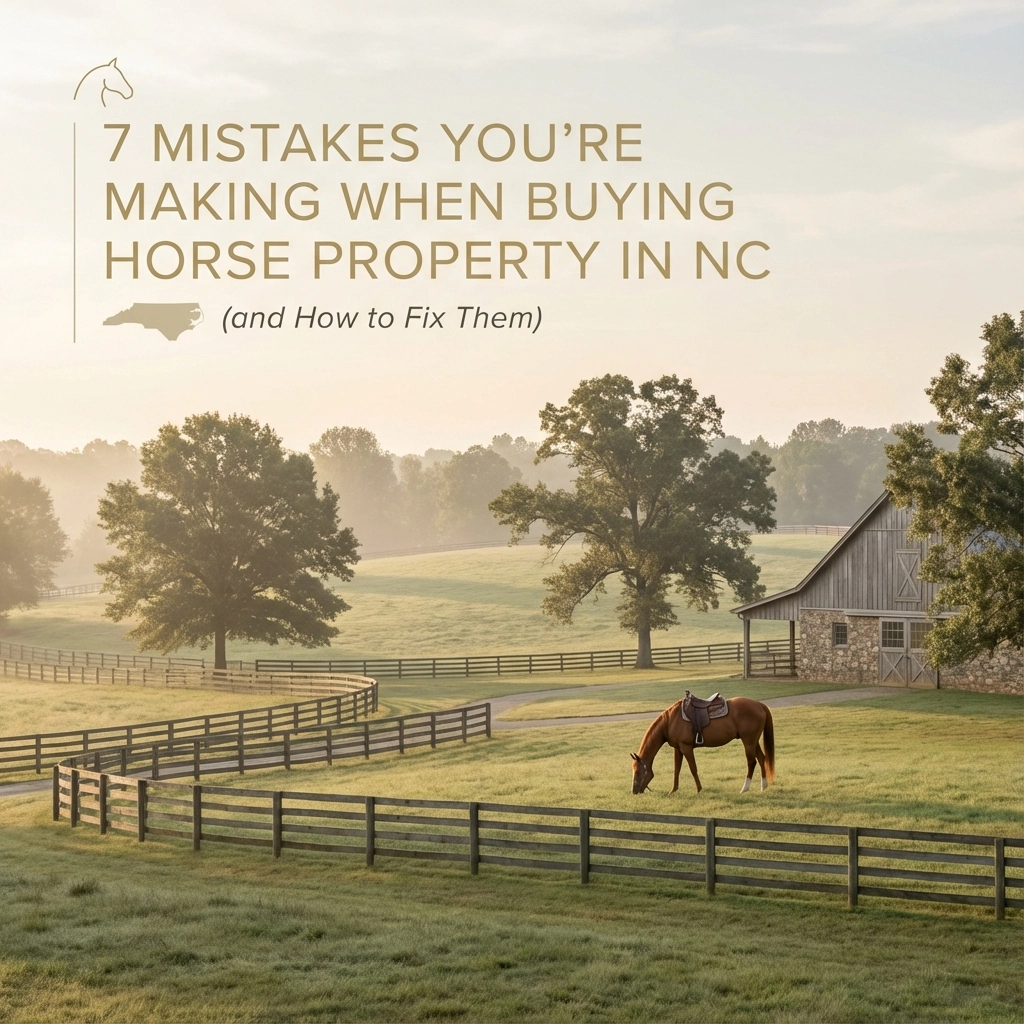
Buying horse property in North Carolina should be an exciting milestone, not a costly learning experience. Yet every year, well-intentioned buyers make preventable mistakes that lead to drainage disasters, zoning surprises, and maintenance nightmares that could drain both your wallet and your enthusiasm for horse ownership.
After years of helping clients navigate North Carolina's diverse equestrian landscape: from the Piedmont's rolling hills to the Coastal Plain's sandy soils: we've seen these same seven mistakes repeated countless times. The good news? Every single one is completely avoidable when you know what to look for.
Mistake #1: Ignoring Soil Composition and Drainage
The Problem: You fall in love with a property's barn or views, but overlook what's literally beneath your feet. Poor drainage creates muddy, boggy conditions that soften hooves, promote bacterial infections, and turn your dream pastures into swampland.
North Carolina's clay-heavy soils in the Piedmont region are notorious for poor drainage, while Coastal Plain areas can have opposite challenges with overly sandy soils that don't retain nutrients.
The Fix: Visit properties after heavy rain to see how water moves across the land. Look for standing water, marshy areas, or evidence of erosion. Sandy loam soils with gentle slopes drain best while retaining enough moisture for healthy grass growth.
Request soil composition reports and consider hiring an agricultural extension agent for professional soil testing. In Charlotte's surrounding counties, soil conditions can vary dramatically within a few miles, so don't assume neighboring properties have similar drainage.

Mistake #2: Underestimating Zoning and Regulatory Requirements
The Problem: You assume "rural" means "anything goes" and discover after closing that your dream of adding a second barn requires special permits, or that your property isn't actually zoned for commercial horse activities.
The Fix: Contact the county zoning office directly: don't rely solely on listing descriptions. Each North Carolina county has different agricultural zoning classifications and requirements for horse properties.
Ask specific questions: Can you operate a boarding facility? Are there restrictions on the number of horses per acre? What permits are required for new construction? In rapidly developing areas like Union, Iredell, and Cabarrus counties, zoning laws are evolving quickly as rural areas face suburban pressure.
Work with a realtor who understands equestrian property regulations and maintains relationships with local planning departments. The time invested upfront prevents expensive surprises later.
Mistake #3: Miscalculating Your Land-to-Horse Ratio
The Problem: You either buy too little land and end up with overgrazed, muddy paddocks, or purchase more acreage than you can properly maintain, leading to weed problems and deteriorating pastures.
The Fix: Plan for two acres of quality pasture per horse as a starting point, though North Carolina's year-round growing season can support slightly higher stocking rates with proper rotation.
Consider your management style honestly. If you're a weekend warrior who travels frequently, extensive acreage might become overwhelming. If you plan to expand your herd or add boarding income, ensure you have room to grow without overgrazing.
Factor in unusable acres: areas too steep, wet, or wooded for grazing. A 20-acre property might only provide 12-15 acres of usable pasture after accounting for the house, barn, driveways, and setbacks.

Mistake #4: Overlooking Infrastructure Maintenance Costs
The Problem: You budget for the purchase price and monthly mortgage, but forget that horse properties require ongoing investments in fencing, barn maintenance, pasture management, and water systems.
The Fix: Budget 2-3% of the property's value annually for maintenance: potentially more for older properties. Fence repairs alone can cost thousands, especially if you're dealing with rotted wooden posts or outdated barbed wire that needs replacement.
Research local contractor costs for equine-specific services. In North Carolina's humid climate, wooden structures require more frequent maintenance than in drier regions. Metal roofing, composite fencing, and concrete barn aisles often prove more economical long-term despite higher upfront costs.
Create separate savings accounts for routine maintenance, emergency repairs, and property improvements. This prevents financial stress when your automatic waterers freeze or storm damage requires immediate fence repairs.
Mistake #5: Choosing Location Based on Beauty Over Practicality
The Problem: You prioritize scenic views or privacy over proximity to essential services, then struggle with limited veterinarian availability, expensive feed delivery fees, or difficult access during emergencies.
The Fix: Map out key services within a reasonable radius: equine veterinarians, farriers, feed stores, and hay suppliers. In rural North Carolina areas, some services might require significant travel time or higher fees for farm calls.
Consider road access year-round. That charming dirt lane might become impassable during winter storms or spring flooding, potentially preventing emergency veterinary care. Properties with all-weather access typically maintain better resale value.
Evaluate cell phone coverage and internet reliability: crucial for modern horse management apps, security systems, and staying connected with service providers.

Mistake #6: Skipping Professional Property Inspections
The Problem: You assume a general home inspector can evaluate equine facilities adequately, or you skip inspection altogether because the property "looks good" from a quick walkthrough.
The Fix: Hire inspectors who understand horse-specific requirements. Barn electrical systems, water line placement, footing materials, and fence installation all require specialized knowledge that typical home inspectors don't possess.
Inspect during different weather conditions and times of day. Some drainage issues only become apparent after rain, while electrical problems might be noticeable only when all barn systems are running simultaneously.
Test water quality and pressure throughout the property. Wells serving both house and barn often struggle to maintain adequate pressure for automatic waterers, especially during dry seasons common in North Carolina summers.
Mistake #7: Failing to Plan for Future Needs and Resale Value
The Problem: You buy based solely on current needs without considering how your horse activities might evolve or how future buyers might view the property.
The Fix: Think beyond your current horse count and discipline. Properties with flexible layouts and quality infrastructure appeal to broader markets. A barn designed only for trail horses might not suit future buyers interested in showing or breeding.
Consider the property's development potential. Areas experiencing suburban growth might offer excellent resale opportunities, but also face increasing property taxes and potential zoning pressures.
Research local market trends and comparable sales. Properties in established equestrian communities typically maintain value better than isolated rural properties, especially as suburban development continues expanding outward from Charlotte and other NC metro areas.

Moving Forward With Confidence
The North Carolina equestrian market offers incredible opportunities for both first-time buyers and those upgrading their horse properties. By avoiding these seven common mistakes, you're positioning yourself for a purchase that enhances rather than complicates your horse ownership journey.
Take time to educate yourself about local soil conditions, zoning requirements, and infrastructure costs before beginning your search. The properties that seem too good to be true often are: but armed with the right knowledge, you can identify genuine opportunities and negotiate from a position of strength.
Our team understands the unique intersection of horses, land, and North Carolina's diverse regional characteristics. We're here to help you navigate this important decision with the expertise that comes from years of matching buyers with properties that truly serve their equestrian goals.
Ready to find horse property that checks all the right boxes? Let's discuss your specific needs and explore options that position you for long-term success in North Carolina's vibrant equestrian community.
Leave a Reply