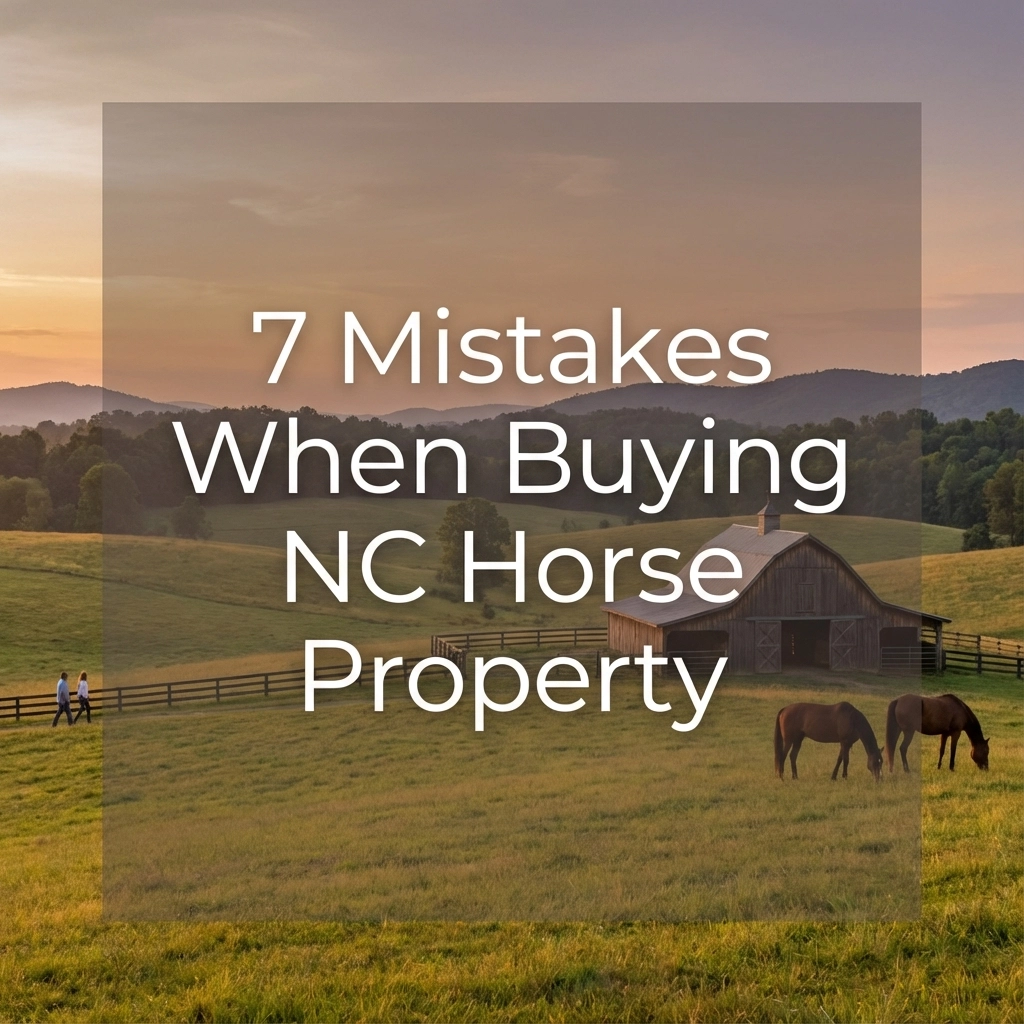
After decades of helping equestrians find their perfect property in North Carolina, we've seen the same costly mistakes repeated time and again. From the rolling hills of the Piedmont to the coastal plains, buying horse property in the Tar Heel State requires more than just falling in love with a pretty pasture view.
These seven critical errors can turn your dream property into a financial nightmare: but they're completely avoidable when you know what to look for.
Mistake #1: Ignoring North Carolina's Unique Soil and Drainage Challenges
North Carolina's diverse geology creates specific drainage issues that can make or break your horse operation. Red clay soil in the Piedmont region becomes a slippery, muddy mess after our frequent summer thunderstorms, while coastal areas can have sandy soil that drains too quickly, requiring constant irrigation.
The Fix: Visit properties during and after heavy rain to observe water flow patterns. Look for standing water, muddy conditions, or overly dry areas. Request soil composition reports and consider hiring a soil specialist for properties over 10 acres. Properties with mixed loamy soil and gentle slopes typically offer the best drainage balance for North Carolina conditions.

Mistake #2: Overlooking Agricultural Zoning and Land Use Restrictions
Many buyers assume that rural property automatically allows horses, but North Carolina's zoning laws vary significantly by county. Some areas restrict the number of horses per acre, require special permits for commercial boarding, or have setback requirements for barns and arenas.
The Fix: Contact the county planning department before making an offer. Verify current zoning allows your intended use and ask about future development plans for surrounding areas. Work with a realtor experienced in agricultural properties who understands local regulations. Consider properties with existing agricultural exemptions, which often provide tax benefits and confirm the land's suitability for horse operations.
Mistake #3: Underestimating Infrastructure Costs and Maintenance
That charming old tobacco barn might look picturesque, but converting it to house horses safely can cost $50,000 or more. Similarly, replacing miles of deteriorating fence line or installing proper drainage systems can quickly exceed your budget.
The Fix: Budget an additional 20-30% beyond the purchase price for immediate infrastructure needs. Hire a contractor experienced with equine facilities to assess existing buildings before closing. Factor in ongoing maintenance costs: fence repairs, stall bedding, pasture management, and utility costs for barns add up quickly in North Carolina's humid climate where wood deteriorates faster and grass grows year-round.

Mistake #4: Failing to Consider Accessibility and Emergency Services
Remote properties might offer privacy and lower prices, but they can become problematic when you need veterinary care, farrier services, or emergency transport. North Carolina's rural areas can have limited cell service and longer emergency response times.
The Fix: Test cell phone reception throughout the property. Research distances to equine veterinarians, feed stores, and farriers. Ensure the driveway can accommodate large trucks and trailers: many North Carolina properties have steep or narrow driveways that create delivery challenges. Consider properties within 30 minutes of equine services for optimal convenience and safety.
Mistake #5: Not Planning for North Carolina's Climate Extremes
Our state experiences hot, humid summers, occasional ice storms, and periods of drought followed by flooding. Properties without adequate shelter, water sources, or storm-resistant fencing create ongoing management challenges and safety risks for horses.
The Fix: Evaluate existing shelter capacity and wind protection. Ensure multiple water sources with backup systems: wells can fail during droughts, and surface water can become contaminated during floods. Look for properties with mature trees for natural windbreaks and shade. Consider climate-appropriate fencing materials that can withstand high winds and ice loading common in North Carolina.

Mistake #6: Skipping Professional Property Inspections
Standard home inspections don't cover the unique aspects of horse properties. Wells, septic systems, electrical service to barns, and structural integrity of agricultural buildings require specialized knowledge to assess properly.
The Fix: Hire inspectors with agricultural property experience. Have wells tested for flow rate and water quality: horses drink 5-10 gallons daily, requiring adequate well capacity. Inspect septic systems for current condition and capacity if expanding facilities. Verify electrical service to barns meets code and can handle additional loads from water heaters, fans, or arena lighting.
Mistake #7: Choosing the Wrong Property Size for Your Goals
North Carolina offers everything from one-acre horse lots to thousand-acre farms, but many buyers choose poorly. Too little acreage means constant hay purchases and limited turnout options. Too much land creates overwhelming maintenance responsibilities and tax burdens.
The Fix: Calculate your actual space needs realistically. Plan for 1.5-2 acres per horse for adequate pasture rotation in North Carolina's growing conditions. Consider your long-term goals: breeding operations need different facilities than trail riding. Factor in your available time for property maintenance and whether you'll hire help or manage everything yourself.

Red Flags That Should Make You Walk Away
Certain warning signs indicate properties with expensive underlying problems:
- Standing water that doesn't drain within 48 hours after rain
- Barbed wire fencing (expensive to replace and dangerous for horses)
- Wells with flow rates below 3 gallons per minute
- Properties with recent zoning violations or code enforcement issues
- Sellers who won't allow thorough inspections of outbuildings
- Adjoining properties with industrial operations or major development plans
Questions to Ask Before Making an Offer
Smart buyers research thoroughly before committing. Essential questions include:
- What is the exact zoning classification and permitted uses?
- Are there any liens, easements, or rights-of-way affecting the property?
- What are the average monthly utility costs for existing facilities?
- How many horses can legally be kept on this acreage?
- Are there any upcoming assessments or special tax situations?
- What maintenance has been performed on wells, septic, and outbuildings?

Moving Forward with Confidence
Buying horse property in North Carolina doesn't have to be overwhelming when you avoid these common pitfalls. The key is working with professionals who understand both equestrian needs and local regulations, taking time for thorough due diligence, and planning for both current requirements and future growth.
Your perfect horse property is out there: whether it's a small farm in the foothills or a larger operation in the coastal plains. By avoiding these seven mistakes, you'll find a property that serves your horses well and provides years of enjoyment without unexpected financial surprises.
Ready to start your search for the perfect North Carolina horse property? Our team at Carolina Horse Farm Realty specializes in matching equestrians with properties that meet both their horse's needs and their long-term goals. Contact us to discuss your specific requirements and let our local expertise guide you to the right property from the start.
Leave a Reply