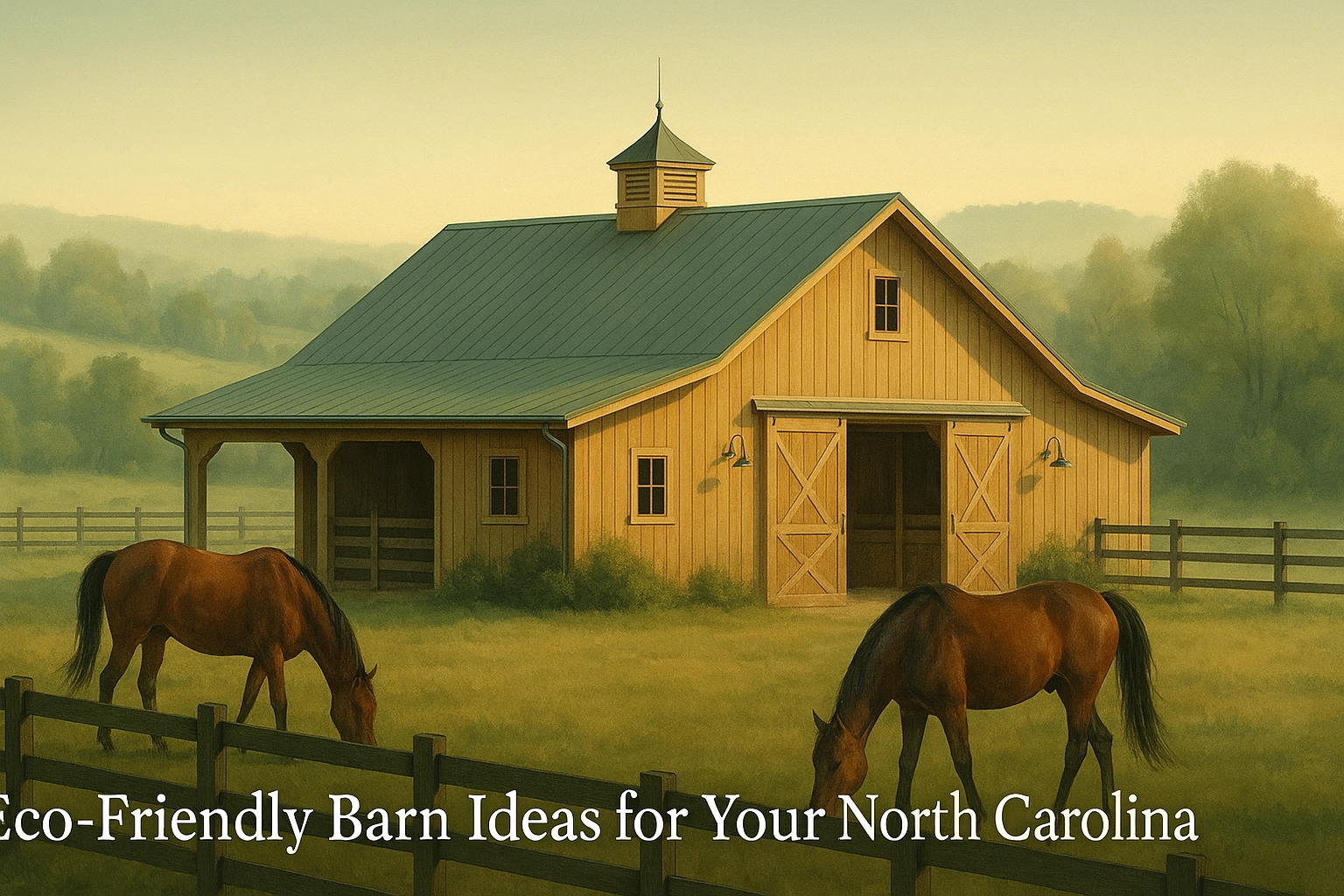
Building a sustainable barn isn't just about reducing your environmental footprint: it's about creating a healthier environment for your horses while cutting long-term operational costs. In North Carolina's unique climate, smart eco-friendly design choices can transform your equestrian facility into an efficient, comfortable space that works with nature rather than against it.
Climate-Smart Ventilation That Actually Works
North Carolina's hot, humid summers demand exceptional airflow, and the best sustainable barns harness natural wind patterns rather than fighting them. Design your barn with cross-ventilation principles that allow cooler air to enter through lower openings while warm air naturally exits through higher points.
Position large sliding doors and windows to capture prevailing summer breezes, typically from the southwest in our region. Ridge vents along the barn's peak create a natural chimney effect, pulling hot air up and out. This approach reduces or eliminates the need for energy-consuming fans during much of the year.
Consider cupolas with adjustable louvers that can be opened wider during humid summer months and partially closed during winter storms. The key is creating multiple ventilation zones that can be adjusted seasonally without compromising your horses' comfort.

Sustainable Materials That Handle Our Climate
Locally sourced lumber isn't just environmentally responsible: it's adapted to North Carolina's humidity levels and temperature swings. Pine and oak from regional mills have already acclimated to our climate conditions, making them less prone to warping and splitting.
For high-wear areas, recycled composite materials offer exceptional durability. HDPE (high-density polyethylene) lumber resists moisture, insects, and horse damage while requiring virtually no maintenance. These materials may cost more upfront but eliminate the need for annual staining, sealing, or replacement.
Galvanized steel framing provides exceptional strength and longevity in our humid environment. Unlike traditional steel, galvanized components resist rust and corrosion, extending your barn's lifespan while reducing maintenance costs.
Consider mass timber construction using Cross-Laminated Timber (CLT) for exposed beams. These engineered wood products are harvested from sustainably managed forests, provide natural insulation, and create the warm aesthetic horses and owners appreciate.
Energy Systems That Pay for Themselves
Solar panel installation on south-facing barn roofs can offset 60-80% of your facility's electrical needs. North Carolina's solar incentives, combined with federal tax credits, often result in payback periods of 6-8 years.
LED lighting systems use 75% less energy than traditional incandescent bulbs and last 25 times longer. Install motion sensors in feed rooms, tack rooms, and wash areas to ensure lights operate only when needed. Programmable timers for aisle lighting can maintain security while minimizing energy waste.
Automatic waterers with leak detection sensors prevent water waste from damaged float valves or frozen pipes. These systems can save thousands of gallons annually while ensuring consistent water availability for your horses.

Water Management for Drought and Deluge
North Carolina experiences both drought conditions and intense rainfall events, making water management crucial for sustainable operations. Rainwater harvesting systems can collect 600 gallons of water from just one inch of rain on a 1,000-square-foot roof area.
Install gutters and downspouts that direct water to storage tanks or retention ponds for irrigation use. This reduces demand on municipal water supplies during dry spells and prevents erosion during heavy rains.
Permeable flooring materials in wash racks and grooming areas allow water to drain naturally while filtering out debris. Recycled rubber mats with drainage channels provide safe footing while managing water flow.
Waste Management That Builds Soil Health
Transform your manure management from a disposal problem into a soil-building asset. Properly designed composting systems reduce waste volume by 50-70% while creating valuable organic matter for pasture improvement.
Three-bin composting systems allow continuous cycling, with finished compost ready every 3-4 months. Position compost areas downwind from the barn and at least 100 feet from water sources to prevent contamination.
Integrated manure management can include sacrifice paddocks with deep sand or wood chip footing that naturally begins the decomposition process while providing horses with appropriate turnout during wet weather.

Smart Flooring Choices for Comfort and Durability
Rubber matting made from recycled tires provides excellent cushioning while supporting environmental responsibility. These mats reduce bedding requirements by 30-50%, saving money and reducing waste over time.
Permeable concrete in wash racks and grooming areas eliminates standing water while providing stable footing. This material allows water to drain while preventing mud formation around high-traffic areas.
Consider locally sourced stone dust or recycled concrete aggregate for aisle ways. These materials provide excellent drainage, reduce dust, and support local recycling efforts.
Technology Integration for Efficiency
Smart barn monitoring systems can track temperature, humidity, and air quality, automatically adjusting ventilation fans or misting systems to maintain optimal conditions. These systems prevent energy waste while ensuring horse comfort.
Automated feeding systems with programmable timers reduce feed waste while ensuring consistent nutrition delivery. Some systems can be powered by solar panels, creating a completely off-grid feeding solution.
Water monitoring sensors can detect leaks or system failures immediately, preventing both water waste and potential facility damage from flooding.

Cost-Effective Implementation Strategies
Start with high-impact, low-cost improvements like LED lighting upgrades and improved ventilation design. These changes often provide immediate returns through reduced utility costs.
Phase larger investments like solar panels or comprehensive water management systems over multiple years to spread costs while taking advantage of improving technology and potentially better incentive programs.
Partner with local contractors who understand North Carolina's climate challenges and building codes. Local expertise often results in better material choices and more appropriate design solutions.
Long-Term Value and Performance
Sustainable barn features typically increase property values by 8-12% while reducing operational costs by 20-30% annually. These improvements appeal to environmentally conscious buyers and demonstrate thoughtful facility management.
Energy-efficient systems require less maintenance than traditional alternatives, reducing both costs and downtime. Solar panels, LED lighting, and efficient ventilation systems often operate for decades with minimal service requirements.
Climate-appropriate design ensures your facility remains comfortable and functional as North Carolina's weather patterns potentially change over time.

Building an eco-friendly barn requires balancing immediate costs with long-term benefits, but the result is a facility that serves your horses better while supporting environmental responsibility. These sustainable practices create value that extends far beyond utility savings, contributing to the lasting appeal and functionality of your equestrian property.
Ready to explore sustainable barn options for your North Carolina horse farm? Our team understands the unique requirements of equestrian facilities and can connect you with properties that support your vision for responsible horse keeping.
Leave a Reply