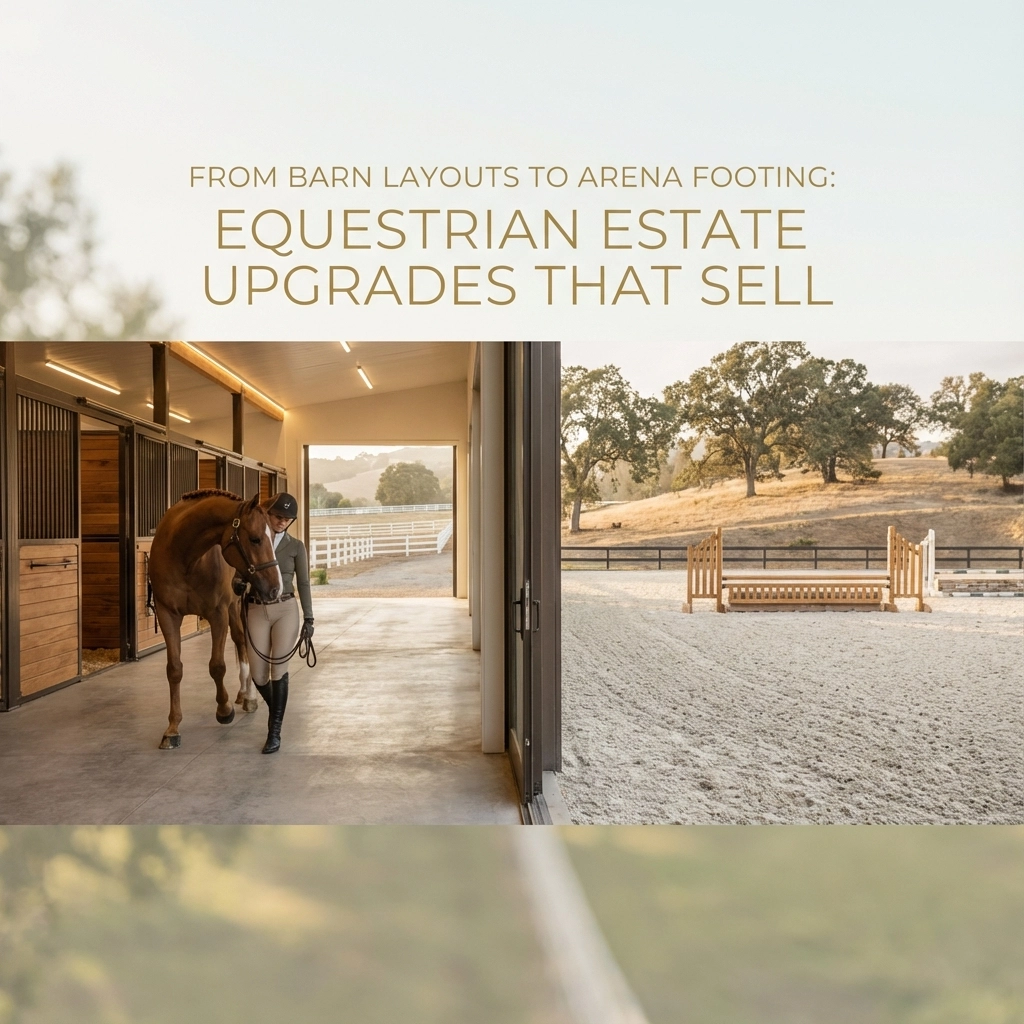
When you're preparing an equestrian estate for market, every upgrade decision should answer one crucial question: does this investment speak directly to horse people? After years of working with buyers and sellers across North Carolina's horse country, we've identified the specific improvements that transform good properties into must-have equestrian destinations.
The difference between a property that sits and one that sells often comes down to understanding what serious horse owners actually prioritize when they walk a farm. It's not always what you'd expect.
The Foundation: Barn Quality Sets the Tone
Your barn is your property's business card. The moment prospective buyers step inside, they're evaluating whether this facility can support their horses' health, their training goals, and their daily routines.
Ventilation drives everything else. Poor air quality creates health issues, condensation problems, and an uncomfortable environment that signals ongoing maintenance headaches. Installing proper ridge vents, eave openings, and cross-ventilation systems demonstrates that you understand horse management fundamentals. This isn't about luxury: it's about basic horse welfare, and experienced buyers spot inadequate ventilation immediately.
Stall sizing matters more than stall count. A barn with eight spacious 12×12 stalls will outsell one with twelve cramped 10×10 spaces every time. Horses need room to move comfortably, lie down fully, and turn around without restriction. If you're renovating, consider removing walls to create fewer, larger stalls rather than maximizing numbers.
Easy pasture access from stalls eliminates daily handling stress and allows for natural horse movement patterns. Buyers envision their morning routines: how easy will turnout be? How quickly can horses be brought in during weather? Direct stall-to-pasture access through dutch doors or run-out areas addresses these practical concerns.

Fresh paint and clean, level flooring signal active maintenance. Buyers assess barn cleanliness, ground conditions, and structural integrity as indicators of overall property care. A well-maintained barn suggests they're purchasing a turnkey operation rather than inheriting deferred maintenance.
Arena Excellence: Where Training Happens
Your riding arena represents potential. Whether buyers plan dressage training, jumping sessions, or simple conditioning work, arena quality directly impacts their horse's performance and safety.
Professional footing is non-negotiable. The days of riding on hard pack dirt are over. Modern equestrian buyers expect appropriate footing for their discipline: whether that's angular sand for jumping, a sand-fiber blend for dressage, or specialized materials for specific sports. Clean, maintained footing that's free of rocks, weeds, and hazardous materials demonstrates serious equestrian commitment.
Drainage prevents seasonal limitations. North Carolina's weather patterns demand arena systems that handle everything from summer thunderstorms to winter freeze-thaw cycles. Proper base preparation with gravel, geotextiles, and grading ensures year-round usability. Buyers want arenas that work in February, not just in July.
Fencing and entry systems should prioritize safety while maintaining professional appearance. Clean sight lines, appropriate height, and secure gates create environments where horses and riders can focus on training rather than managing distractions.
Consider arena lighting for properties targeting serious competitors. Quality lighting extends training hours and adds significant value for buyers committed to consistent programs.
Fencing: Your Property's Safety Network
Fencing represents one of your largest maintenance responsibilities, and buyers evaluate fence condition as a predictor of ongoing costs and safety concerns.
Intact, well-maintained fencing ranks among buyers' top inspection priorities. Broken boards, loose wire, and failing posts signal immediate expenses and potential horse injuries. Regular fence repair and replacement demonstrate ongoing stewardship and reduce buyer concerns about hidden maintenance costs.
Appropriate fencing materials should match your property's intended use. Board fencing projects traditional elegance but requires consistent maintenance. High-tensile wire systems offer durability and cost-effectiveness for larger acreages. Electric fencing works well for temporary divisions and rotational grazing systems.
Gate functionality matters more than aesthetics. Buyers test gate latches, evaluate swing clearance, and assess whether gates accommodate equipment like tractors and horse trailers. Difficult gates create daily frustrations that buyers remember long after viewing.

Pasture Management: The Land Tells the Story
Your pastures reveal your horsemanship knowledge and land stewardship practices. Well-managed grassland suggests you understand horse nutrition, soil health, and sustainable grazing systems.
Maintained pastures through regular mowing and weed control demonstrate active management. Overgrown fields filled with invasive species suggest neglect and potential feed costs. Clean pastures with appropriate grass species indicate that horses can derive nutrition from the land rather than requiring expensive supplemental feeding.
Water access in every field eliminates the need for daily water hauling and ensures horse health during turnout. Automatic waterers, pond access, or strategically placed tanks should provide clean, reliable water sources throughout your grazing areas.
Pasture rotation capabilities appeal to buyers focused on sustainable horse management. Cross-fencing that enables rotational grazing protects soil health, maximizes grass production, and demonstrates sophisticated land management understanding.
Landscape Presentation: First Impressions Matter
Professional landscaping creates emotional connection while ensuring safety for horses and handlers moving throughout the property.
Well-defined driveways and pathways establish traffic patterns and prevent confusion during property tours. Buyers need to visualize daily routines: how do trailers navigate to the barn? Where do farriers park? How do horses move safely between facilities?
Strategic tree placement provides natural shade in pastures while avoiding hazards near fence lines. Mature trees add property value and horse comfort, but dead or damaged trees near horse areas represent liability concerns.
Maintained lawn areas around barns and homes create professional presentation and reduce mud tracking into facilities. Simple improvements like edging, fertilization, and seasonal flowers significantly enhance property appeal without major investment.

Infrastructure: The Unseen Essentials
Reliable utilities support daily horse care routines and determine whether your property functions efficiently or creates ongoing frustrations.
Water pressure and quality affect everything from stall cleaning to horse health. Adequate water pressure ensures efficient barn operations, while quality testing results provide buyer confidence in water safety for both horses and humans.
Electrical systems should handle modern barn requirements including lighting, fans, heated waterers, and equipment charging. Outdated electrical systems represent safety hazards and expensive upgrade requirements that buyers factor into their offers.
Waste management systems address both horse manure and household needs. Composting areas, manure storage solutions, and septic systems appropriate for property size demonstrate planning and environmental responsibility.
Modern Touches That Set Properties Apart
Energy-efficient upgrades appeal to cost-conscious buyers while reducing environmental impact. LED lighting systems, solar panels, and efficient heating systems demonstrate forward-thinking property management and reduce ongoing operational costs.
Smart technology integration including automatic waterers, security systems, and climate monitoring appeals to buyers juggling equestrian commitments with busy professional lives. Technology that simplifies horse care without compromising quality attracts modern equestrian families.
Multipurpose spaces like heated tack rooms that double as offices, or barns designed to accommodate both horses and equipment storage, maximize facility utility and appeal to buyers with diverse needs.
The Investment Strategy
Focus upgrade investments on improvements that enhance daily horse care efficiency while projecting professional equestrian commitment. Buyers purchase lifestyle potential along with real estate, so every upgrade should reinforce the vision of successful horse ownership.
Prioritize safety and functionality over decoration. A barn with excellent ventilation, appropriate stall sizes, and efficient workflows will always outsell a facility that looks impressive but functions poorly for horse care routines.
Consider your local market's preferences. Hunter/jumper areas prioritize different arena features than western or trail riding communities. Understanding your buyer pool's specific needs ensures upgrade investments align with market demands.
Quality equestrian properties sell because they eliminate barriers between owners and their horses. Every upgrade should make horse ownership more enjoyable, efficient, and successful.
Your property's story should communicate that serious horse people designed these facilities for serious horse people. When upgrades reflect genuine equestrian knowledge and commitment to horse welfare, the right buyers recognize that value immediately.
Ready to discuss how strategic improvements can position your equestrian property for maximum market appeal? Our team understands the unique requirements that drive equestrian real estate decisions across North Carolina's diverse horse communities.
Leave a Reply