Author: james

  • The Ultimate Guide to Horse Farms for Sale in Waxhaw, NC: Everything You Need to Succeed

    The Ultimate Guide to Horse Farms for Sale in Waxhaw, NC: Everything You Need to Succeed

    Why Waxhaw Belongs on Every Serious Horse Owner's Radar

    Named after the Waxhaws Native American tribe that once called this land home, Waxhaw has evolved into one of the Charlotte Metro's most compelling equestrian destinations. The soil is right, the community understands horses, and the infrastructure supports serious barn operations: all while maintaining the rural character that makes morning barn chores feel like a privilege rather than a grind.

    If you're tired of compromising between proximity and privacy, Waxhaw offers something increasingly rare: genuine horse country within reach of Charlotte's amenities. The question isn't whether Waxhaw works for horses: it's whether you're ready for what true equestrian property ownership demands.

    Understanding the Waxhaw Horse Property Market

    The current landscape reflects both opportunity and competition. Active listings range from 17 to 43 equestrian properties depending on inventory cycles, with average prices clustering around $570,000. That number tells only part of the story: acreage drives value here, with land averaging $50,000 to $51,660 per acre.

    What those statistics don't capture is the variety. You'll find everything from modest training operations on 10 acres to sprawling breeding facilities exceeding 50 acres. The market serves weekend warriors and professionals alike, which means understanding exactly what your program requires before you start touring properties.

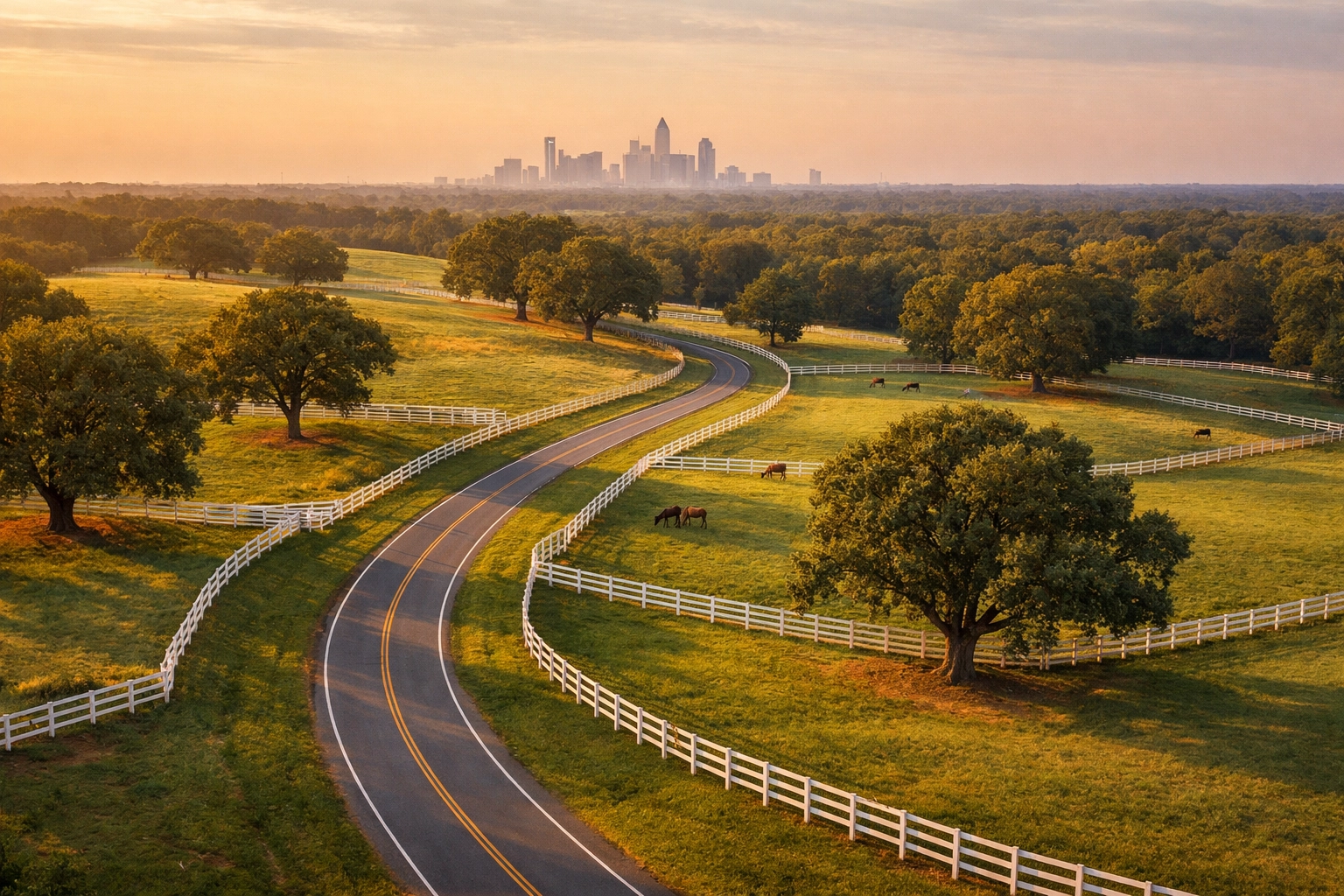
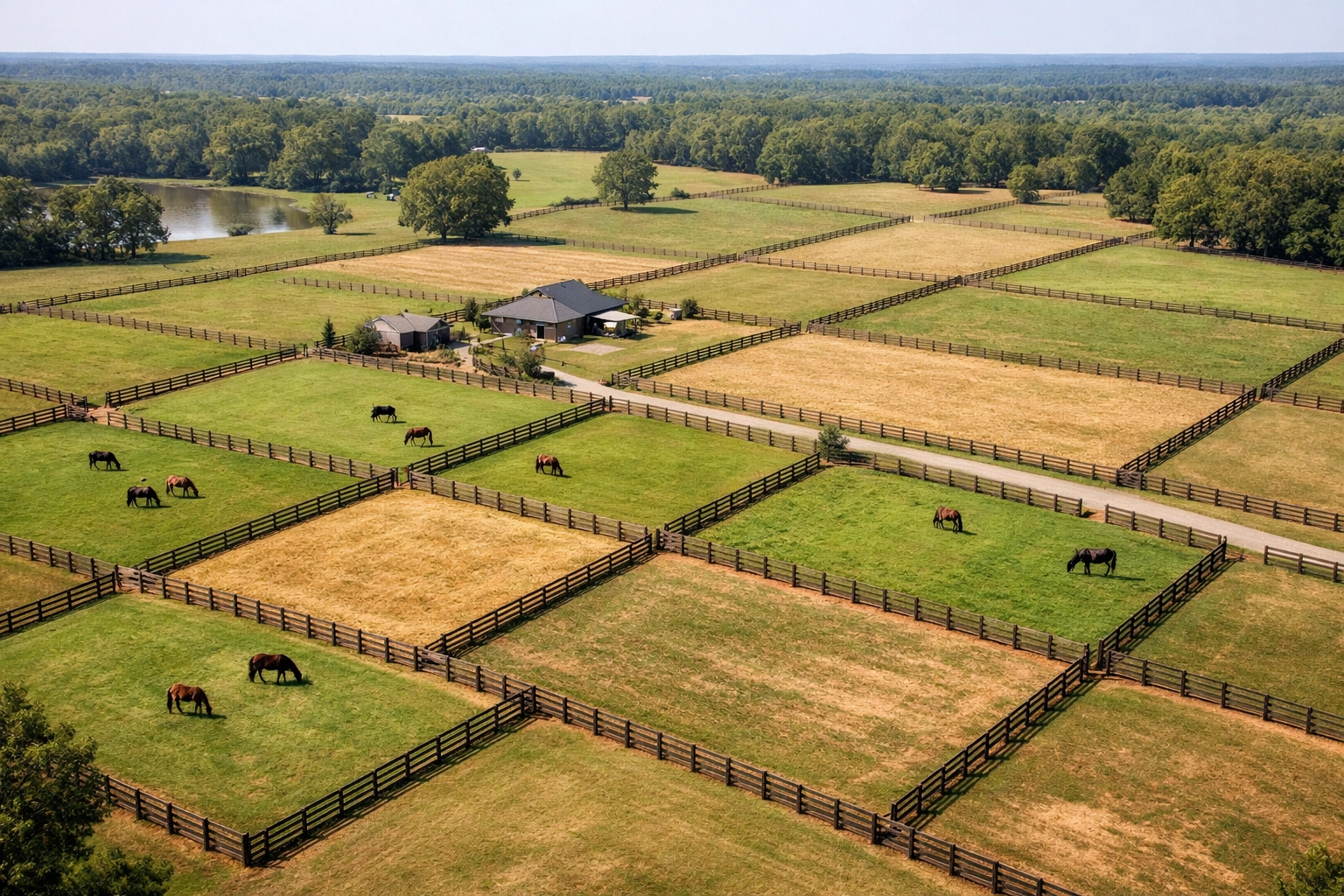
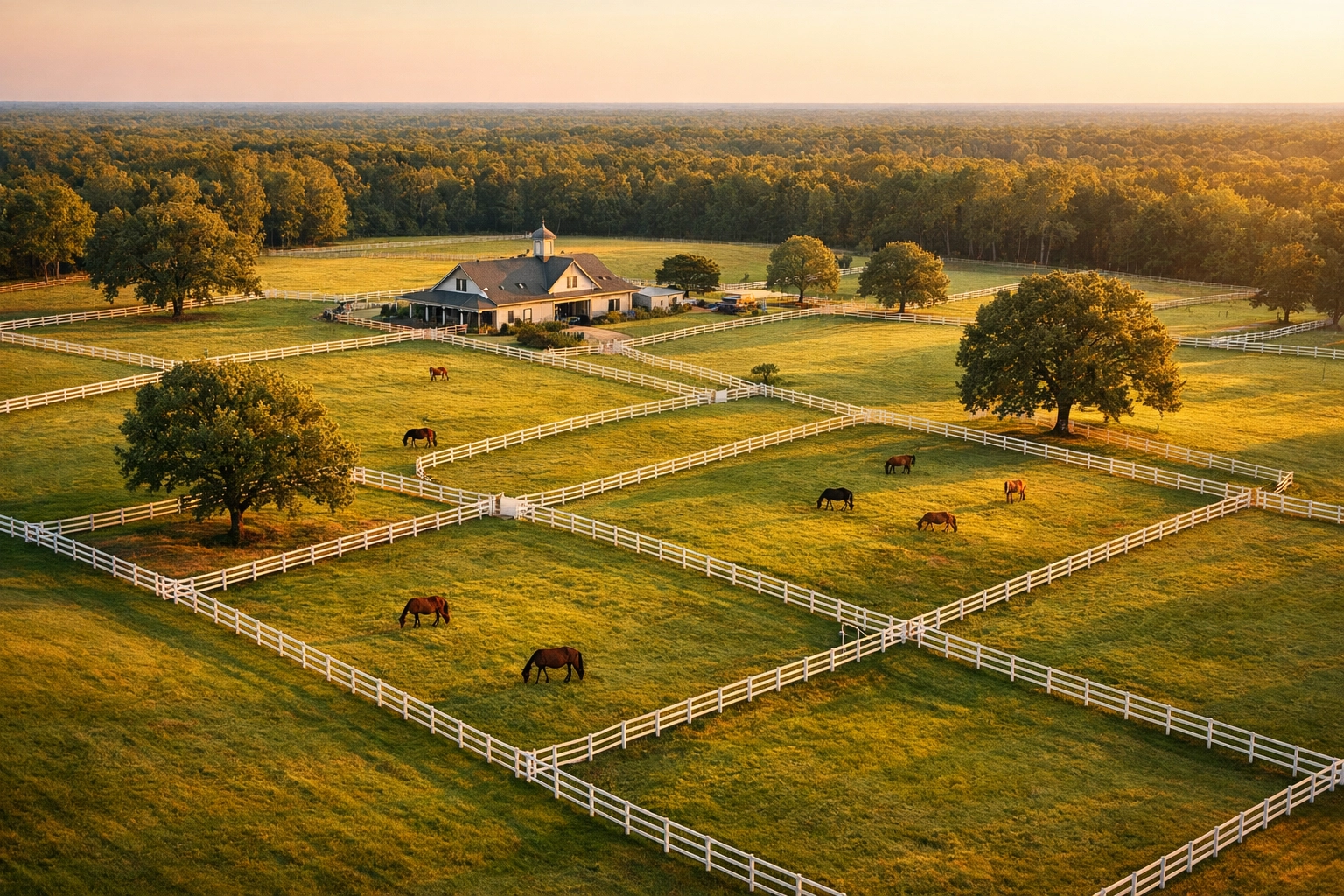
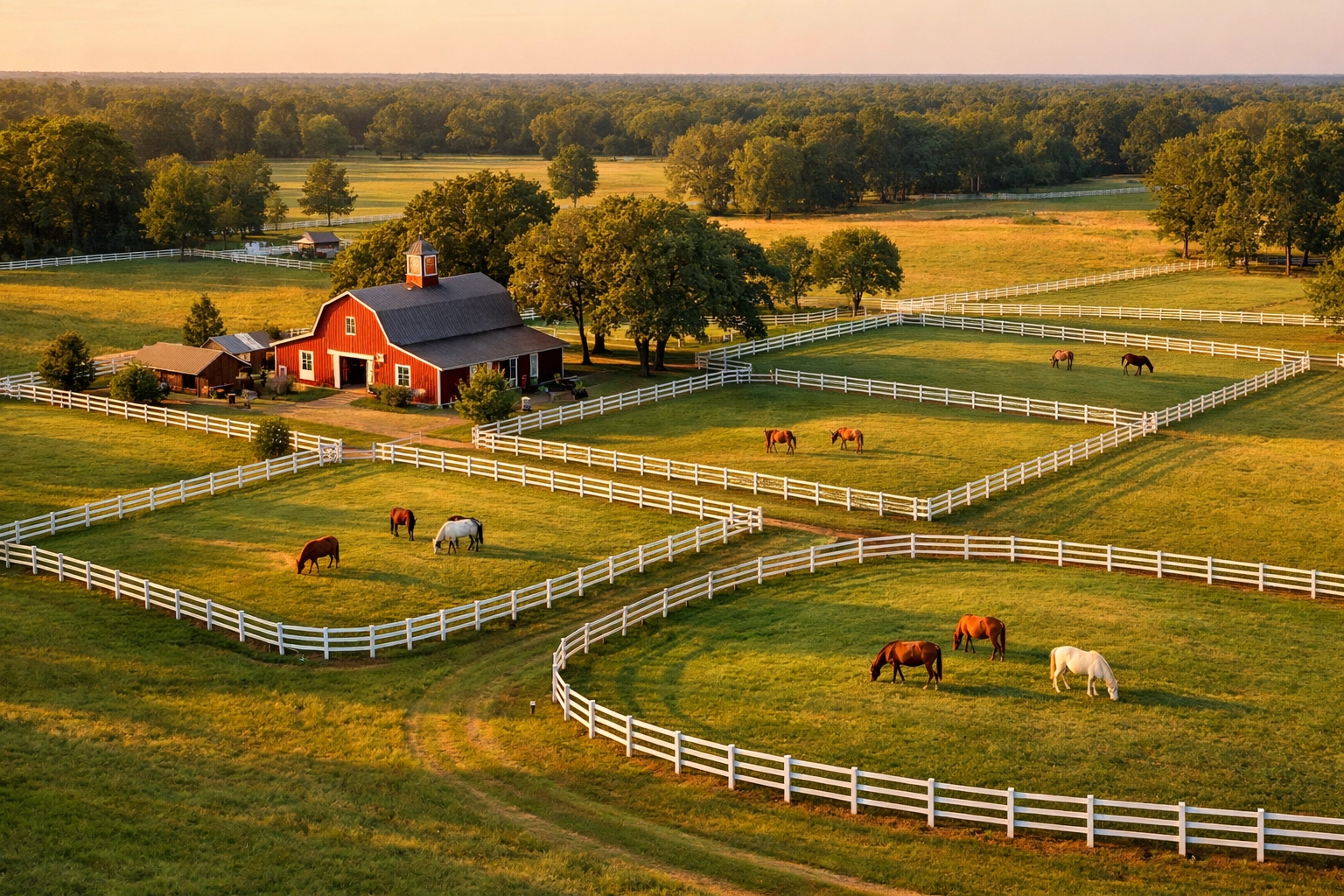
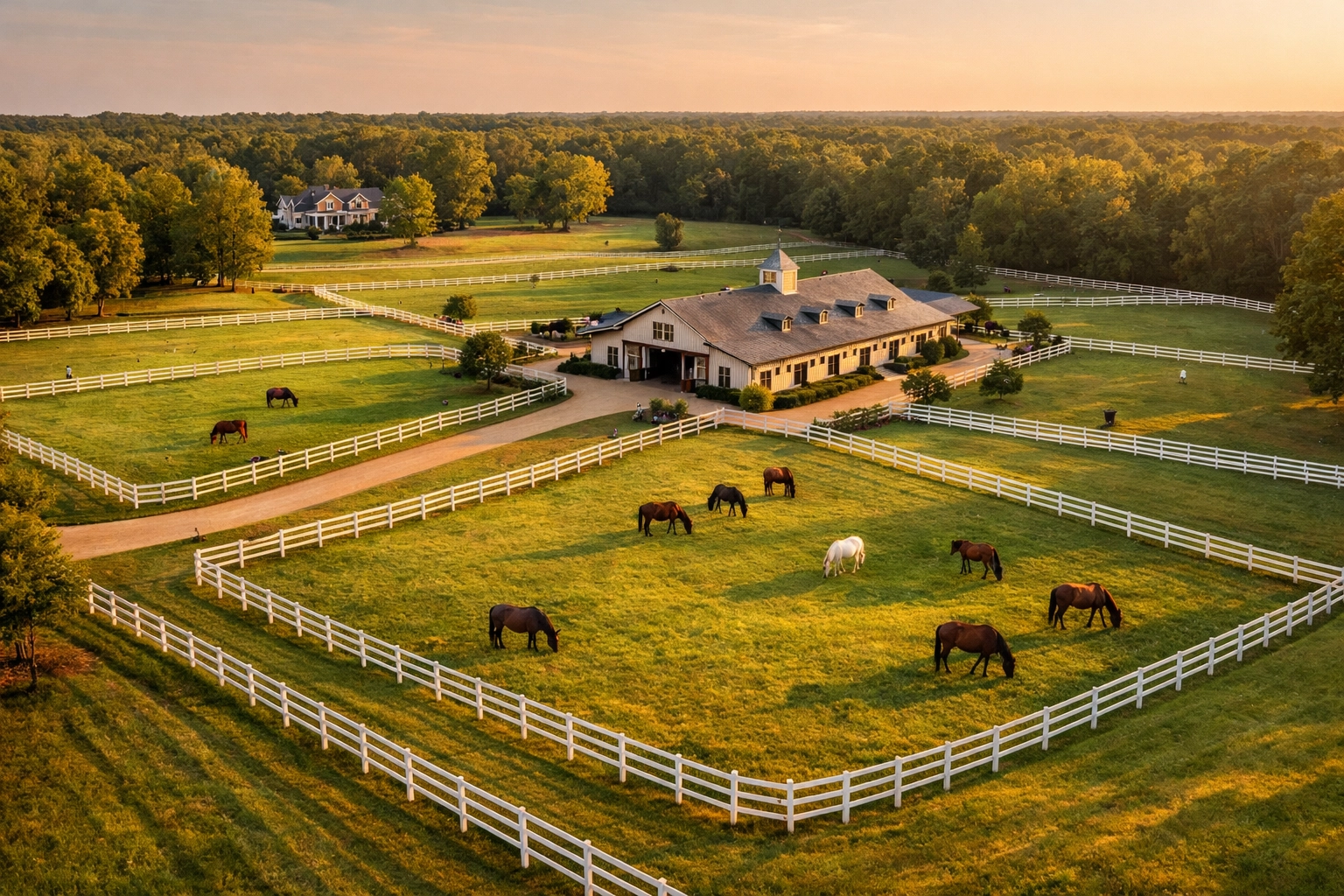
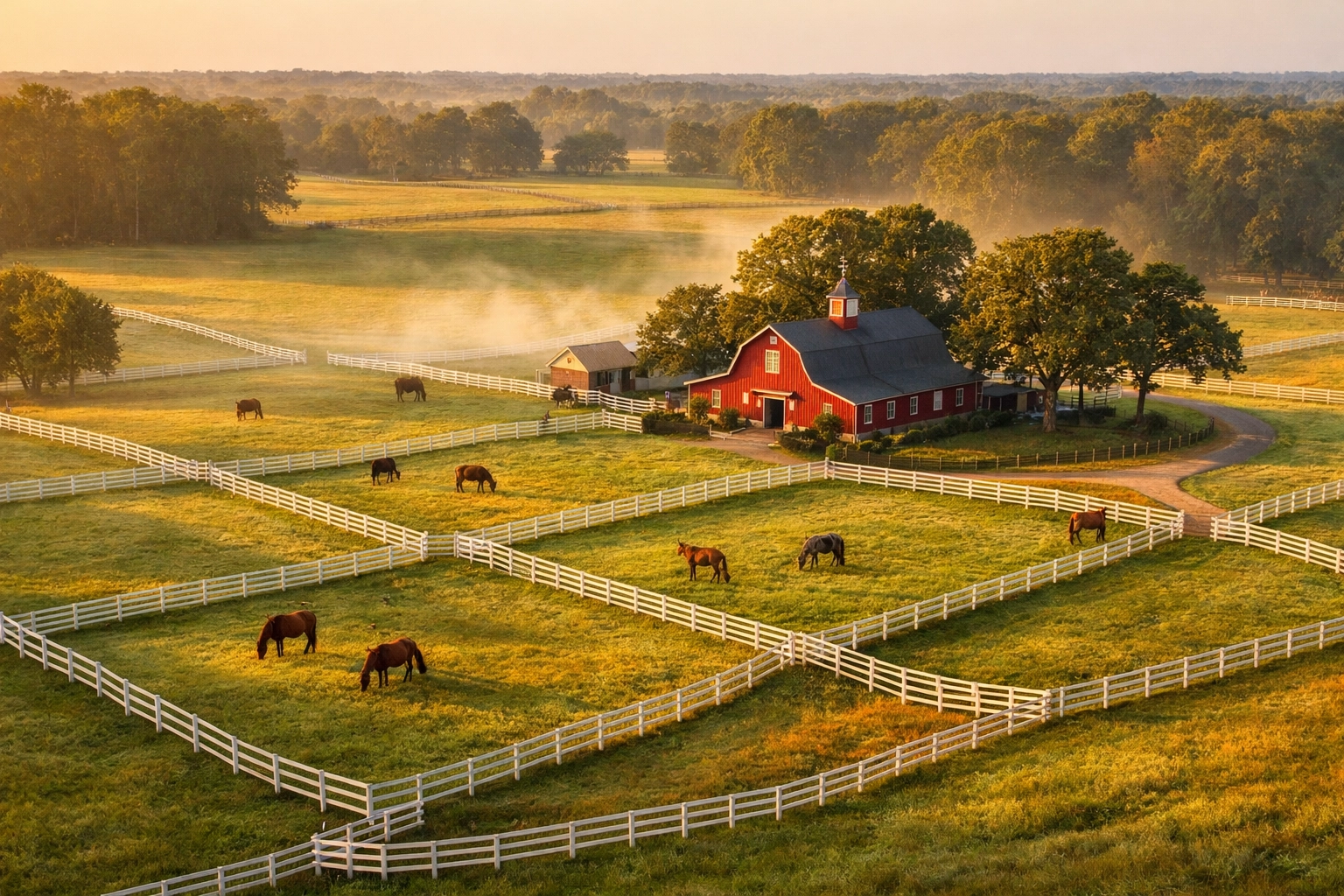
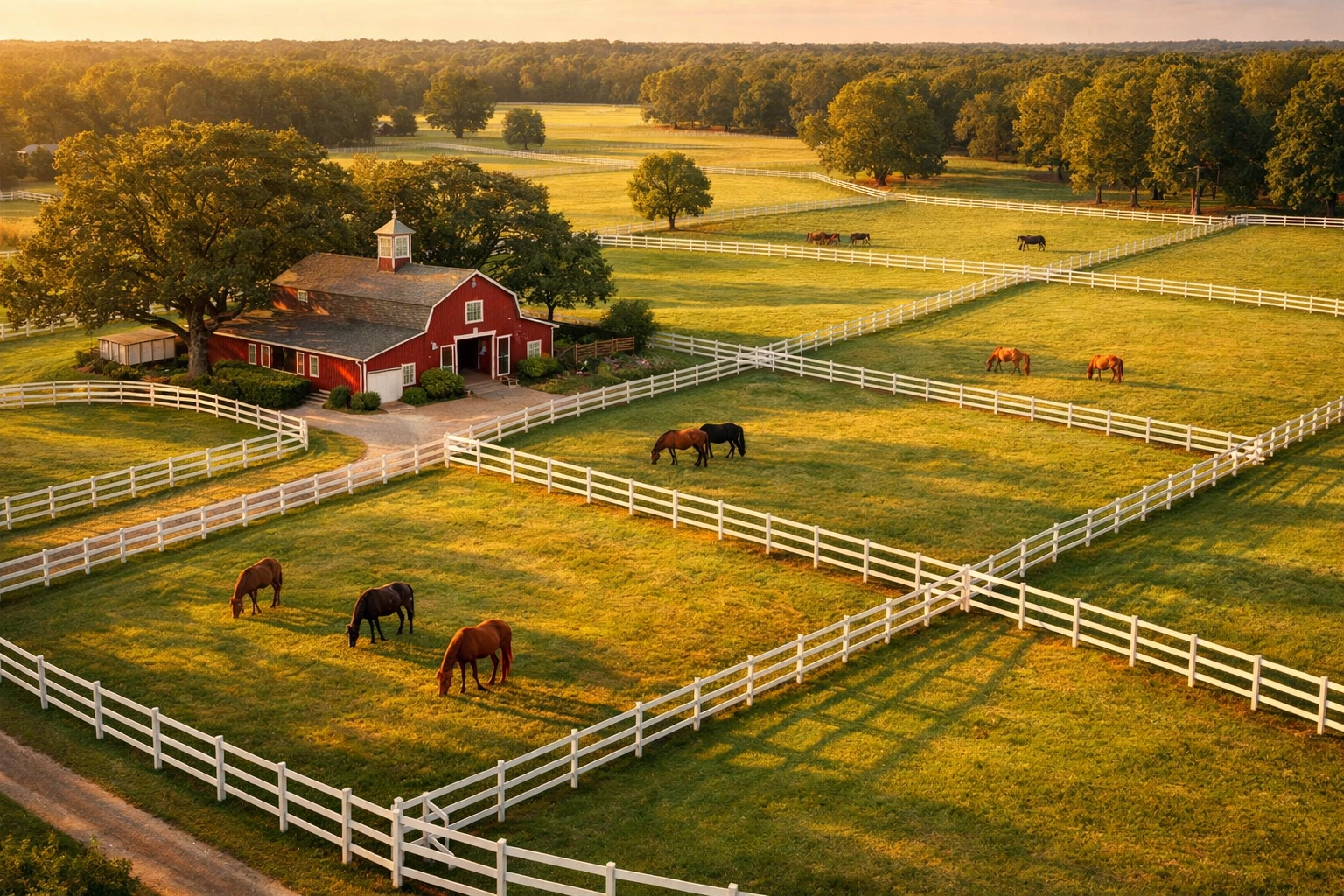
    Aerial view of Waxhaw horse farm with white fencing, barn, and horses grazing in green pastures

    What Makes Waxhaw Different from Other Charlotte-Area Markets

    Waxhaw sits far enough south to escape the development pressure consuming northern Mecklenburg County, yet close enough to Charlotte that a feed store run or emergency vet call doesn't become an expedition. The topography rolls gently: ideal for pasture rotation without the drainage headaches that plague flatter regions.

    The community infrastructure matters more than many buyers initially recognize. When your neighbors understand that 5 AM tractor noise means someone's cutting hay before the afternoon heat, not disturbing the peace, daily farm management becomes simpler. Waxhaw has that culture embedded in its identity.

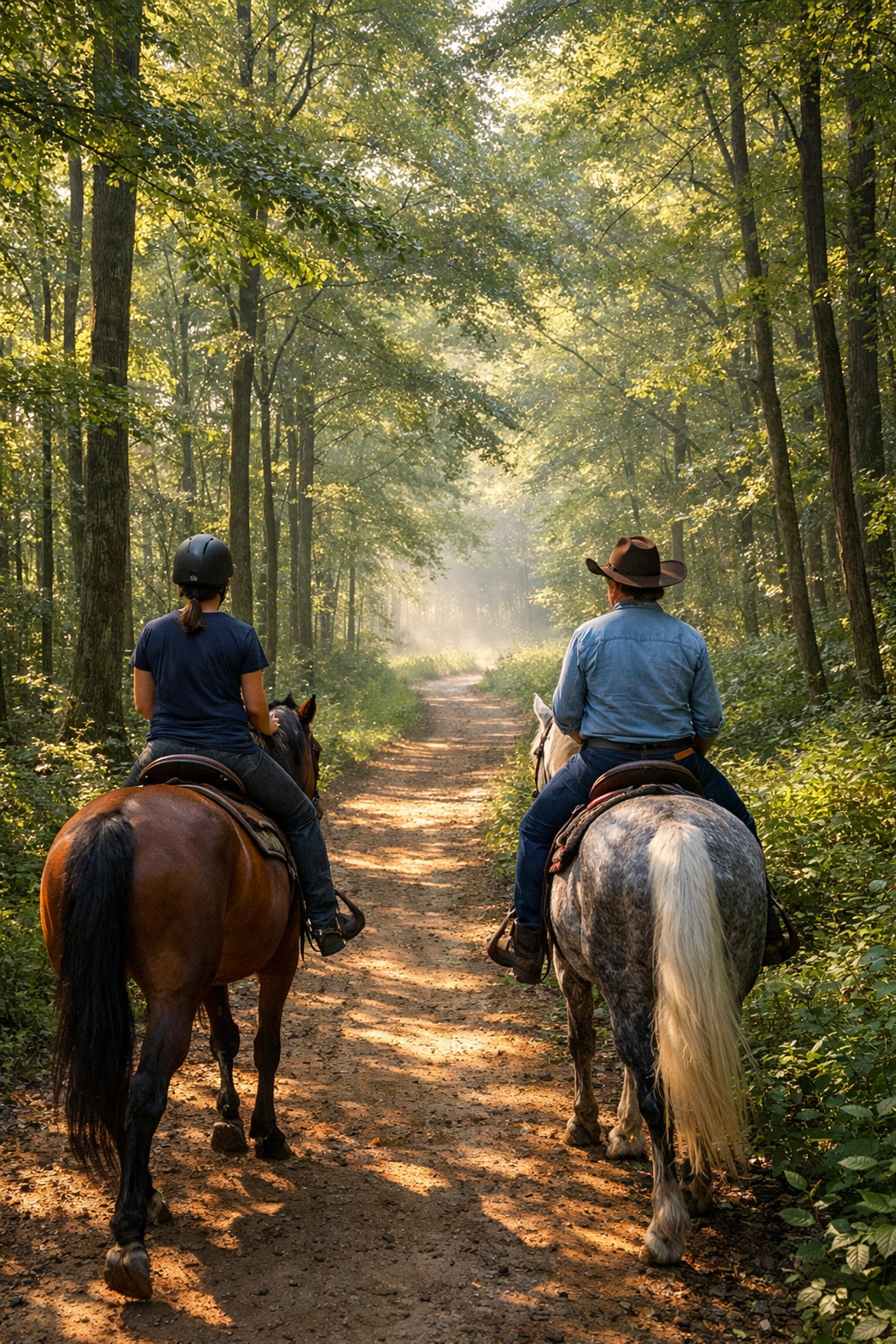
    Trail access deserves its own mention. Mineral Springs Greenway and Cane Creek Park offer miles of maintained trails within hauling distance, providing turnout variety that keeps both you and your horses mentally fresh. Public trail access reduces the pressure on your own pastures while expanding training opportunities.

    Essential Features in Waxhaw Horse Properties

    Pasture Quality and Layout

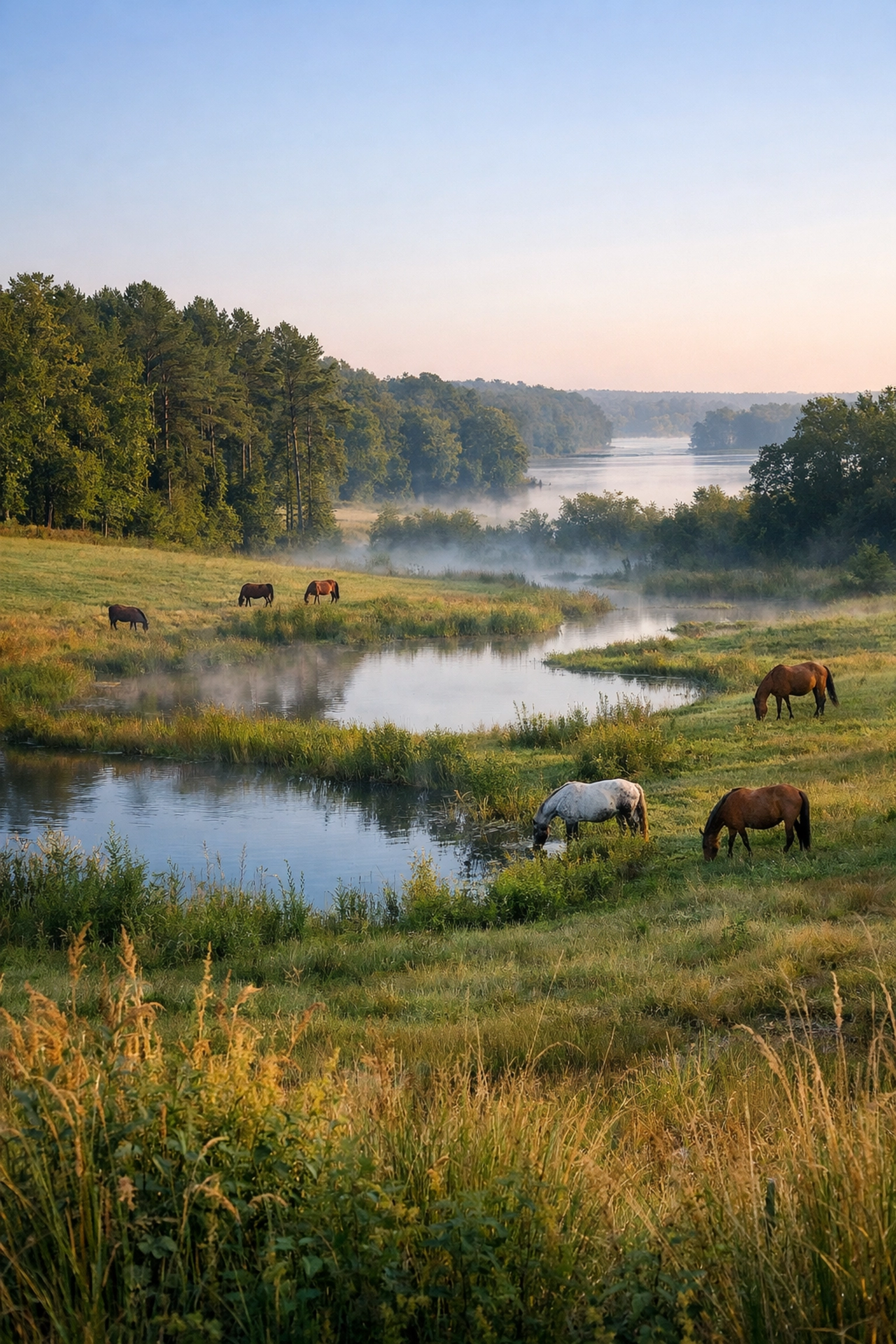
    North Carolina's red clay soil can support excellent pasture if properly managed, but you need sufficient acreage for rotation. Calculate two acres per horse as your baseline, then add 30% for seasonal rest and reseeding. Properties offering established pastures with varied topography allow you to separate wet-weather turnout from summer grazing.

    Look for fence lines that make sense: straight runs where possible, minimal sharp corners, and gates positioned for efficient movement between areas. Poorly planned pasture layouts cost you hours every week in unnecessary handling.

    Barn Infrastructure

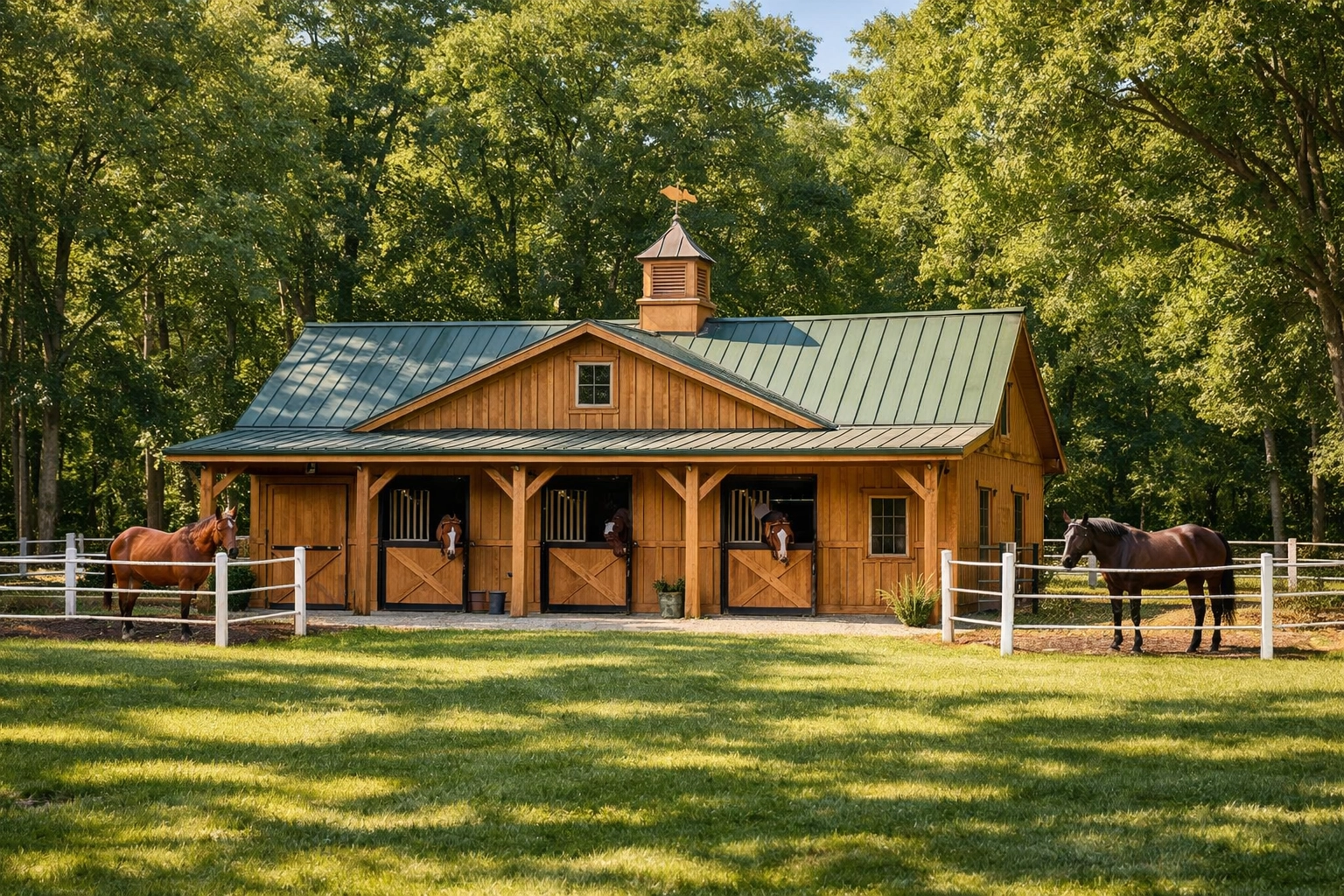
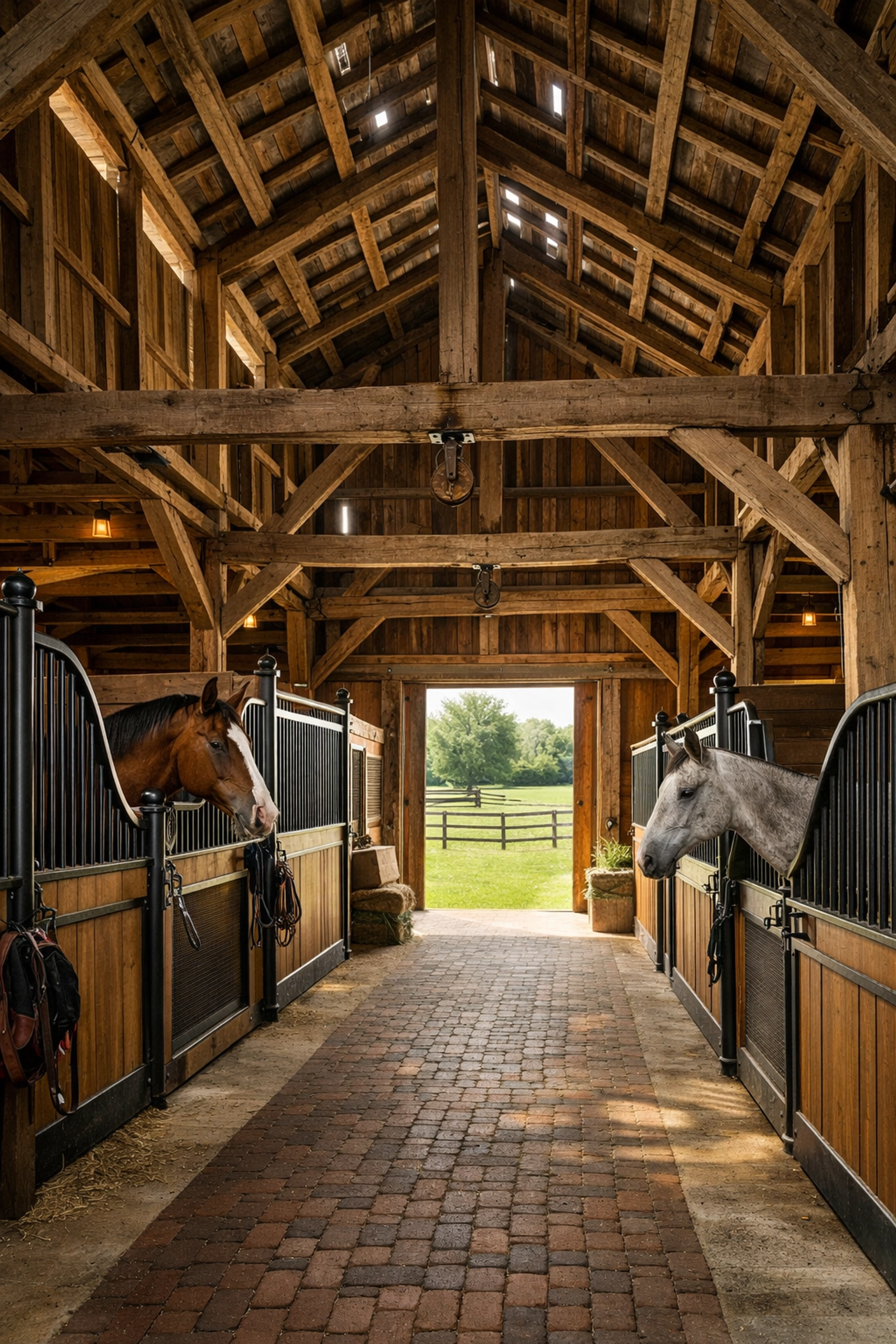
    The barn tells you everything about how the previous owner operated. Well-ventilated stalls with adequate natural light, wide aisles that accommodate equipment, and thoughtful storage placement indicate someone who understood horse welfare and operational efficiency.

    Center-aisle barns dominate Waxhaw listings, and for good reason: they handle North Carolina's summer humidity better than other configurations. Pay attention to roof height, electrical capacity for adding heated water buckets or fans, and whether the hay storage keeps bedding dry during our occasional wet winters.

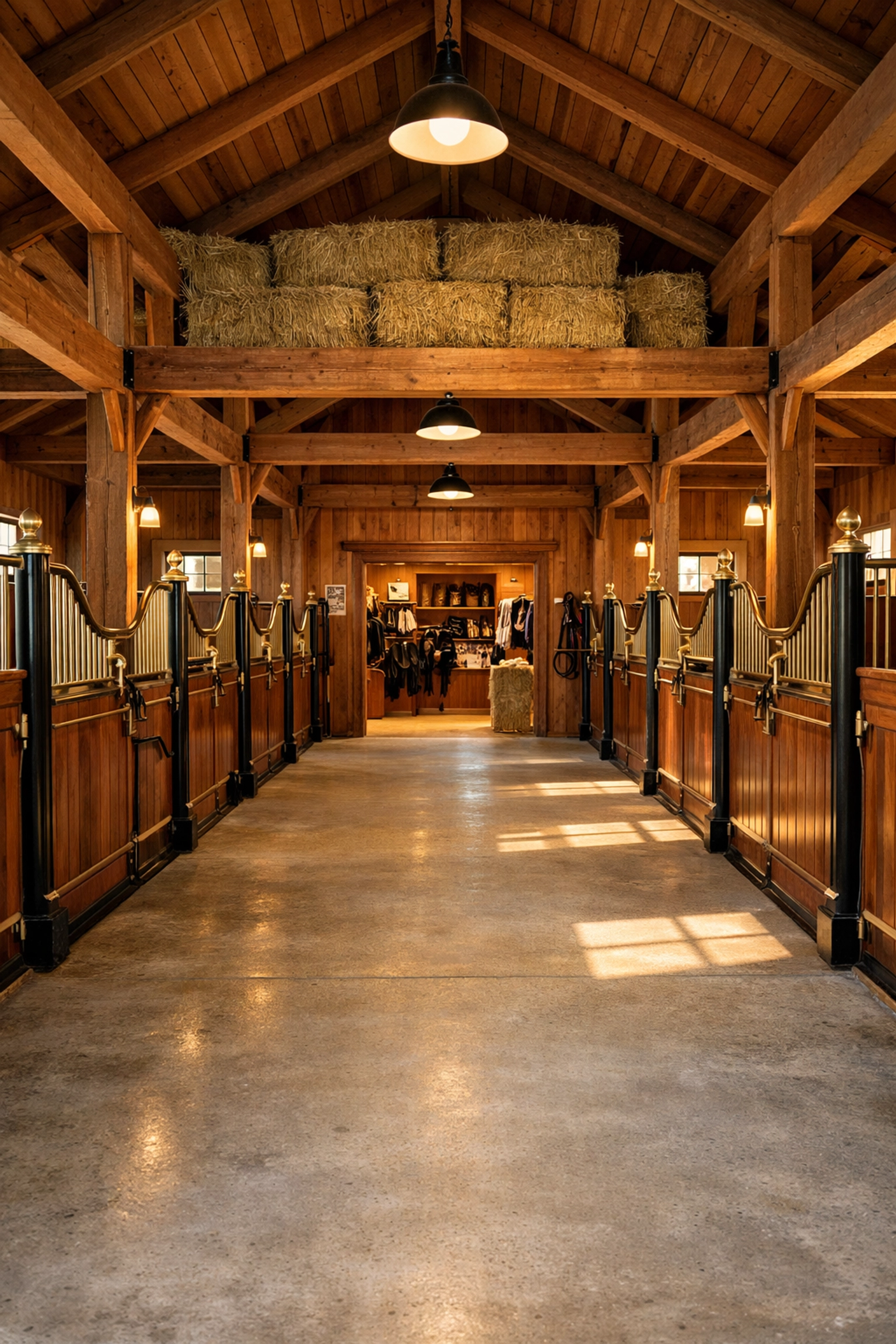
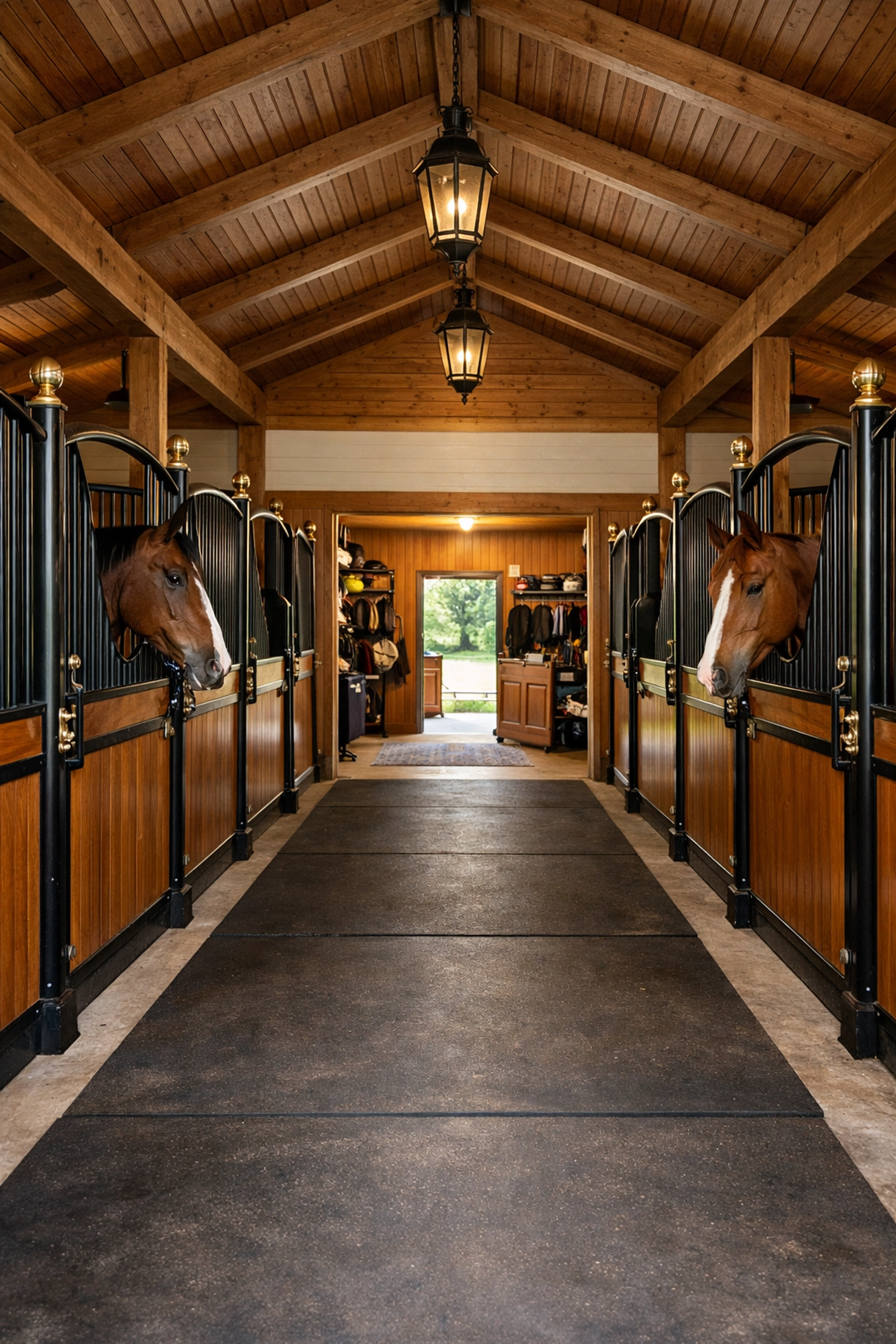
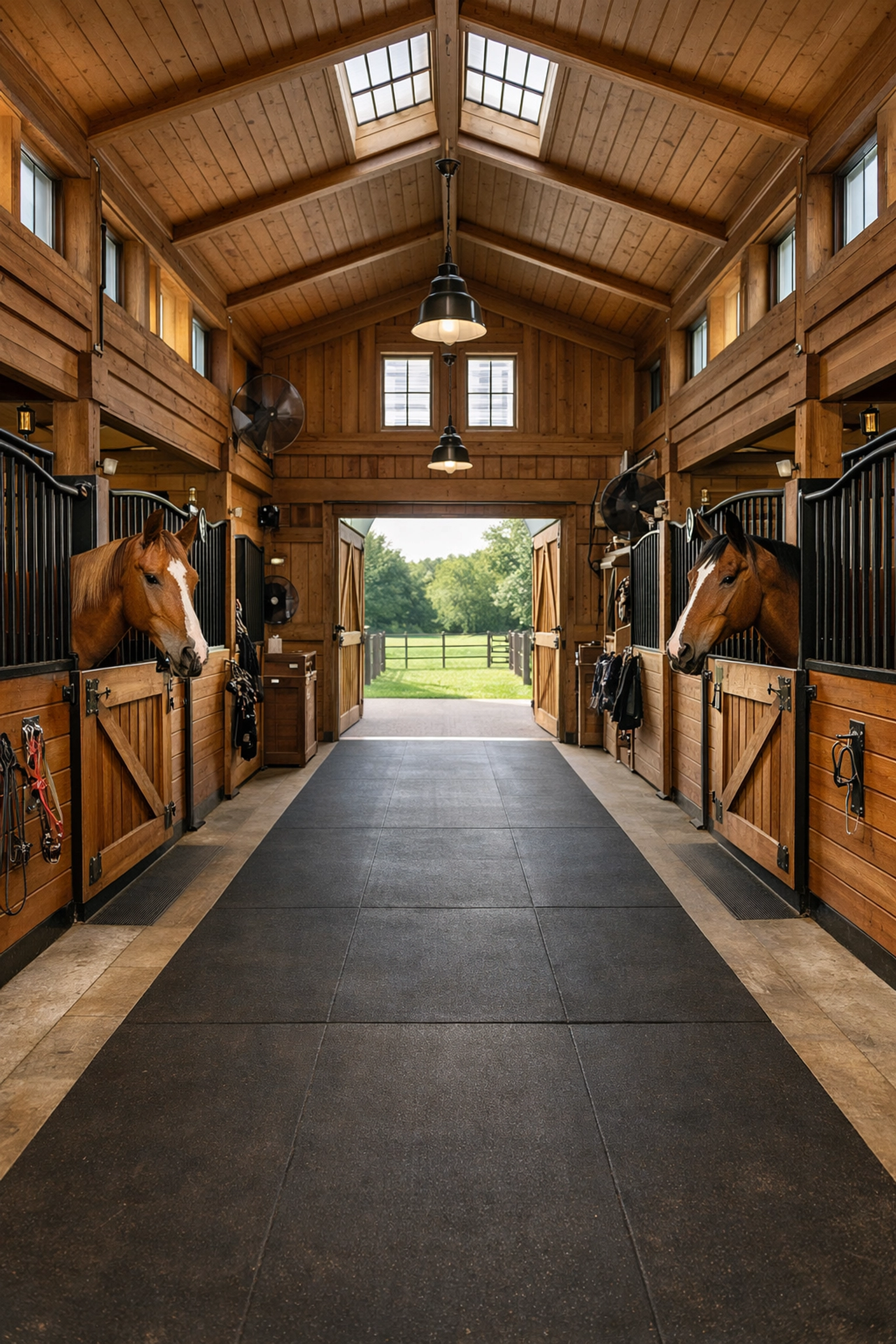
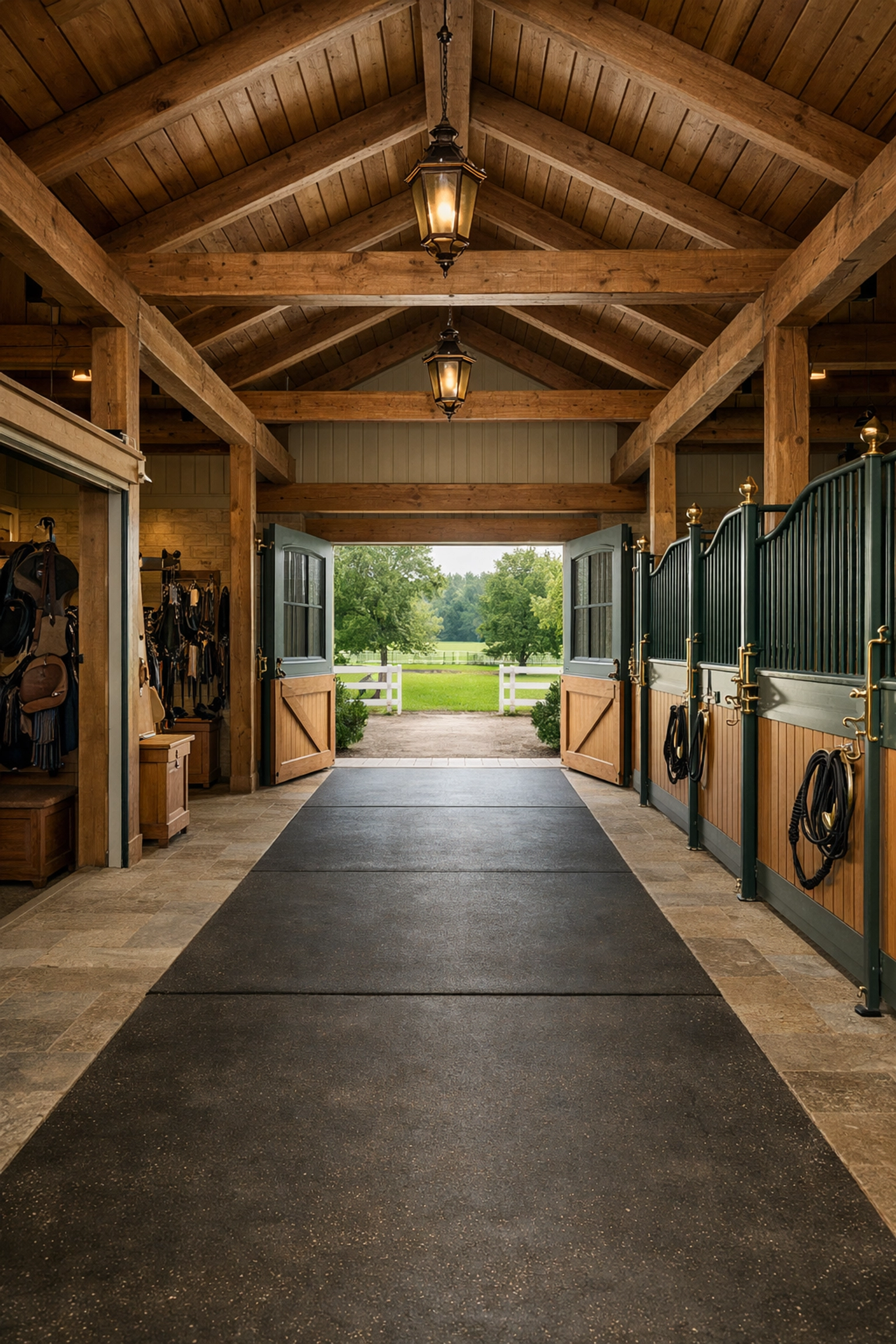
    Well-designed center aisle barn interior with natural light and organized tack room at horse farm

    Arena and Riding Facilities

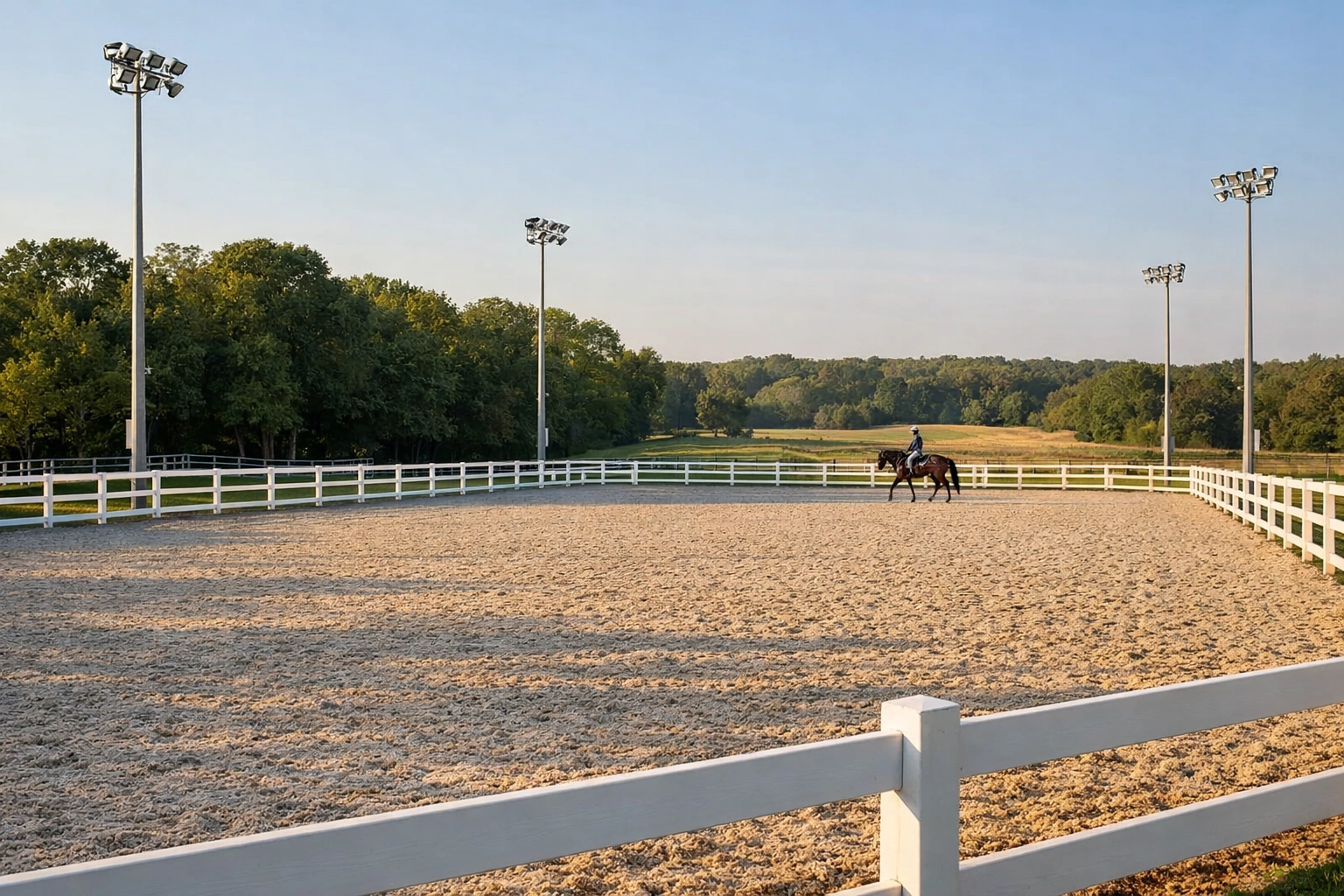
    Outdoor arenas are standard in this price range; indoor arenas remain premium additions that significantly increase property values. If your discipline requires consistent daily riding regardless of weather: dressage, reining, or hunter/jumper work: prioritize properties with enclosed riding space.

    Arena footing quality varies dramatically. Quality sand with appropriate drainage and regular maintenance represents a $15,000–$30,000 investment that many sellers defer. Budget accordingly if the arena needs work.

    Navigating Waxhaw Neighborhoods and Zones

    Union County's zoning regulations generally favor agricultural use, but specific restrictions vary by parcel. The northern sections closer to Highway 16 see more residential development pressure, while areas south toward the South Carolina border maintain stronger agricultural protection.

    Properties along Cuthbertson Road and Potter Road corridors offer established equestrian communities where boarding operations, training facilities, and private farms coexist comfortably. The social network matters: knowing which farms can take your horses during emergencies or which trainers hauling to regional shows have extra trailer space creates operational resilience.

    Check deed restrictions carefully. Some newer developments include covenants limiting commercial boarding or breeding operations, even when county zoning permits them. If your business model requires client horses on property, verify all restrictions before committing.

    Financial Considerations Beyond the Purchase Price

    Operating Costs

    Property taxes in Union County run lower than Mecklenburg, but water and septic systems sized for farm operations cost more to maintain. Budget $800–$1,500 monthly for utilities, basic maintenance, and property upkeep before adding horse-specific costs like feed, bedding, and farrier services.

    Improvement Planning

    Most buyers need to invest in improvements within the first two years. Whether that's upgrading fencing, expanding the barn, or adding arena lighting, plan for 10–15% of purchase price in near-term capital improvements. Properties priced at market already reflect deferred maintenance: you'll handle those items yourself.

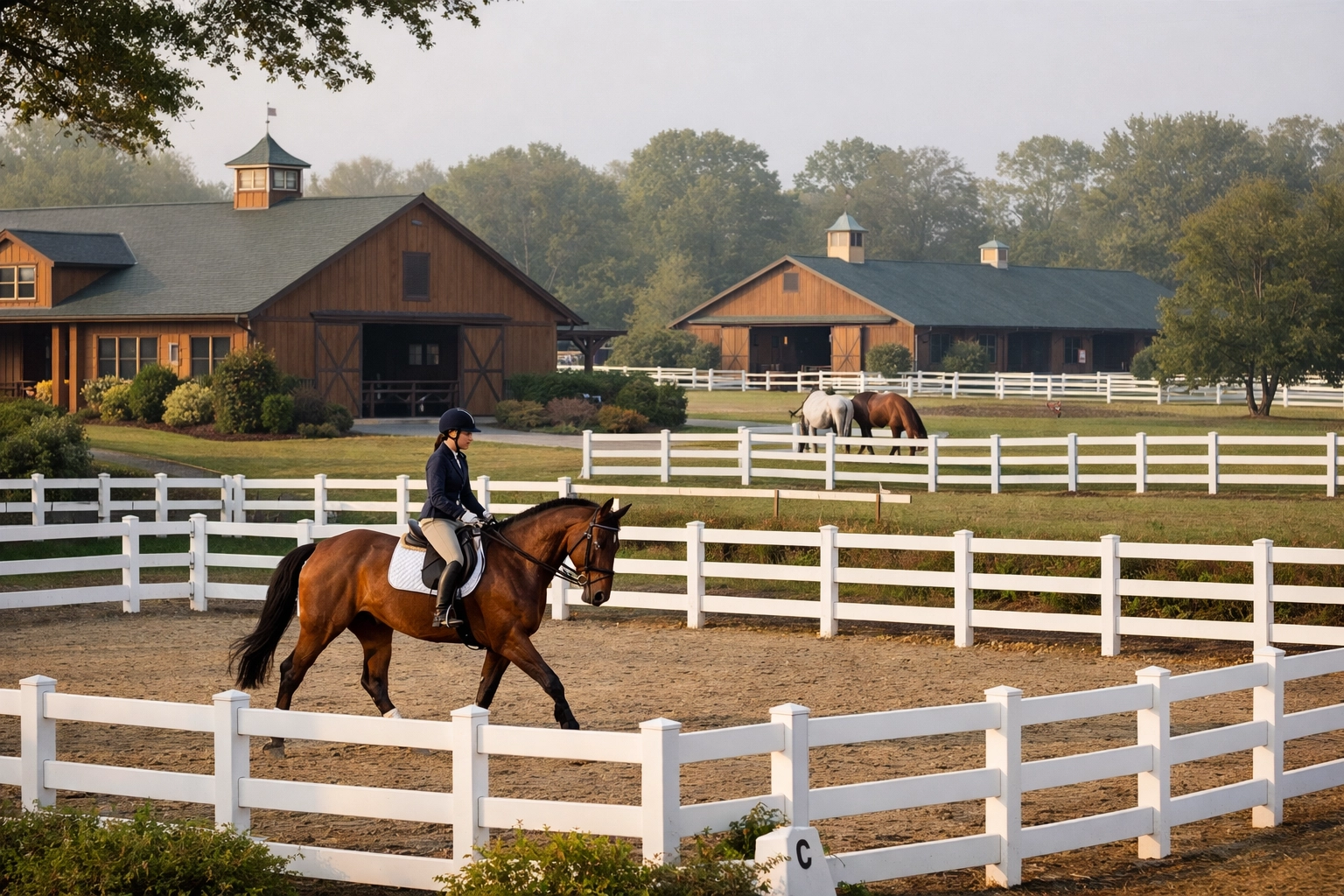
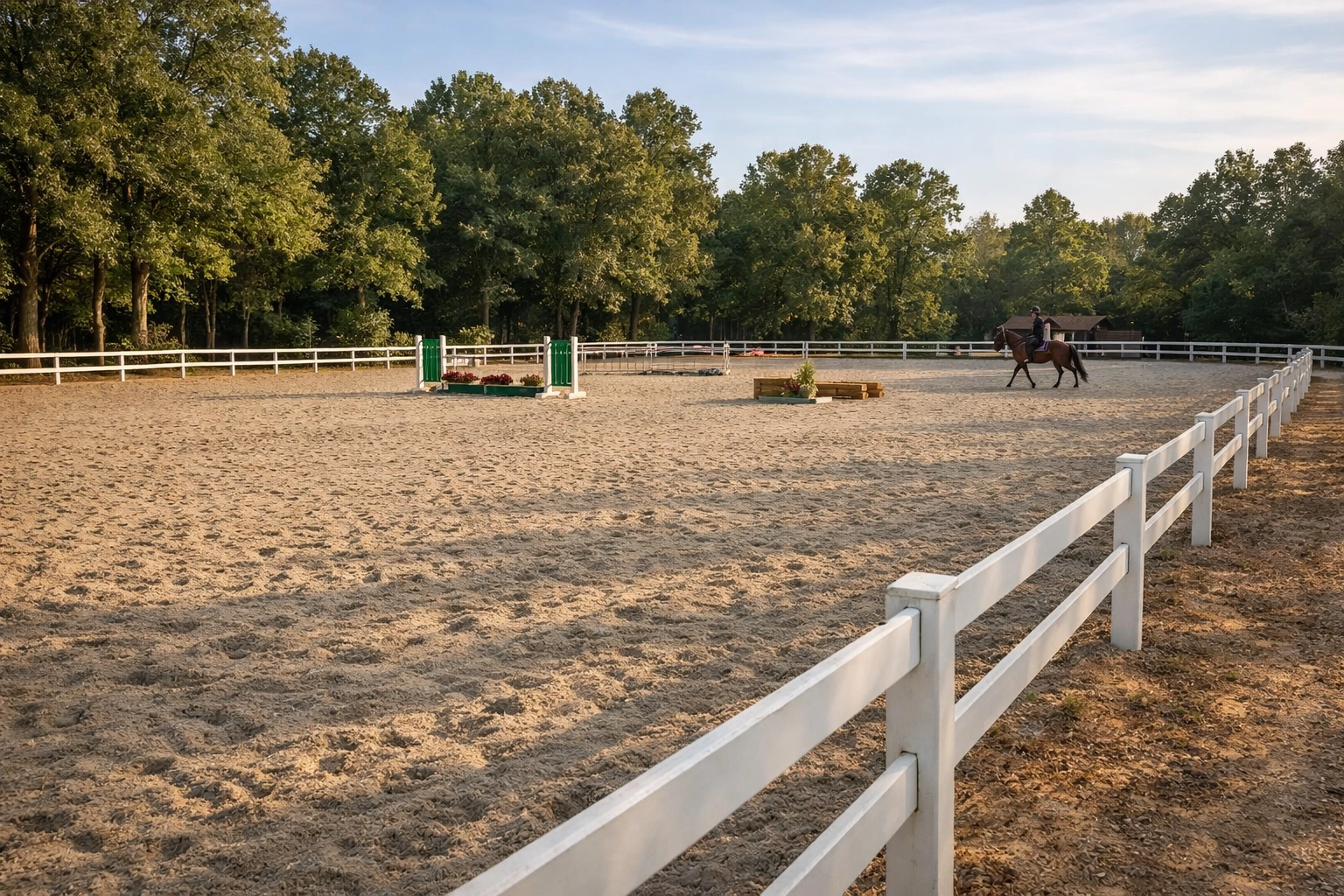
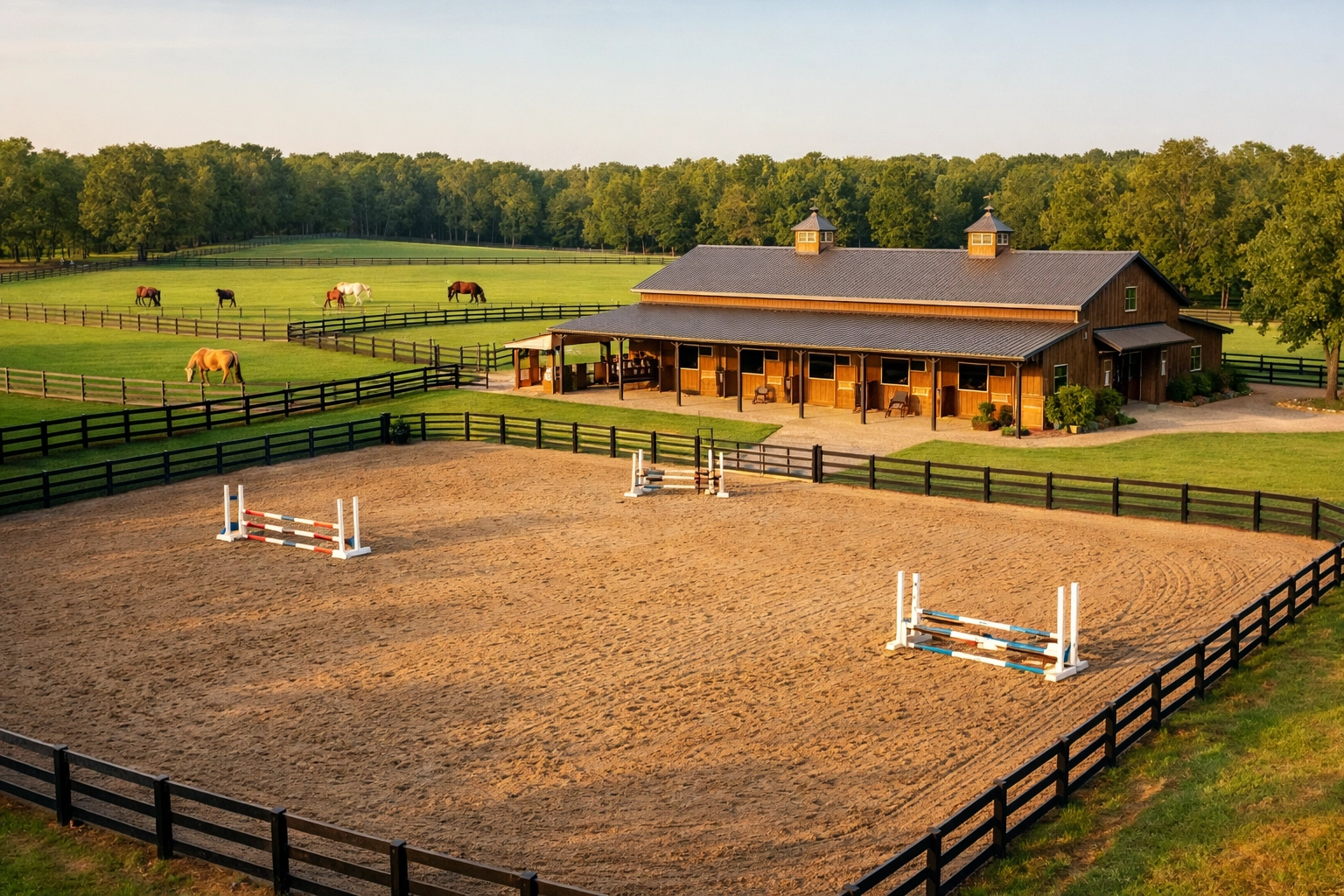
    Professional outdoor riding arena with quality footing at North Carolina equestrian property

    Income Potential

    If boarding income factors into your financial model, understand Union County's competitive landscape. Full-care board rates range from $450–$750 monthly depending on amenities. Properties supporting 8–12 client horses can generate meaningful offset against mortgage and operating costs, but success requires genuine facility management commitment: not just spare stalls.

    Due Diligence That Protects Your Investment

    Soil and Water Testing

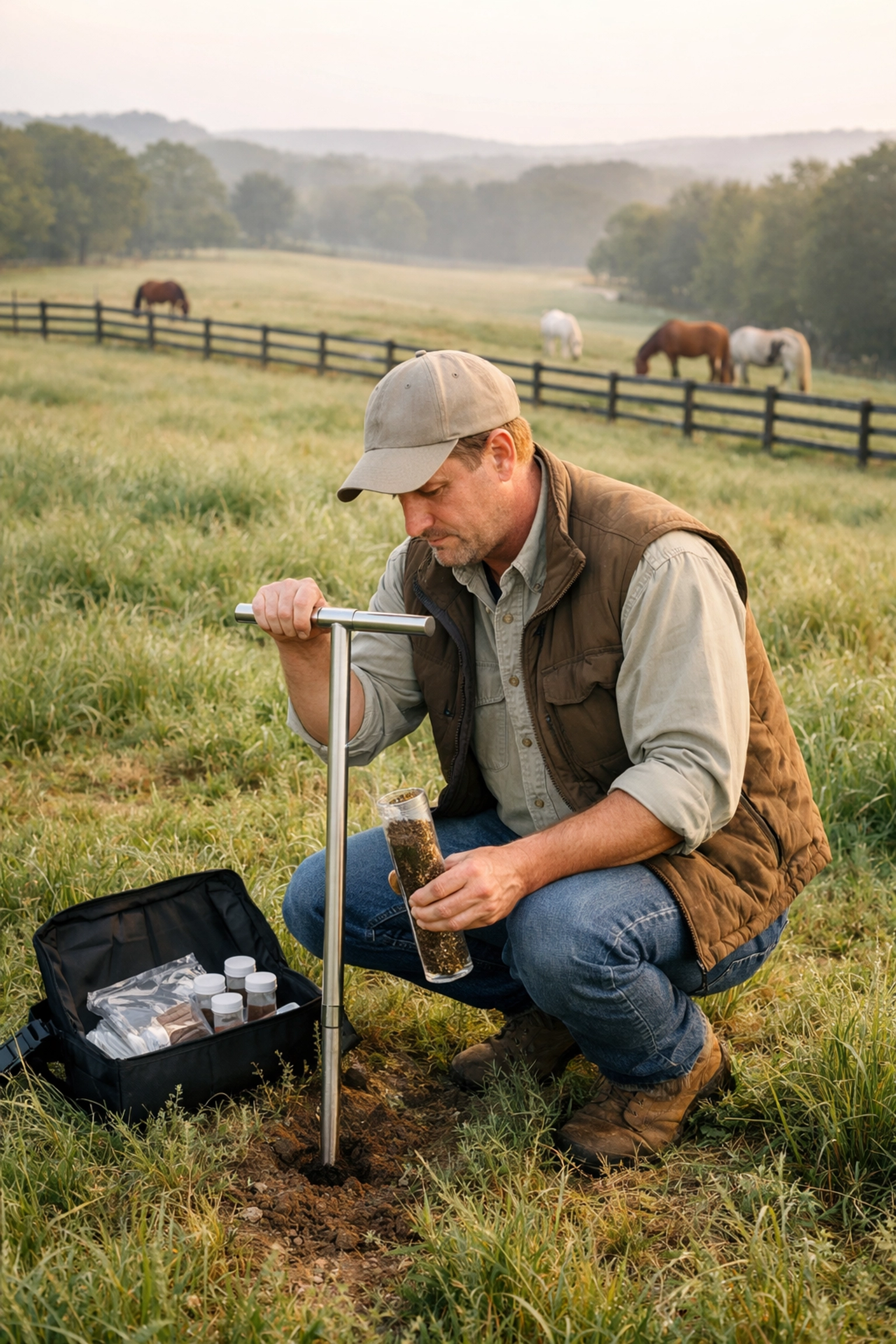
    Before closing, test well water quality and flow rates. Wells supporting multiple horses and automatic waterers need 5–10 GPM minimum. Soil testing reveals pH, nutrient levels, and contamination history, which determines your pasture establishment costs.

    Septic and Drainage Assessment

    Confirm septic system capacity matches property use. Systems designed for residential occupancy may not handle barn restrooms or wash stalls. Poor drainage destroys pastures: walk the property after heavy rain and identify low areas that hold water.

    Infrastructure Inspection

    Beyond standard home inspections, evaluate barn electrical systems, arena drainage, and fence condition professionally. A specialized equestrian property inspector costs $500–$800 but identifies issues that standard residential inspectors miss.

    Making Your Move: Practical Next Steps

    Start by clarifying your non-negotiables. How many horses do you currently own? Do you plan to breed, board, or simply maintain private facilities? Does your training schedule require an indoor arena, or will you haul during bad weather? Honest answers to these questions eliminate properties that won't serve your actual program.

    Tour properties during different weather conditions if possible. That gorgeous pasture in July may become a mud pit in February. Morning visits reveal drainage issues and barn workflow that afternoon showings conceal.

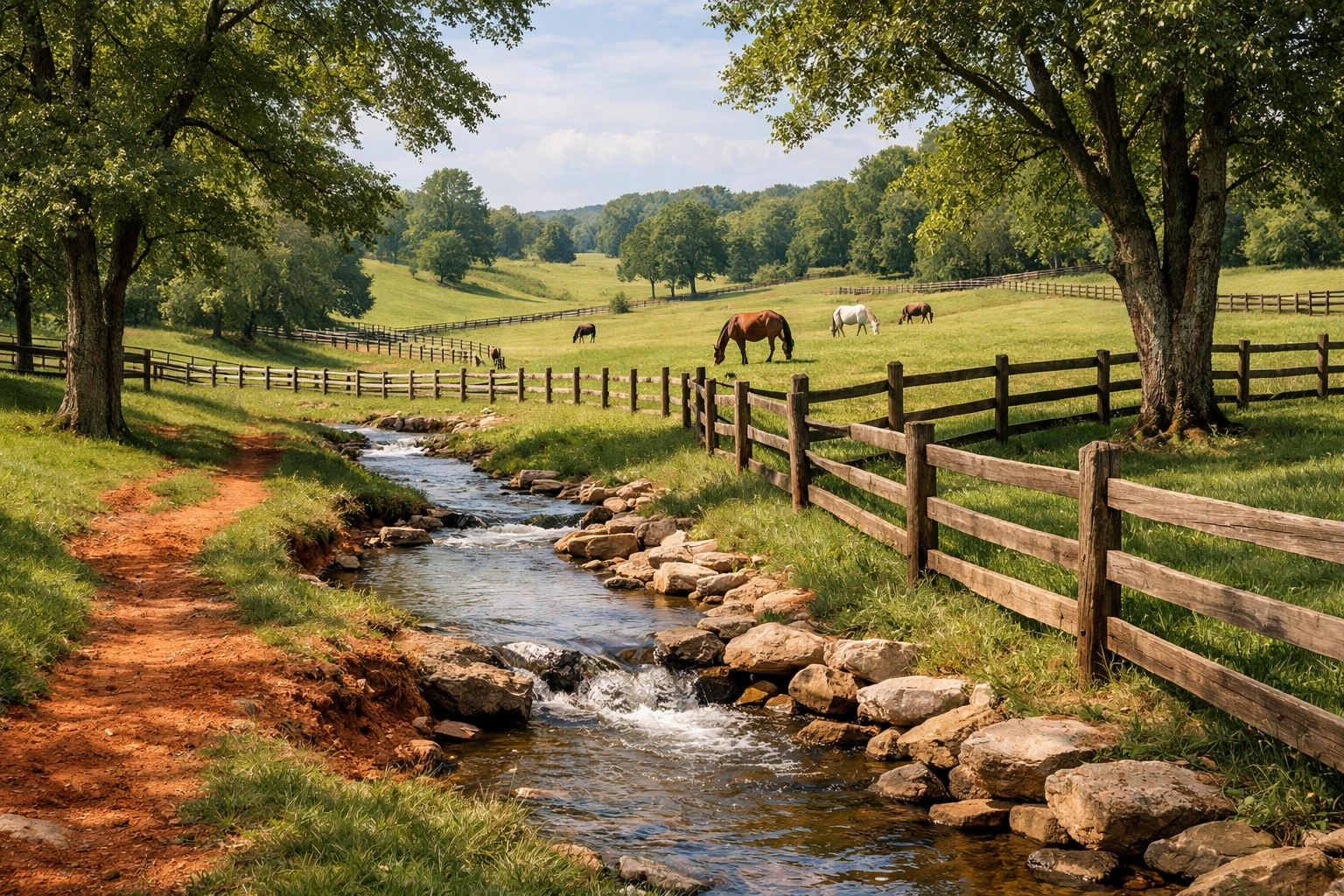
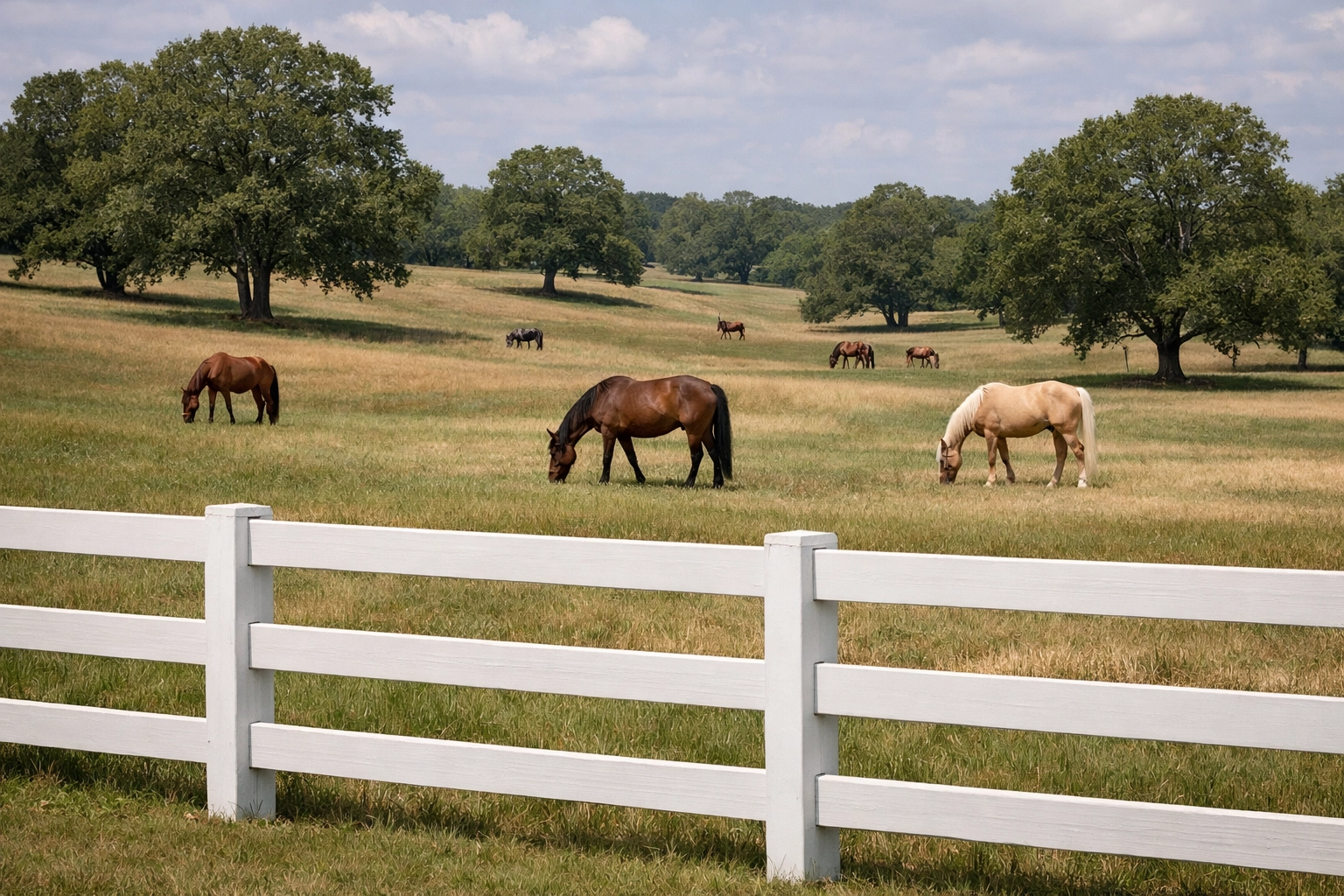
    Horses grazing in well-managed pastures at Waxhaw NC horse farm with proper fencing

    Work with representation that understands equestrian properties specifically. General residential agents often miss critical barn and pasture issues that seem minor but cost tens of thousands to remedy. The right agent asks about your turnout philosophy and hay storage needs before discussing kitchen finishes: because that's what actually matters to your daily operation.

    Why Waxhaw Continues Attracting Serious Horsemen

    The combination of usable land, established equestrian culture, and relative affordability compared to northern Charlotte markets creates lasting value. Development pressure remains manageable, protective zoning preserves agricultural use, and the community actively supports equestrian businesses through local shows, clinics, and cooperative marketing.

    Waxhaw doesn't offer the cachet of Tryon's international scene or the manicured estates dotting Weddington. What it provides instead is honest horse country where your operation can function efficiently, your investment holds value, and your neighbors speak the same language: because they're out doing morning feed checks at the same ungodly hour you are.

    The properties exist. The market remains active but not overheated. The question becomes whether you're ready to move from browsing listings to actually building the equestrian life you've been planning.

    Ready to explore what's currently available? View our current equestrian property listings or reach out to discuss your specific requirements: because finding the right horse property isn't about settling for what's available, it's about recognizing what works when you see it.

  • The Ultimate Guide to Horse Farms for Sale in Waxhaw, NC: Everything You Need to Succeed

    The Ultimate Guide to Horse Farms for Sale in Waxhaw, NC: Everything You Need to Succeed

    There's something about Waxhaw that just makes sense for horse people. Maybe it's the rolling pastures that actually drain well, or the fact that you can trailer to Cane Creek Park without fighting Charlotte traffic. Whatever it is, this corner of Union County has quietly become one of the smartest places to own horses in the Charlotte metro area: and the properties reflect that.

    If you're looking at horse farms for sale in Waxhaw, you're not just shopping for real estate. You're looking for land that works, a barn that functions, and neighbors who understand why you're out feeding at 6 AM in January. This guide breaks down everything you need to know before you make one of the most important decisions of your equestrian life.

    The Waxhaw Market: What You're Actually Looking At

    Let's start with the numbers, because they matter. As of early 2026, Waxhaw has approximately 17-20 active equestrian property listings, with average prices hovering around $540,000 to $570,000. Per-acre costs typically run $50,000 to $52,000, which positions Waxhaw as more accessible than Weddington or Marvin, yet still offering the infrastructure serious horse owners require.

    The inventory fluctuates, but one thing remains consistent: properties here move when they're priced right and show well. We're not talking about gentleman farms with ornamental barns: buyers in this market know their stuff. They're looking at drainage, pasture rotation capability, and whether that "4-stall barn" actually has proper ventilation and safe stall dimensions.

    Aerial view of horse farm for sale in Waxhaw NC with fenced pastures and barn

    Most equestrian properties in Waxhaw fall into the 10-25 acre range, which is the sweet spot for private horse owners who want enough land for proper pasture management without needing a full farm staff. You'll find everything from turnkey training facilities to raw land with stellar building sites, but the common thread is soil that performs and topography that works with you, not against you.

    Why Waxhaw Works for Horses (And Horse People)

    Waxhaw isn't trying to be Tryon, and that's precisely why it works. This is a working equestrian community where people actually ride, not just decorate. The infrastructure proves it: Cane Creek Park's 1,100 acres include miles of riding trails that see regular use, and the Mineral Springs Greenway connects riders to even more territory without hauling your horse onto a highway.

    The soil composition here is piedmont clay loam: not perfect, but manageable with proper amendments and pasture rotation. The terrain offers natural drainage options that make stormwater management significantly less expensive than in flatter areas to the south. If you've ever dealt with standing water in paddocks, you understand why this matters.

    Zoning in Union County tends to favor agricultural use, with most equestrian properties falling under RA-40 or RA-20 classifications. This means you can actually operate a small boarding or training business without the bureaucratic nightmare you'd face closer to Charlotte's urban core. The county understands horses aren't pets: they're agriculture.

    Property Features That Separate Serious Farms from Instagram Props

    When you're evaluating horse farms for sale in Waxhaw, look past the pretty pictures. Here's what actually matters:

    Barn infrastructure should include proper stall dimensions (minimum 12×12 for average-sized horses), adequate ventilation without drafts, safe flooring with proper drainage, and lighting that doesn't flicker or spook. A hay loft sounds romantic until you're throwing bales down in July. Climate-controlled tack rooms protect thousands of dollars in equipment: not a luxury, a necessity.

    Professional horse barn interior showing stalls and center aisle at Waxhaw equestrian property

    Pasture setup deserves serious scrutiny. Count the paddocks and assess rotation capability. Are the fencelines in good repair, or will you be replacing 2,000 feet of board fence before you unload your first horse? Water access to every pasture isn't optional in North Carolina summers. Run-in sheds provide essential weather protection and can prevent veterinary emergencies during sudden storms.

    Arena space dramatically increases a property's functionality and value. A lighted 50×125 arena: like you'll find on some Waxhaw properties: means you can work horses year-round regardless of daylight. Proper footing requires investment but saves thousands in soundness issues. If there's no arena, assess whether the property has suitable terrain and drainage for building one.

    The Practical Side: What First-Time Farm Buyers Miss

    You've ridden your whole life, maybe even managed a barn. Owning the property is different. Here's what catches people off guard:

    Manure management isn't glamorous, but it's daily. Union County has regulations about composting and disposal. Some properties have established systems with proper drainage and access for removal. Others require you to start from scratch. Factor this into your assessment.

    Water systems on rural properties often mean well water. Test it. Not just for potability, but for sulfur content and flow rate. Automatic waterers are convenient until the system freezes or the pressure drops. Backup plans matter.

    Utility access and costs vary dramatically. Some Waxhaw properties have full county services, others rely on septic and well systems. Electric service to barns should be on separate meters with proper breaker capacity for heaters, fans, and lighting. A quality electrician familiar with agricultural applications isn't cheap, but cutting corners here creates dangerous situations.

    Lighted outdoor riding arena at horse farm in Waxhaw NC at dusk

    Property maintenance scales with acreage. Ten acres means mowing, fence repair, pasture management, and facility upkeep. Be realistic about whether you'll do this yourself or need to budget for help. Many successful horse property owners maintain full-time jobs: they just have good relationships with reliable contractors.

    Finding Your Property and Making It Happen

    The best horse farms for sale in Waxhaw often sell before they hit the major real estate platforms. Working with an agent who specializes in equestrian properties means access to pocket listings and early notice when properties are coming to market.

    When you find a property that checks your boxes, move decisively but not desperately. Have your financing lined up before you start looking seriously. Equestrian properties often require specialized agricultural loans or jumbo mortgages: not something to figure out after you've found your dream farm.

    The inspection process for horse property should include someone who understands agricultural buildings and systems. Your typical home inspector won't catch critical barn issues or recognize problematic pasture drainage patterns. Budget for well and septic inspections, soil testing if you plan to build, and possibly a survey if property lines near pastures seem unclear.

    The Waxhaw Advantage: Location Without Compromise

    Here's what makes Waxhaw work in the larger Charlotte metro context: you're close enough to reach quality veterinary care, feed stores, and farriers without living on top of suburban sprawl. Emergency vet services from Charlotte reach Waxhaw in reasonable time. The area supports multiple large animal veterinary practices who make farm calls.

    The community includes riders at every level: from backyard horse owners to professionals operating training businesses. Local tack shops understand what serious riders need, and the area supports mobile services from chiropractors to dentists to trainers. You're not pioneering horse ownership in a hostile environment; you're joining an established equestrian community.

    Yet you maintain the peace that makes horse ownership worthwhile. Quiet mornings in the barn, evening rides through your own property, and neighbors who wave instead of complaining about trailer traffic. That balance is increasingly hard to find in the Charlotte metro area.

    Morning horse care routine at Waxhaw NC equestrian property with multiple paddocks

    Your Next Move

    Finding the right horse property isn't about settling: it's about matching your operation's needs with land that performs. Whether you're relocating from a boarding situation and buying your first farm, or upgrading from a smaller property that no longer fits your program, Waxhaw offers options worth serious consideration.

    The properties here reward buyers who do their homework and understand what they're looking at. If you're ready to have a real conversation about what's available and what would actually work for your situation, reach out to our team. We live this market, we speak horse, and we won't waste your time showing you properties that won't work.

    Your horses deserve better than compromise. Let's find the place where they: and you( can thrive.)

  • Looking For Horse Farms in Davidson, NC? Here Are 10 Hidden Gems You Should Know About

    Looking For Horse Farms in Davidson, NC? Here Are 10 Hidden Gems You Should Know About

    Most equestrian buyers searching the Charlotte metro area focus on Waxhaw, Weddington, or Tryon. Meanwhile, Davidson remains one of North Carolina's best-kept secrets for horse properties: offering the rare combination of Lake Norman proximity, excellent soil, established equestrian infrastructure, and genuine small-town character that hasn't been bulldozed for subdivisions.

    If you've been searching for horse farms for sale and finding yourself in bidding wars or compromising on acreage, it's time to look north.

    Why Davidson Flies Under the Radar

    Davidson sits in northern Mecklenburg County, about 20 miles north of Charlotte's center. While its historic college town reputation precedes it, most people don't realize the surrounding rural areas harbor some of the region's finest equestrian properties. The land here transitions from piedmont clay to sandy loam, the terrain rolls naturally for good drainage, and mature hardwoods provide shade and windbreaks that money can't buy on newly cleared lots.

    The best horse properties aren't listed on Zillow with "equestrian estate" in the headline. They're working farms that have quietly changed hands between horse families, barns with established boarding clients that owners are reluctant to leave, and legacy properties where the next generation moved to careers elsewhere.

    These are the hidden gems: and understanding what makes Davidson unique means knowing what to look for beyond the MLS description.

    Aerial view of rolling Davidson NC horse farm landscape with pastures and mature trees

    The Geography Advantage: Why the Land Works

    Davidson's location at the northern edge of Mecklenburg County creates distinct advantages for horse keeping. The soil composition here contains less of the heavy red clay found further south, meaning better drainage and healthier pastures with less mud management during our wet seasons. This isn't trivial: good drainage affects everything from hoof health to whether you can actually use your arena year-round.

    The topography matters too. Properties here feature natural elevation changes that create microclimates and drainage patterns. A well-positioned barn on a Davidson property might catch summer breezes off Lake Norman while sitting protected from winter winds by natural ridgelines. These are details you can't retrofit onto flat, cleared land.

    Water access deserves mention. While Lake Norman waterfront properties command premium prices for residential buyers, horse properties near (but not on) the lake benefit from stable water tables and well performance without the waterfront tax burden. Several Davidson-area farms maintain ponds that provide livestock water and irrigation options: infrastructure that's increasingly valuable as summers trend drier.

    What True Hidden Gems Look Like

    The best Davidson horse properties share characteristics that don't photograph well in listing photos. They're not about fancy barn doors or decorator touches: though those exist too. They're about infrastructure that works.

    Established Pasture Rotations: Properties where someone has spent years building soil health, managing weed pressure, and establishing sustainable grazing patterns. You'll see this in the quality of grass cover, absence of erosion, and whether pastures are thoughtfully sized and shaped. A property with six well-managed four-acre paddocks is worth more than one with twenty-four poorly-shaped acres of broomsedge and briars, regardless of what the listing says.

    Functional Water Systems: North Carolina requires specific setbacks for wells and septic from horse facilities. Properties where someone has already solved these puzzles: with agricultural wells positioned correctly, frost-free hydrants at each paddock, and proper drainage away from water sources: represent thousands of dollars and months of permitting you won't have to navigate.

    Arena Footing That's Been Maintained: Building an arena is expensive. Building an arena with proper base, drainage, and footing that performs in July and January is an art. Properties with arenas that actually work: meaning the seller actively rides there and maintains the footing: are infinitely more valuable than properties with weedy rings that have been neglected.

    Well-maintained horse pasture in Davidson NC with quality fencing and healthy grass

    Road Access and Setbacks: Davidson's rural zoning protects agricultural use, but front-line properties on major roads sacrifice privacy and safety. The gems sit back from the road with proper setbacks, gated entries, and enough buffer that your horses aren't spooked by traffic. These properties often have secondary road access or easements that previous owners established specifically for hay delivery and vet visits.

    Utility Infrastructure: Three-phase power to the barn for arena lights and well pumps. Internet service that actually reaches the property for running a training business or working remotely. Septic systems sized for horse facility use, not just residential occupancy. These aren't glamorous details, but they determine whether a property actually functions for serious horse keeping.

    The Davidson Lifestyle Component

    Beyond the land itself, Davidson offers something increasingly rare in the Charlotte metro: authentic small-town character that hasn't been theme-parked for tourists. The town maintains a distinct identity with local restaurants, an actual walkable Main Street, and community events that draw neighbors together without requiring a $200 festival ticket.

    For families, Davidson's school system and proximity to Lake Norman activities provide lifestyle balance beyond the barn. Your kids can pursue equestrian interests while maintaining access to other activities. For professionals, the commute to Charlotte's northern suburbs or uptown remains manageable: you're close enough to access the city's resources without living in its sprawl.

    The local equestrian community here is established but not insular. You'll find everything from backyard horse owners to professionals running training operations. Several boarding facilities in the area provide options if you're not ready to manage your own barn, or if you want to integrate into the community before committing to property ownership.

    Functional equestrian riding arena at Davidson NC horse farm with barn and trees

    What Most Buyers Miss

    Horse property shopping typically focuses on barn stalls and arena size. What buyers should evaluate first: especially in Davidson: is whether the property's infrastructure matches their actual use case.

    For Training Professionals: Client access, parking areas for trailers, and whether the property presents well enough to attract higher-end clients. Davidson's proximity to I-77 and Lake Norman communities puts you within a 30-minute drive of significant equestrian populations. Properties with circular driveways, professional-looking barns, and space to host small clinics or schooling shows command training business that justifies premium pricing.

    For Retirement Horses or Semi-Serious Riders: Lower-maintenance properties with smaller barn footprints, established sacrifice areas, and pasture-based systems. These properties exist in Davidson but rarely get marketed heavily: they're the "gentleman farms" where owners are downsizing or moving for family reasons, not because the property failed.

    For Breeding Operations: Foaling stalls, quarantine capability, and pasture layout that allows separation by age and gender. The room to grow without constant fence-line breeding behavior issues. Davidson's rural character means neighbors understand agricultural operations: you won't face complaints about breeding activity the way you might in more suburban areas.

    Due Diligence Specific to Davidson Properties

    Before making offers on Davidson horse farms, conduct research that goes beyond the standard home inspection. Walk the fence lines: all of them. Note which paddocks would require clearing, regrading, or drainage work to become usable. Check where runoff flows during rain. Identify which trees are hardwoods worth preserving versus pines that will eventually fall on fencing.

    Review the property's history with Mecklenburg County zoning. Some Davidson-area properties contain grandfathered agricultural structures or uses that wouldn't be permitted under current code if you were starting from scratch. Understanding what's legal-nonconforming versus what you can modify or expand prevents expensive surprises.

    Test ride the property, literally. Bring your horse and spend time in the arena, on the trails if they exist, and in the barn during daily management activities. Does the layout flow logically? Can you safely turn horses out without walking through other paddocks? These operational details determine daily quality of life far more than cosmetic finishes.

    Traditional horse barn entrance with trailer access at Davidson equestrian property

    The Market Reality Right Now

    As of February 2026, Davidson's equestrian properties occupy an interesting market position. They're priced below comparable farms in Waxhaw or Weddington, yet offer similar or superior land quality and significantly better proximity to Lake Norman employment centers. This gap exists primarily because buyer attention follows marketing rather than fundamentals.

    Properties here typically spend longer on market than farms in "hot" equestrian areas, which benefits serious buyers willing to conduct thorough due diligence. Sellers often prioritize finding the right steward for their property over maximizing sale speed, particularly for established farms with existing boarding clients or training programs they want to see continue.

    The hidden gems aren't necessarily the lowest-priced properties. They're the ones where previous owners invested in infrastructure that works: proper fencing, functional water systems, maintained facilities: and priced the property based on comparable sales rather than replacement cost of improvements. These properties represent value because they're move-in ready for serious equestrian use, not project farms requiring six months of work before you can bring horses home.

    Finding Properties That Aren't Obviously Listed

    The best Davidson horse properties often change hands through word-of-mouth before hitting the open market. Owners with established boarding operations don't want to disrupt their clients with public showings. Families selling generational farms prefer connecting directly with buyers who understand what they've built.

    This reality makes local expertise essential. Working with agents who actively participate in the Davidson equestrian community: who know which properties might be available before they're listed, understand the local horse culture, and can evaluate infrastructure quality beyond what shows in photos: provides access to opportunities that don't appear on national real estate portals.

    Frost-free water hydrant showing quality infrastructure at Davidson NC horse farm

    Moving Forward

    Davidson's appeal for equestrian buyers comes down to substance over marketing. The properties here won't necessarily feature professionally staged barn lounge areas or decorator tack rooms. They'll have straight fencing that's been maintained, gates that hang properly because someone cared enough to fix them, and arenas where people actually ride.

    If you're serious about finding a horse property in the Charlotte metro area that prioritizes function over flash, offers genuine value, and provides room for both your equestrian pursuits and your daily life, Davidson deserves your attention.

    The hidden gems are here: they're just hidden from buyers only searching the usual suspects.


    Ready to explore equestrian properties in Davidson and throughout the Charlotte metro area? Carolina Horse Farm Realty specializes in connecting serious horse people with properties that match how they actually live with horses. View our current listings or contact our team to discuss what you're looking for: we know these properties and this community.

  • The Ultimate Guide to Horse Farms for Sale in Waxhaw, NC: Everything You Need to Succeed

    The Ultimate Guide to Horse Farms for Sale in Waxhaw, NC: Everything You Need to Succeed

    Waxhaw, North Carolina has quietly become one of the Charlotte Metro area's most sought-after locations for equestrian properties. With its balance of preserved farmland, proximity to major equestrian venues, and genuine horse community culture, this Union County town offers something increasingly rare: room for horses without sacrificing convenience.

    Understanding the Waxhaw Horse Property Market

    The current Waxhaw market maintains between 13 and 45 horse farms for sale at any given time, with a median listing price around $570,000. Land costs typically range from $50,000 to $51,660 per acre: competitive pricing for properties that deliver both functionality and location value.

    These aren't hobby farms with a backyard paddock. Waxhaw's equestrian inventory includes working training facilities, breeding operations, and privately-owned estates designed by people who understand horses. The market serves everyone from professionals needing competition-ready facilities to families wanting safe, well-designed space for their personal horses.

    Aerial view of horse farm for sale in Waxhaw NC with white fenced pastures and red barn

    What Sets Waxhaw Apart for Horse Owners

    Waxhaw's equestrian appeal stems from factors beyond simple acreage availability. The area sits at a geographic sweet spot: close enough to Charlotte for convenience, far enough out for land preservation and agricultural zoning that protects your investment.

    Union County has maintained agricultural-friendly zoning policies that support equestrian use. This means neighbors who understand 6 a.m. feeding schedules, local officials who comprehend pasture rotation needs, and a tax structure that rewards working farms. You're not fighting subdivision mentality or explaining why your manure spreader belongs on your property.

    The trail access deserves specific mention. Cane Creek Park's 1,100 acres offers extensive riding trails within minutes of many Waxhaw properties. The Mineral Springs Greenway provides additional riding options, and the proximity to Carolina Horse Park in Raeford (roughly 90 minutes) positions you near world-class competition facilities without requiring you to live on top of them.

    Essential Property Features in Waxhaw Horse Farms

    Well-designed Waxhaw horse properties typically include specific infrastructure elements. A representative example is Break Away Farm: 10+ acres with four pastures, a four-stall barn with hay loft, run-in shed, four-bay equipment shed, and a lighted 50' × 125' arena with irrigation. This combination reflects what serious horse owners need: proper separation of space, weather protection for horses and equipment, and facilities that support training programs.

    Well-maintained horse pasture with board fence in Waxhaw North Carolina equestrian property

    When evaluating properties, look beyond stall counts. Examine pasture drainage: North Carolina's clay-heavy soil requires intentional grading and potentially French drains to prevent standing water. Check fence quality and materials; while board fencing photographs beautifully, proper no-climb wire with treated posts often proves more practical for this climate.

    Barn orientation matters more than most buyers initially realize. Southern exposures in North Carolina summers mean heat buildup; proper ventilation design with ridge vents, cupolas, and strategic door placement determines whether your barn remains functional year-round. Winter winds from the northwest should be blocked by building orientation or strategic tree lines.

    Water access for pastures is non-negotiable. Frost-proof hydrants positioned for easy tank filling, automatic waterers with heating elements, or creative gravity-fed systems from elevated storage tanks: any solution works, but the property must have one.

    The Residential Component: Living Where You Work

    Most Waxhaw equestrian properties combine functional farm infrastructure with quality residential homes. Expect three to five bedroom residences with open floor plans, updated kitchens, and outdoor living spaces that let you monitor barn activity while entertaining guests.

    The best properties position the residence to provide clear sightlines to barns and pastures without placing you uncomfortably close to daily farm operations. You want to see your horses from your kitchen window; you don't want dust from the arena drifting into your HVAC system.

    Professional horse barn interior with center aisle and stalls at Waxhaw equestrian estate

    Zoning and Agricultural Considerations in Union County

    Union County's zoning approach supports equestrian operations, but understanding the specifics protects your intended use. Most horse properties fall under agricultural or rural residential zoning, which permits horses as a primary use rather than a conditional one.

    If you plan to operate a boarding facility, training business, or breeding operation, verify the property's zoning allows commercial equestrian activity. Some parcels carry deed restrictions or homeowner association rules that limit business operations, even when county zoning permits them. This distinction becomes critical for professionals moving existing client bases.

    The agricultural present-use value program offers significant tax advantages for qualifying horse farms. Properties generating sufficient agricultural income can receive substantial property tax reductions. Working with an agent who understands these programs ensures you structure your purchase and operations to maximize available benefits.

    Finding the Right Property in Waxhaw

    Multiple platforms list Waxhaw horse properties: LandWatch, LandSearch, Zillow, and Realtor.com all maintain equestrian-specific filters. However, the best properties often sell before reaching broad market distribution. Serious buyers benefit from working with agents who specialize in equestrian real estate and maintain relationships with farm owners considering future sales.

    When touring properties, bring someone who understands horses if you're newer to farm ownership. An experienced trainer or veterinarian can identify subtle infrastructure problems: inadequate stall ventilation, dangerous fence corners, or pasture layouts that invite injury: that even knowledgeable horse owners might miss during initial excitement.

    Southern farmhouse with front porch overlooking horse pastures on Waxhaw NC property

    Community and Cultural Considerations

    Waxhaw's equestrian community operates with an unspoken understanding: horses come first, and neighbors respect that priority. You'll find veterinarians who make farm calls, farriers with availability, and feed stores that understand the difference between alfalfa varieties.

    The local trail riding community welcomes newcomers without excessive formality. Weekend riders organize informal group trail rides; competitive riders share trailer space to recognized shows. This balance between privacy and community access defines Waxhaw's appeal for many buyers.

    Making Your Decision

    Successful Waxhaw horse farm purchases require balancing current needs against future flexibility. Buy for the horses you have now, but ensure infrastructure supports potential program growth. A four-stall barn feels sufficient until you start breeding, or your daughter's riding friends need lesson horse space, or you decide to bring in a working student.

    Soil quality affects everything from pasture productivity to arena maintenance costs. Properties with established pastures and proven drainage patterns carry value beyond what initial pricing suggests. Buying land that's been poorly managed or requires extensive soil amendment adds hidden costs that quickly exceed any purchase price savings.

    The right Waxhaw horse farm supports your equestrian goals while fitting your financial parameters. It provides proper horse care infrastructure, protects your investment through sound design and favorable zoning, and positions you within a community that understands your priorities.

    Your Next Steps

    Finding the right horse property in Waxhaw requires local expertise and equestrian understanding. Whether you're relocating an existing operation or purchasing your first farm, working with professionals who know both horses and this specific market ensures you make informed decisions.

    Explore current Waxhaw listings to see what's available, or contact our team to discuss your specific requirements. We understand that buying a horse farm isn't simply a real estate transaction( it's establishing the foundation for your equestrian life.)

  • The Ultimate Guide to Horse Farms for Sale in Waxhaw, NC: Everything You Need to Succeed

    The Ultimate Guide to Horse Farms for Sale in Waxhaw, NC: Everything You Need to Succeed

    Finding Your Footing in Carolina's Premier Horse Country

    Waxhaw, North Carolina sits quietly at the intersection of everything equestrian buyers actually need: quality pastureland, authentic horse community, and proximity to Charlotte without the suburban sprawl creeping into your sightlines. If you've been searching for horse farms for sale in the Charlotte Metro area, you already know Waxhaw's reputation precedes it.

    This isn't a guide about square footage or granite countertops. We're here to talk about soil drainage, barn orientation, and whether your future property can actually support the equestrian life you're building, not just accommodate it.

    Why Waxhaw Works for Serious Horse People

    The land tells you everything. Union County's clay-loam composition provides the foundation drainage you need without the constant battle against standing water that plagues lower-lying areas. Waxhaw's rolling terrain offers natural grade variation, which means your pastures shed water properly and your paddocks don't turn into mud pits after every thunderstorm.

    Currently, the Waxhaw market offers 17-43 equestrian properties depending on inventory fluctuation, with median listing prices around $539,000-$570,917. Land costs average $50,005-$51,660 per acre, a meaningful figure when you're calculating pasture rotation capacity and long-term property value.

    Rolling pastures with fence lines on horse farm property in Waxhaw, NC showing quality grazing land

    But numbers only tell part of the story. Waxhaw maintains the rural character that disappears quickly in faster-developing areas. Your neighbors understand that tractors belong on roads, manure spreaders have right-of-way, and 5 a.m. grain delivery trucks are simply part of the rhythm.

    What You'll Actually Find: Property Types and Realistic Expectations

    Waxhaw's equestrian inventory spans genuine diversity. Small horse farms starting around 5-10 acres serve hobby owners and retirees perfectly, enough space for 2-4 horses with proper rotation, a modest barn, and manageable upkeep. These properties typically include 3-4 stall barns, basic run-ins, and established fencing.

    Mid-range estates (10-25 acres) attract active amateurs and trainers operating small boarding or lesson programs. Properties like Break Away Farm exemplify this category: 10+ manicured acres featuring a 4-stall barn, lighted 50' × 125' arena, four pastures with proper rotation capability, and modern amenities wrapped in thoughtful design.

    Equestrian property in Waxhaw NC with 4-stall barn, white fencing, and lighted riding arena

    Larger ranches and training facilities occupy the 25+ acre category. Trinity Ridge Farm's nearly 46 acres with French country manor and full equestrian infrastructure represents the high end, these properties support breeding operations, training businesses, or serious competitive programs requiring substantial facilities.

    Gentleman's farms occupy their own niche: properties prioritizing lifestyle and aesthetics alongside functional equestrian use. These often feature higher-end residential finishes, manicured landscaping, and boutique barn designs that balance beauty with practicality.

    Communities That Understand Horses First

    The Valley Farm Community consistently attracts knowledgeable buyers for good reason. This established neighborhood maintains protective covenants preserving agricultural character while providing the infrastructure horse properties demand: maintained roads that handle trailer traffic, neighbors who share your priorities, and proximity to Waxhaw village without compromise.

    Properties throughout Union County cluster along key corridors: Lancaster Highway, Richardson King Road, Farmbrook Drive, and Walkup Road. Each area offers distinct advantages, some provide more seclusion, others easier trailer access to major equestrian facilities, some balance both.

    Understanding these micro-markets matters when you're making a decades-long commitment. A property's specific location within Waxhaw affects everything from your morning feed routine to your resale value down the road.

    Trail Access and Riding Resources: Beyond Your Property Lines

    Your own arena and pastures provide daily foundation work, but access to varied terrain keeps horses and riders mentally engaged. Waxhaw delivers through proximity to Mineral Springs Greenway and the 1,100-acre Cane Creek Park, both offering extensive riding trails through diverse Carolina landscape.

    These resources extend your effective training grounds without the overhead of maintaining additional acreage. For young horses needing mileage, retirees requiring gentle exercise, or competitive horses benefiting from hill work, nearby trail systems prove invaluable.

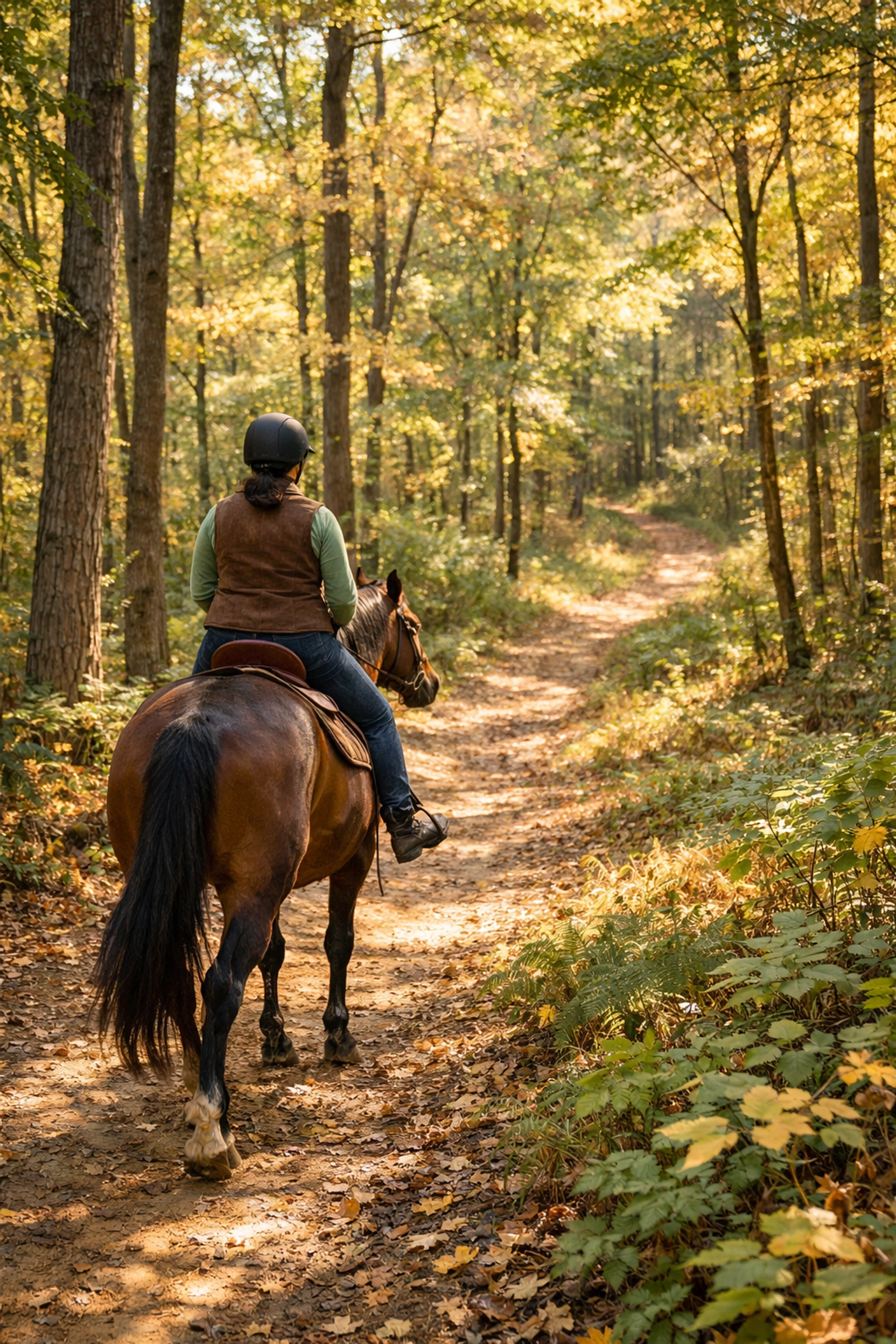
    Horse and rider on wooded trail at Cane Creek Park near Waxhaw NC equestrian properties

    The local riding community actively maintains these resources and welcomes responsible equestrians. This isn't just amenity access, it's integration into an established horse culture that makes daily life easier and more enjoyable.

    What to Scrutinize Before You Buy

    Walk every pasture before you walk through the house. Check fence lines for proper tension and safe construction, you're evaluating years of delayed maintenance or money saved. Examine gates for functionality; cheap hardware means constant repairs.

    Study barn design with critical eyes. Proper ventilation matters more than decorative cupolas. Stall size should accommodate your specific horses comfortably. Aisle width needs to handle your equipment and work style. Feed and tack storage must protect against moisture and pests.

    Evaluate water sources thoroughly. Well capacity, pressure, and water quality directly affect daily operations. Properties relying on single wells for house and barn use require backup plans. Automatic waterers save labor but demand reliable water supply and proper winterization.

    Soil testing reveals what brochures hide. Commission comprehensive testing covering drainage characteristics, nutrient profiles, and pH levels. This data determines whether your pastures will support healthy grazing or demand constant amendment and management.

    Understanding Waxhaw's Practical Advantages

    Location relative to veterinary emergency services matters more at 2 a.m. than during afternoon property tours. Waxhaw's position provides reasonable access to Charlotte's specialized equine hospitals while maintaining the space and quiet horses need for recovery and routine care.

    Proximity to quality feed suppliers, farriers, veterinarians, and equine services creates efficiency in your daily operation. You're not just buying land: you're buying into an infrastructure that supports horse ownership practically and economically.

    The area's established equestrian presence means service providers understand horses first. Your farrier won't cancel because of weather-related access issues. Your vet knows the farm's location without GPS confusion. Your feed supplier delivers on schedule because they service multiple farms along efficient routes.

    Making Your Decision With Confidence

    Buying horse property in Waxhaw requires evaluating multiple complex systems simultaneously: land quality, facility functionality, community fit, and long-term value. The right property supports your specific equestrian goals while fitting your management style and resources.

    Well-maintained pasture fencing on Waxhaw horse farm with grazing horse in background

    Visit properties multiple times, in different weather conditions. Rain reveals drainage issues. Heat exposes ventilation problems. Cold weather shows how facilities actually function when pipes freeze and mud deepens.

    Talk to neighboring horse owners candidly. Ask about farrier availability, vet response times, and any area-specific challenges. The local horse community shares knowledge freely when approached respectfully.

    Consider how the property fits your five-year plan, not just today's needs. Young horses grow into training demands. Breeding programs expand. Competitive goals evolve. Your property should accommodate reasonable growth without requiring immediate facility additions.

    Your Next Steps in Waxhaw

    The Waxhaw equestrian property market rewards prepared buyers who understand both horses and real estate. Properties here attract serious buyers quickly because knowledgeable equestrians recognize quality land and proper facilities.

    Carolina Horse Farm Realty specializes in connecting horse people with properties that actually work: not just properties that look good in photos. We understand the difference between decorative barn features and functional design because we've lived it ourselves.

    Whether you're searching for your first horse farm or upgrading to accommodate a growing program, Waxhaw offers options worth serious consideration. Explore current listings or contact our team to discuss your specific requirements and timeline.

    The right horse farm isn't about finding perfection: it's about finding property that supports the life you're building with your horses. Waxhaw provides the foundation. The rest is up to you.
  • The Best Public Riding Trails Near Charlotte, NC (And the Equestrian Properties Within Minutes of Each One)

    The Best Public Riding Trails Near Charlotte, NC (And the Equestrian Properties Within Minutes of Each One)

    One of the quiet joys of owning an equestrian property isn't just what you build on your own land: it's knowing you're ten minutes from a hundred unspoiled acres where you can point your horse toward the horizon.

    Charlotte's equestrian community has access to something rare in growing metros: public trail systems designed for horses first. Not multi-use paths where you're dodging mountain bikers. Not marginal greenways that tolerate hooves as an afterthought. Actual horse trails, maintained, mapped, and built for the way we ride.

    What matters just as much? Living close enough that trailering becomes a Sunday morning impulse, not an all-day expedition. That proximity: between your farm gate and the trailhead: changes how often you actually go. And it changes which properties become the ones you remember years later.

    Latta Nature Preserve: 1,400 Acres and 15 Miles of Equestrian-Specific Trail

    Located in Huntersville along the Mountain Island Lake shoreline, Latta Nature Preserve has been the Charlotte region's most reliable horse trail system for decades. Fifteen miles of purpose-built equestrian trails wind through mature hardwood forest, along creek crossings, and across terrain varied enough to condition a young horse or challenge an experienced trail mount.

    Aerial view of equestrian trail winding through hardwood forest near Charlotte NC

    The preserve offers dedicated horse trailer parking at the equestrian access point, large enough for multi-horse rigs without the anxiety of squeezing into spaces designed for sedan parking. The trail system includes wide paths suitable for side-by-side riding, single-track sections for more technical work, and elevation changes that keep both horse and rider engaged without becoming treacherous.

    Trail Conditions and Management

    Latta maintains a trail hotline at (980) 314-1004 where riders can verify current conditions before loading up. The trails close when wet: a policy that protects footing quality and respects the land's carrying capacity. This management approach is why, after thirty years of public use, Latta's trails remain well-drained and safe rather than rutted-out mud tracks.

    Equestrian Properties Within 10 Minutes of Latta

    The most desirable horse properties near Latta sit in northern Mecklenburg County and southern Iredell County. Huntersville's rural zoning allows for equestrian facilities on properties as small as two acres, though serious horsekeeping typically requires five acres minimum for proper pasture rotation and arena space.

    Cornelius and Davidson: both within a fifteen-minute trailer ride: offer a mix of established equestrian estates and undeveloped land suitable for custom builds. Properties in this corridor balance trail access with proximity to veterinary services, feed stores, and the professional trainers concentrated along Statesville Road.

    We're seeing increased interest in the 10-20 acre parcels east of I-77, where buyers can build a private facility while maintaining weekly access to Latta's trail system. These properties typically feature mature tree coverage, county water access, and soil composition that supports both arena construction and pasture establishment.

    Love Valley Trail: 2.7 Miles Through the Brushy Mountain Foothills

    Love Valley is less a trail system and more an experience: a preserved slice of the Old West transplanted to Iredell County. The 2.7-mile natural surface trail winds through the foothills of the Brushy Mountains, connecting to the town of Love Valley itself, where hitching posts line Main Street and horses are the preferred mode of transportation.

    Horseback rider at scenic overlook on Love Valley Trail in Brushy Mountain foothills

    The trail prioritizes equestrian use; hikers and cyclists are required to yield to horses. The terrain includes moderate elevation gain, rocky sections that test a horse's sure-footedness, and canopy coverage that provides relief during summer rides. The loop can be ridden in under an hour at a walk, or extended by exploring Love Valley's network of connecting paths and the town's streets themselves.

    After a ride, the town's vintage restaurants and saloons welcome riders: many keep water troughs out front and don't blink when patrons arrive in chaps and spurs. It's one of the few remaining places in North Carolina where a horse is practical transportation, not a curiosity.

    Horse Properties in the Love Valley Corridor

    Love Valley sits roughly 45 minutes north of Charlotte, positioning it at the outer edge of comfortable commuting distance but well within the metro's equestrian sphere of influence. The surrounding area: particularly northern Iredell County: offers some of the region's best value in horse property.

    Land prices drop significantly as you move north of Mooresville, while equestrian infrastructure remains strong. Properties here tend toward larger acreage tracts (20-50 acres), with established pasture, older but serviceable barns, and the kind of privacy that's increasingly difficult to find closer to Charlotte's core.

    Buyers drawn to Love Valley are often looking for authentic working farms rather than manicured estates. The area attracts trail riders, pleasure horse owners, and small breeding operations that value land quality and community over proximity to urban amenities. Properties frequently include timber, multiple ponds, and topography that provides natural pasture drainage.

    Horse trailer parking area at equestrian trailhead near Charlotte NC

    Country Time Equestrian Events: Guided Trail Rides in Indian Trail

    For those new to the area or still searching for their own property, Country Time Equestrian Events in Indian Trail provides a turnkey introduction to Charlotte's trail riding culture. Operating since 1989, the facility offers guided trail rides suitable for beginners through experienced riders, plus the infrastructure for group events and family outings.

    Located just south of Charlotte in Union County, Country Time gives prospective buyers a chance to experience the region's terrain and climate from the saddle before committing to a property purchase. It's not uncommon for clients to spend a Saturday trail riding at a facility like this, then start seriously searching for land the following week.

    Union County's Equestrian Property Market

    Indian Trail, Waxhaw, and the greater Union County corridor represent Charlotte's fastest-growing equestrian market. Zoning here remains horse-friendly, with agricultural exemptions readily available and fewer restrictions on barn construction, arena lighting, and commercial equestrian operations than you'll find in Mecklenburg County proper.

    Properties range from 3-acre mini-farms suitable for two to three horses, up to 50+ acre training facilities with indoor arenas, professional-grade footing, and existing boarding clientele. The area has attracted a critical mass of equestrian professionals: farriers, vets, trainers, bodyworkers: creating a support network that makes horse ownership significantly easier.

    Waxhaw, in particular, has emerged as a hub for serious English riders, with multiple dressage and eventing barns operating within a five-mile radius. The combination of quality land, reasonable pricing (relative to closer-in markets), and established equestrian community makes Union County compelling for buyers who prioritize horse infrastructure over urban proximity.

    What Trail Access Actually Means for Property Values

    Proximity to quality public trails functions as an amenity multiplier. A well-maintained property with good basics: safe fencing, adequate shelter, reliable water: becomes substantially more attractive when it's ten minutes from a public trail system. Buyers consistently pay premiums for this access, particularly when trailering distance is measured in minutes rather than hours.

    The calculation is practical: public trails extend your effective riding space by hundreds or thousands of acres without the maintenance burden. They provide terrain variety your own property can't replicate. They offer social riding opportunities that keep the sport enjoyable rather than isolating. And they serve as conditioning grounds that develop better horses than endless arena circles ever will.

    Horse farm pasture with white fencing in Union County near Charlotte NC

    Properties marketed with explicit references to nearby trail access: complete with accurate drive times and trailer parking details: consistently generate stronger inquiry volume and faster sales timelines. Buyers understand the value proposition immediately, especially those relocating from areas where public equestrian trails are nonexistent.

    Finding Properties That Balance Access and Privacy

    The ideal scenario pairs private horse-keeping space with public trail proximity: enough land to ride, train, and turn out without neighbors watching your every move, positioned close enough to trailheads that weekend rides remain spontaneous rather than orchestrated events.

    In Charlotte's current market, that balance typically requires 10+ acres and a willingness to look beyond Mecklenburg County's inner suburbs. The properties that deliver both elements tend to cluster in specific corridors: northern Mecklenburg near Latta, southern Iredell near Love Valley, and Union County's Waxhaw-to-Weddington arc.

    Working with a real estate team that understands equestrian priorities: one that can map drive times to trailheads, evaluate soil for pasture quality, and assess existing barns for safety and functionality: changes the search process from frustrating to focused. You're not just buying acreage. You're buying into a lifestyle system where your farm and the surrounding equestrian infrastructure work together.

    Making Trail Access Part of Your Search Criteria

    When we work with buyers relocating to Charlotte or trading up from smaller properties, trail proximity often starts as a "nice to have" and quickly becomes a dealbreaker. Once you've experienced the freedom of regular trail access: the mental reset of three miles through woods instead of 45 minutes in an arena: it's difficult to give up.

    If trail riding matters to your program, state that requirement clearly from the beginning. We can filter searches based on drive times to specific trail systems, identify properties where prior owners maintained trailer access routes, and connect you with the equestrian community using those trails regularly. The goal is finding a property where Sunday morning starts with loading up, not with an hour of logistics.

    Horse and rider on wooded trail near Charlotte equestrian properties

    Charlotte's public trail systems represent a resource worth protecting and a feature worth prioritizing in your property search. The right farm, positioned close to trails you'll actually use, becomes something more than a place to keep horses. It becomes the base camp for everything you moved to horse country to experience.

    For detailed information about available equestrian properties near Charlotte's premier trail systems, explore our current listings or reach out directly to discuss how trail access fits into your specific requirements.

  • The Ultimate Guide to Horse Farms for Sale in Waxhaw, NC: Everything You Need to Succeed

    The Ultimate Guide to Horse Farms for Sale in Waxhaw, NC: Everything You Need to Succeed

    Why Waxhaw Continues to Attract Serious Equestrians

    Waxhaw isn't trying to be something it's not. There's no pretense here: just good land, thoughtful horse people, and a community that understands what matters when you're building a life around horses. Located twenty-five minutes southeast of Charlotte, this Union County town has quietly become one of the most desirable equestrian destinations in the Carolina Piedmont.

    The market reflects that demand. With 40+ horse properties currently available and median listing prices around $570,000, Waxhaw offers options for both established operations and first-time farm buyers. The average cost per acre hovers between $50,000 and $52,000: premium pricing that reflects genuine value, not speculation.

    Aerial view of horse farm for sale in Waxhaw NC with fenced pastures and barn

    Understanding the Current Waxhaw Equestrian Market

    The numbers tell part of the story. Across major listing platforms, Waxhaw consistently shows 15-20 active equestrian properties at any given time, with price points ranging from starter farms under $400,000 to established training facilities exceeding $1.5 million. This isn't a market driven by weekend hobbyists: these are working farms, breeding operations, and serious training facilities.

    What sets Waxhaw apart is acreage integrity. Most equestrian listings include 10+ acres with functional improvements: center-aisle barns with proper ventilation, established pasture rotation systems, and arena footings that actually drain. You'll find properties with four to twelve stalls, equipment storage that makes sense for the property size, and fencing that reflects an understanding of horse behavior and safety.

    The area supports diverse disciplines. Dressage riders appreciate the flat terrain and proximity to recognized trainers. Hunter-jumper operations value the established show circuit access and quality footing. Western pleasure and trail riders benefit from direct access to Cane Creek Park's 1,100 acres of riding trails and the nearby Mineral Springs Greenway system.

    What Makes Waxhaw Land Work for Horses

    Soil composition matters more than most buyers initially realize. Waxhaw sits on well-drained Piedmont clay loam that supports healthy pasture growth with proper management. The topography offers gentle rolls: enough for natural drainage without creating unsafe riding terrain. Most properties include a mix of cleared pasture and wooded buffer areas that provide natural windbreaks and summer shade.

    Water access is reliable. Properties typically feature wells capable of supporting both household and barn use, with many including separate meters for agricultural irrigation. The climate allows for nearly year-round turnout with appropriate shelter, reducing the infrastructure demands compared to northern operations.

    Professional equestrian barn interior with horse stalls and center aisle in North Carolina

    Essential Features That Define Quality Waxhaw Horse Properties

    Barn Design and Functionality

    Look beyond stall count. The best properties incorporate proper ventilation systems, concrete center aisles that drain away from stall fronts, and ceiling heights that accommodate hay storage without compromising air quality. Tack rooms should include climate control: this isn't optional in Carolina summers. Wash stalls with hot water hookups and proper drainage prevent the makeshift arrangements that plague poorly planned facilities.

    Arena and Riding Surfaces

    A 50' x 125' arena with maintained footing and adequate lighting represents the baseline for serious training operations. Proper base construction with engineered drainage prevents the mud pit scenario that shuts down winter riding. Sprinkler systems aren't luxury additions: they're essential for dust control and footing maintenance during our increasingly dry summer months.

    Pasture Infrastructure

    Four to six paddocks allow for proper rotation and parasite management. Fencing should combine functionality with appropriate aesthetics: board fence for visibility, vinyl-coated wire for durability, and electric options for training-specific needs. Run-in sheds placed in each major paddock provide weather protection without requiring constant stall management.

    Horse and rider training in professional riding arena at Waxhaw equestrian property

    Zoning Considerations and Agricultural Use in Union County

    Union County regulations generally support equestrian operations, but understanding the specifics prevents costly surprises. Properties designated for agricultural use often qualify for preferential tax treatment, but maintaining that status requires documented farming activity. This doesn't mean commercial boarding: proper pasture management and maintaining horses in appropriate training qualifies.

    Barn placement matters. Setback requirements from property lines typically range from 50 to 100 feet, depending on structure size and use. If you're planning future expansion or additional outbuildings, verify these requirements before purchase. Some properties include existing permits for arenas, round pens, or specialized facilities: transfer procedures should be confirmed during due diligence.

    Commercial boarding operations or training facilities visible from public roads may trigger additional zoning review. This doesn't prohibit the activity, but it requires proper documentation and occasionally a conditional use permit. Working with someone familiar with Union County's specific requirements saves time and frustration.

    The Waxhaw Equestrian Community and Lifestyle

    Proximity to Charlotte provides genuine advantages without urban compromise. Veterinary specialists, farriers with competitive-level experience, and feed suppliers who understand performance nutrition are accessible within twenty minutes. Emergency veterinary care is available through multiple 24-hour facilities.

    The local equestrian community operates with quiet competence. Training professionals run respected programs without the drama that sometimes plagues more competitive regions. Clinicians regularly schedule stops in Waxhaw, and the trailer ride to major show venues: from Southern Pines to Tryon: falls within reasonable distance for weekend competition.

    Historic downtown Waxhaw offers practical amenities alongside its preserved character. Quality restaurants, essential services, and genuine community events create the lifestyle balance that makes rural living sustainable long-term. This matters when you're building a life, not just buying a property.

    Horses grazing in well-maintained pastures with board fencing at Waxhaw horse farm

    What to Prioritize During Your Property Search

    Start with land quality, not aesthetic appeal. Pastures should show evidence of proper management: controlled weed populations, appropriate fencing maintenance, and rotational grazing patterns. Bare spots indicate poor drainage or overstocking. Dense, consistent grass coverage suggests soil health and responsible stewardship.

    Evaluate barn systems with a practical eye. Check electrical panels for adequate amperage to support clippers, heaters, and power tools. Inspect water lines for proper insulation and shutoff valve locations. Look at how manure management is handled: proper composting areas positioned for equipment access but away from water sources demonstrate thoughtful planning.

    Consider your actual riding discipline and training needs. A breeding operation requires different infrastructure than a hunter-jumper training facility. An eventing program needs cross-country terrain that a dressage-focused property doesn't provide. Match property capabilities to your specific program requirements, not generic "horse property" features.

    Working With Specialists Who Understand Equestrian Operations

    The difference between a general residential agent and someone who genuinely understands equestrian properties becomes apparent during negotiations and due diligence. Specialists recognize when arena footing is properly engineered versus decorative stone dust. They understand which barn repairs are cosmetic and which indicate structural concerns. They know appropriate price points for various acreage sizes and improvement levels.

    Proper representation includes connections to equestrian-specific service providers: inspectors who understand barn construction standards, lenders familiar with agricultural property financing, and attorneys experienced with farm operation contracts. This network prevents the learning curve that costs time and money.

    Historic downtown Waxhaw NC main street with shops and tree-lined sidewalks

    Finding Your Place in Waxhaw's Equestrian Landscape

    Successful horse property purchases in Waxhaw result from clear priorities and patient evaluation. The market moves: quality properties attract serious buyers quickly: but rushing into the wrong property creates years of correction and compromise.

    Define your must-have features versus nice-to-have amenities. Determine whether you're buying for immediate use or planning phased development. Understand your actual budget including reserves for inevitable improvements and maintenance.

    Waxhaw offers the land, the community, and the infrastructure to support serious equestrian operations. What you bring is clarity about your program needs and patience to find the right match.

    If you're ready to explore horse farms in Waxhaw with someone who speaks your language, our team brings both equestrian credibility and local market expertise. We're here when you're ready to have an informed conversation about what's actually available and what makes sense for your operation.

  • The Ultimate Guide to Horse Farms for Sale in Waxhaw, NC: Everything You Need to Succeed

    The Ultimate Guide to Horse Farms for Sale in Waxhaw, NC: Everything You Need to Succeed

    If you've been making the drive to your barn before dawn, navigating traffic from the city just to get saddle time, you already know the truth: the right property changes everything. Waxhaw has quietly become one of the Charlotte Metro's most sought-after equestrian communities: not because of marketing, but because horse people who live here understand what matters.

    Understanding the Waxhaw Equestrian Market

    The current market reflects steady demand from serious horsemen and women who recognize quality land when they see it. Approximately 17-20 active listings typically populate the market at any given time, with additional properties available through specialized equestrian channels. The average listing price hovers around $539,000 to $571,000, translating to roughly $50,000-$52,000 per acre: a premium that reflects the infrastructure, soil quality, and location advantages this area provides.

    These aren't inflated numbers disconnected from value. They represent land that's been thoughtfully developed with equestrian use in mind, in a location that offers genuine proximity to Charlotte without sacrificing the space horses need to thrive.

    Aerial view of horse farm for sale in Waxhaw NC with white-fenced pastures and barn

    Why Waxhaw Works for Horse Properties

    Named after the Waxhaws Native American tribe, this area has maintained its connection to the land while growing strategically. What separates Waxhaw from other bedroom communities is the deliberate preservation of agricultural character. Zoning remains favorable for horse operations, neighbors understand that 5 AM feeding schedules are normal, and the infrastructure: from veterinary services to feed stores: supports equestrian life.

    The soil composition in Waxhaw supports healthy pasture growth with proper management. The region's geology provides natural drainage advantages that reduce mud management issues common in other parts of Mecklenburg and Union Counties. This matters more than granite countertops when you're evaluating whether a property will work for your horses long-term.

    Essential Property Features in Waxhaw Listings

    Quality Waxhaw equestrian properties typically include purpose-built infrastructure, not hastily converted farm buildings. A representative example demonstrates the standard: a 10-acre estate might feature a four-stall barn with proper ventilation and hay loft storage, multiple fenced pastures with safe footing, a dedicated equipment storage building, and a lighted arena measuring 50' x 125' with irrigation capabilities.

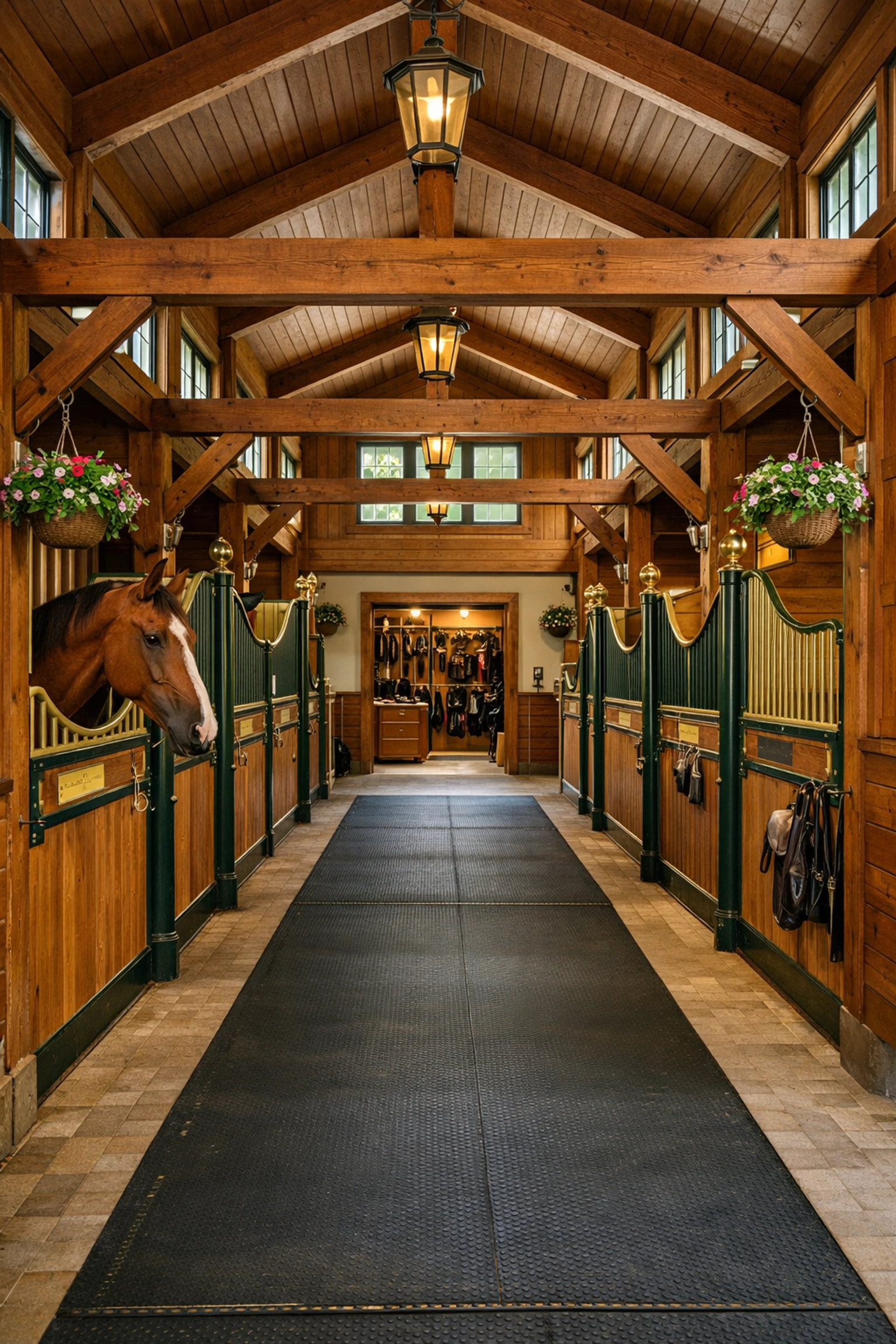
    Professional horse barn interior with stalls and center aisle at Waxhaw equestrian property

    These features aren't luxury add-ons: they're the foundation of functional horse keeping. When evaluating properties, prioritize:

    Barn Design and Placement: Proper orientation for airflow, adequate stall size (12'x12' minimum), concrete or rubber mat aisles, and strategic positioning relative to pastures and home.

    Pasture Configuration: Adequate acreage per horse (2-3 acres minimum in North Carolina), rotational grazing capability, water access in each paddock, and safe, visible fencing throughout.

    Arena and Riding Areas: Proper footing material, drainage systems, lighting for year-round use, and size appropriate for your discipline: dressage requires different dimensions than barrel racing.

    Water and Utilities: Multiple frost-free hydrants, adequate electrical service for barn operations, and three-phase power if you're considering adding amenities like heated wash stalls or an indoor arena.

    Location Benefits: Proximity Without Compromise

    Waxhaw sits approximately 25 miles south of Charlotte's center: close enough for professional commutes, far enough to maintain agricultural character. This positioning provides access to Cane Creek Park's 1,100 acres of trails and the developing Mineral Springs Greenway system, offering riding opportunities beyond your property boundaries.

    The local equestrian community includes active organizations, regular clinics with visiting professionals, and informal networks that make settling into the area straightforward. You'll find farriers with reasonable scheduling, veterinarians familiar with sport horse medicine, and hay suppliers who understand quality matters.

    Rolling pastures and countryside landscape of Waxhaw NC horse farm country

    Property Types and Price Considerations

    The Waxhaw market serves different segments of the equestrian community:

    Starter Properties (5-10 acres): Typically $400,000-$650,000, these farms suit 2-4 horses with basic amenities. Expect a modest barn, limited arena facilities, and opportunities for improvement.

    Established Farms (10-25 acres): The $650,000-$1,200,000 range provides complete infrastructure: quality barns, riding arenas, proper fencing, and homes that match the property's equestrian value.

    Premium Estates (25+ acres): Above $1,200,000, properties include indoor arenas, multiple barns, advanced facilities for breeding or training operations, and exceptional homes. These represent turnkey operations for serious professionals.

    Making the Purchase Decision

    Buying horse property differs fundamentally from residential real estate. The land evaluation requires equestrian expertise: soil composition, drainage patterns, pasture conditions, and infrastructure quality determine whether a property succeeds long-term.

    Schedule inspections during wet weather to observe drainage. Walk fence lines completely. Test arena footing. Verify water pressure at distant paddocks. These details reveal more than any home inspection about whether a property functions for horses.
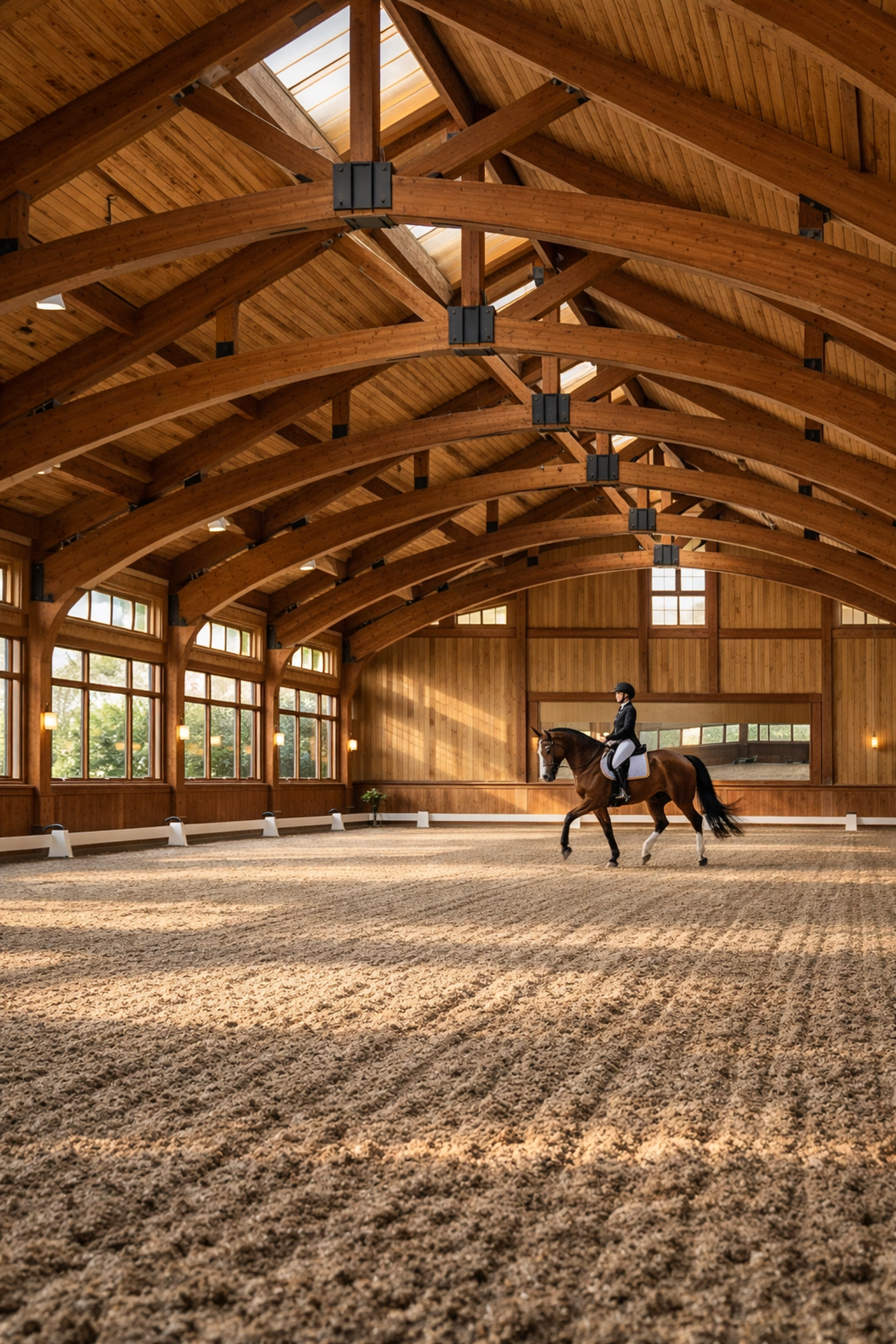
    Lighted outdoor riding arena at Waxhaw equestrian property with rider training at dusk

    Consider future intentions. A property perfect for two pleasure horses becomes inadequate if you decide to start a lesson program or breed. Adequate space, proper zoning, and infrastructure capacity to expand matter more than initially apparent.

    Financing and Practical Considerations

    Equestrian properties often require specialized financing understanding. Rural property loans, acreage considerations, and barn valuations differ from suburban residential mortgages. Work with lenders experienced in agricultural and equestrian properties who understand that a quality barn represents significant legitimate value.

    Factor ongoing costs realistically: pasture maintenance, fence repair, arena dragging, and property upkeep exceed typical homeownership expenses. Properties that appear less expensive initially may cost more long-term if infrastructure requires immediate replacement or significant systems need upgrading.

    Working with Specialized Representation

    The properties currently available in Waxhaw represent varied opportunities, but finding the right match requires understanding both real estate mechanics and equestrian requirements. An agent who rides, who understands why corner feeders matter and can evaluate barn construction quality, provides value beyond transaction management.

    Questions about specific properties, market timing, or how current listings match your requirements deserve conversations with professionals who speak horse first, real estate second. The Waxhaw market moves quickly for quality properties: inventory turns over as horse people recognize value and act decisively.

    Your Next Steps

    If Waxhaw's combination of location, land quality, and equestrian community aligns with your needs, the current market provides opportunities worth exploring. Whether you're transitioning from boarding, expanding an existing operation, or relocating to the Charlotte area, understanding what's available and how properties compare requires current market knowledge.

    The right property doesn't just house your horses: it enables your equestrian goals, whether that's focused training, breeding programs, or simply coming home to your horses each evening. Waxhaw offers that possibility with infrastructure and community to support success.

    Ready to explore what's currently available? Browse our specialized equestrian listings or reach out to discuss how specific properties might match your requirements. We evaluate properties the way horse people do( because that's who we are.)

  • The Ultimate Guide to Horse Farms for Sale in Waxhaw, NC: Everything You Need to Succeed

    The Ultimate Guide to Horse Farms for Sale in Waxhaw, NC: Everything You Need to Succeed

    Where Southern Charm Meets Equestrian Excellence

    Waxhaw sits at the crossroads of what every horse owner wants: genuine rural character, workable land, and proximity to essential services. This isn't manufactured "horse country": it's the real thing, preserved by people who understand that horses need space, routine, and neighbors who get it.

    If you're searching for horse farms for sale in the Charlotte Metro area, Waxhaw deserves your serious attention. The market here reflects something rare: affordability meeting quality, with properties designed by horse people for horse people.

    The Current Waxhaw Equestrian Market

    The numbers tell a compelling story. As of early 2026, Waxhaw offers approximately 17-45 active horse property listings, depending on your search parameters. Average listing prices sit around $539,000 to $571,000, with land costs averaging $50,000-$52,000 per acre.

    These figures matter because they represent actual value: not inflated prices driven by suburban sprawl or developer speculation. You're paying for functional acreage, not proximity to shopping centers.

    What's Currently Available:

    • Properties ranging from 5 to 50+ acres
    • Established barns with 4-12 stalls
    • Functional arena facilities (both outdoor and covered)
    • Pasture systems with proper drainage
    • Equipment storage and hay facilities
    • Homes ranging from modest farmhouses to updated estates

    The inventory fluctuates seasonally, but Waxhaw maintains consistent availability: a sign of a healthy, stable market rather than boom-bust cycles.

    Aerial view of horse farm for sale in Waxhaw NC with pastures, white fencing, and red barn

    Why Waxhaw Works for Horses

    Understanding local terrain isn't optional: it determines everything from pasture rotation to vet bills. Waxhaw's geography delivers several practical advantages.

    Soil and Drainage

    The soil composition here leans toward Carolina clay with decent organic content. This means:

    • Pastures hold up well under grazing pressure
    • Proper drainage systems prevent chronic mud issues
    • Fertilization programs show good response
    • Trees establish easily for shade and wind breaks

    The rolling topography naturally channels water away from barn areas when properties are laid out correctly. Look for farms where previous owners worked with the land, not against it.

    Climate Realities

    North Carolina weather requires year-round management. Waxhaw's four-season climate means:

    • Mild winters that rarely disrupt turnout schedules
    • Hot, humid summers demanding shade and water access
    • Spring mud season lasting 4-6 weeks
    • Fall conditions ideal for arena work and trail riding

    Your property should include run-in sheds in every pasture, adequate tree coverage, and reliable water systems that won't freeze during occasional cold snaps.

    Essential Property Features to Prioritize

    Not all "horse farms" function equally. After years evaluating equestrian properties across the Charlotte Metro, certain features separate functional farms from expensive headaches.

    Barn Infrastructure

    Your barn determines daily efficiency more than square footage or aesthetics. Evaluate:

    • Stall size and layout: 12×12 minimum, with center aisle width allowing equipment passage
    • Ventilation design: Ridge vents, Dutch doors, and cross-breeze capability
    • Footing: Concrete aisles with proper slope for cleaning
    • Utilities: Water hydrants in multiple locations, adequate electrical service
    • Storage: Separate areas for feed, bedding, and tack

    A well-designed 6-stall barn outperforms a poorly planned 12-stall facility every time.

    Well-designed horse barn interior with spacious stalls and center aisle in North Carolina

    Pasture Systems

    The quality of your grazing land directly impacts feed costs and horse health. Assess:

    • Acreage per horse: 2-3 acres minimum for sustainable rotation
    • Fence condition: Board, post-and-rail, or high-tensile wire properly installed
    • Water access: Automatic waterers or frost-free hydrants
    • Shelter: Run-in sheds positioned for wind protection
    • Grass quality: Established stands of fescue, orchardgrass, or bermuda

    Pastures showing bare patches, erosion channels, or standing water indicate previous management issues or poor design.

    Arena and Training Facilities

    Whether you're maintaining fitness or running a business, arena quality matters. Waxhaw properties often feature:

    • 100' x 200' outdoor arenas with proper footing (sand, rubber, or mixed)
    • Covered arenas for year-round work
    • Round pens for groundwork and training
    • Adequate lighting for evening rides

    The footing base: often overlooked: determines longevity and safety. Proper drainage underneath prevents the constant maintenance cycle that ruins most arenas within five years.

    Zoning and Land Use Considerations

    Union County's zoning regulations affecting equestrian properties remain relatively horse-friendly compared to more urbanized areas. Current regulations typically allow:

    • Agricultural exemptions for working farms
    • Boarding operations under agricultural use
    • Training facilities with proper permitting
    • Limited commercial activities tied to equestrian use

    Key Questions Before You Buy:

    • Does the property qualify for agricultural tax status?
    • Are there deed restrictions limiting horse numbers or facilities?
    • What's the minimum lot size for subdivision if you're considering future flexibility?
    • Are there upcoming zoning changes in surrounding parcels?

    Properties within planned developments may have HOA restrictions on barn aesthetics, trailer parking, or manure management. Read every covenant before making an offer.

    Healthy horse pastures with board fencing and run-in shed on NC equestrian property

    The Waxhaw Equestrian Community

    Beyond property lines, Waxhaw offers genuine community infrastructure for horse owners. This matters more than most buyers initially recognize.

    Local Resources:

    • Multiple veterinary practices specializing in equine care within 20-minute response time
    • Farriers with established client routes through the area
    • Feed stores stocking quality hay and supplements year-round
    • Trailer repair and towing services familiar with local farms

    Trail Access:

    Waxhaw connects to the Mineral Springs Greenway and sits near Cane Creek Park's 1,100-acre trail system. Off-property riding options extend your horses' experience and your own sanity during summer stall rest periods.

    Competition and Training:

    The area supports multiple disciplines without requiring constant trailering. Within 30-45 minutes you'll find:

    • Hunter/jumper training facilities
    • Dressage barns with experienced instruction
    • Eventing courses for schooling
    • Western performance and trail training options

    Practical Considerations for Out-of-Area Buyers

    If you're relocating to the Charlotte Metro for equestrian opportunities, Waxhaw's location delivers strategic advantages.

    Distance and Access:

    • 30 minutes to Charlotte Douglas International Airport
    • 25 minutes to downtown Charlotte
    • 15 minutes to quality veterinary hospitals
    • 5 minutes to historic Waxhaw village

    The rural setting doesn't mean isolation. Highway access via NC-16 and proximity to I-485 keeps Charlotte amenities accessible while maintaining the quiet most horses (and their owners) need.

    Employment Flexibility:

    Many Waxhaw horse farm owners work remotely or commute to Charlotte for professional careers. The area attracts both dedicated equestrian professionals and serious amateurs who need property that functions independently during workday hours.

    Rider training horse in outdoor arena at equestrian property near Waxhaw

    Investment Perspective

    Real estate decisions require both emotional and financial clarity. Waxhaw's horse farm market demonstrates several positive indicators:

    • Stable appreciation tied to land value, not speculation
    • Consistent rental demand for quality equestrian facilities
    • Lower property taxes compared to Mecklenburg County
    • Agricultural exemptions reducing annual carrying costs

    Properties here sell based on functionality and location, not trendy amenities that don't age well. This creates a more predictable value trajectory for long-term owners.

    Making Your Decision

    Finding the right horse farm requires patience and clear priorities. Before scheduling property tours, determine:

    1. Your daily horse management approach: Full turnout, stall board, or mixed?
    2. Income requirements: Personal use only, or partial boarding to offset costs?
    3. Future flexibility: Room to expand facilities or subdivide if plans change?
    4. Commute tolerance: How often will you travel to Charlotte?

    The best properties move quickly in Waxhaw's market. Working with a real estate team that understands equestrian operations: not just "land with a barn": makes the difference between finding exactly what you need and settling for almost right.

    Your Next Steps

    Waxhaw's combination of functional properties, established community, and accessible location creates opportunities for serious horse owners building their ideal operation. The market rewards buyers who understand what horses actually need and how farms function long-term.

    Ready to explore what's currently available? View our current listings of horse farms for sale in Waxhaw and the greater Charlotte Metro area, or connect with our team to discuss your specific requirements. We evaluate every property from a horse person's perspective( because that's exactly what you deserve.)

  • The Ultimate Guide to Horse Farms for Sale in Waxhaw, NC: Everything You Need to Succeed

    The Ultimate Guide to Horse Farms for Sale in Waxhaw, NC: Everything You Need to Succeed

    There's something about Waxhaw that just feels right when you're looking for horse property. Maybe it's the rolling terrain that's ideal for pasture rotation, or the fact that you can still find properties with genuine acreage less than forty minutes from Charlotte. Whatever draws you here, you're looking at one of the most resilient equestrian markets in the Charlotte Metro area, and for good reason.

    The Current Waxhaw Horse Farm Market

    As of early 2026, Waxhaw maintains a healthy inventory of equestrian properties, with approximately 43-45 active listings available in Union County. This is significant, while some markets have seen horse property inventory tighten considerably, Waxhaw continues to offer options for serious buyers.

    Average asking prices currently range from $539,000 to $570,917, with land costs averaging $50,000-$51,660 per acre. That pricing reflects something important: you're paying for established equestrian infrastructure, better soil quality than you'll find closer to the city, and a community that actually understands horses aren't just a hobby.

    Aerial view of horse farm for sale in Waxhaw NC with fenced pastures and barn

    Why Serious Equestrians Choose Waxhaw

    The Land Quality Matters

    Waxhaw sits in Union County's agricultural corridor, where soil conditions support quality pasture without the constant amendments required in more developed areas. The terrain offers natural drainage advantages, critical for anyone who's dealt with mud management in North Carolina's clay-heavy regions. You'll find properties here with established pasture systems, mature tree lines for summer shade, and topography that actually works with your farm layout instead of against it.

    Trail Access Without Compromise

    Few areas offer the combination Waxhaw delivers: private acreage with legitimate public trail access nearby. Mineral Springs Greenway provides riding trails, while Cane Creek Park's 1,100 acres includes designated equestrian trails that see regular maintenance. This matters when you're managing multiple horses, some days you need your own space, other days variety keeps both you and your horses mentally engaged.

    Zoning That Works

    Union County maintains agricultural zoning classifications that protect equestrian use. Properties zoned for agricultural purposes allow commercial boarding, training operations, and breeding facilities without the restrictive conditional use permits required in more suburban counties. If you're planning anything beyond personal use, this administrative simplicity matters significantly.

    Well-designed horse barn interior with stalls and center aisle in Waxhaw property

    What to Look for in Waxhaw Horse Properties

    Barn and Arena Infrastructure

    The best properties in Waxhaw feature barns designed by people who actually work with horses. Look for:
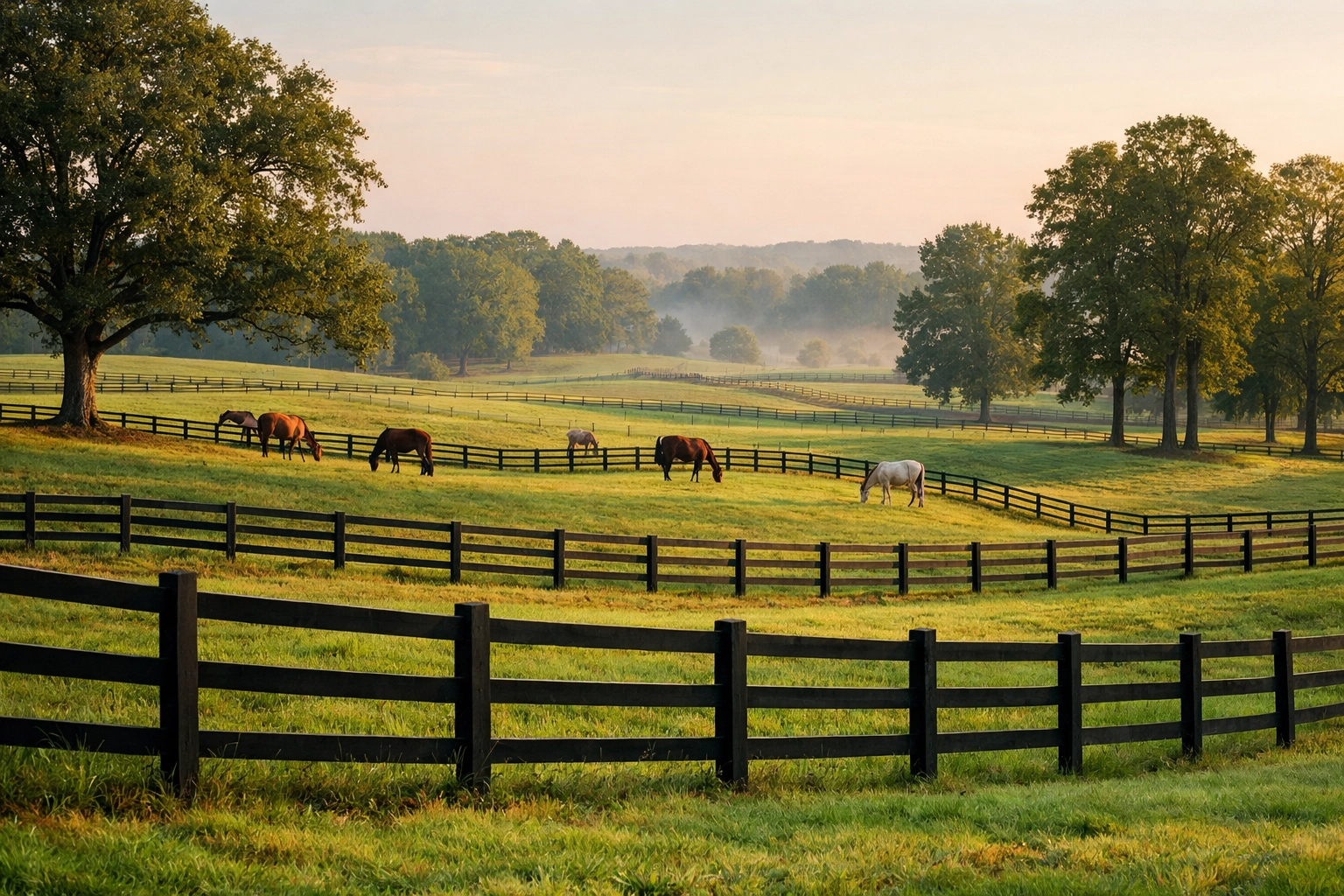
    • Stall dimensions of at least 12×12 feet with adequate ceiling height
    • Concrete aisles with proper pitch for drainage
    • Hay storage separated from stall areas (insurance and fire safety)
    • Natural ventilation systems, not just fans attempting to compensate for poor design
    • Tack rooms with climate consideration for leather care

    Arena quality varies dramatically. A 50×125-foot lighted arena with proper footing and sprinkler system, like the one at Break Away Farm, represents genuine value. Dirt dumped in a fenced rectangle does not. Look for engineered footing, proper base preparation, and drainage systems that function year-round.

    Pasture Configuration

    More acreage doesn't automatically mean better horse property. A well-designed 10-acre farm with proper pasture rotation outperforms a poorly managed 40-acre property. Evaluate:

    • Fencing quality and configuration (board fencing still commands premium pricing here)
    • Access to water in each pasture
    • Shade availability and natural windbreaks
    • Separation capability for multiple horse groups
    • Run-in sheds or shelter options beyond the main barn

    Water and Utilities

    Well water systems should be evaluated by someone familiar with equestrian demands: multiple horses consume significant water daily. Check well capacity, recovery rates, and system age. Properties with county water access eliminate one variable, though you'll pay for that convenience in monthly costs.

    Three-phase electrical service isn't common in rural Waxhaw, but if you're considering heated/cooled barn spaces or planning commercial operations, verify service capacity with the local utility provider before closing.

    Horses grazing in maintained pastures on Waxhaw NC equestrian property

    Featured Property Types in the Market

    Turnkey Training Facilities

    Properties like Trinity Ridge Farm: featuring nearly 46 acres with complete equestrian infrastructure: represent the upper tier of the Waxhaw market. These properties attract professionals relocating from more expensive markets or buyers consolidating multiple horses from boarding situations. Expect full arena systems, multiple pastures, and housing that accommodates both family living and potential staff quarters.

    Developing Farm Properties

    Many Waxhaw properties offer substantial acreage with basic infrastructure: perhaps a modest barn and perimeter fencing: allowing buyers to customize remaining development to their specific discipline and program needs. This approach often provides better long-term value if you're willing to invest in improvements over time.

    Boutique Acreage

    The 10-15 acre properties, when properly designed, serve personal horse owners exceptionally well. Break Away Farm exemplifies this category: enough space for effective pasture management and privacy, without the maintenance demands of larger acreage. These properties often feature higher-end residential finishes, acknowledging that many buyers prioritize both equestrian function and quality living spaces.
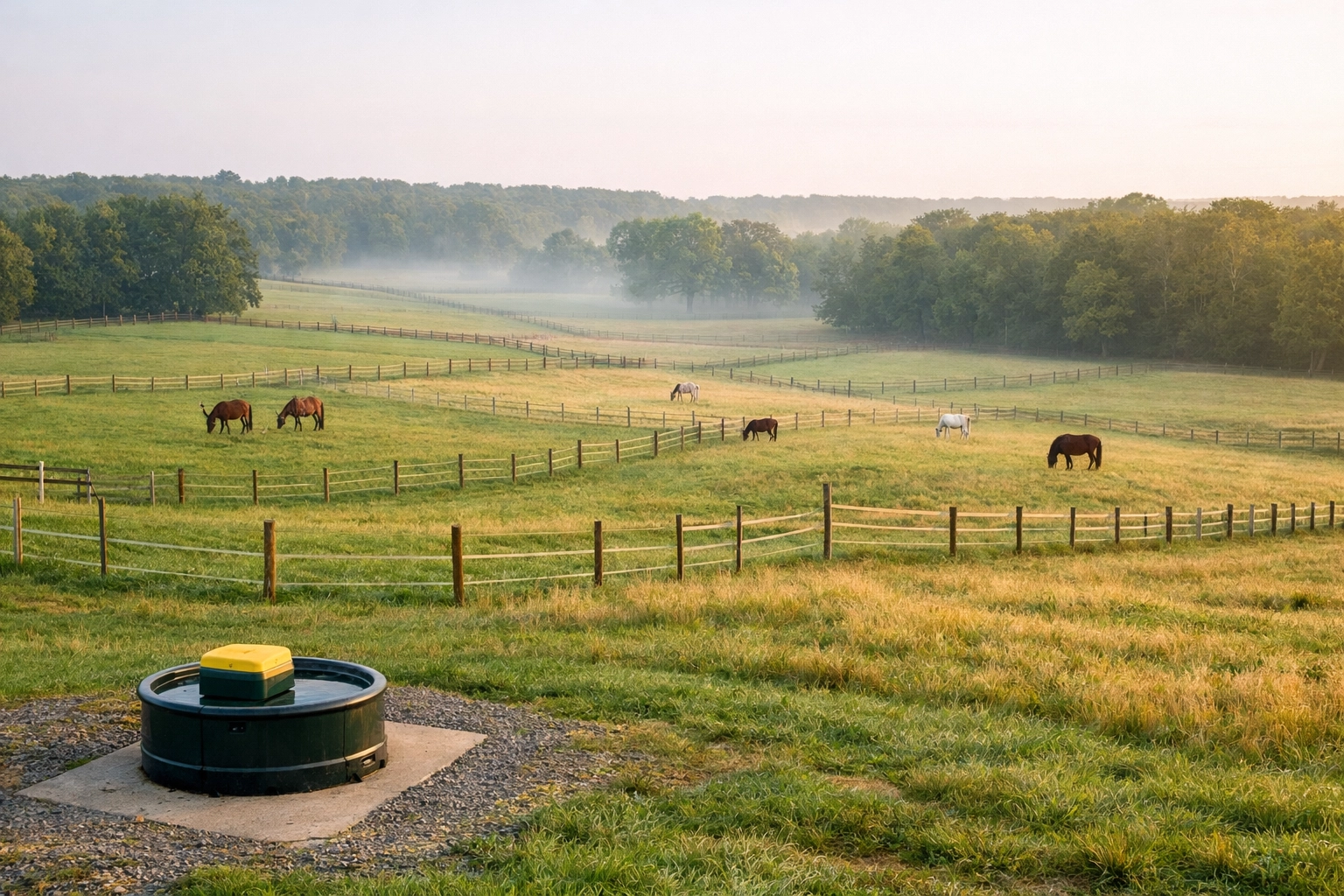
    The Lifestyle Component

    Living in Waxhaw means you're part of an established equestrian community without the stuffiness sometimes found in more exclusive markets. You'll find serious dressage riders, hunter/jumper trainers, eventers, and western discipline enthusiasts. The local farrier schedule stays busy, veterinarians understand the area's geography, and feed stores stock quality options beyond basic sweet feed.
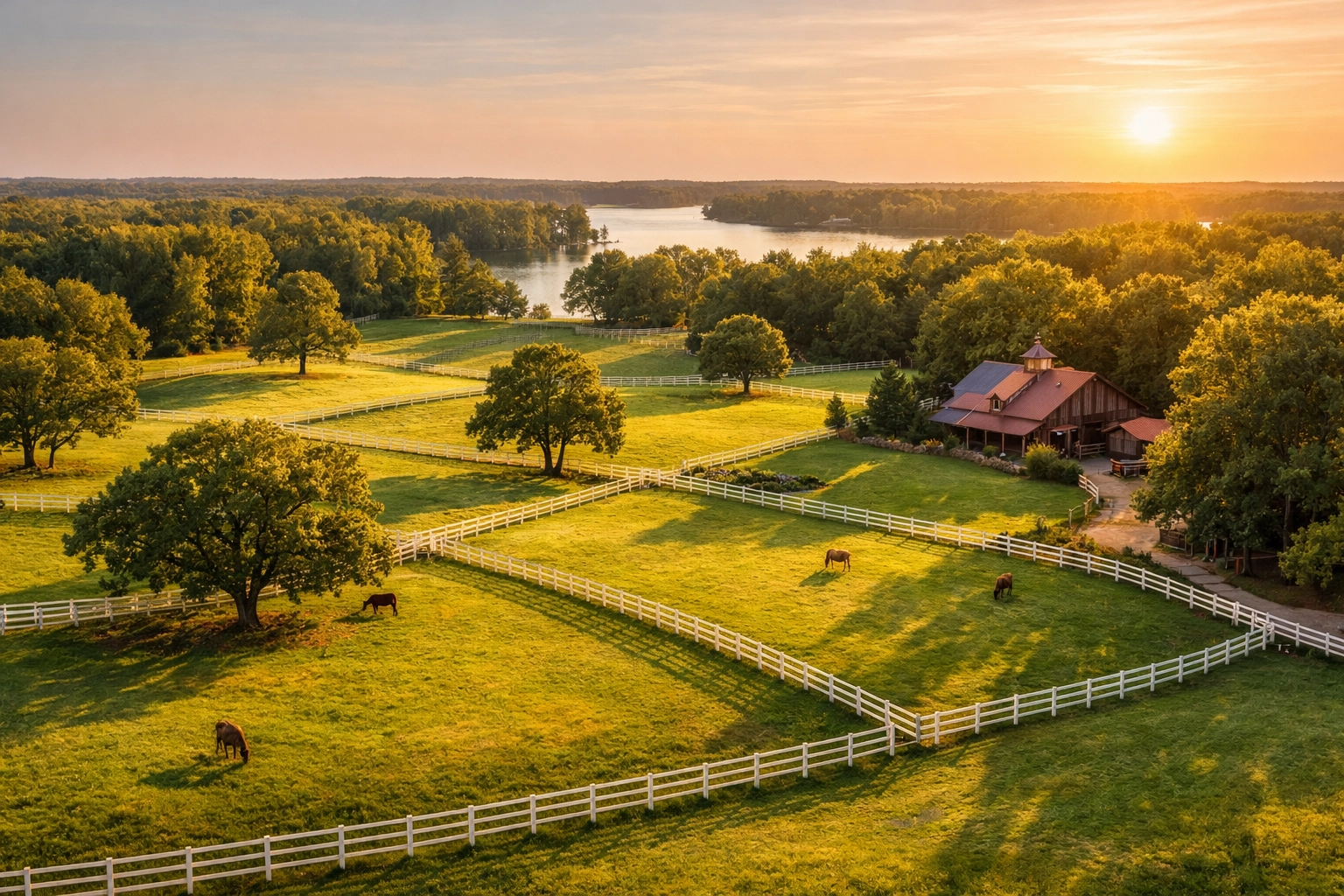
    The town itself maintains historical character: this isn't generic suburban sprawl with a few horses scattered about. Agricultural heritage matters here, visible in preserved properties and community resistance to overdevelopment.

    Lighted riding arena on horse farm with quality footing and fencing in Waxhaw

    Practical Considerations Before You Buy

    Work with Someone Who Understands Equestrian Properties

    The difference between a general real estate agent and someone who actually knows horse properties becomes evident the moment you start evaluating barn layouts, pasture conditions, and infrastructure costs. Questions about footing drainage, stall ventilation, and arena positioning aren't exotic: they're baseline due diligence.

    Budget Beyond Purchase Price

    Even turnkey properties require ongoing investment. Quality hay in North Carolina isn't cheap, fencing maintenance is continuous, and facility improvements always cost more than initial estimates suggest. Properties priced at the area average ($540,000-$570,000) typically require $15,000-$30,000 annually for basic maintenance, more if you're running a commercial operation.

    Visit Multiple Times

    See the property in different weather conditions. That arena that looks perfect on a sunny afternoon may reveal drainage issues after rain. Pasture conditions change seasonally. Drive the access road in winter: some properties become significantly less accessible in adverse weather.

    Making Your Decision

    Waxhaw offers something increasingly rare in the Charlotte Metro area: legitimate horse farms at prices that haven't completely detached from reality. You're buying into an established equestrian community with quality land, reasonable zoning, and infrastructure that works.

    The properties moving fastest right now share common characteristics: proper equestrian infrastructure designed by people who understand horses, land quality that supports sustainable pasture management, and locations that balance privacy with access to amenities and trails.

    If you're serious about finding horse property in the Charlotte area: whether you're relocating from another market, moving horses off boarding, or starting a professional operation: Waxhaw deserves thorough consideration. The inventory exists, the community supports equestrian use, and the land delivers what horses actually need.

    Elegant farmhouse with horse pastures on equestrian estate in Waxhaw NC

    We work with buyers navigating this market daily, helping evaluate properties through an equestrian lens first and a real estate lens second. If you'd like to discuss current listings or want guidance on what's actually worth considering in Waxhaw, reach out to our team. We can help you move past marketing descriptions to understand what you're actually getting: and what you're not.

    The right horse farm is out there. Finding it requires patience, proper evaluation, and someone who understands that barn layout matters more than granite countertops.