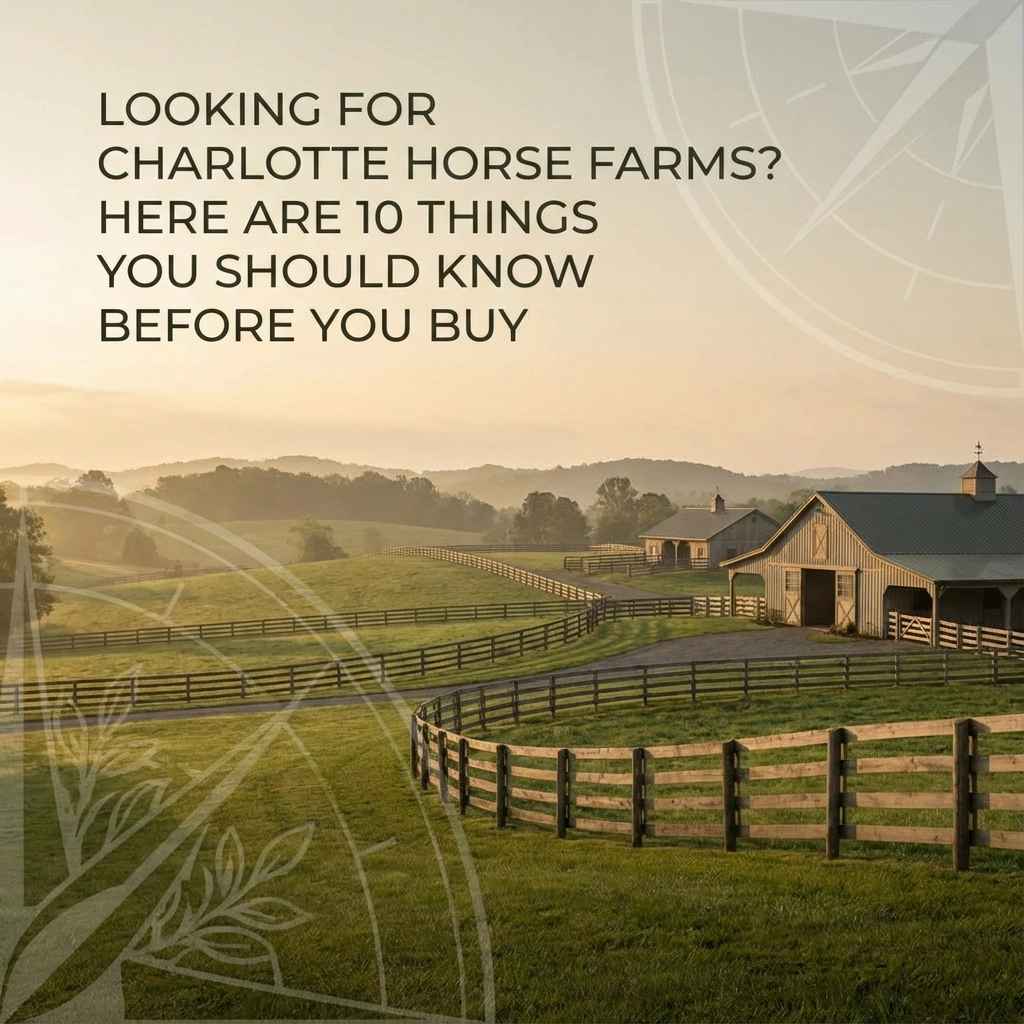
Purchasing an equestrian property in the Charlotte Metro area requires specialized knowledge that goes far beyond traditional real estate considerations. Our team has guided hundreds of buyers through successful horse farm acquisitions, and we understand the unique requirements that make the difference between a dream property and a costly mistake.
The Charlotte region offers exceptional opportunities for equestrian enthusiasts, from rolling pastures in Union County to established farms in Mecklenburg and surrounding areas. However, each property presents distinct challenges that require careful evaluation before making an investment decision.
1. Water Supply Infrastructure Determines Your Property's Viability
The foundation of any successful horse operation starts with adequate water supply. Your property must provide at least 12 gallons per minute (gpm) to support basic equestrian operations, with higher requirements for larger facilities.
We evaluate well capacity, water quality, and distribution systems during every property assessment. Properties with insufficient water supply face expensive infrastructure upgrades that can add tens of thousands to your initial investment.
Municipal water connections offer reliability but come with ongoing costs and potential restrictions during drought conditions. Well water provides independence but requires regular testing and maintenance to ensure safety for both horses and humans.
2. Soil Quality Directly Impacts Pasture Performance and Long-Term Costs
Soil composition determines pasture productivity, drainage characteristics, and your ongoing maintenance expenses. Clay-heavy soils common in parts of Charlotte create drainage challenges but retain nutrients effectively. Sandy soils drain well but require more frequent fertilization.
Professional soil testing reveals pH levels, nutrient content, and organic matter percentages that directly affect grass growth and horse health. Properties with poor soil conditions require significant ongoing investment in lime, fertilizer, and overseeding programs.

Converting wooded acreage to productive pasture demands multiple growing seasons and substantial financial commitment. Tree removal, soil preparation, seeding, and establishment create a timeline that extends well beyond your initial purchase date.
3. Local Zoning and Land Use Regulations Shape Your Development Options
Charlotte Metro counties maintain distinct agricultural zoning requirements that determine permitted uses, building restrictions, and animal density limits. Some areas restrict the number of horses per acre, while others limit commercial equestrian activities.
Weddington, Waxhaw, and Matthews each maintain specific ordinances governing barn construction, manure management, and property setbacks. Understanding these regulations before purchase prevents costly surprises during development phases.
Land disturbance policies vary significantly between jurisdictions, with some requiring permits for tree removal or pasture development. These requirements can delay your timeline and increase development costs substantially.
4. Fencing Systems Provide Safety While Defining Property Boundaries
Proper fencing represents both a safety necessity and a significant financial investment. Vinyl, wood, metal, and electric fence systems each offer distinct advantages for different applications and budgets.
Never consider properties with barbed wire fencing suitable for horses without factoring replacement costs into your purchase decision. Safe fencing prevents injuries that create veterinary expenses and liability issues.
Perimeter fencing establishes property boundaries and security, while interior fencing creates paddocks and rotational grazing areas. Quality installation requires professional expertise to ensure proper tension, spacing, and gate functionality.
5. Exercise Areas and Riding Facilities Enhance Property Value and Functionality
Adequate exercise space goes beyond basic turnout requirements to include riding trails, arenas, and specialized training areas. Properties without these features limit your horses' development and your enjoyment of equestrian activities.
Arena construction requires proper base preparation, drainage systems, and quality footing materials. Existing arenas need evaluation for safety, maintenance requirements, and suitability for your intended disciplines.

Trail systems add significant value to rural properties while providing natural exercise opportunities. Evaluate trail conditions, maintenance requirements, and connectivity to regional trail networks when assessing property potential.
6. Barn Infrastructure Determines Daily Operation Efficiency
Barn condition, layout, and ventilation systems directly impact horse health and your daily management efficiency. Well-designed facilities reduce labor requirements while providing safe, comfortable environments for horses.
Proper ventilation prevents respiratory issues and maintains air quality during extreme weather conditions. Natural ventilation through strategic placement and mechanical systems both require evaluation for effectiveness and maintenance needs.
Storage areas for feed, equipment, and supplies must provide adequate capacity while maintaining security and accessibility. Insufficient storage creates ongoing logistical challenges and increased operating costs.
7. Topography Affects Both Property Functionality and Personal Accessibility
Land slope influences drainage patterns, pasture usability, and facility placement options. Level terrain suits formal disciplines like dressage, while varied topography offers natural conditioning opportunities for horses.
Steep slopes create erosion challenges and limit pasture productivity, while poorly draining low areas become unusable during wet periods. Understanding drainage patterns prevents future problems with facility placement and pasture management.
Personal accessibility becomes increasingly important as property owners age. Evaluate walking distances, elevation changes, and facility accessibility for long-term usability and safety considerations.
8. Local Equestrian Support Services Determine Operational Success
Proximity to qualified veterinarians, farriers, and support services directly affects your ability to maintain horses effectively. Charlotte Metro areas vary significantly in service availability and quality.
Emergency veterinary care requires rapid response capabilities that may not be available in remote locations. Establishing relationships with local practitioners before purchase ensures continuity of care for your horses.
Feed suppliers, equipment dealers, and transportation services create the support network necessary for efficient operations. Rural properties may face higher costs and limited availability for essential services.

9. Financing Requirements Differ Significantly from Traditional Real Estate
Conventional loan programs typically apply to properties under 10 acres where the residence comprises at least 70% of the total property value. Larger operations require specialized agricultural lending with different qualification criteria.
Lenders evaluate business plans, income projections, and management experience when considering agricultural loans. Properties intended for commercial operations face more stringent requirements than hobby farms or private use facilities.
Down payment requirements often exceed traditional residential standards, with some programs requiring 25-30% initial investment. Interest rates and terms may differ from conventional mortgages based on property type and intended use.
10. Clear Priority Definition Prevents Costly Purchasing Mistakes
Successful horse property purchases begin with honest assessment of actual needs versus aspirational wants. Creating detailed priority lists prevents emotional decisions that exceed practical requirements or budget constraints.
True needs include essential facilities for your current horses and immediate plans. Wants represent desirable features that enhance enjoyment but don't affect basic functionality. Nice-to-haves are luxury features that can be added later if budget permits.
Modern buyers often seek properties that balance functionality with personal enjoyment rather than large-scale commercial operations. Understanding your actual requirements prevents overbuying or selecting properties unsuitable for your intended use.
Partner With Specialists Who Understand Equestrian Real Estate
Charlotte Metro horse property transactions require expertise that extends far beyond traditional real estate knowledge. Our team's deep understanding of equestrian requirements, local regulations, and property evaluation ensures successful purchases that meet both immediate needs and long-term goals.
We guide clients through every aspect of the evaluation process, from water system assessment to zoning compliance verification. Our comprehensive approach prevents costly mistakes while identifying properties with the greatest potential for your specific requirements.
Ready to find your perfect Charlotte area horse farm? Contact Carolina Horse Farm Realty today to begin your search with confidence and expert guidance.
Leave a Reply