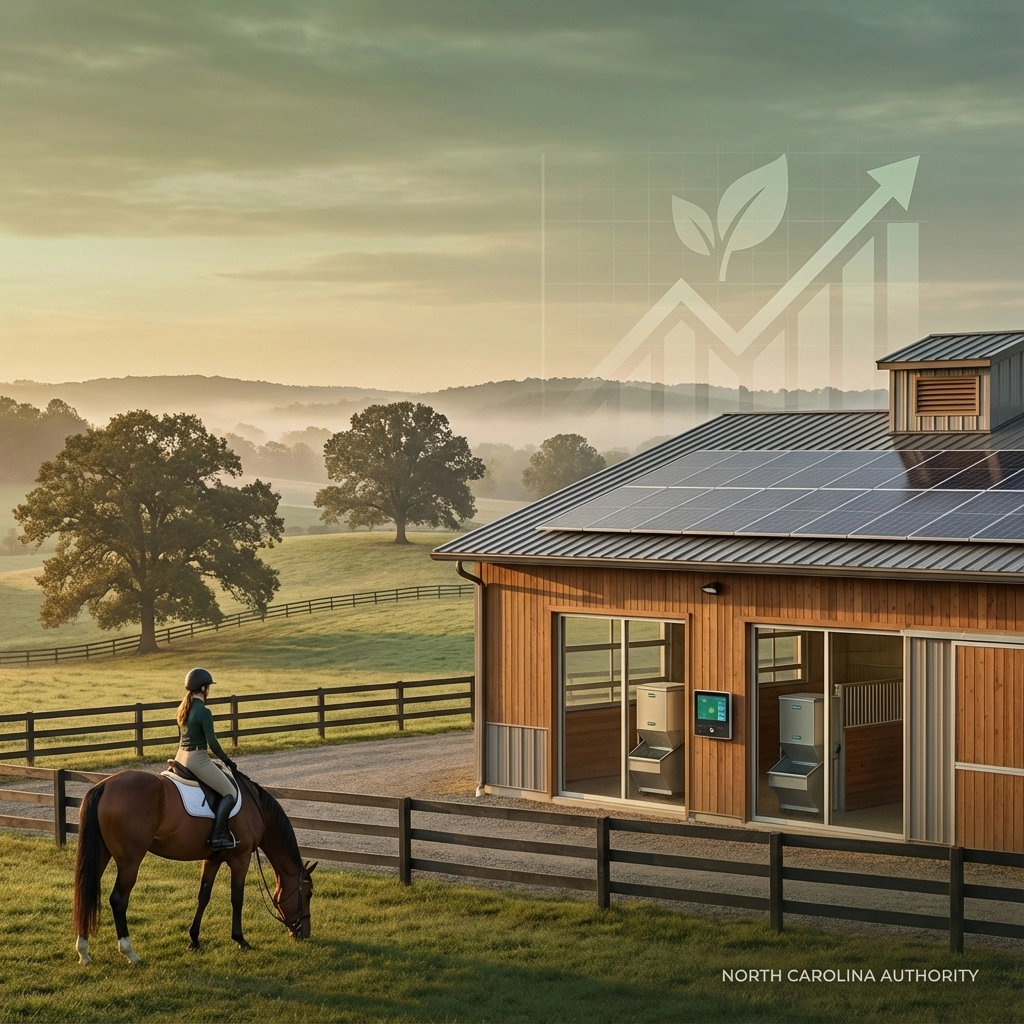
The short answer: Solar panels deliver proven ROI within 8-10 years, while smart stable technology requires careful cost-benefit analysis based on your operation's specific needs.
After analyzing installation costs, maintenance requirements, and long-term savings potential across dozens of horse properties in North Carolina, we've found that eco-friendly upgrades can significantly enhance both operational efficiency and property value: but only when implemented strategically.
The Solar Panel Reality Check: Numbers That Matter
Installation Investment: Expect $15,000-$30,000 for a comprehensive farm solar system, with smaller barn-focused setups starting around $5,000-$8,000. The federal government currently offers a 30% tax credit, effectively reducing your upfront investment by nearly one-third.
Payback Timeline: A 1-kilowatt system serving a barn with $150 monthly electricity bills typically pays for itself in 8.2 years. After that payoff period, you're generating essentially free electricity for the remaining 20+ years of the system's warranty period.
Energy Cost Reduction: Well-designed solar installations can slash annual energy costs by up to 70%, with many horse farm owners eliminating utility bills entirely during peak production months.

Maintenance Reality: Solar panels require virtually no ongoing maintenance. No moving parts mean no mechanical failures, and most systems come with 25-30 year warranties that guarantee performance levels.
The most compelling aspect isn't just the financial return: it's the operational independence. Rural horse properties often face higher utility rates and less reliable grid power. Solar provides energy security that keeps water pumps running, barn lights functioning, and climate systems operating regardless of grid issues.
Smart Stable Technology: Beyond the Marketing Hype
Smart stable systems encompass automated feeding, climate control, stall monitoring, and health tracking technology. Unlike solar panels with their straightforward ROI calculation, smart technology benefits vary dramatically based on operation size and management style.
Automated Feeding Systems: Range from $2,000-$15,000 depending on barn size. These systems reduce labor costs and ensure consistent feeding schedules, particularly valuable for facilities managing 20+ horses or operating with limited staff.
Climate Control Integration: Advanced ventilation and temperature management systems typically cost $5,000-$12,000 per barn. The health benefits are measurable: consistent air quality reduces respiratory issues and veterinary costs.
Monitoring and Alert Systems: Stall sensors, camera systems, and health monitoring devices range from $500-$3,000 per stall. For breeding operations or facilities housing high-value horses, these systems provide peace of mind that justifies the investment.

Labor Efficiency: The real value often lies in time savings rather than direct cost reduction. Automated systems allow one person to effectively manage larger operations or free up time for training and client services.
However, smart technology introduces complexity that solar panels don't. You're adding electronic systems that require technical support, software updates, and eventual replacement cycles every 10-15 years.
ROI Analysis: When the Numbers Make Sense
Solar panels deliver predictable returns because electricity costs are rising while solar equipment costs continue falling. The math is straightforward: calculate current annual electricity costs, factor in the 30% tax credit, and determine payback timeline.
For a typical 50-stall facility spending $400 monthly on barn electricity, a $25,000 solar installation (after tax credit: $17,500) pays for itself in approximately 6.5 years and generates $60,000+ in savings over its 25-year lifespan.
Smart stable ROI requires operation-specific analysis. A breeding farm with night foaling may see immediate value in stall monitoring systems, while a training facility might prioritize automated feeding for consistent schedules.
Consider these factors when evaluating smart technology:
- Current labor costs and availability
- Horse value and insurance considerations
- Operational scale and growth plans
- Technical comfort level and support access

Property Value Impact: The Buyer Perspective
Eco-friendly upgrades increasingly influence horse property values, particularly as utility costs rise and environmental consciousness grows among buyers.
Solar installations transfer directly to new owners with remaining warranty coverage and established performance history. Buyers recognize the immediate operational benefit and long-term cost savings.
Smart stable technology appeals to specific buyer segments but may require explanation and demonstration. Technology-forward buyers appreciate automation and monitoring capabilities, while traditional horsemen may view complex systems as unnecessary complications.
Infrastructure quality matters most. Well-designed solar installations and professionally integrated smart systems enhance property appeal, while DIY solutions or cutting-edge technology nearing obsolescence can actually detract from value.
The key is implementing upgrades that demonstrate operational benefits without overwhelming potential buyers with complexity they can't maintain.
Implementation Strategy: Maximizing Your Investment
Start with solar as your foundation upgrade. The financial case is proven, installation is straightforward, and benefits begin immediately. Size your system based on current electrical usage plus anticipated growth.
Phase smart technology implementation based on operational priorities. Begin with systems that address your biggest pain points: whether that's labor efficiency, animal monitoring, or feed management consistency.
Plan for integration from the beginning. Solar systems can power smart stable technology, but this requires proper electrical planning during installation. Retrofitting power systems later adds unnecessary cost and complexity.

Location considerations matter significantly in North Carolina. Our coastal regions offer excellent solar potential but require corrosion-resistant equipment. Mountain properties may need modified mounting systems for snow loads and wind conditions.
Financing options expand accessibility. Solar loans, equipment financing, and lease programs allow you to begin saving immediately while spreading installation costs over time. Many horse farm owners finance solar installations and use monthly savings to fund smart stable upgrades.
The Technology Evolution Factor
Solar panel technology has matured: efficiency improvements are incremental, and current systems will remain relevant for decades. Smart stable technology continues evolving rapidly, making strategic timing important.
Avoid bleeding-edge technology that may become obsolete before providing full value. Choose established systems with proven track records and reliable support networks.
Plan for scalability. Start with core systems that can expand as needs grow or technology improves. Modular approaches allow gradual investment while maintaining operational flexibility.
Consider local support availability. High-tech systems require knowledgeable service providers. Rural locations may struggle with specialized support for complex automation systems.

Making the Decision: Your Next Steps
Eco-friendly horse farm upgrades deliver genuine value when aligned with operational needs and implemented thoughtfully. Solar panels offer proven financial returns and energy independence that benefit virtually every horse property. Smart stable technology provides operational advantages that vary significantly based on facility size, management style, and specific challenges.
The most successful approach combines proven technology with strategic implementation. Begin with solar to establish your renewable energy foundation, then add smart systems that address your specific operational priorities.
We've guided numerous horse farm owners through these upgrade decisions, analyzing costs, benefits, and implementation strategies specific to North Carolina properties. Each operation presents unique considerations that influence which technologies provide the greatest value.
Ready to explore how eco-friendly upgrades could enhance your horse farm's efficiency and value? Let's discuss your specific situation and develop a strategy that delivers measurable returns while supporting your long-term goals.
At Carolina Horse Farm Realty, we understand that horse properties require specialized knowledge of both equestrian operations and real estate markets. Our team combines deep industry expertise with comprehensive market knowledge to help horse farm owners make informed decisions about property improvements and investments.
Leave a Reply