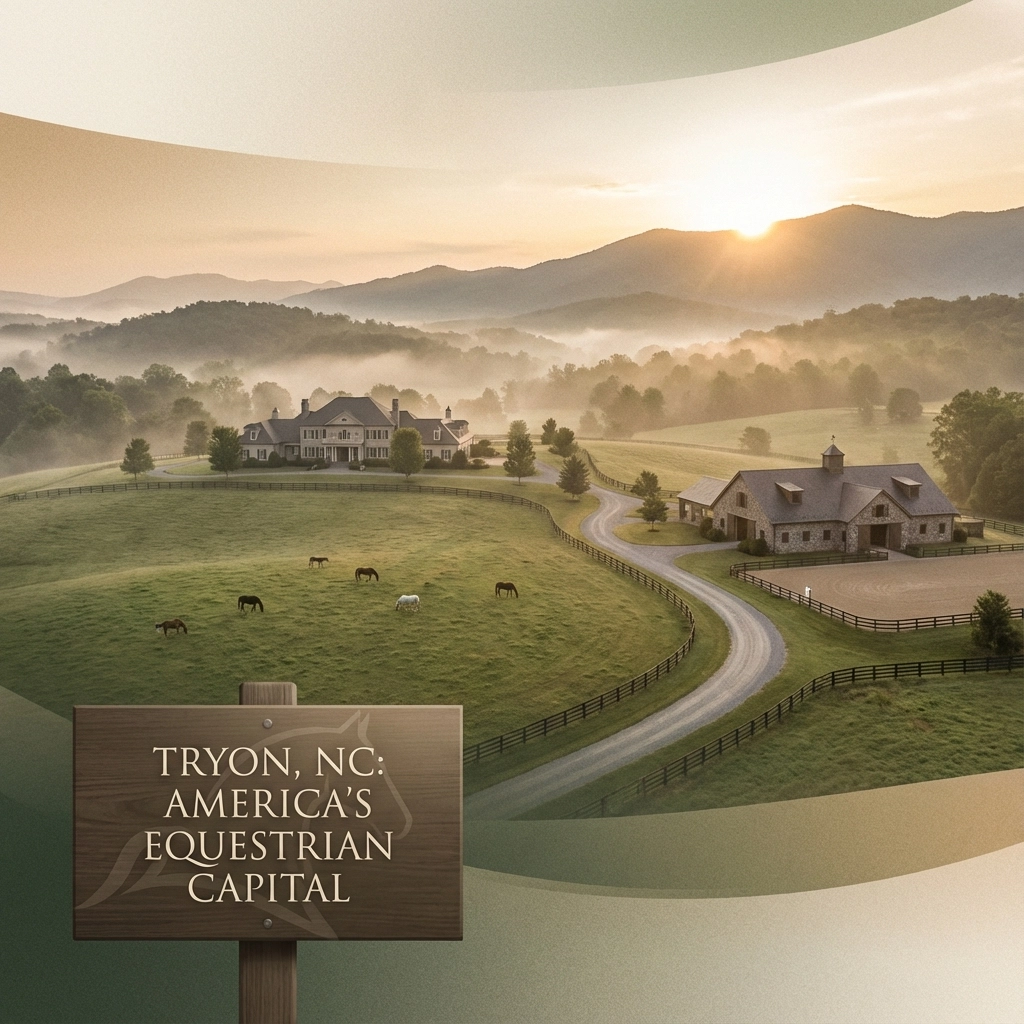
When people ask us about the most significant development in North Carolina's equestrian landscape over the past decade, there's only one answer: Tryon International Equestrian Center. This 1,600-acre facility in Mill Spring has fundamentally changed what it means to own horse property in the western Carolinas, and smart buyers are taking notice.
The Rise of a World-Class Equestrian Destination
Since opening in 2014, TIEC has hosted more than just competitions, it's created an entirely new ecosystem for equestrian living. The facility's selection to host the 2018 FEI World Equestrian Games wasn't just an honor; it was a declaration that this corner of North Carolina could compete with Wellington, Aiken, or any other established equestrian hub in America.
The numbers tell the story: over 300,000 visitors during the World Games alone, generating more than $200 million in economic impact. But for horse property buyers, what matters more is what happened next. The infrastructure, services, and culture that developed around TIEC created a self-sustaining equestrian community that continues to grow year after year.

What Makes Tryon Different for Horse Property Owners
Most equestrian centers focus solely on competition. TIEC was designed as a lifestyle destination from day one. The facility hosts competitions from March through December across every discipline, show jumping, dressage, eventing, combined driving, even PBR rodeo. This year-round activity means consistent demand for boarding, training, and temporary housing for visiting competitors.
For property owners in the area, this translates to opportunities that simply don't exist in other markets. We've seen clients purchase farms within a 30-minute radius of TIEC and successfully operate short-term rental businesses for competitor families, seasonal boarding for out-of-state horses, and training programs that capitalize on the world-class facilities nearby.
The venue's resort-style amenities, boutique shopping, fine dining, luxury accommodations, also mean that horse properties in the area attract buyers who want more than just good footing and fencing. They want the complete equestrian lifestyle, with social and cultural activities that complement their riding.
The Geographic Advantage
Tryon sits in the foothills of the Blue Ridge Mountains, offering natural advantages that most equestrian areas can't match. The terrain provides excellent natural drainage for pastures, varied topography for interesting trail rides, and cooler summers than the coastal plains. The location between Charlotte, Asheville, Spartanburg, and Greenville means you're never more than an hour from a major airport or metropolitan amenities.
But here's what many buyers don't realize: the soil composition in this region is particularly well-suited for horses. The combination of mountain runoff and piedmont clay creates rich, well-draining pastures that support higher stocking rates than typical Carolina land. We regularly see successful operations running one horse per 1.5 acres, where other areas might require 2-3 acres per horse.

Market Impact: What We're Seeing
Since TIEC's establishment, we've tracked significant changes in the local horse property market. Quality horse farms within a 15-mile radius have appreciated at rates 15-20% above the regional average. More importantly, these properties are selling faster and attracting buyers from much wider geographic areas.
Five years ago, most of our Tryon-area clients were local or regional. Today, we're working with buyers from Florida, Virginia, Kentucky, and even California who specifically want to be part of this emerging equestrian community. The profile of these buyers has also evolved, we're seeing more young professionals who can work remotely but want access to world-class riding, and more established equestrians who are relocating from oversaturated markets like Wellington.
The rental market has been equally transformed. Quality horse properties near TIEC that offer short-term accommodations during major shows command premium rates. We've seen well-positioned properties generate enough rental income during peak season to cover six months of carrying costs.
Infrastructure Development: The Ripple Effect
TIEC's presence has catalyzed infrastructure improvements throughout the area that benefit all horse property owners. Feed stores have expanded their inventory and services. Veterinary practices have grown and specialized. Farriers from across the region now maintain regular routes through Tryon. The density of equestrian services is approaching what you'd find in established markets like Middleburg or Lexington.
Transportation infrastructure has also improved dramatically. The roads leading to TIEC have been upgraded to handle horse trailer traffic, and the North Carolina Department of Transportation has prioritized maintenance on routes that serve the equestrian community. For horse property owners, this means better access and lower transportation costs for everything from hay delivery to emergency veterinary calls.

What This Means for Different Types of Buyers
Competitive Riders: Access to world-class facilities for training and competition without the cost and complexity of Wellington or other established markets. Many top trainers now maintain winter or year-round operations in the Tryon area.
Lifestyle Buyers: The opportunity to live the equestrian dream with access to cultural amenities, fine dining, and social activities that rival any resort destination. The presence of TIEC attracts like-minded neighbors who share your passion for horses.
Investment-Oriented Buyers: A rapidly developing market with strong fundamentals and multiple revenue streams. Properties positioned correctly can generate income from boarding, training, short-term rentals, and appreciation.
Retirees and Semi-Retirees: A lower cost of living than traditional equestrian markets, combined with excellent healthcare (due to proximity to Spartanburg Regional Medical Center) and year-round mild weather suitable for riding.
The Challenges to Consider
Every market has its complexities, and Tryon is no exception. The rapid growth has led to increased property taxes in some areas, though they remain well below levels in established equestrian markets. Competition for quality properties has intensified, particularly those with easy access to TIEC or excellent trail connections.
The seasonal nature of some activities means that certain businesses and services operate at variable capacity throughout the year. While this creates opportunities for some property owners, it also means that revenue streams tied to the competition calendar can be unpredictable.
Water rights and well capacity can also be concerns on some properties, particularly at higher elevations. The increasing demand for horse properties has put pressure on existing water infrastructure in some areas.

Looking Forward: The Next Decade
TIEC's ten-year track record demonstrates that this isn't a temporary phenomenon or speculative bubble. The facility has consistently attracted major competitions, maintained high occupancy rates, and continued to invest in facility improvements. The 2024 season saw record attendance at several events, and the competition calendar for 2025 is already largely booked.
More significantly, we're seeing the development of satellite facilities and services that suggest a maturing market. Private boarding and training facilities have opened to serve the overflow demand. Custom home builders now specialize in equestrian properties. Local governments have adopted zoning and development policies that support rather than hinder agricultural and equestrian land use.
The integration of TIEC with the broader western North Carolina tourism and recreation economy also provides stability that purely equestrian markets often lack. The venue hosts non-equestrian events throughout the year, and the surrounding area benefits from Asheville's reputation as a destination for outdoor recreation and agritourism.
Making Your Move in the Tryon Market
For buyers considering horse property in the Tryon area, timing and positioning are crucial. The best opportunities often come from understanding the subtle differences between various sub-markets within the region. Properties with direct trail access to TIEC command premium prices, but those with good road access and their own quality facilities can offer better value.
We've found that successful buyers in this market take the time to understand the seasonal rhythms of the equestrian community. Visiting during major competitions provides insight into the energy and potential of the area, but touring properties during quieter periods often reveals more about their practical suitability for year-round horse keeping.
The most important factor is working with someone who understands both the local real estate market and the specific requirements of horse properties. TIEC's influence extends well beyond its physical boundaries, and evaluating properties requires knowledge of how they fit into the broader equestrian ecosystem that has developed around this world-class facility.
Whether you're looking for a training base, a lifestyle property, or an investment opportunity, Tryon represents something rare in today's equestrian real estate market: a destination that has achieved critical mass while still offering room for growth. For the right buyer, with the right property, this may be the opportunity that defines the next chapter of your equestrian journey.
Mountain Horse Farms vs. Coastal Plains: Why Elevation Matters More Than You Think

After twenty years of matching clients with horse properties across North Carolina, one question comes up repeatedly: mountains or coastal plains? The answer isn't as straightforward as many buyers assume, and the decision often comes down to factors that have little to do with personal preference and everything to do with practical horse keeping.
The Hidden Costs of Elevation
Mountain horse farms look spectacular in photographs. Rolling hills, mountain views, and dramatic seasonal changes create the postcard-perfect equestrian setting that many buyers envision. But elevation brings challenges that can significantly impact both your budget and your horses' wellbeing.
At elevations above 2,000 feet, which covers much of the prime horse country around Tryon, Hendersonville, and the Asheville area, winter weather becomes a serious consideration. We've seen buyers from Florida or Southern California underestimate the impact of ice storms, extended freezing periods, and the logistics of maintaining water systems at elevation.
Hay costs increase substantially in mountain areas, primarily due to transportation logistics. While the coastal plains can produce multiple cuttings of quality hay per season, mountain properties often rely on hay trucked in from lower elevations. We typically see mountain properties paying 20-30% more for quality hay, and that difference compounds over years of ownership.

Soil Composition: The Foundation of Everything
The coastal plains offer sandy loam soils that drain well and support excellent grass growth with proper management. These soils warm earlier in spring, extending the growing season, and generally require fewer amendments to maintain healthy pastures.
Mountain soils tend toward clay-based compositions with rock outcroppings that can complicate fence installation and arena construction. However, these soils often have higher mineral content, which can reduce the need for supplemental feeding if managed correctly. The key is understanding what you're working with before you buy.
We always recommend soil testing as part of the due diligence process, regardless of location. But mountain properties, in particular, can have dramatic soil variations across relatively small areas due to erosion patterns and rock formations.
Water: The Make-or-Break Factor
Mountain properties typically enjoy abundant water from springs and wells, but gravity flow systems require careful planning to ensure adequate pressure throughout the property. Coastal properties often deal with higher mineral content in well water and may face seasonal water table fluctuations.
The regulatory environment around water rights also differs significantly. Mountain properties may have spring rights or creek access that come with specific legal considerations. Coastal properties are more likely to deal with irrigation restrictions and saltwater intrusion issues, particularly in areas within 20 miles of the coast.
Pasture Management: Two Different Playbooks
Coastal plains pastures can support year-round grazing with proper rotation, but they require more intensive management to prevent overgrazing and maintain soil health. The longer growing season means more frequent mowing, fertilization, and weed control.
Mountain pastures typically have shorter growing seasons but may require less intensive management due to natural diversity in plant species and slower growth rates. The challenge is maintaining productivity during shorter grazing seasons and managing steep slopes that can be prone to erosion.
We've found that successful mountain horse operations often require 25-30% more acreage per horse to account for seasonal variations in pasture productivity, while coastal plains operations can often maintain higher stocking rates with intensive management.

Infrastructure Considerations
Building costs vary significantly between regions, but not always in the ways buyers expect. While mountain properties may face higher costs for site preparation and utility installation due to terrain challenges, coastal properties often require more substantial drainage systems and may face stricter building codes in flood-prone areas.
Road maintenance is a often-overlooked cost factor. Mountain properties with long driveways or private roads face ongoing maintenance challenges that can cost thousands annually, particularly if the property includes steep grades or areas prone to washouts.
Coastal properties may require elevated construction or special foundation work in flood zones, but generally offer easier access for delivery vehicles and emergency services.
Climate and Horse Health
The temperature moderation that elevation provides can be a significant advantage for horses, particularly those with heavy coats or breeds that struggle with heat and humidity. Mountain properties typically see summer temperatures 10-15 degrees cooler than coastal areas, which can reduce heat stress and extend comfortable riding seasons.
However, humidity control in barns becomes more challenging in mountain areas where temperature swings can be dramatic. Coastal properties benefit from more consistent temperatures but must deal with higher humidity levels that can contribute to respiratory issues and hoof problems if not properly managed.
Market Dynamics and Resale
Mountain horse properties typically appreciate more slowly but hold value more consistently during market downturns. The scenic appeal and limited supply of quality mountain horse land provide a floor for values, but the smaller buyer pool can mean longer selling times.
Coastal plains properties often see more volatile appreciation patterns but benefit from larger buyer pools that include both equestrian and agricultural users. The versatility of flatter terrain makes these properties appealing to a broader range of potential buyers.

Transportation and Access
Proximity to major highways and airports favors coastal plains properties in most cases. Mountain properties may offer spectacular settings but can add hours to travel times for competitions, veterinary emergencies, or simple errands.
This access factor becomes particularly important for competitive riders who need regular access to training facilities, shows, and specialized veterinary care. We've seen mountain property owners struggle with the logistics of getting horses to coastal competitions, particularly during winter months when mountain roads can become treacherous.
Making the Right Choice for Your Situation
For buyers prioritizing scenery, cooler summers, and a more traditional "horse country" aesthetic, mountain properties often deliver an unmatched experience. These properties tend to attract buyers who plan to spend significant time at home and value privacy and natural beauty over convenience.
Coastal plains properties appeal to buyers who prioritize practical horse keeping, year-round riding weather, and easy access to urban amenities and competition venues. These properties often work better for commercial operations or riders who maintain active competition schedules.
The decision often comes down to lifestyle priorities and operational needs rather than simple preference. Mountain properties require owners who are prepared for seasonal challenges and higher operational complexity. Coastal plains properties reward buyers who value efficiency and consistency in their horse-keeping operations.
Understanding these differences before you start looking can save months of time and prevent expensive mistakes. Both mountain and coastal plains horse properties can provide excellent equestrian experiences, but success in either environment requires matching the property characteristics to your specific needs and management capabilities.
Whether you're drawn to misty mountain mornings or the practical advantages of level terrain, the key is understanding what you're signing up for before you fall in love with a view.
Why Charlotte Metro Horse Properties Are Selling 40% Faster Than Rural Farms

The data doesn't lie: horse properties within 45 minutes of Charlotte are spending an average of 67 days on market, compared to 112 days for similar properties in rural counties. This isn't just a temporary market quirk, it represents a fundamental shift in how buyers prioritize location versus land when shopping for equestrian properties.
The Commuter Equestrian Revolution
Twenty years ago, serious horse people lived in the country, period. Today's buyers are different. They're technology professionals who can work remotely, medical specialists who need hospital access, and young families who want top-rated schools alongside quality horse facilities. These buyers are driving the surge in demand for Charlotte-accessible horse properties.
We're seeing buyers pay premium prices, often 15-20% above comparable rural properties, for horse farms in Union County, southern Mecklenburg, and northern Lancaster County. The value proposition isn't just convenience; it's lifestyle integration that allows serious horse ownership without social or professional isolation.
The numbers support this trend. In 2023, 68% of our Charlotte metro horse property sales went to buyers relocating from other states, compared to just 34% in rural counties. These buyers typically have higher budgets and move faster when they find properties that meet their criteria.

Infrastructure: The Hidden Value Driver
Rural horse properties often win on price per acre, but Charlotte metro properties deliver infrastructure advantages that justify premium pricing. Municipal water and sewer availability, high-speed internet, and reliable electricity with underground utilities create operating efficiencies that rural properties simply cannot match.
We recently worked with a client comparing a 25-acre property in Union County versus a 40-acre farm in Montgomery County. The Union County property cost $180,000 more, but the buyer's analysis showed annual savings of $8,000 in utilities, internet, and water costs, plus significantly reduced maintenance headaches.
Emergency services access represents another often-overlooked advantage. Large animal veterinarians can reach metro properties in 30 minutes during peak hours, compared to 60-90 minutes for remote rural locations. For buyers with valuable horses or breeding operations, this access can be worth tens of thousands of dollars in a single emergency situation.
School Districts: The Family Factor
Quality schools drive much of the premium pricing in Charlotte metro horse properties. Union County, in particular, offers some of the state's top-rated schools combined with agricultural zoning that supports serious horse operations. Young families are willing to pay substantially more for properties that allow them to pursue equestrian goals without compromising their children's educational opportunities.
We've tracked this trend carefully: families with children under 18 represent 45% of Charlotte metro horse property buyers, compared to just 28% in rural areas. These families typically have higher household incomes and more urgency in their buying timelines, both factors that contribute to faster sales and premium pricing.
The Professional Services Ecosystem
Charlotte metro horse properties benefit from proximity to specialized professional services that support serious equestrian operations. Equine hospitals, specialty farriers, and experienced large animal veterinarians maintain denser coverage areas around the metro region.
The concentration of equestrian professionals also creates networking opportunities that can be valuable for both amateur and professional horsemen. We see Charlotte metro buyers building relationships with trainers, veterinarians, and other horse professionals that enhance both their horses' care and their own development as horsemen.

Competition Access and Training Opportunities
Major equestrian competitions increasingly favor venues with good highway access and proximity to airports for competitor convenience. Charlotte motor speedway hosts some of the largest horse shows on the East Coast, and the city's central location makes it accessible to competitors from across the Southeast.
Metro properties also provide easier access to training opportunities. While rural areas may offer peace and quiet, serious riders often benefit from proximity to multiple trainers, clinicians, and riding programs. The density of equestrian activity around Charlotte creates opportunities for continuing education that rural locations simply cannot match.
Technology and Modern Ranch Management
High-speed internet availability transforms how modern horse operations function. From security cameras to automated feed systems to telehealth veterinary consultations, today's horse farms increasingly rely on technology that requires reliable internet infrastructure.
Rural properties often struggle with internet speeds that make modern ranch management difficult or expensive. Charlotte metro properties typically offer multiple high-speed internet options, often at lower costs than satellite-dependent rural alternatives.
Smart horse owners are also using technology for marketing and business operations. Whether selling horses, advertising services, or managing online presence, reliable internet connectivity has become as important as good water and electricity for successful horse operations.
Market Liquidity and Investment Considerations
Charlotte metro horse properties offer significantly better market liquidity than rural alternatives. When it's time to sell, metro properties typically attract 3-4 times as many qualified buyers, leading to faster sales and more competitive bidding.
This liquidity advantage becomes particularly important during life changes that require quick property sales. We've seen rural property owners forced to accept below-market offers due to limited buyer pools, while comparable metro properties sold at or above asking price within 60 days.
The broader buyer pool for metro properties also provides more exit strategies. While rural horse properties primarily attract other horse enthusiasts, metro properties may appeal to developers, investors, or buyers looking for luxury rural living without specific equestrian interests.

The Rural Property Advantage: What You Give Up
Rural properties still offer advantages that some buyers prioritize. Privacy levels impossible to achieve near metro areas, lower per-acre pricing, and fewer regulatory restrictions appeal to buyers who prioritize space and independence over convenience.
Large-scale breeding operations, training facilities, or buyers who prefer isolation often find better value in rural locations. These properties also tend to have fewer deed restrictions and more flexibility for agricultural and business use.
Weather patterns can also favor rural properties, particularly those at elevation that escape some of the heat and humidity that affect lower elevation metro areas during summer months.
Making the Metro vs. Rural Decision
For buyers considering Charlotte metro versus rural horse properties, the decision often comes down to lifestyle priorities and family situation. Metro properties work best for:
- Families with school-age children
- Professionals requiring reliable internet and convenient travel access
- Competitive riders who need regular access to training and shows
- Buyers who value convenience and don't want to compromise on services
Rural properties appeal to buyers who prioritize:
- Maximum acreage for their budget
- Privacy and minimal regulatory restrictions
- Lower operating costs and property taxes
- Traditional agricultural lifestyle
The market trends clearly favor metro accessibility, but individual situations vary significantly. The key is understanding what you're optimizing for before beginning your search.
Whether you choose metro convenience or rural tranquility, success comes from aligning your property choice with your actual lifestyle needs rather than abstract preferences. Both options can provide excellent equestrian experiences, but they require different approaches to property selection and management.
Hidden Deal Breakers: 12 Problems Most Horse Property Inspections Miss

Standard home inspectors miss critical issues that can cost horse property buyers tens of thousands of dollars. After two decades of watching clients discover expensive surprises after closing, we've developed a specialized approach to horse property inspections that goes far beyond checking the barn roof and testing the well.
Water System Complications
Most inspectors test water quality and flow rate at the house, but horse properties require comprehensive water system evaluation. We've seen buyers discover wells that can't support automatic waterers throughout the property, water lines that freeze in multiple locations, and pressure systems inadequate for barn operations.
The critical factors that standard inspections miss include static water level in wells during different seasons, recovery rate after high-demand periods, and water quality specifically for equine consumption. High iron content that's acceptable for human consumption can cause palatability issues for horses, leading to reduced water intake and health problems.
Gravity-fed systems require particular attention to elevation changes, pipe sizing, and seasonal flow variations. We recommend hiring a specialist to pressure test all water lines and evaluate the system's capacity to handle simultaneous use at multiple points throughout the property.

Soil and Drainage Issues
Standard inspections focus on the house foundation, but horse properties require soil evaluation throughout areas intended for pasture use. Compacted soils, poor drainage, and high clay content can create muddy conditions that make pastures unusable for months each year.
Seasonal water table fluctuations can turn apparently solid pastures into swamps during wet periods. Properties that look perfect during dry summer inspections may be unusable during winter and spring months. We always recommend inspections during or immediately after periods of heavy rain to reveal drainage problems.
Soil pH testing throughout pasture areas often reveals conditions that require expensive lime applications or complete reseeding to support quality grass growth. These costs can easily reach $200-300 per acre and should be factored into purchase decisions.
Electrical System Adequacy
Barns typically require significantly more electrical capacity than standard inspections evaluate. Modern horse operations rely on water heaters, automatic waterers, ventilation fans, and lighting systems that can overwhelm electrical systems designed for basic barn use.
We've seen buyers discover that bringing adequate electrical service to barn areas requires trenching and new service panels that cost $15,000-25,000. Properties with old barns often have electrical systems that were adequate for hay storage but are inadequate and potentially dangerous for horse use.
Code compliance for agricultural electrical installations differs significantly from residential standards, and many barn electrical systems were installed without permits or professional oversight. Professional electrical evaluation should include load calculations for planned horse operation use, not just existing conditions.
Fencing Assessment and Hidden Costs
Fencing represents one of the largest ongoing expenses for horse properties, yet standard inspections rarely evaluate fencing condition comprehensively. Board fencing that appears solid may have foundation issues, post rot, or hardware failure that requires complete replacement within 2-3 years.
The type of fencing also impacts insurance costs and liability exposure. Some fencing materials that look attractive may not meet insurance company requirements for horse properties, leading to coverage issues or premium increases that buyers don't anticipate.
We recommend professional fencing evaluation that includes foundation assessment, post condition throughout the property, and analysis of sight lines and potential hazards. Hidden costs often include gate hardware replacement, fence line clearing, and grading work to eliminate low spots where horses can get trapped.

Barn Structure and Safety
Most inspectors check basic structural elements but miss horse-specific safety issues that can lead to serious accidents or liability problems. Ceiling height, door width, and aisle configuration that seem adequate may create dangerous conditions for horses and handlers.
Ventilation adequacy requires specialized evaluation that considers horse respiration needs, dust control, and moisture management. Poor barn ventilation contributes to respiratory problems that can affect horse health and create ongoing veterinary expenses.
Footing in barns and riding areas requires assessment for safety and drainage. Concrete floors without proper texturing become slippery and dangerous when wet. Wash stall drainage that appears adequate may not handle the volume of water used for horse bathing, leading to standing water and sanitation issues.
Septic System Capacity
Horse properties generate significantly more water usage than typical residential properties due to barn activities, horse bathing, and potentially higher occupancy during events or lessons. Standard septic evaluations don't account for these increased demands.
Septic systems located near barn areas may face additional challenges from runoff and higher organic loads. Properties with riding arenas or round pens near septic drain fields can experience compaction that reduces system effectiveness.
We've seen buyers discover that their septic systems require expensive upgrades or replacement to handle the demands of horse operations, particularly if they plan to offer boarding or training services that increase property usage.
Access and Emergency Considerations
Emergency vehicle access becomes critical for horse properties but receives little attention during standard inspections. Fire trucks, ambulances, and large animal veterinary vehicles require adequate road width, turning radius, and bridge capacity that may not be obvious during casual property tours.
Driveway maintenance costs can be substantial on horse properties due to heavy traffic from horse trailers, delivery vehicles, and service providers. Properties with long driveways or challenging terrain may face ongoing maintenance costs that buyers don't anticipate.
Gate and entrance configurations that work fine for personal use may be inadequate for commercial horse activities or emergency access. We've seen properties where fire departments cannot access barn areas due to narrow gates or inadequate turning space.

Environmental and Regulatory Compliance
Many horse properties have environmental compliance issues that standard inspections don't address. Manure management, stream setbacks, and agricultural exemptions require specialized knowledge to evaluate properly.
Properties with streams or wetlands may have deed restrictions or environmental regulations that limit barn placement, fence installation, or land use. These restrictions often aren't apparent without specialized review of environmental assessments and regulatory databases.
Agricultural zoning often comes with specific requirements for minimum acreage, types of permitted structures, or limitations on business activities. Buyers planning commercial horse operations need specialized review of zoning compliance and permitted uses.
The Solution: Specialized Horse Property Inspections
Effective horse property evaluation requires a team approach that includes standard home inspection plus specialists in agricultural electrical systems, water system evaluation, soil assessment, and equine facility design.
The additional cost of specialized inspections, typically $2,000-4,000, represents a fraction of the potential problems they can identify. We've seen single missed issues cost buyers $20,000-50,000 in unexpected expenses during their first year of ownership.
The key is identifying potential problems before closing, when you have negotiating leverage to address issues or adjust pricing. Post-closing discoveries leave you with the full cost burden and no recourse against sellers.
Smart horse property buyers build inspection costs into their budget and treat thorough evaluation as insurance against expensive surprises. The peace of mind and financial protection that proper inspections provide far outweigh the additional upfront costs.
Whether you're buying a turnkey facility or a property that needs development, understanding exactly what you're purchasing prevents expensive mistakes and allows for accurate budgeting of improvement costs. In horse property transactions, what you don't know definitely can hurt you.
Lake Norman Horse Properties: Why Waterfront Isn't Always Worth the Premium

Lake Norman's horse properties command some of the highest prices in North Carolina, often 30-50% above comparable inland farms. But after helping dozens of clients evaluate waterfront equestrian properties, we've learned that proximity to water creates as many challenges as benefits for serious horse operations.
The Premium Price Reality
Waterfront horse properties around Lake Norman typically start at $25,000-35,000 per acre, compared to $8,000-15,000 for quality inland horse farms within 30 minutes. The premium reflects the scarcity of large parcels with lake access, but buyers often discover that the benefits don't justify the cost difference for practical horse keeping.
The numbers get more extreme for properties with direct water access. We've seen 10-15 acre horse properties with lake frontage sell for $2-3 million, while comparable inland properties trade for $800,000-1.2 million. The question becomes whether the lifestyle benefits justify spending an additional $1-2 million that could otherwise buy more land, better facilities, or provide years of operational funding.
Most buyers initially focus on the appeal of riding to the lake or the scenic beauty of water views from their barns. These are real benefits that enhance quality of life, but they come with operational challenges that many buyers underestimate.

Environmental Regulations and Restrictions
Lake Norman properties face environmental regulations that significantly impact horse operations. Stream buffer requirements often limit where barns can be located, restrict pasture access to water, and complicate manure management plans.
The 30-foot undisturbed buffer zone required around streams and lake frontage can eliminate prime barn sites or force expensive construction modifications to maintain compliance. Properties that appear to have excellent barn locations may face regulatory challenges that aren't obvious without specialized environmental review.
Fertilizer and chemical restrictions around water bodies limit pasture management options. The herbicides and fertilizers commonly used to maintain quality horse pastures may be prohibited or restricted near lake frontage, leading to higher costs for organic alternatives or reduced pasture quality.
Practical Water Access Challenges
Many buyers envision horses enjoying direct access to lake water, but practical considerations often make this unrealistic. Bank stability, water quality, and liability concerns frequently require fencing that prevents horses from accessing the waterfront directly.
Lake levels fluctuate seasonally and during drought conditions, potentially leaving shoreline areas muddy or unstable for months at a time. Properties that offer excellent water access during summer inspections may be unusable during low-water periods or wet seasons.
We've seen buyers spend $50,000-100,000 on shoreline stabilization and access improvements only to discover that their horses prefer automatic waterers to lake access anyway. The romanticism of horses drinking from natural water sources often doesn't translate to practical daily management.
Mosquito and Pest Pressure
Standing water attracts mosquitoes, flies, and other pests that create significant challenges for horse comfort and health. Properties near water require more intensive fly control programs, including fans, sprays, and management practices that add to operating costs.
The pest pressure around water also affects riding comfort and limits the hours when outdoor activities are pleasant. Evening rides that would be enjoyable on inland properties may be miserable near water during summer months due to mosquito activity.
Some horse health issues become more prevalent in high-moisture environments. Fungal conditions, hoof problems related to constant moisture, and respiratory challenges from humidity all occur more frequently on waterfront properties.

Flood Risk and Insurance
Flood insurance adds substantial costs to waterfront properties that inland farms don't face. Annual flood insurance premiums can cost $2,000-5,000 annually, and coverage limits may not adequately protect expensive barn facilities and equipment.
Barn placement becomes critical on properties with flood risk. Barns located in flood zones may face restrictions on improvements or require elevation that significantly increases construction costs. Properties that appear safe during normal conditions may face flood risk during extreme weather events.
We've seen clients discover that their insurance companies won't provide coverage for horses or equipment in barn areas that face flood risk, creating liability exposure that many buyers don't anticipate.
Market Liquidity Trade-offs
While waterfront properties often hold value well, they can be more difficult to sell than quality inland horse farms due to the limited buyer pool. The combination of high prices and specific location requirements reduces the number of qualified buyers when it's time to sell.
Waterfront horse properties also tend to attract buyers who prioritize lifestyle over practical horse keeping, which can lead to mismatched expectations. Properties marketed primarily on waterfront access may sit on the market longer than comparable farms marketed to serious horse people.
The seasonal nature of waterfront appeal also affects market timing. Properties often show best during spring and summer months when water activities are most attractive, potentially limiting selling seasons.
Infrastructure and Maintenance Challenges
Properties near water face increased maintenance challenges from humidity, moisture, and seasonal flooding. Metal roof and siding systems deteriorate faster in high-moisture environments, and electrical systems require more frequent inspection and maintenance.
Septic systems on waterfront properties face additional regulations and potential complications from high water tables. Properties with older septic systems may require expensive upgrades to meet current standards for waterfront locations.
Road and driveway maintenance becomes more challenging on properties with seasonal flooding or high water table issues. We've seen buyers face ongoing costs for driveway repairs and drainage improvements that weren't apparent during initial property tours.

When Waterfront Makes Sense
Despite these challenges, waterfront horse properties can be excellent choices for buyers with specific priorities and adequate budgets. Properties work best for:
- Buyers who prioritize lifestyle amenities over operational efficiency
- Families who want to combine equestrian and water recreation activities
- Buyers with budgets that allow premium pricing without compromising facility quality
- Operations that can work within environmental restrictions and regulatory requirements
The key is understanding the full cost of waterfront ownership before making the financial commitment. Successful waterfront horse property owners typically have higher operating budgets and accept higher maintenance complexity in exchange for lifestyle benefits.
Better Alternatives for Horse Operations
For buyers prioritizing practical horse keeping, inland properties often provide better value. Quality farms within 15 minutes of Lake Norman offer convenient water access for recreation while providing better soils, fewer regulations, and lower operating costs for serious horse operations.
Properties on tributaries or with pond access can provide water features and recreational opportunities without the premium pricing and regulatory complexity of direct lake frontage. These alternatives often offer the best of both worlds for families who want water access without compromising their equestrian operations.
The decision between waterfront and inland ultimately depends on whether lifestyle priorities or horse operation efficiency takes precedence. Both can provide excellent experiences, but they require different approaches to property selection and management.
Understanding these trade-offs before you start looking prevents disappointment and ensures that your property choice aligns with your actual priorities rather than abstract preferences about waterfront living.
The Real Cost of Organic Pasture Management: What We've Learned from 50+ NC Horse Farms

After helping clients evaluate organic pasture management systems across North Carolina for the past five years, we've collected data that challenges many assumptions about the costs and benefits of chemical-free horse farm operations. The numbers reveal both surprising cost savings and hidden expenses that can make or break an organic transition.
The Initial Investment Reality
Converting conventional pastures to organic certification requires a three-year transition period during which yields typically decline 20-30% while input costs often increase. We've tracked properties through this process and found that the break-even point usually occurs in years four to six, assuming stable feed cost savings and premium pricing for organic hay sales.
The upfront soil improvement costs for organic transitions average $400-600 per acre in North Carolina, compared to $150-250 per acre for conventional pasture renovation. This difference primarily reflects the cost of organic-approved soil amendments, seeds, and more intensive soil testing required for organic certification.
However, our data shows that properties with naturally healthy soils and good drainage often achieve faster transitions with lower initial costs. Sandy loam soils in the coastal plains typically require less amendment than mountain clay soils to achieve productive organic pasture systems.

Labor and Management Intensity
Organic pasture management requires approximately 40% more labor than conventional systems for comparable results. This increase comes from more frequent pasture rotation, manual weed control, and intensive monitoring required to maintain productivity without synthetic inputs.
The learning curve represents a significant hidden cost. We've found that farm managers typically require 2-3 years to develop the skills and systems necessary for efficient organic pasture management. During this learning period, productivity often declines while labor costs increase.
Successful organic operations typically invest in additional fencing to support more intensive rotational grazing systems. Temporary fencing systems and water distribution infrastructure can cost $200-400 per acre but are essential for the pasture rotation intensity that organic systems require.
Feed Cost Analysis
The most significant benefit of successful organic pasture management appears in reduced feed costs. Properties that achieve high organic pasture productivity often reduce purchased feed requirements by 30-50% compared to conventional operations with poor pasture management.
Our cost analysis shows that horses on high-quality organic pastures require less grain supplementation due to improved nutrient density in organically managed grass. This reduction in concentrate feeding can save $500-800 per horse annually while improving digestive health and reducing colic risks.
However, organic grain and supplement costs run 25-40% higher than conventional alternatives. Properties that cannot achieve adequate pasture productivity find themselves facing significantly higher feed costs than conventional operations.
Soil Health and Long-term Value
Organic management consistently improves soil health metrics over time. We've documented improvements in soil organic matter, water infiltration rates, and biological activity that translate to increased property values and reduced long-term management costs.
Properties managed organically for five years or longer typically show improved drought resistance and require less irrigation during dry periods. The enhanced soil organic matter and biological activity create systems that are more resilient to weather extremes.
The improved soil health also supports higher stocking rates over time. While initial organic transitions often require reduced stocking, mature organic systems often support equal or higher horse densities than conventional pastures due to improved grass productivity and soil health.

Horse Health Outcomes
Our veterinary cost analysis reveals significant differences between horses managed on organic versus conventional pastures. Properties using organic management report 25-35% fewer digestive issues, respiratory problems related to dust and chemical exposure, and skin conditions.
Hoof health improvements represent one of the most consistent benefits we've observed. Horses on organic pastures show better hoof quality, fewer thrush problems, and reduced need for corrective trimming or shoeing related to poor horn quality.
However, parasite management requires more intensive monitoring and alternative strategies that can increase veterinary consultation costs during the learning phase. Successful organic operations typically develop integrated pest management approaches that are equally effective but require more management skill.
Environmental and Regulatory Benefits
Organic properties qualify for various environmental incentive programs that can offset transition costs. USDA conservation programs often provide cost-share funding for practices that support organic certification, including fencing, water systems, and soil improvement projects.
Properties near water bodies or in watershed protection areas often face fewer regulatory restrictions under organic management due to reduced chemical inputs. This regulatory advantage can simplify expansion plans and reduce compliance costs over time.
The environmental benefits also translate to improved relationships with neighbors and local communities. Organic properties typically face fewer complaints about odors, water quality impacts, or chemical drift that can complicate rural property ownership.
Market Value and Exit Strategy
Organic certification adds measurable value to horse properties, particularly in markets with environmentally conscious buyers. Certified organic farms typically command 10-15% premium pricing due to the demonstrated soil health and sustainable management systems.
The certification also appeals to a growing segment of horse owners who prioritize natural management approaches. This expanded buyer pool can reduce marketing time and create competitive bidding situations when selling organic properties.
However, maintaining certification requires ongoing compliance costs and record-keeping that some buyers view as burdensome. Properties must transfer certification to new owners who commit to maintaining organic standards, which can limit the buyer pool in some markets.

Regional Success Factors
Coastal plains properties with sandy soils often achieve faster organic transitions and require lower input costs due to naturally better drainage and soil biological activity. These properties typically see positive cash flow from organic management within 3-4 years.
Mountain properties with clay soils face longer transition periods but often achieve more dramatic soil health improvements. These properties may require 5-6 years to reach optimal productivity but create highly resilient systems once established.
Rainfall patterns significantly impact organic system success. Properties receiving 40+ inches annually typically perform better under organic management, while properties in drier regions may require irrigation systems that increase operational complexity.
Financial Planning for Organic Transition
Successful organic transitions require adequate capital reserves to manage the 3-5 year transition period. We recommend budgeting for 20-30% higher operational costs during transition years while planning for 20-30% lower yields until systems mature.
Cash flow management becomes critical during transition periods. Properties generating income from boarding, training, or hay sales may need alternative revenue sources during years when pasture productivity is reduced but input costs are elevated.
The long-term financial benefits of organic management typically justify the initial investment for operations planning to maintain horses on the property for 10+ years. Shorter-term ownership may not provide adequate time to recoup transition costs.
Making the Organic Decision
Organic pasture management works best for buyers who prioritize long-term sustainability, environmental stewardship, and horse health over short-term cost minimization. The system requires higher management skill, more labor investment, and patience during the transition period.
Properties with naturally healthy soils, adequate rainfall, and owners committed to learning intensive management techniques typically achieve excellent results with organic systems. Properties with poor soils, drainage issues, or owners looking for low-maintenance systems may be better served by conventional management approaches.
The key to success lies in understanding both the challenges and benefits before beginning the transition. Organic pasture management can create healthier horses, improved soil, and higher property values, but only for owners prepared to invest the time, money, and management attention that successful systems require.
Equestrian Estate Taxes in North Carolina: Agricultural Exemptions That Actually Work

North Carolina's agricultural exemption program can reduce property taxes on qualified horse farms by 80-95%, but the requirements have become increasingly strict. After helping hundreds of clients navigate the application and qualification process, we've identified the strategies that consistently work and the common mistakes that lead to costly rejections.
The Numbers: Why Agricultural Exemptions Matter
The tax savings from agricultural exemptions become dramatic on larger properties. A 50-acre horse farm in Union County might face annual property taxes of $15,000-20,000 without agricultural exemption, compared to $1,500-3,000 with approved exemption status. Over a 10-year ownership period, the savings easily exceed $100,000.
These savings compound over time as property values appreciate. Properties without agricultural exemptions face tax increases as values rise, while exempted properties maintain low agricultural valuations regardless of development pressure or market appreciation in surrounding areas.
The exemption also provides protection against forced sales due to property tax increases. We've seen non-exempted rural properties become impossible to maintain as surrounding development drives tax assessments beyond the carrying capacity of agricultural operations.

Current Income Requirements and Documentation
The most common exemption failure occurs when applicants cannot demonstrate adequate agricultural income relative to property value. Current North Carolina requirements mandate that agricultural operations generate gross income of at least $1,000 annually plus an additional $0.50 per $1,000 of assessed land value.
For a property assessed at $500,000, the agricultural operation must generate $1,250 annually in gross income. This calculation excludes residential improvements, focusing only on land and agricultural building values. Properties with expensive homes may qualify more easily because residential value doesn't factor into the income calculation.
Documentation requirements have become increasingly stringent. Tax returns, sales receipts, boarding agreements, and detailed operation records must clearly demonstrate agricultural activity and income. Casual or hobby-level horse activities rarely meet current documentation standards.
Horse Operations That Qualify Consistently
Boarding operations represent the most straightforward path to agricultural exemption for horse properties. Monthly boarding fees create clear income documentation and ongoing business activity that satisfies review requirements. Properties with 8-10 horses in paid board typically generate adequate income for exemption qualification.
Training and lesson programs also qualify effectively if properly documented. Professional training operations with regular clients, lesson schedules, and clear fee structures demonstrate commercial agricultural activity. However, informal or family-only activities don't meet commercial operation requirements.
Hay production and sales provide another viable qualification path, particularly for properties with adequate acreage and equipment. Properties producing 100+ bales annually for sale can often demonstrate sufficient income, though market price fluctuations can affect year-to-year qualification.
Business Structure Requirements
Agricultural exemptions require legitimate business operations with proper record-keeping, tax reporting, and business licenses where applicable. Casual horse activities or personal use properties don't qualify regardless of income levels generated.
Limited liability companies or other business entities can strengthen exemption applications by demonstrating serious commercial intent. However, the business structure must have substance beyond tax planning, with actual operations and business purposes clearly documented.
Professional bookkeeping and separate business bank accounts help demonstrate legitimate agricultural operations. Commingled personal and business expenses or poor record-keeping often lead to exemption denials even when adequate income exists.

Land Use and Acreage Considerations
Minimum acreage requirements vary by county, but most require at least 10 acres for horse operations to qualify for agricultural exemptions. Smaller properties may qualify if they demonstrate intensive agricultural use and adequate income generation.
Land use must be primarily agricultural, with residential use occupying minimal acreage relative to total property size. Properties with large home sites or extensive landscaping may face challenges proving agricultural primacy even if they meet income requirements.
Pasture management and maintenance demonstrate ongoing agricultural activity. Properties with well-maintained fencing, proper pasture rotation, and evidence of regular agricultural activities strengthen exemption applications significantly.
Common Application Mistakes
Applicants frequently fail to understand that exemptions apply to future tax years, not retroactively. Late applications result in full taxation for the current year even if subsequent years qualify for exemption. Timing applications for submission before annual deadlines prevents costly delays.
Inadequate income documentation represents the most frequent cause of exemption denials. Applicants must demonstrate not just agricultural income, but commercial agricultural operation with business intent rather than personal enjoyment or hobby activities.
Property owners often assume that owning horses automatically qualifies properties for agricultural exemptions. Personal horse ownership without commercial activity, income generation, or business operation doesn't meet exemption requirements regardless of the number of horses maintained.
Professional Services and Validation
Working with agricultural tax specialists or extension agents familiar with exemption requirements can significantly improve application success rates. Professional review of operations and documentation before application submission identifies potential problems while solutions remain possible.
Veterinary records, feed purchases, and farm supply receipts help document ongoing agricultural operations even when direct income may be limited. These records demonstrate commercial intent and operational expenses that support exemption applications.
Agricultural operation plans and business documentation strengthen applications by demonstrating forward-looking commercial activity rather than casual or sporadic horse-related activities.

Maintaining Exemption Status
Once granted, agricultural exemptions require ongoing compliance and annual reporting to maintain qualification. Changes in operation, reduced activity, or failure to meet ongoing income requirements can result in exemption loss and tax penalties.
Properties sold or inherited must re-qualify for exemptions under new ownership. Exemption status doesn't automatically transfer, and new owners must demonstrate their own qualifying agricultural operations.
Periodic county reviews evaluate ongoing exemption eligibility. Properties must maintain documentation and be prepared to demonstrate continued agricultural activity during review periods.
Alternative Property Tax Strategies
Properties that cannot qualify for agricultural exemptions may benefit from other tax reduction programs. Forest land classification, conservation easements, or historic property designations can provide alternative tax benefits for qualifying properties.
Present use value taxation provides another option for properties maintaining agricultural or forest use without meeting income requirements for agricultural exemptions. While savings are typically lower, this program offers more flexible qualification criteria.
Planning for Exemption Success
Properties purchased for agricultural use should establish qualifying operations immediately rather than waiting for development or future planning. Early establishment of agricultural activities strengthens exemption applications and provides baseline documentation for ongoing compliance.
Buyers should evaluate exemption potential before purchase, as some properties may face physical or regulatory challenges that prevent qualification regardless of operational planning. Properties with development restrictions, inadequate size, or infrastructure limitations may not support qualifying agricultural operations.
Working with realtors experienced in agricultural properties and tax professionals familiar with exemption requirements helps ensure that property purchases align with agricultural exemption strategies from day one.
Understanding both the benefits and requirements of agricultural exemptions allows horse property owners to make informed decisions about operations, documentation, and compliance strategies that can save tens of thousands of dollars annually in property taxes while supporting legitimate agricultural activities.
Aiken vs. Tryon vs. Middleburg: The Great Southeastern Horse Town Comparison

After helping clients relocate between all three of these legendary horse communities, we've developed deep insights into how they compare for different types of equestrian buyers. Each destination offers distinct advantages, but the choice often comes down to lifestyle priorities, competitive goals, and budget considerations that aren't immediately obvious to newcomers.
Cost of Living and Property Values
Aiken offers the most affordable entry point among the three markets. Quality horse properties start around $8,000-12,000 per acre, with excellent facilities available in the $800,000-1.5 million range. The lower property taxes and cost of living create ongoing operational advantages that compound over years of ownership.
Middleburg commands premium pricing that reflects its proximity to Washington D.C. and established reputation. Similar properties cost 40-60% more than Aiken equivalents, with quality horse farms starting around $15,000-20,000 per acre. The premium reflects both land scarcity and buyer demographics that can afford higher prices.
Tryon falls between the two, with recent appreciation driven by TIEC's success. Properties have increased 25-35% since 2018, but still offer better value than Middleburg for buyers seeking mountain settings and world-class competition access.

Climate and Riding Conditions
Aiken's moderate climate allows year-round outdoor riding with minimal weather-related disruptions. Winter temperatures rarely drop below freezing, and summer heat is manageable with proper timing. The sandy soil drains quickly after rain, extending usable riding days throughout the year.
Tryon's mountain elevation provides excellent summer temperatures but brings winter weather that limits riding during ice storms and extended freezing periods. The dramatic seasonal changes appeal to some buyers but require more careful facility planning and winter management strategies.
Middleburg experiences true four-season weather with beautiful fall colors but significant winter limitations on outdoor activities. The clay soils common in Virginia can become muddy and unusable during wet periods, requiring more sophisticated drainage and footing systems.
Competition and Training Opportunities
All three markets offer excellent competition access, but the focus differs significantly. Aiken specializes in eventing and dressage with a strong tradition of winter training programs. The annual steeplechase and numerous recognized competitions create consistent high-level competition opportunities.
Tryon has emerged as a multi-discipline powerhouse since TIEC's opening. The facility hosts everything from hunter/jumper shows to rodeos, attracting diverse participants and creating opportunities across disciplines. The year-round competition schedule and world-class facilities rival any destination globally.
Middleburg maintains its reputation for traditional hunt seat disciplines, with numerous trainer barns and consistent access to major East Coast competitions. The proximity to Maryland and Pennsylvania venues provides extensive competition circuits for hunter/jumper riders.
Community Culture and Social Life
Aiken preserves a traditional Southern horse community atmosphere with established families, historic properties, and cultural institutions. The polo club, golf courses, and social organizations create opportunities for community involvement beyond equestrian activities.
Tryon represents the newest and most rapidly evolving community culture. TIEC has attracted an international mix of competitors and horse enthusiasts, creating a more cosmopolitan atmosphere than traditional horse towns. The resort amenities and year-round events appeal to buyers seeking active social lives.
Middleburg offers sophisticated cultural amenities reflecting its proximity to Washington D.C. Art galleries, fine dining, and cultural events attract buyers who want small-town horse community living with access to metropolitan amenities.

Professional Services and Infrastructure
All three markets provide excellent equestrian professional services, but the depth varies by specialty. Aiken offers particular strength in eventing and dressage instruction, with internationally recognized trainers maintaining winter programs. Veterinary services and farrier availability are excellent and competitively priced.
Tryon's professional services have expanded rapidly to support TIEC operations. The concentration of international competitors has attracted top-level trainers, veterinarians, and support services. However, the rapid growth means some services may be oversubscribed during peak competition periods.
Middleburg benefits from proximity to major metropolitan areas and established infrastructure. Professional services are readily available but may command premium pricing due to the affluent local market and high demand from D.C.-area clients.
Airport Access and Travel Convenience
Middleburg wins clearly for travel convenience, with three major airports within 90 minutes and excellent highway access for domestic travel. Business travelers and frequent competitors appreciate the transportation advantages that reduce travel time and costs.
Tryon offers reasonable access to Charlotte and Greenville airports within 90 minutes, but limited options for international travel or complex itineraries. The mountain location creates beautiful settings but adds travel time for most destinations.
Aiken requires travel to Columbia, Augusta, or Charleston for airline service, adding 60-90 minutes to most trips. However, the central location between major southeastern cities provides good highway access for regional travel with horses.
Investment and Appreciation Potential
Middleburg offers the strongest investment fundamentals due to land scarcity, proximity to Washington D.C., and consistent buyer demand from high-income demographics. Properties typically maintain value well and appreciate steadily, though current high prices may limit future appreciation potential.
Tryon represents the highest growth potential due to TIEC's continued development and increasing international recognition. Properties purchased before major appreciation may provide excellent returns, though current buyers face higher entry costs and greater market volatility.
Aiken provides stable, modest appreciation with excellent ongoing affordability. The established community and reasonable property costs create good value for buyers prioritizing lifestyle over investment returns.

Family and Educational Considerations
Middleburg offers excellent schools and family amenities, with proximity to Virginia's strong educational system and Washington D.C. cultural institutions. Families appreciate the combination of rural living and educational opportunities.
Tryon provides good local schools and access to Asheville's cultural amenities, but fewer educational options than metropolitan areas. Families often choose the area for lifestyle rather than educational advantages.
Aiken offers reasonable schools and family amenities at lower costs than other markets. The stable community and affordable living costs appeal to families seeking traditional Southern small-town life.
Making the Right Choice
The decision between these three markets often comes down to personal priorities:
Choose Aiken if you prioritize: Affordability, year-round riding weather, traditional horse community culture, eventing and dressage focus.
Choose Tryon if you prioritize: Mountain scenery, world-class facilities, multi-discipline opportunities, emerging community with growth potential.
Choose Middleburg if you prioritize: Proximity to urban amenities, traditional hunt seat disciplines, established community with metropolitan access, strong investment fundamentals.
Each market can provide excellent equestrian experiences, but success depends on matching the community characteristics to your actual lifestyle needs, competitive goals, and financial priorities. Visiting all three markets during different seasons and speaking with current residents provides the best foundation for making this important decision.
Understanding these differences before beginning your search prevents expensive mistakes and ensures that your choice aligns with your long-term equestrian and lifestyle goals rather than abstract preferences about any particular location.
The Hidden Costs of Horse Farm Utilities: What First-Time Buyers Always Underestimate

After watching dozens of first-time horse property buyers get shocked by their first-year utility costs, we started tracking actual expenses across different property types and sizes. The results reveal systematic underestimation of utility costs that can derail budgets and force operational changes that buyers never anticipated.
Electrical: The Biggest Shock
First-time buyers typically budget $200-400 monthly for electricity based on residential experience. Reality for active horse operations runs $600-1,200 monthly, with winter heating and summer ventilation creating extreme peak demand periods.
Automatic waterers alone can add $150-250 to monthly electrical bills during winter months when heating elements run continuously. Properties with 6-8 waterers often see electrical bills spike to $800-1,000 during extended freezing periods, costs that many buyers never consider during purchase planning.
Barn lighting for winter turnout and indoor arena lighting for year-round riding create baseline electrical loads that far exceed residential assumptions. Properties with lighted outdoor arenas face additional costs of $300-500 monthly just for arena lighting during peak usage periods.

Water: More Complex Than You Think
Well water appears free until buyers discover the electrical costs of pumping, pressure tank maintenance, and water quality treatment systems. Properties with multiple barn areas often require booster pumps, storage tanks, and distribution systems that significantly increase operational complexity and costs.
Water testing and treatment represent ongoing costs that many buyers don't anticipate. Iron, sulfur, and bacterial contamination common in rural wells require filtration systems that cost $200-500 annually to maintain, plus periodic system replacement every 5-7 years.
Municipal water eliminates well maintenance but creates usage costs that can be substantial for horse operations. Properties using municipal water for barn operations often face bills of $300-600 monthly during summer months when pasture irrigation becomes necessary.
Internet and Communications
High-speed internet has become essential for modern horse operations, from security camera systems to business operations to telehealth veterinary consultations. Rural properties often face limited options with higher costs and lower reliability than urban alternatives.
Satellite internet services can cost $100-200 monthly with data limitations that restrict business operations and property security systems. Properties that cannot access cable or fiber internet may require expensive cellular boosters or fixed wireless services that add $200-400 to monthly communications costs.
Security camera systems increasingly rely on internet connectivity for remote monitoring and cloud storage. Properties with multiple barn areas may require professional networking equipment and installation that costs $3,000-5,000 initially plus ongoing internet service capable of supporting multiple high-definition cameras.
Propane and Heating Fuel
Horse properties typically use significantly more propane than residential properties due to barn heating, water heating, and equipment operations. Automatic waterers, wash stalls, and indoor arena heating can consume 200-500 gallons monthly during peak winter periods.
The logistics of propane delivery to rural properties also create efficiency costs. Smaller delivery minimums, rural delivery charges, and seasonal price fluctuations can increase propane costs 20-30% above suburban residential rates.
Properties with heated indoor arenas face particularly high heating costs during winter months. A 200' x 100' indoor arena can require 1,000-2,000 gallons of propane monthly to maintain comfortable temperatures, creating utility bills of $2,000-4,000 during peak winter months.

Waste Management and Septic
Horse properties generate significantly more wastewater than typical residential properties due to barn activities, horse bathing, and potentially higher human occupancy during events or lessons. Standard septic systems may require pumping every 1-2 years instead of every 3-5 years for residential use.
Grease trap maintenance for wash stalls and feed rooms creates additional costs that many buyers don't anticipate. Commercial-grade grease traps require quarterly pumping and annual maintenance that can cost $800-1,200 annually.
Properties using septic systems also face restrictions on cleaning products and medications that may affect system operation. Switching to septic-safe products often increases ongoing costs for barn cleaning and maintenance supplies.
Garbage and Recycling
Rural properties often lack municipal garbage collection, requiring private service or self-hauling to disposal facilities. Horse operations generate significantly more waste than residential properties, from feed bags to medical waste to manure disposal.
Dumpster service for horse properties typically costs $150-300 monthly for adequate capacity, plus additional costs for hazardous waste disposal and recycling services. Properties hosting events or lessons may require larger containers or more frequent pickup that increases costs substantially.
Emergency Generator Systems
Power outages affect horse operations more severely than residential properties due to automatic waterer systems, barn ventilation, and security systems that are critical for horse health and safety. Quality generator systems represent significant initial and ongoing costs that many buyers underestimate.
Whole-farm generator systems adequate for horse operations cost $15,000-40,000 installed, plus annual maintenance costs of $800-1,200 and fuel costs during outages. Portable generators provide limited capabilities and may not protect critical systems during extended outages.
Seasonal Cost Variations
Monthly utility costs on horse properties can vary by 300-400% between peak and off-peak periods. Summer irrigation and winter heating create extreme demand periods that require careful budgeting and cash flow management.
Properties in mountain areas face particularly extreme seasonal variations due to elevation effects on temperature and the need for freeze protection systems. Buyers from moderate climate areas often underestimate the winter utility costs in mountain regions.
Cost-Effective Strategies
Solar power systems can significantly reduce electrical costs for horse operations, particularly for properties with large roof areas suitable for solar installation. Systems sized for farm operations often pay for themselves within 7-10 years while providing long-term cost stability.
Energy-efficient barn design and equipment can reduce ongoing utility costs substantially. LED lighting, efficient ventilation systems, and proper insulation create ongoing savings that justify higher initial construction costs.
Water conservation systems including rainwater collection and greywater recycling can reduce both water usage costs and septic system demands. Properties designed with water efficiency create lower ongoing operational costs.
Budgeting for Utility Reality
First-time horse property buyers should budget 1.5-2 times their estimated utility costs to account for learning curve effects and seasonal variations. Properties with incomplete utility information should be evaluated conservatively to prevent cash flow problems during the first year of ownership.
Professional energy audits before purchase can identify potential utility cost issues and efficiency improvement opportunities. The cost of pre-purchase utility evaluation often pays for itself in avoided surprises and improved negotiating positions.
Understanding actual utility costs allows buyers to make informed decisions about property selection, operational planning, and ongoing budget management. Rural horse properties require different utility planning than residential properties, and success depends on budgeting for this reality rather than hoping for residential-equivalent costs.
Whether you're evaluating your first horse property or upgrading to a larger operation, accurate utility cost planning prevents financial surprises and allows for sustainable long-term operation planning that supports your equestrian goals without breaking your budget.
Why Some Horse Farms Stay on the Market for 500+ Days (And How to Avoid Buying One)

Properties that sit on the market for extended periods often have fundamental problems that aren't immediately obvious to buyers. After analyzing dozens of horse farms that struggled to sell, we've identified the warning signs that reveal why some properties languish while others sell quickly, often at higher prices.
Pricing Disconnected from Market Reality
The most common cause of extended market time is pricing that ignores comparable sales and local market conditions. Sellers often price based on emotional attachment, original purchase price plus improvements, or unrealistic expectations about property appreciation rather than current market values.
Horse properties face particular pricing challenges because improvements may not add dollar-for-dollar value. Custom barns, indoor arenas, and specialized facilities often cost more to build than they add to market value, creating disconnect between seller expectations and buyer willingness to pay.
We've tracked properties where sellers reduced prices multiple times over 18-24 months, ultimately accepting offers below the price that would have sold the property quickly in the first place. The carrying costs, maintenance, and marketing expenses often exceed the difference between initial asking and final selling prices.
Major Infrastructure Problems
Properties with significant infrastructure issues often stay on the market while sellers hope to find buyers willing to accept problems rather than investing in solutions. Well water issues, septic system failures, and electrical system inadequacies can kill deals repeatedly until properly addressed.
The most problematic properties have multiple system issues that create cascading problems. A property with well problems, septic issues, and aging electrical systems may require $50,000-100,000 in immediate investments that few buyers are prepared to undertake.
Sellers who refuse to address infrastructure problems often price properties below market value to compensate, but many buyers prefer paying full price for problem-free properties rather than dealing with renovation complexities and unknown costs.
Location and Access Issues
Remote properties with difficult access often struggle to attract buyers despite attractive pricing. Long gravel driveways, steep grades, or seasonal access limitations can deter buyers who prioritize convenience and year-round accessibility.
Properties with poor highway access face particular challenges if buyers plan to travel frequently to competitions or need regular access for business purposes. An additional 30-45 minutes of travel time can eliminate significant portions of the buyer pool.
Proximity to negative land uses like industrial facilities, major highways, or incompatible agricultural operations can create permanent marketing challenges that pricing alone cannot overcome.
Regulatory and Legal Complications
Properties with zoning violations, deed restrictions, or regulatory compliance issues often face extended market times while legal complications are resolved. Agricultural exemption problems, environmental violations, or unpermitted improvements can create delays that extend market time indefinitely.
Boundary disputes, easement conflicts, or unclear property rights create title issues that prevent closings even when buyers are willing to purchase. These legal complications often require months or years to resolve while properties remain on the market.
Properties in HOA communities with restrictive covenants that limit horse activities face limited buyer pools and extended market times. Buyers specifically seeking horse properties often eliminate these properties early in their search processes.
Poor Property Presentation
Properties that photograph poorly or lack professional marketing often struggle to attract initial buyer interest. Poor lighting, cluttered spaces, or inadequate photography can eliminate buyer interest before properties receive serious consideration.
Maintenance issues that suggest poor property care create negative first impressions that are difficult to overcome. Peeling paint, broken fencing, overgrown landscaping, or equipment scattered throughout the property signal potential problems that many buyers prefer to avoid.
Properties that haven't been properly staged or prepared for sale often show poorly during tours, even if the underlying facilities are excellent. Buyers form opinions quickly during property tours, and poor presentation can eliminate serious consideration.
Overbuilt or Underbuilt for the Market
Properties with facility levels that don't match local market expectations often struggle to find appropriate buyers. Extremely high-end facilities in moderate-income markets may attract few qualified buyers, while minimal facilities in competitive markets may not meet buyer expectations.
Custom facilities designed for specific disciplines may limit buyer pools to those with identical interests. Properties built exclusively for racing, driving, or other specialized activities often struggle to attract broader equestrian market segments.
Properties with incomplete facility development often face challenges from buyers who want turnkey operations and sellers who cannot justify additional investment. Half-finished projects create uncertainty about completion costs and timeline.
Unrealistic Seller Expectations
Sellers who are unwilling to negotiate on price, terms, or timing often extend market time unnecessarily. Inflexible sellers miss opportunities to close sales with qualified buyers who might accept reasonable compromises.
Sellers who refuse to provide normal seller concessions or address inspection items may lose multiple potential sales. Horse property buyers often have specific requirements that sellers must accommodate to complete transactions successfully.
Properties where sellers are not genuinely motivated to sell often show signs of half-hearted marketing efforts that buyers can sense. Sellers who are "testing the market" rather than committed to selling often price properties optimistically and refuse reasonable offers.
Market Timing and Seasonal Factors
Properties listed during poor timing windows often struggle to attract buyers. Horse properties typically show best during spring and early summer when weather is favorable and buyers are
Leave a Reply