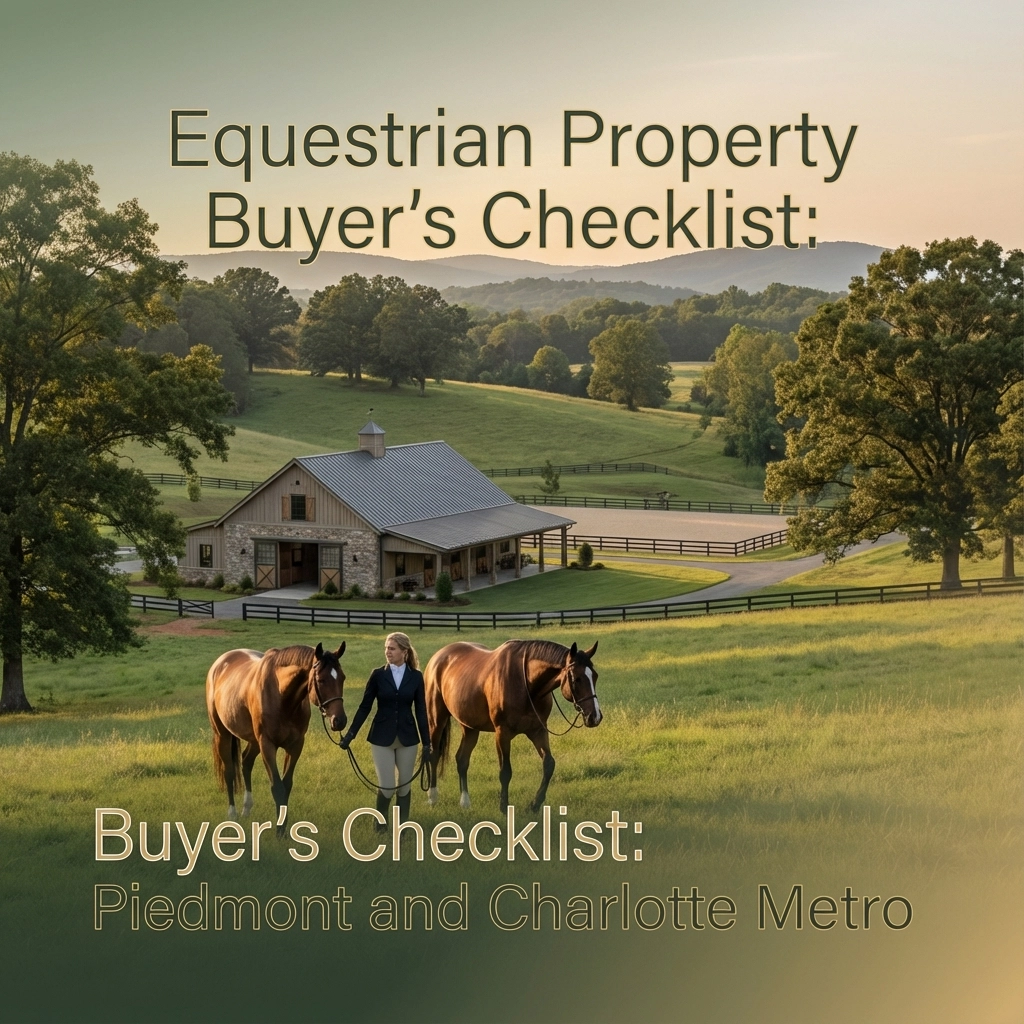
The Piedmont region and Charlotte Metro area offer some of North Carolina's most sought-after equestrian properties, where rolling hills meet established horse communities and proximity to world-class facilities. Whether you're relocating from out of state or expanding within Carolina's horse country, understanding what makes a property truly horse-friendly in this region can mean the difference between finding your dream farm and inheriting someone else's expensive mistakes.
Land Quality and Acreage: More Than Just Square Footage
In the Piedmont's clay-based soils and rolling terrain, not all acres are created equal. The five-acre-per-horse rule that works in other regions needs adjustment here, you'll want to consider drainage, slope, and seasonal pasture rotation when calculating your real needs.
Essential Land Considerations:
- Usable vs. Total Acreage: Steep slopes, wetlands, and heavily wooded areas don't count toward grazing calculations
- Soil Testing: Piedmont clay requires different pasture management than sandy coastal soils
- Drainage Patterns: Natural water flow during Carolina's heavy spring rains
- Pasture Rotation Capability: Subdivided fields for proper grass management
- Access Routes: Year-round trailer access that won't wash out or become impassable

The region's natural beauty comes with specific challenges. That picturesque creek running through the property might flood three times a year, making lower pastures unusable for months. Similarly, those mature hardwoods provide excellent shade but can limit pasture expansion and complicate fencing projects.
Zoning and Legal Framework: Navigate Before You Negotiate
Charlotte Metro's rapid growth means agricultural zoning isn't guaranteed, even on properties currently housing horses. Mecklenburg, Union, Gaston, and surrounding counties each maintain different livestock regulations, setback requirements, and grandfathering provisions.
Critical Verification Steps:
- Current Use vs. Legal Use: Confirm horses are legally permitted, not just currently present
- Future Development Pressure: Research planned commercial or residential expansion nearby
- Agricultural Tax Benefits: Understand qualification requirements and annual obligations
- HOA Agricultural Restrictions: Many "horse-friendly" communities limit commercial activities
- Setback Compliance: Ensure existing structures meet county requirements for any future modifications
Don't assume the seller's real estate agent understands equestrian zoning nuances. Contact the county directly and speak with someone familiar with agricultural permits. This conversation often reveals restrictions that could affect your intended use.
Water Systems and Infrastructure: The Foundation of Daily Operations
Reliable water systems in the Piedmont require more than just adequate flow rates. The region's seasonal weather patterns, from summer droughts to winter freezes, demand infrastructure that performs year-round.
Water System Evaluation:
- Source Reliability: Well yield during dry periods, municipal backup options
- Distribution Network: Frost-proof hydrants in barns, paddocks, and pastures
- Pressure and Flow: Adequate capacity for multiple horses, wash stalls, and fire safety
- Backup Systems: Emergency water access during power outages
- Quality Testing: Recent analysis for minerals, bacteria, and pH levels

Many Piedmont properties rely on wells drilled decades ago when different standards applied. A professional inspection should include flow testing during typical usage periods and evaluation of the electrical systems powering pumps and distribution.
Barn and Facility Assessment: Beyond Aesthetic Appeal
Charlotte area horse properties often feature barns built during different eras of construction standards and equestrian trends. What looks charming might hide expensive problems, while seemingly plain structures sometimes offer superior functionality.
Structural Priorities:
- Foundation Integrity: Especially critical in clay soils prone to shifting
- Electrical Safety: GFI protection, adequate circuits, proper grounding in wet environments
- Ventilation Design: Natural airflow patterns for Carolina's humid summers
- Footing Condition: Proper drainage in aisles, stalls, and wash areas
- Storage Adequacy: Hay, feed, bedding, and equipment storage with pest control
Functional Evaluation:
- Stall Size and Design: Adequate space for intended horse sizes and breeds
- Cross-Tie Areas: Safe, well-lit spaces for grooming and veterinary work
- Feed Room Security: Rodent-proof storage with easy access for deliveries
- Tack Room Climate: Protection from humidity and temperature extremes
- Wash Stall Functionality: Hot water, proper drainage, non-slip surfaces
The most expensive barns aren't always the most functional. Focus on practical features that support daily horse care rather than impressive architecture that complicates routine tasks.
Fencing and Paddock Systems: Safety Meets Function
The Piedmont's terrain and weather patterns place specific demands on fencing materials and installation. What works in flat, sandy regions may fail on Carolina's hills during ice storms or summer heat.
Fencing Assessment Checklist:
- Material Condition: Wood rot, metal corrosion, post stability
- Gate Functionality: Hardware condition, swing clearance, latch security
- Corner and End Post Integrity: Proper bracing for fence line tension
- Sight Lines: Clear visibility for both horses and humans
- Maintenance Access: Ability to repair and replace sections efficiently
Paddock Design Evaluation:
- Size Appropriate for Use: Turnout vs. exercise vs. quarantine needs
- Drainage and Footing: Prevention of mud accumulation and erosion
- Shelter Access: Natural or constructed weather protection
- Water Availability: Automatic systems or easy manual filling
- Safe Corners and Angles: Elimination of injury-causing design features

Poor fencing represents both immediate safety risks and ongoing financial obligations. Factor replacement costs into your purchase negotiations, especially for older installations using materials no longer considered safe for horses.
Location and Community Connections: The Lifestyle Component
The Charlotte Metro equestrian community offers extensive resources, but proximity matters for both convenience and emergency situations. Understanding the local network of services, facilities, and fellow horse owners enhances both property value and daily life quality.
Service Accessibility:
- Veterinary Care: Emergency and routine service response times
- Farrier Availability: Established professionals accepting new clients
- Feed and Supply: Reliable delivery or convenient pickup locations
- Hay Sources: Local suppliers and seasonal availability patterns
Community Resources:
- Training Facilities: Access to arenas, round pens, trails, and instruction
- Show Grounds: Competition venues and recognized event hosting
- Trail Systems: Public access, maintenance standards, safety considerations
- Horse Transport: Professional hauling services for shows, veterinary visits, or purchases
The region's established horse community provides both resources and standards. Properties with good reputations benefit from this network, while those known for problems may face service limitations.
Financial Considerations: Beyond the Purchase Price
Equestrian property ownership in the Charlotte Metro area involves ongoing costs that vary significantly based on property condition, intended use, and management approach. Understanding these expenses helps determine realistic budgets and prevents financial surprises.
Annual Operating Costs:
- Insurance Coverage: Liability, property, and potentially commercial policies
- Utility Expenses: Higher usage for barns, arenas, and multiple water sources
- Maintenance Reserves: Fencing, roofing, equipment replacement schedules
- Agricultural Tax Obligations: Use requirements and annual compliance costs
- Emergency Preparedness: Generator capacity, backup systems, storm preparation
Improvement Planning:
- Regulatory Compliance: Bringing older structures up to current standards
- Capacity Expansion: Additional stalls, storage, or arena construction
- Technology Upgrades: Security systems, automated feeding, monitoring equipment
- Land Enhancement: Pasture renovation, drainage improvement, tree management

Properties requiring immediate major improvements aren't necessarily poor investments if priced accordingly. However, factor these costs into your decision-making process rather than hoping to address them later when budgets might be tighter.
Professional Support Team: Expertise You Can't Do Without
The complexity of equestrian property evaluation exceeds typical residential real estate transactions. Assembling the right professional team before you start serious shopping prevents expensive mistakes and speeds the evaluation process.
Essential Team Members:
- Equestrian-Specialized Real Estate Agent: Understanding of horse property unique requirements
- Large Animal Veterinarian: Property evaluation from horse health and safety perspectives
- Agricultural Extension Agent: Soil, pasture, and land use guidance
- Specialized Property Inspector: Experience with barns, fencing, and agricultural systems
- Insurance Agent: Coverage options and risk assessment for equestrian activities
Working with professionals who understand horses prevents miscommunication and ensures all parties recognize what makes properties suitable for equestrian use. This expertise becomes particularly valuable when negotiating repairs or improvements based on inspection findings.
The Charlotte Metro equestrian market rewards prepared buyers who understand both the opportunities and obligations of horse property ownership. Take time to thoroughly evaluate each property against your specific needs, and don't hesitate to walk away from properties that require more investment than you're prepared to make.
Your perfect horse property exists in this region; finding it requires patience, preparation, and professional guidance tailored to equestrian life.
Leave a Reply