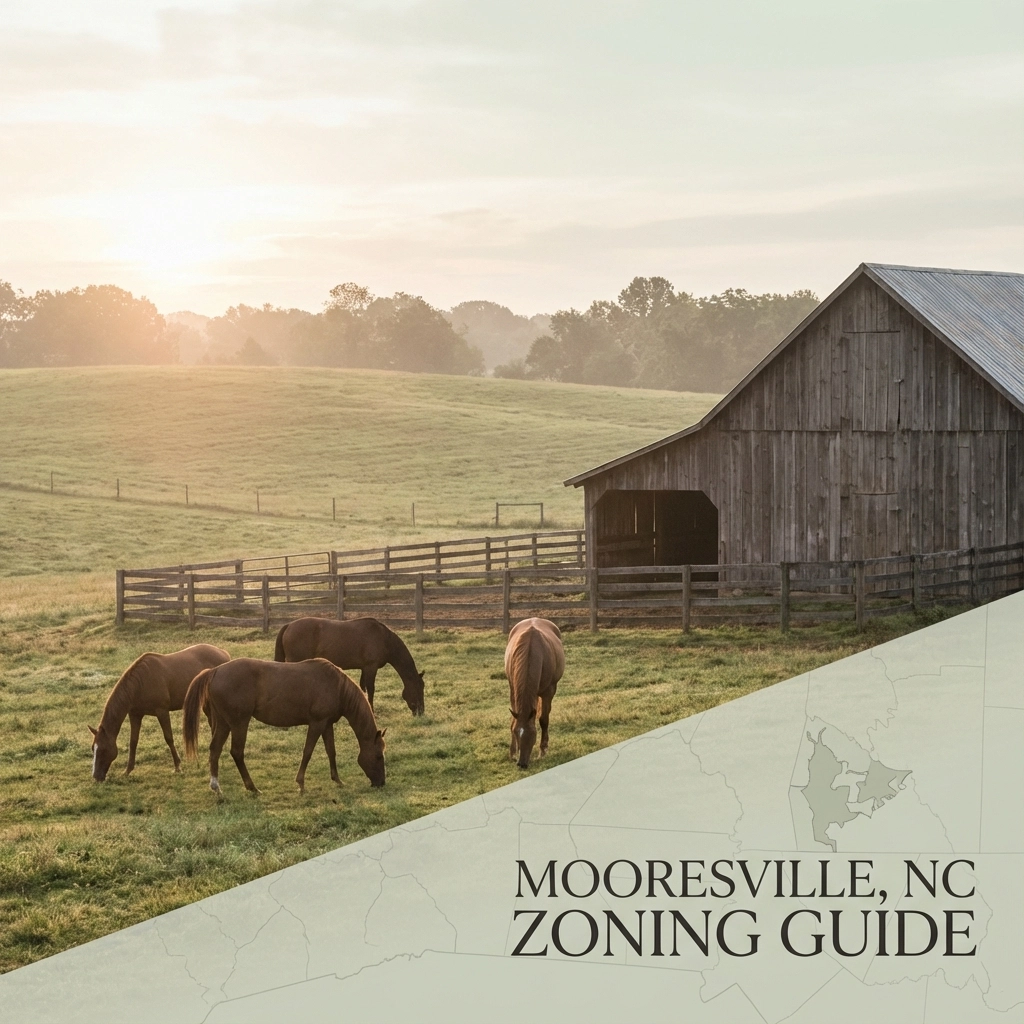
Zoning regulations can make or break your dream horse property purchase. One overlooked restriction, and your plans for boarding, breeding, or simply keeping your horses at home could vanish overnight.
In the greater Mooresville area, understanding local zoning becomes even more critical as you navigate between different jurisdictions: each with their own rules about horses, barns, and agricultural use. What's permitted in Moore County's Rural Equestrian district differs significantly from regulations within Mooresville town limits or surrounding Iredell County areas.
Understanding Your Jurisdiction: Moore County vs. Mooresville
Before diving into specific requirements, buyers must first understand which governing body controls their potential property. This distinction affects everything from permitted horse density to barn placement restrictions.
Moore County operates under a comprehensive Rural Equestrian zoning district with specific provisions for horse properties. If your target property falls within Moore County boundaries, you'll encounter well-defined regulations designed to support equestrian activities.
Town of Mooresville and Iredell County each maintain separate zoning ordinances. While these jurisdictions permit agricultural activities in certain zones, the specific requirements for horse properties require direct verification with local planning offices.

Moore County Rural Equestrian District Requirements
Moore County established its Rural Equestrian zoning district to specifically accommodate horse properties while maintaining rural character. Here's what buyers need to know about these regulations:
Minimum Lot Standards
- Lot size: 1 acre minimum
- Lot width: 100 feet minimum
- Frontage: 100 feet minimum
- Building height: 40 feet maximum
Critical Setback Requirements
Principal Structures (your home):
- Front setback: 40 feet from road
- Side setback: 15 feet (25 feet on corner lots)
- Rear setback: 30 feet
Accessory Structures (barns, stables, storage):
- Front setback: 40 feet from road
- Side setback: 10 feet (20 feet on corner lots)
- Rear setback: 10 feet
Horse Stable Placement
Horse stables qualify as accessory structures and can be positioned in front, side, or rear yards, provided they meet accessory structure setback requirements. This flexibility allows property owners to design functional layouts that work with their land's natural features.
Essential Verification Steps for All Buyers
Regardless of your specific location within the greater Mooresville area, these verification steps protect your investment and ensure your equestrian plans remain viable.

1. Confirm Current Zoning Classification
Contact the appropriate planning office with your exact property address. Zoning maps change, and what appears agricultural today might have different underlying classifications affecting future use.
Key contacts:
- Moore County Planning: For properties within county boundaries
- Town of Mooresville Planning: For properties within town limits
- Iredell County Planning: For unincorporated county areas
2. Research Surrounding Property Zoning
Your neighbor's zoning affects your property's long-term viability. Commercial or high-density residential zoning adjacent to your horse property could limit expansion opportunities or create conflicts over noise, dust, and traffic from your equestrian activities.
3. Understand Horse Density Restrictions
Many jurisdictions limit the number of horses per acre, typically ranging from one horse per acre to one horse per two acres. Some areas differentiate between personal use and commercial boarding operations, with stricter requirements for businesses.
4. Investigate Barn and Structure Limitations
Beyond basic setbacks, regulations often address:
- Maximum barn size relative to lot size
- Height restrictions for indoor arenas
- Requirements for manure storage and management
- Setbacks from wells and septic systems
- Storm water management for impervious surfaces
Common Zoning Mistakes That Cost Buyers
Assuming Agricultural Zoning Equals Horse Permission
Agricultural zoning doesn't automatically permit horses. Some agricultural zones restrict livestock to certain types or require minimum acreage per animal that exceeds your property size.
Overlooking Grandfathered Use Limitations
Existing barns and horse facilities might operate under grandfathered permissions that don't transfer to new owners or expire if use ceases for a specified period. Always verify whether current horse-related improvements comply with current zoning requirements.

Ignoring Homeowner Association Restrictions
Even when local zoning permits horses, HOA covenants might prohibit them entirely. Rural subdivisions increasingly include equestrian restrictions despite being located in horse-friendly zones.
Misunderstanding Commercial vs. Residential Use
Planning to offer boarding, training, or breeding services? Commercial equestrian activities often require special use permits, additional parking, enhanced septic systems, and compliance with business licensing requirements beyond basic zoning approval.
Working with Local Planning Officials
Successful horse property buyers develop relationships with local planning staff before making offers. These professionals provide invaluable insight into:
- Upcoming zoning changes that might affect your property
- Typical permit timelines for barn construction or renovation
- Required site plan elements for commercial equestrian operations
- Compliance requirements for existing non-conforming structures
Questions to Ask Planning Staff
About Current Regulations:
- What specific horse-related activities does current zoning permit?
- Are there pending ordinance changes that might affect equestrian use?
- What documentation proves legal non-conforming status for existing facilities?
About Future Plans:
- What permits are required for new barn construction?
- Can I add an outdoor arena without special permits?
- Are there restrictions on arena lighting or hours of use?
Special Considerations for Different Property Types
Raw Land Development
Purchasing undeveloped land for horse facilities requires additional due diligence:
- Soil percolation tests for septic system placement
- Well water testing and capacity verification
- Topographical surveys identifying buildable areas
- Environmental assessments for wetlands or protected habitats

Properties with Existing Facilities
When buying properties with established horse facilities:
- Verify all structures were built with proper permits
- Confirm grandfathered uses transfer to new owners
- Document any non-conforming elements that might require future compliance
- Understand maintenance requirements for specialized features like indoor arenas
Navigating Multi-Jurisdictional Properties
Some larger horse properties span multiple jurisdictions, creating complex regulatory situations. Each portion of the property must comply with its respective zoning requirements, potentially limiting unified development plans.
Before purchasing multi-jurisdictional properties, consult with attorneys experienced in land use law to understand how different regulations interact and whether proposed uses remain viable across boundary lines.
Professional Resources and Next Steps
Successfully navigating horse property zoning requires coordination between multiple professionals:
- Land use attorneys for complex zoning interpretations
- Licensed surveyors for accurate boundary and setback verification
- Equestrian architects familiar with local building codes
- Experienced real estate agents who specialize in horse properties
At Carolina Horse Farm Realty, we understand that zoning compliance forms the foundation of every successful horse property purchase. Our team maintains current knowledge of regulations across the region and works directly with local planning offices to verify zoning compliance before our clients make binding commitments.
Don't let zoning surprises derail your equestrian dreams. Contact our team for a confidential consultation about horse property zoning in your target area. We'll help you navigate local regulations and identify properties that support your specific equestrian goals while ensuring full compliance with all applicable requirements.
Your perfect horse property exists within the bounds of proper zoning( we'll help you find it.)
Leave a Reply