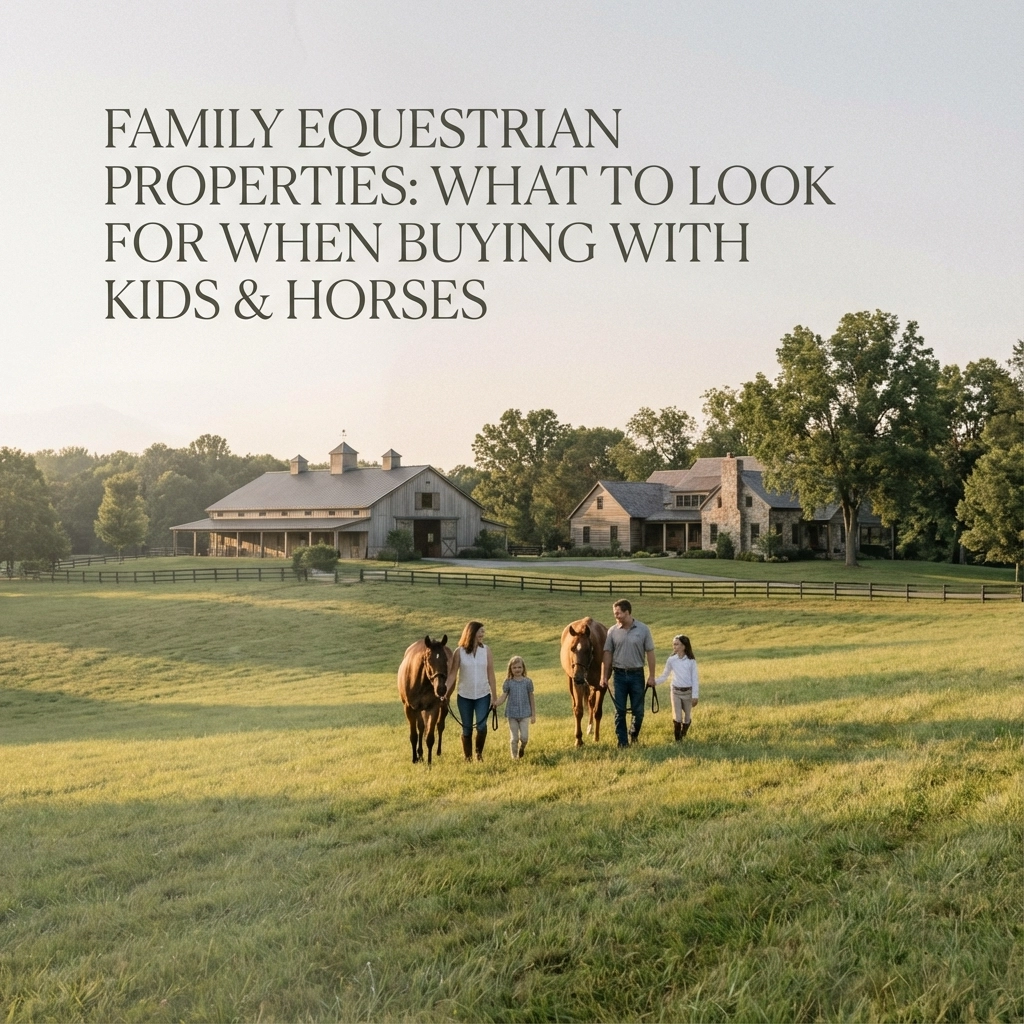
Finding the perfect equestrian property for your family means balancing your horses' needs with your children's safety, comfort, and growth. Unlike competitive riders who prioritize training facilities above all else, families need properties that serve as both functional horse operations and nurturing environments for kids to develop their love of horses.
After helping dozens of families relocate to North Carolina's horse country, we've identified the essential features that make equestrian properties truly family-friendly. Here's what smart buyers focus on when shopping for their forever farm.
Prioritize Safe, Supervised Sightlines from Your Home
The most successful family horse properties offer clear visual connections between your house and horse facilities. You need to see and hear what's happening in the barn, paddocks, and arenas from your main living areas, especially the kitchen window where you'll spend considerable time.
This isn't just about convenience. Young equestrians often head to the barn before and after school, on weekends, and during summer breaks. Being able to monitor their activities while handling household tasks creates peace of mind and allows for quick intervention if needed.
Look for properties where the barn sits within 200-300 yards of the house with minimal visual obstructions. Avoid farms where the horse facilities are tucked behind hills, dense tree lines, or other buildings that block your view.

Understand Acreage Requirements for Growing Families
While the general rule suggests one horse per acre, families often need more space than this minimum. Growing children typically mean additional horses over time, plus you'll want room for friends' horses during visits and riding lessons.
Plan for 1.5-2 acres per horse minimum if you want year-round turnout without destroying your pastures. North Carolina's clay soils and seasonal weather patterns demand this buffer, especially in areas around Charlotte, Tryon, and the Triangle where horse density is higher.
Consider your family's 5-10 year trajectory. Will you add horses as children grow? Do you want space for a riding instructor's horse during lessons? Smart buyers purchase slightly more land than their current needs require.
Evaluate Fencing for Both Safety and Functionality
Family properties require fencing that protects both horses and children while accommodating different age groups and skill levels. Board fencing remains the gold standard for family farms, it's visible, strong, and relatively safe if someone falls into it.
Avoid properties with barbed wire, old field fencing, or electric-only perimeters unless you're prepared for significant fencing investments. Children learning to ride need forgiving boundaries that won't cause serious injury during inevitable tumbles.
Pay special attention to gate latches and spacing. Young children should be able to safely open and close gates, but horses shouldn't be able to manipulate the hardware. Look for self-closing hinges and childproof latches that still function smoothly for daily use.
Assess Barn Design for Teaching and Learning
Family barns need to accommodate teaching moments, multiple horses being handled simultaneously, and storage for equipment sized for different family members. Wide aisles (12 feet minimum) allow parents to supervise children working with horses and provide space for wheelbarrows, grooming stations, and emergency maneuvering.
Individual stalls should measure at least 12×12 feet with doors that allow visual contact between horses. Young equestrians learn faster when they can observe other horses' behaviors and reactions. Dutch doors or stall fronts with bars serve this purpose well.
Essential barn features for families include:
- Tack rooms with separate areas for adult and children's equipment
- Feed rooms with secure latches that children cannot accidentally open
- Hot water for washing horses and cleaning equipment
- Adequate electrical outlets for grooming tools and lighting
- Cross-tie areas designed for horses of different sizes

Consider Arena and Training Space Options
Not every family property needs a full-size dressage arena, but having designated riding areas significantly enhances your children's development and safety. Even a simple 60×120 foot arena provides enough space for basic training, lunging, and supervised rides.
Footing quality matters more than size for family use. Children's horses typically require consistent, forgiving surfaces that provide good traction without being too deep or too hard. Sand-based footings with appropriate additives perform well in North Carolina's climate and drainage conditions.
Outdoor rings should include safe fencing (no corners that could trap horse and rider) and proper drainage to extend usability throughout the year. Indoor arenas offer year-round riding options but require significant maintenance investment, factor these costs into your long-term budget planning.
Examine Water Sources and Distribution Systems
Reliable, clean water access throughout your property is non-negotiable for family horse farms. Children often take primary responsibility for daily horse care, so water systems must be simple, reliable, and safe for young people to manage.
Automatic waterers in paddocks reduce daily chores but require regular maintenance and freeze protection systems in North Carolina's variable winters. Traditional water troughs offer more control but demand consistent refilling, consider which approach matches your family's capabilities and schedules.
Well water should be tested for mineral content, bacteria, and pH levels before purchase. Some areas of North Carolina have naturally high iron content that can stain light-colored horses and affect palatability. City water connections eliminate some concerns but may include monthly costs that impact your operating budget.

Plan for Equipment and Hay Storage Needs
Family equestrian operations generate significant storage requirements that grow over time. Each family member needs space for their equipment, seasonal gear, and maintenance supplies. Children's equipment takes surprising amounts of room when you factor in multiple saddle sizes, helmets, boots, and safety gear for different disciplines.
Hay storage should accommodate 6-12 months of feed for your planned horse population. North Carolina's humidity requires proper ventilation and moisture control to prevent mold and spoilage. Plan for 2-3 tons of hay per horse annually, plus bedding storage if you don't use pasture board.
Consider covered equipment storage for tractors, mowers, trailers, and maintenance tools. Family farms require more mechanical equipment than boarding operations since you're handling all maintenance personally.
Evaluate Access to Professional Services
Family horse properties benefit significantly from proximity to quality veterinarians, farriers, feed stores, and riding instructors. Children's equestrian development depends on regular access to professional guidance and emergency services.
Research local veterinary practices before purchasing. Large animal vets are essential, but finding practitioners comfortable working with children and family horses enhances your overall experience. Some areas of rural North Carolina have limited large animal veterinary coverage, affecting response times for emergencies.
Quality farrier services can make or break your property's success. Children's horses often require more frequent attention due to their activity levels and developing riders' impacts on hoof care needs. Establish relationships with local professionals before moving to your new property.
Address Safety and Emergency Preparedness
Family properties require enhanced safety planning for both routine activities and emergency situations. Children interact with horses differently than adults: they're less predictable, more emotional, and require additional safety margins in all facilities and procedures.
Emergency planning should include clear protocols for horse-related injuries, escape procedures if horses get loose, and communication systems that work even when children are in the barn alone. Cell phone coverage throughout your property enables quick emergency response calls.
Consider proximity to emergency veterinary services and human medical facilities. Rural North Carolina properties may be 30-45 minutes from specialized emergency care: factor response times into your safety planning and first aid preparation.
Your family's equestrian property should grow with your children's skills and interests while maintaining safety and functionality throughout their development. The right property becomes a foundation for decades of family memories and equestrian achievement.
Leave a Reply