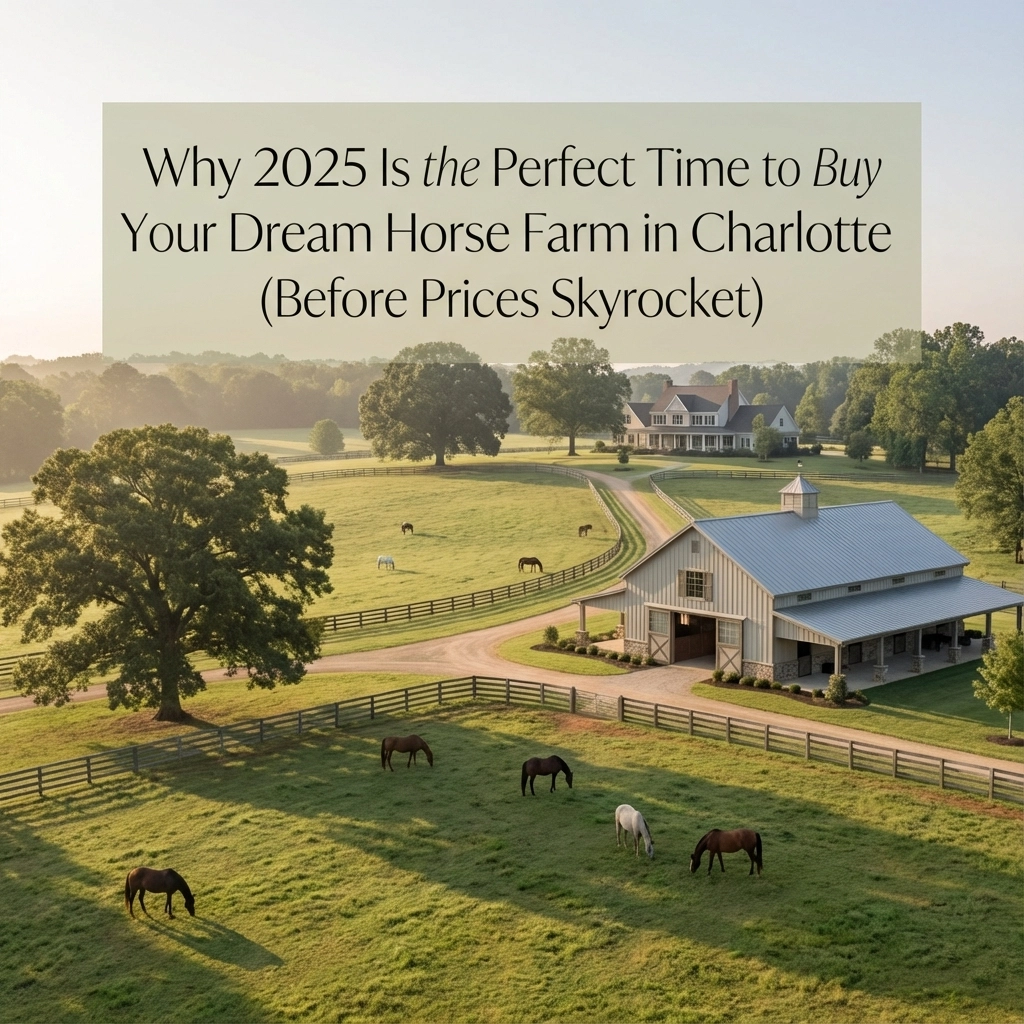
The Charlotte Metro area has quietly become one of the Southeast's premier equestrian destinations, and current market conditions present unique opportunities for discerning horse farm buyers. While we can't predict the future with certainty, several converging factors suggest that serious buyers should act decisively in today's market.
Charlotte's Equestrian Infrastructure Reaches Critical Mass
The Queen City's horse community has experienced remarkable growth over the past decade. With over 200 equestrian facilities within a 50-mile radius, Charlotte now rivals traditional horse capitals like Lexington and Aiken for training, competition, and breeding opportunities.
Major developments driving this transformation include:
- The Tryon International Equestrian Center's continued expansion, hosting world-class competitions just 90 minutes from Charlotte
- New partnerships between local hunt clubs and conservation groups, protecting riding trails for generations
- The establishment of three new large animal veterinary practices specializing in equine medicine
- Increased direct flights from Charlotte Douglas International Airport to major equestrian destinations
This infrastructure boom creates a network effect: each new facility, service provider, and event venue makes the entire region more attractive to horse owners nationwide.

Interest Rates Create a Strategic Window
Current interest rates remain historically favorable for qualified buyers, particularly those considering larger land purchases. Rural property financing often requires different strategies than traditional residential mortgages, and experienced buyers understand that timing these decisions correctly can save tens of thousands over the life of a loan.
Smart financing strategies for 2025 include:
- Leveraging relationships with agricultural lenders who understand equestrian operations
- Considering owner-financing options increasingly popular with retiring horse farm owners
- Structuring purchases to take advantage of agricultural tax benefits
- Planning for potential rate changes by securing pre-approval for optimal properties
Land Availability Versus Development Pressure
Charlotte's population growth continues to accelerate, with demographers projecting the metro area will add another 500,000 residents by 2030. This expansion inevitably creates pressure on rural land, particularly properties within reasonable commuting distance of the city center.
Currently, buyers can still find exceptional horse farms within 45 minutes of downtown Charlotte. However, the mathematics of development suggest this window won't remain open indefinitely. Agricultural land that sells for $15,000-$25,000 per acre today may command significantly higher prices once surrounding areas reach suburban density.
Prime areas showing early development pressure:
- Waxhaw and the Union County corridor toward Monroe
- Denver and the Lake Norman region
- Mint Hill and the eastern approach toward Monroe Road
- Rock Hill and Fort Mill areas benefiting from corporate relocations
The key insight? Today's "remote" horse farms may become tomorrow's suburban estates, with corresponding price adjustments.

Corporate Migration Brings Qualified Buyers
Charlotte's business-friendly climate continues attracting major corporations and their executive teams. Many of these incoming families arrive from traditional horse regions: California's Central Valley, Kentucky's Bluegrass, and the Northeast's hunt country: bringing both equestrian knowledge and significant purchasing power.
This demographic shift creates a deeper buyer pool for quality horse properties. Unlike speculative investors, these families plan to actively use their land for horses, supporting local equestrian businesses and maintaining properties according to best practices.
Seller Motivations Align with Buyer Opportunities
Many current horse farm owners purchased their properties 15-25 years ago, when land prices were substantially lower. As these owners reach retirement age or experience lifestyle changes, they're often motivated to sell to families who will continue their equestrian legacy.
Common seller scenarios creating opportunities:
- Empty-nesters wanting to downsize while remaining in the equestrian community
- Business owners ready to convert property appreciation into retirement income
- Families relocating for career opportunities in other markets
- Estates requiring settlement following owner transitions
These motivated sellers often prioritize finding the "right" buyer over maximizing sale price, particularly when they've invested decades developing their farms.

Quality Inventory Requires Patient Search
Unlike residential real estate, exceptional horse farms don't appear on the market frequently. Properties offering ideal combinations of location, acreage, facilities, and land quality may surface only once or twice per year in specific areas.
Serious buyers understand that finding their ideal farm requires sustained search efforts and quick decision-making when the right property becomes available. The best farms often sell before reaching the general market, moving within networks of equestrian professionals and dedicated real estate specialists.
What defines "exceptional" inventory:
- 20+ acres with suitable topography for arenas and trails
- Existing barn facilities designed by equestrian architects
- Multiple water sources and proper drainage systems
- Proximity to boarding, training, and veterinary services
- Clear title with appropriate zoning and agricultural designations
The Lifestyle Premium Continues Growing
Horse ownership represents one of the few lifestyle pursuits that consistently appreciates in both financial and personal value. Unlike recreational vehicles or luxury goods that depreciate, well-maintained horse farms typically increase in value while providing daily enjoyment and family bonding opportunities.
Charlotte's climate supports year-round riding, and the region's cultural appreciation for equestrian pursuits creates a supportive community for horse families. From hunter/jumper competitions to trail riding groups, from driving clubs to dressage societies, every equestrian discipline finds representation in the Charlotte Metro area.

Planning Your Strategic Approach
Success in today's horse farm market requires more than financial qualification. Buyers need strategic approaches addressing both immediate needs and long-term goals.
Essential preparation steps:
- Engage real estate professionals with specific equestrian property experience
- Develop relationships with farm managers, veterinarians, and feed suppliers before purchasing
- Understand local zoning regulations and their implications for your intended use
- Consider utility access, internet connectivity, and emergency services availability
- Plan for ongoing farm maintenance and improvement projects
The Network Effect Advantage
Charlotte's equestrian community operates on relationship-based principles. Newcomers who demonstrate genuine commitment to horse welfare and community participation quickly find acceptance and support. This network provides ongoing value through shared resources, emergency assistance, and collaborative purchasing opportunities.
Local organizations like the Carolina Hunter Jumper Association, Mecklenburg Hounds, and various breed associations offer immediate entry points into established equestrian circles.

Making Your Move
Current market conditions favor decisive action by qualified buyers. While no one can guarantee future price movements, the convergence of factors discussed above suggests that today's opportunities may not persist indefinitely.
The most successful horse farm purchases result from careful preparation combined with quick execution when the right property appears. This balance requires working with professionals who understand both real estate markets and equestrian requirements.
At Carolina Horse Farm Realty, we specialize in connecting serious horse families with properties that match their specific needs and goals. Our team combines deep equestrian knowledge with comprehensive understanding of the Charlotte Metro real estate landscape.
Ready to explore what's available in today's market? Let's discuss your vision for the perfect horse farm and develop a strategic approach to make it reality. Contact us at Carolina Horse Farm Realty to begin your search for the property that will become your family's equestrian legacy.
Leave a Reply