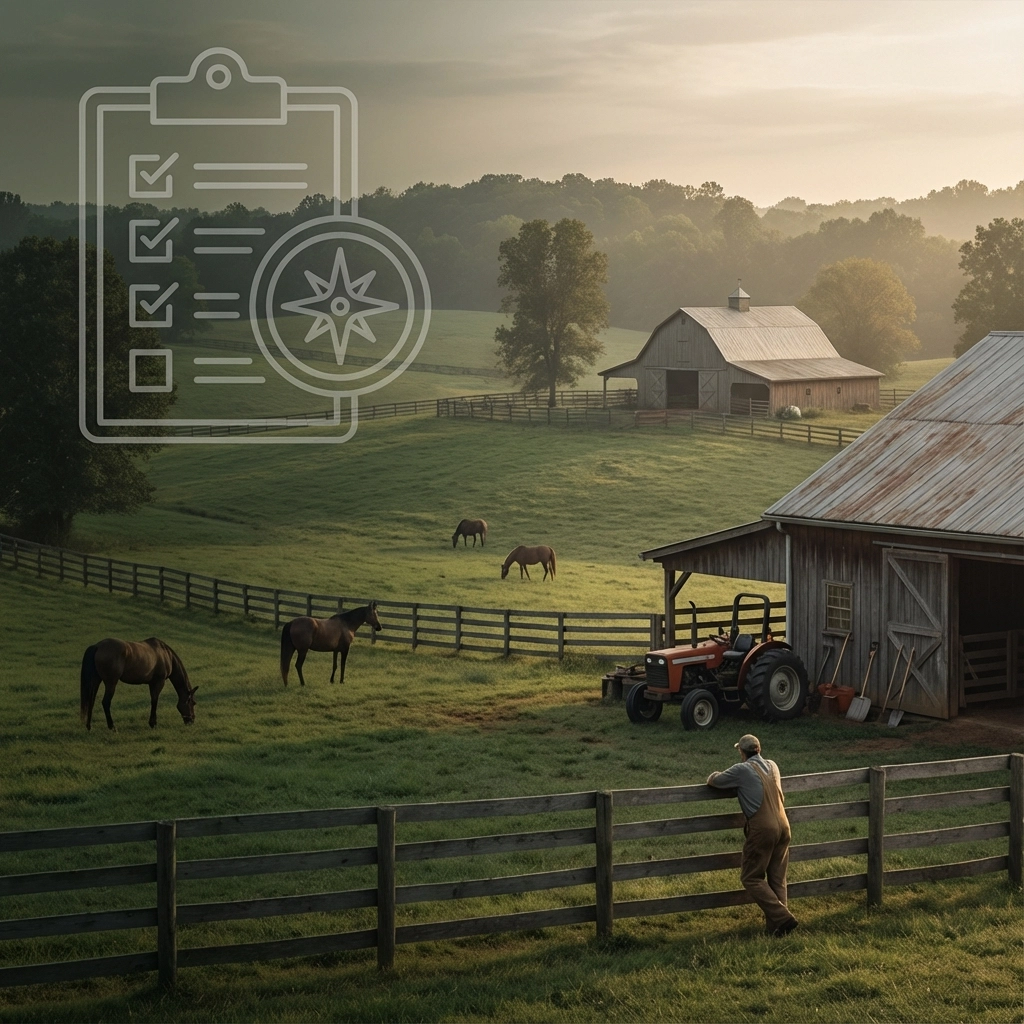
Every season brings its own rewards and challenges when you own a horse farm in North Carolina. From the humid summers that test your water systems to the unpredictable winter weather that can damage fencing overnight, staying ahead of maintenance isn't just about protecting your investment: it's about keeping your horses safe and healthy year-round.
After helping hundreds of families find their dream equestrian properties across the Carolinas, we've seen firsthand how proper seasonal maintenance can make the difference between a thriving operation and costly emergency repairs. The farms that maintain their value and functionality? They follow a systematic approach that anticipates each season's unique demands.
Spring: Renewal and Recovery
Spring in North Carolina means it's time to assess winter's damage and prepare your property for the active months ahead. The mild temperatures make this the ideal season for intensive maintenance projects.
Barn and Facility Deep Clean
Start with a complete barn overhaul. Strip every stall down to the mats, scrub the walls with a diluted bleach solution, and remove dust and cobwebs from rafters and corners. This isn't just about appearances: you're eliminating bacteria and mold that can compromise your horses' respiratory health.
Check your barn's electrical wiring carefully. Rodents often cause damage during winter months, and exposed wires pose serious fire hazards. Inspect all lighting fixtures and outlets, replacing any damaged components immediately.
Clean and disinfect all water tanks, feed bins, and automatic waterers. Replace any cracked or damaged buckets: they're breeding grounds for bacteria in warmer weather.

Pasture Assessment and Recovery
Walk every inch of your pasture, removing branches, debris, and any old hay piles that accumulated over winter. This is your chance to spot potential problems before they become expensive headaches.
North Carolina's clay soil can become severely compacted during wet winter months. Aerate high-traffic areas and reseed any worn spots with quality pasture grass suited to our climate. Consider soil testing to develop a targeted fertilization plan: healthy pastures reduce your hay costs significantly.
Remove any toxic weeds that may be sprouting. Common North Carolina culprits include wild cherry, red maple, and various nightshades that can be lethal to horses.
Fencing and Infrastructure
Frost heave and winter storms take their toll on fencing. Walk your entire perimeter, checking for leaning posts, sagging wire, and loose boards. Pay special attention to gates: they should swing freely with secure, functioning latches.
Replace any rusted or damaged components now, before your horses find the weak spots. Wood fencing requires particular attention; check for loose nails and replace any cracked or rotting boards.
Summer: Maintenance and Monitoring
North Carolina summers are hot, humid, and demanding on both horses and facilities. Your focus shifts to ongoing maintenance and pest control.
Water System Management
Clean water troughs weekly to prevent algae buildup: a constant battle in our humid climate. Automatic waterers need daily monitoring; the heat can cause seals to fail and pumps to overwork.
Install bird houses near barn areas. Birds are natural pest controllers, reducing the fly population that makes summer miserable for horses and handlers alike.
Ongoing Facility Care
Summer's heat makes heavy construction work dangerous, but it's perfect for maintaining what you have. Keep paddocks free of debris, monitor arena footing for safe conditions, and address small repairs before they become major projects.
This is also prime time for inventory management. Stock up on hay while prices are typically lower, and ensure your grain storage areas are pest-proof and properly ventilated.

Fall: Winter Preparation
Fall is your last chance to prepare for North Carolina's unpredictable winter weather. Don't wait until the first cold snap: it often comes earlier than expected.
Critical Infrastructure Updates
Bring in footing material for paddocks and high-traffic areas before wet weather arrives. Mud management is crucial for horse health and property value. Consider gravel, sand, or specialized footing materials for areas around gates, water sources, and shelter entrances.
Clean and repair all gutters and downspouts. Proper drainage prevents ice damming and protects your barn's foundation. Divert water away from paddocks and riding areas: standing water freezes into dangerous ice sheets.
Facility Winterization
Complete a thorough inspection of all barn structures. Check roof integrity, repair any loose siding, and ensure adequate ventilation without creating drafts. Horses need fresh air even in cold weather, but drafts can cause respiratory issues.
Service all heating systems and check backup power sources. Having a plan for extended power outages can be the difference between manageable inconvenience and disaster.

Equipment and Tack Care
Deep clean all leather tack with quality leather cleaner, removing sweat and dirt buildup from summer use. Condition thoroughly to prevent cracking during cold weather. Properly maintained tack lasts decades; neglected leather becomes expensive to replace.
Service all mechanical equipment: tractors, mowers, water pumps: before you need them in emergencies. Cold weather is hard on equipment that hasn't been properly maintained.
Winter: Protection and Vigilance
North Carolina winters may be milder than northern states, but they bring unique challenges. Ice storms can devastate unprepared properties, and temperature swings stress both animals and infrastructure.
Daily Operations
Maintain consistent daily routines. Remove manure regularly: it creates dangerous ice when frozen. Provide fresh, unfrozen water multiple times daily. Heated water sources reduce labor and ensure horses stay properly hydrated.
Monitor pastures carefully. Prevent horses from grazing on frozen grass, which can damage root systems and destroy pastures for the following year. This is where having established sacrifice areas pays off.
Structural Monitoring
Check barn ventilation regularly. Adequate airflow prevents respiratory problems and reduces moisture buildup that can damage structures. Monitor for ice dams on roofs and address them immediately.
Inspect fencing after every storm. High winds and ice can damage even well-maintained fencing overnight. Quick repairs prevent horses from injuring themselves on broken components.

Regional Considerations for North Carolina
Our state's diverse geography means maintenance needs vary significantly. Coastal properties deal with salt air and hurricane preparations, while mountain farms face different challenges with steep terrain and colder temperatures.
Clay soil, common throughout much of North Carolina, requires special attention to drainage and footing management. Sandy soil areas need different pasture management strategies. Understanding your specific soil type and local climate patterns is essential for effective maintenance planning.
The Value of Preventive Maintenance
Consistent seasonal maintenance protects more than just your property's condition: it preserves its value. Well-maintained horse farms command premium prices and sell faster when the time comes. Buyers recognize properties where attention to detail is obvious, and they're willing to pay for the peace of mind that comes with purchasing a properly maintained facility.
More importantly, good maintenance keeps your horses healthy and safe. Emergency vet calls and injury-related expenses far exceed the cost of preventive care. A systematic approach to seasonal maintenance is an investment in your horses' wellbeing and your financial security.
Whether you're maintaining your current property or considering a move to a new horse farm, understanding these seasonal requirements helps you make informed decisions. A property that's been properly maintained will provide years of enjoyment and service. One that's been neglected becomes a money pit that steals the joy from horse ownership.
At Carolina Horse Farm Realty, we help buyers understand these maintenance realities before they purchase, and we help sellers present their properties in the best possible light. Our deep knowledge of equestrian properties throughout North Carolina means we understand what makes a horse farm truly functional and valuable.
Ready to find a horse farm that's been loved and maintained, or need guidance on preparing your current property for sale? Let's talk about how proper maintenance creates lasting value for both horses and owners.
Leave a Reply