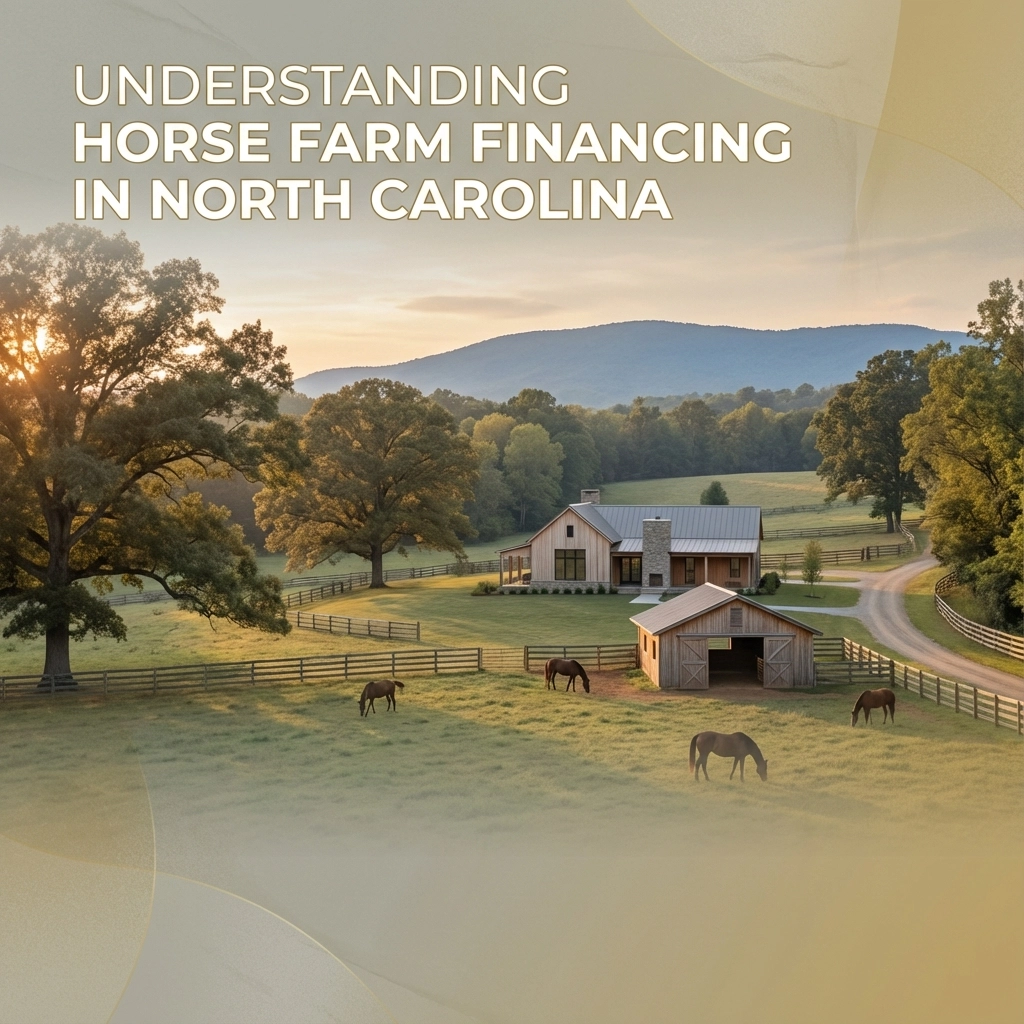
Finding the right financing for your equestrian property in North Carolina doesn't have to feel like navigating uncharted territory. As horse people ourselves, we understand that purchasing a farm isn't just about square footage and curb appeal: it's about securing the foundation for your horses' wellbeing and your equestrian dreams.
North Carolina's agricultural landscape offers unique financing opportunities specifically designed for horse operations, from small hobby farms to large commercial breeding facilities. Understanding these options can mean the difference between settling for a property that "sort of works" and finding the perfect place where your horses can truly thrive.
The Three Primary Loan Categories for Horse Farms
Ranch Loans: For Operating Equestrian Businesses
Ranch loans target properties where horses aren't just pets: they're part of a working operation. These loans recognize that horse farms generate income through boarding, training, breeding, or lesson programs. Lenders evaluate both the property's potential and your business plan, considering factors like pasture quality, existing facilities, and proximity to equestrian communities.
The beauty of ranch loans lies in their flexibility. Unlike traditional residential mortgages, these loans accommodate the seasonal nature of equestrian income. Whether you're planning to board horses through the summer show season or breed for spring foal sales, lenders familiar with horse operations understand cash flow patterns that might puzzle conventional banks.
Land Loans: Building Your Vision from the Ground Up
For those drawn to raw acreage with endless possibilities, land loans finance everything from untouched pasture to partially improved properties. These loans appeal to horse owners who want to design their facilities from scratch: choosing exactly where the barn sits, how paddocks flow, and where riding trails wind through the property.

Land loans typically require larger down payments than improved property purchases, but they offer something invaluable: complete control over your farm's development. You can prioritize what matters most to your horses: whether that's installing automatic waterers, designing custom footing, or creating the perfect arena orientation.
Commercial Loans: For Professional Equestrian Operations
Professional trainers, therapeutic riding centers, and large-scale breeding operations often need financing that recognizes their unique business models. Commercial loans accommodate everything from indoor arena construction to specialized equipment purchases, understanding that a successful equestrian business requires significant infrastructure investment.
What Horse Farm Loans Actually Cover
The scope of equestrian financing extends far beyond simple property purchases. Modern agricultural lenders understand that a successful horse operation requires comprehensive funding for:
Land and Infrastructure Investments
- Property acquisition
- Barn construction and renovation
- Arena development (indoor and outdoor)
- Fencing installation and repairs
- Water system development
- Electrical infrastructure for barns and arenas
Livestock and Equipment Financing
- Horse purchases for breeding or training programs
- Hay and feed storage facilities
- Tractors and farm equipment
- Horse trailers and transportation vehicles
- Specialized equestrian equipment
Operational Capital
- Seasonal operating expenses
- Feed and bedding inventory
- Veterinary and farrier services
- Insurance and licensing costs
- Marketing and facility improvements

Federal Financing Programs: USDA and FSA Options
USDA Rural Development Loans
The United States Department of Agriculture offers some of North Carolina's most attractive financing options for horse farms located in eligible rural areas. These loans often feature competitive interest rates and, in some cases, require no down payment for qualifying buyers.
USDA loans recognize that horse farms contribute to rural economic development and agricultural preservation. Properties must meet specific rural designation requirements, but many of North Carolina's premier horse areas: from the foothills to the coastal plains: qualify for these programs.
Farm Service Agency (FSA) Programs
The FSA provides both direct loans and guaranteed loan programs specifically designed for agricultural operations. Direct farm ownership loans help beginning farmers and ranchers purchase land, while operating loans provide capital for annual expenses like feed, equipment, and facility maintenance.
FSA guaranteed loans work through approved commercial lenders, combining federal backing with local lending relationships. This structure often results in more favorable terms than purely private financing while maintaining the personal service of community banks familiar with regional horse markets.
North Carolina's Agricultural Credit Cooperatives
AgCarolina Farm Credit
As a farmer-owned cooperative, AgCarolina understands the unique challenges facing North Carolina's equestrian community. Their lending specialists regularly work with horse operations, from weekend warriors seeking their first farm to established professionals expanding their facilities.
AgCarolina offers specialized programs for young, beginning, and small farmers that can significantly improve financing terms. These programs recognize that many successful horse operations start small and grow over time, providing pathways for borrowers who might not qualify for conventional agricultural loans.
Carolina Farm Credit and AgSouth
Carolina Farm Credit brings decades of experience financing North Carolina agricultural operations, including a strong understanding of the state's diverse equestrian markets. From Charlotte's competitive hunter/jumper scene to the mountains' trail riding culture, they recognize how location influences property values and income potential.
AgSouth Farm Credit extends comprehensive agricultural lending across North Carolina, offering everything from land acquisition loans to equipment financing. Their experience with livestock operations translates well to horse farms, understanding factors like pasture management, water requirements, and facility depreciation.

Specialized Equestrian Lenders
Horizon Farm Credit and United Ag Lending
Specialized equine lenders bring industry-specific knowledge that general agricultural lenders sometimes lack. They understand why indoor arenas command premium values, how seasonal income patterns affect cash flow, and what facility improvements actually add value versus those that simply increase costs.
These lenders often provide more flexible repayment terms aligned with equestrian business cycles. Whether income peaks during show season, breeding season, or training periods, specialized lenders structure payments to match revenue patterns.
North Carolina Agricultural Finance Authority (NCAFA)
The NCAFA serves as a bridge between federal programs and private lending, often partnering with FSA to provide comprehensive financing packages. Their programs target specific needs within North Carolina's agricultural community, including disaster recovery loans and beginning farmer assistance.
NCAFA's involvement often signals to other lenders that a project has been thoroughly vetted and meets agricultural development criteria. This endorsement can open doors to additional financing options and more favorable terms.
Preparing for Horse Farm Financing Success
Documentation Requirements
Agricultural lenders require extensive documentation beyond typical residential purchases. Business plans, income projections, facility condition reports, and pasture management plans all factor into loan approval decisions.
Successful applicants present comprehensive packages that demonstrate both financial capability and agricultural knowledge. Lenders want to see that borrowers understand horse care requirements, facility maintenance needs, and the economic realities of equestrian operations.
Down Payment Expectations
Horse farm financing typically requires larger down payments than residential purchases, often ranging from 10% to 25% depending on the loan program and property type. However, this investment demonstrates commitment to the operation and reduces lender risk, often resulting in better interest rates and terms.

Making Your Horse Farm Dreams Reality
North Carolina's diverse financing landscape provides multiple pathways to horse farm ownership, from federal programs supporting agricultural development to specialized lenders who speak your language. The key lies in matching your specific needs: whether you're purchasing your first five-acre hobby farm or expanding a commercial operation: with lenders who understand both horses and North Carolina's unique equestrian markets.
Success in horse farm financing comes from preparation, realistic planning, and working with professionals who recognize that buying equestrian property isn't just a real estate transaction: it's the foundation for a lifestyle built around horses.
Ready to explore financing options for your North Carolina horse farm? Our team understands both the equestrian and financial sides of these transactions, helping connect serious buyers with properties that match their horses' needs and their financial capabilities.
Leave a Reply