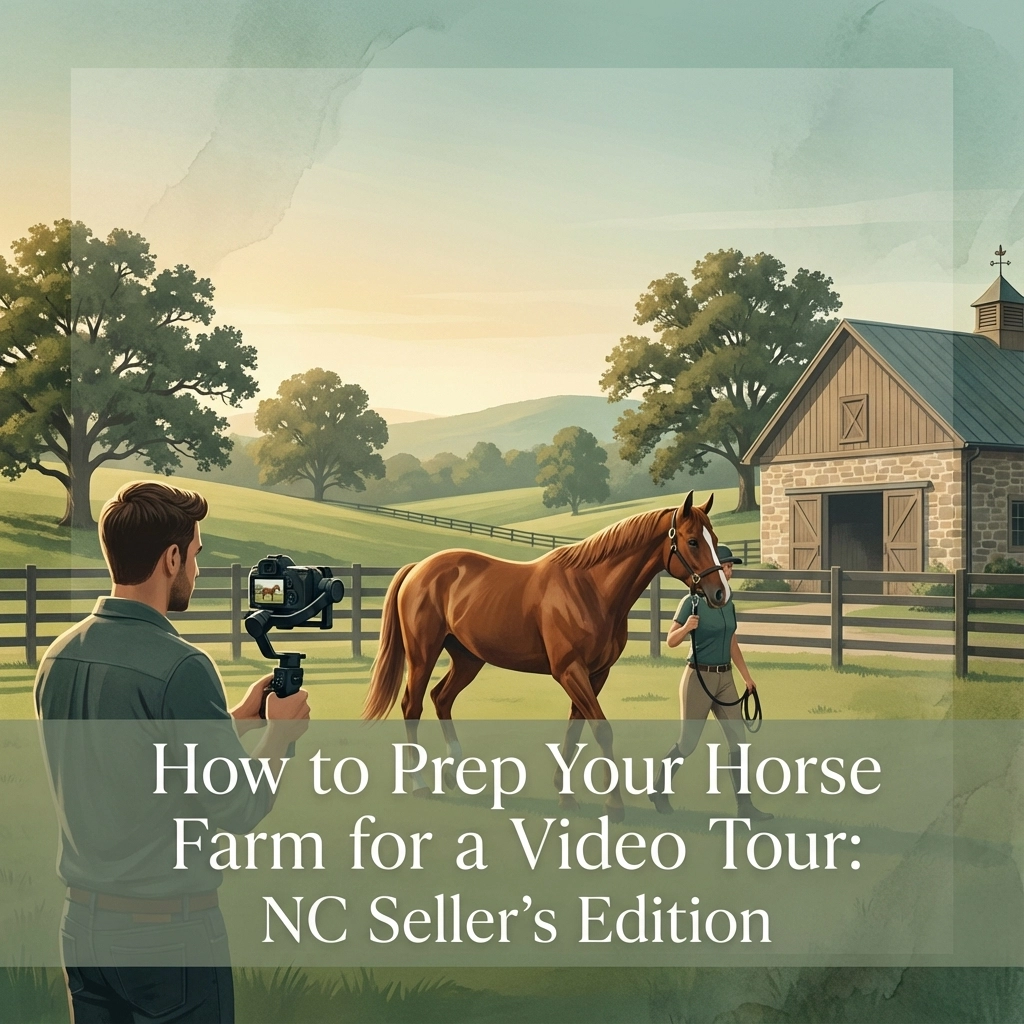
When it comes time to showcase your North Carolina horse property, first impressions happen before buyers ever set foot on your land. In today's digital-first market, that initial connection happens through video: and getting it right can mean the difference between serious inquiries and passed-over listings.
After years of helping horse farm owners across the Tar Heel State prepare their properties for sale, we've learned what makes buyers lean forward in their chairs versus click away. It's not about perfection; it's about authentically presenting the equestrian lifestyle your farm offers.
Understanding the Golden Hour Advantage
North Carolina's natural light changes dramatically throughout the day, and timing your video shoot can transform ordinary pastures into magazine-worthy scenes. Plan your primary footage for the hour following sunrise or the hour before sunset. During these windows, your fields take on that warm, honeyed glow that makes viewers imagine morning feeds and evening rides.
For farms in the Piedmont region, this lighting beautifully showcases the rolling terrain that makes our state so appealing to horse buyers. In coastal areas near Wilmington, golden hour light creates stunning contrast against darker soils and oak groves.

Mid-morning shoots work well for barn interiors and covered areas, when natural light filters in without harsh shadows. Avoid midday filming unless you're specifically showcasing indoor arenas with excellent artificial lighting.
Staging Your Barns and Facilities
Your barn tells the story of how horses live on your property. Start with a thorough cleaning, but resist the urge to make everything look unused. Buyers want to see a working farm, not a museum.
Organize tack rooms and feed areas, but leave evidence of daily horse care: clean halters hanging on hooks, filled water buckets, fresh hay in the racks. Remove personal items like family photos or unrelated storage, but keep horse-related equipment that shows the barn's functionality.
Check all lighting fixtures and replace any burned bulbs. Ensure stall doors operate smoothly and quietly: squeaky hinges are amplified on video and suggest deferred maintenance. If your wash stalls or breeding areas are selling points, ensure they're spotless and properly lit.
For properties with indoor arenas, have the footing freshly dragged and watered if appropriate. A well-maintained arena surface immediately communicates serious equestrian infrastructure to knowledgeable buyers.
Pasture and Fencing Presentation
Your pastures are likely the first thing buyers notice and often the most important factor in their decision. Walk your fence lines the day before filming to identify and address any obvious repair needs. You don't need perfect fencing, but visible maintenance and care matter enormously.
If you're dealing with North Carolina's frequent summer growth, have fields mowed or at least trimmed along fence lines. Overgrown pastures can make excellent land appear neglected, especially to out-of-state buyers unfamiliar with our aggressive growing season.
Consider the visual path your camera will take through each field. Remove temporary fencing, equipment, or debris that might distract from the land itself. If you have automatic waterers or quality fencing, ensure they're prominently visible in shots.

Preparing Your Horses for Their Close-Up
If your horses will appear in the video: and they should, if possible: a little preparation goes a long way. Well-groomed horses grazing peacefully or moving naturally through pastures add life and authenticity that empty fields simply can't match.
Plan feeding times to coincide with filming. Horses focused on hay or grain create natural, attractive footage and demonstrate normal daily routines. Avoid forcing interactions or movement that might stress your animals or create unsafe conditions for your filming crew.
If you have particularly photogenic or calm horses, consider having them in your most visible pastures during filming. But prioritize safety and animal comfort over any shot: stressed horses create stressed footage.
Highlighting Water Features and Natural Assets
North Carolina horse farms often feature ponds, creeks, or other water sources that significantly add to property value. These features require special attention during video preparation.
Clear any debris from pond areas and ensure walking paths to water sources are safe and clear. If you have creek access, consider having it featured prominently, as many buyers specifically seek properties with natural water sources.
Rock outcroppings, mature trees, and natural terrain features that make your property unique should be easily accessible and visible during filming. These elements often justify premium pricing and separate your farm from generic acreage.
Technical Considerations for Optimal Results
Ensure your videographer can access all key areas of your property. This might mean temporarily removing gates, clearing brush from trails, or establishing safe parking for equipment vehicles.
Test your property's cell coverage and internet connectivity if live streaming or immediate upload capabilities are planned. Many rural North Carolina properties have connectivity challenges that should be addressed beforehand.
If your property includes trails or riding areas beyond main pastures, ensure they're accessible and safe for camera equipment. Some of the most compelling footage comes from unique features like wooded trails or hill-top views that showcase your land's full potential.

Seasonal Timing Strategies
North Carolina's seasons each offer distinct advantages for video tours. Spring showcases new grass and flowering trees but may include muddy conditions from frequent rain. Summer provides lush pastures but requires early morning or late evening filming to avoid harsh heat and shadows.
Fall offers spectacular visuals with changing leaves and comfortable temperatures, making it ideal for longer filming sessions. Winter filming can work well for highlighting barn facilities and infrastructure, though brown pastures may not appeal to every buyer.
Plan your video timing around your property's best seasonal appearance, but don't delay marketing for perfect conditions. Well-prepared footage works in any season when properly executed.
Common Mistakes to Avoid
Avoid cluttering shots with personal vehicles, equipment, or temporary structures that don't convey with the property. Empty feed buckets, broken equipment, or overfilled manure piles create negative impressions that last long after viewing ends.
Don't attempt to hide property limitations or challenges. Honest representation builds trust and attracts qualified buyers rather than creating disappointment during in-person visits.
Resist over-staging that makes your farm look unused or artificially perfect. Buyers want working farms, not showpieces that seem impossible to maintain.
Working with Professional Results
Consider your video tour an investment in attracting serious, qualified buyers who understand horse property value. Quality footage not only showcases your farm effectively but also demonstrates the care and attention you've invested in the property itself.
The right preparation creates video content that works as hard as you do to find the perfect buyer for your North Carolina horse farm: someone who will appreciate and continue the legacy you've built.
When you're ready to showcase your horse farm through professional video marketing that truly captures its character and potential, experienced guidance makes all the difference in presenting your property's story effectively.
Leave a Reply