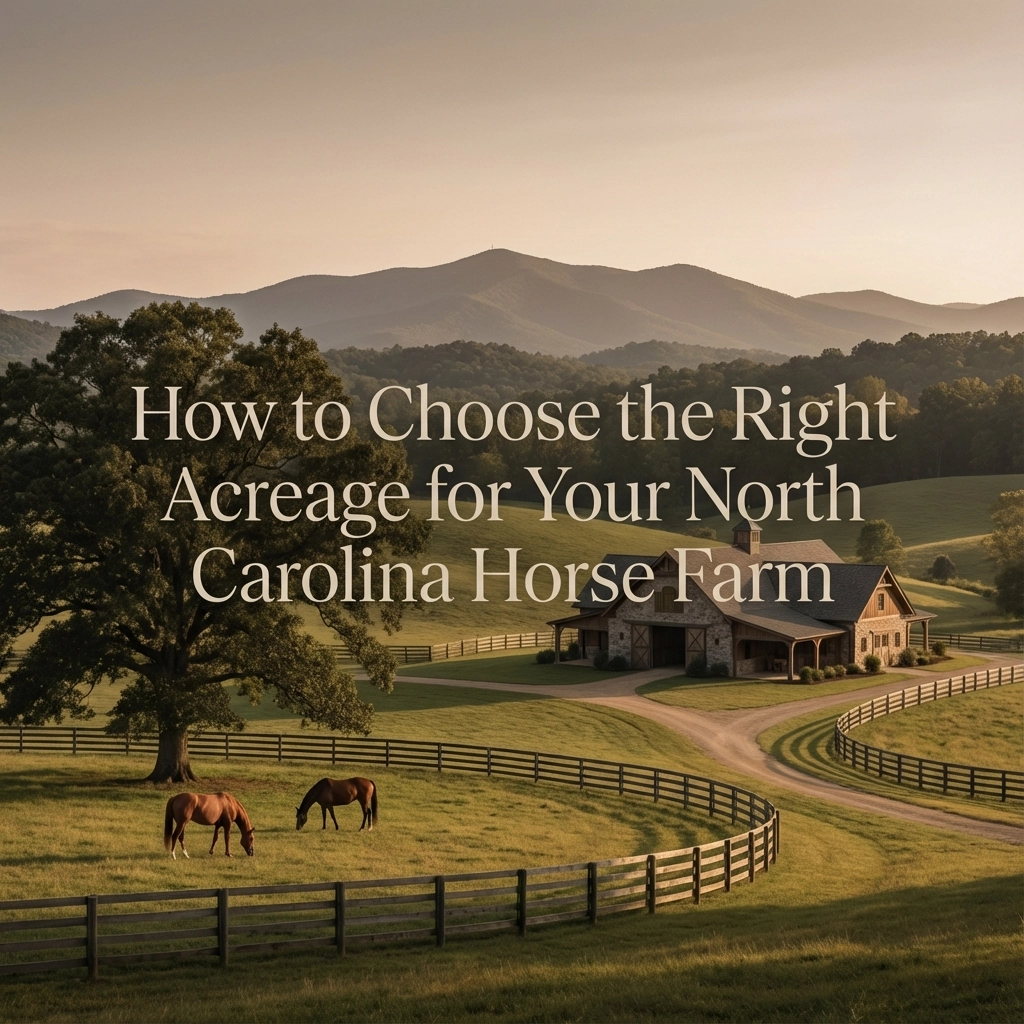
Finding the perfect acreage for your North Carolina horse operation isn't just about having enough space: it's about understanding how different factors work together to create a sustainable, horse-friendly environment that supports your specific goals.
Understanding the Baseline: Industry Standards for Horse Acreage
The equestrian industry has developed general guidelines over decades of experience, but these numbers should serve as your starting point, not your final answer.
The Two-Plus-One Rule: Most professionals recommend two acres for your first horse, then an additional acre for each horse after that. This formula works well for recreational horse owners who want adequate turnout without intensive pasture management.
The Four-Acre Standard: For breeding operations where horses spend 80% of their time grazing, Kentucky horse farming expert Ron Wallace advocates for four acres per horse. This higher ratio accounts for the increased nutritional demands of breeding stock and the need for rotational grazing.
The Intensive Management Exception: Sport horses focused on training rather than turnout, or operations using primarily stall-based management, can function on significantly less land. With excellent management and 70% vegetative cover, experienced horsemen can successfully maintain one horse per acre.

The key insight here is that acreage requirements depend heavily on your management philosophy and your horses' primary use. A dressage barn with horses in work six days a week has different land needs than a retirement farm where horses live out 24/7.
North Carolina's County-Specific Regulations
Unlike states with uniform agricultural zoning, North Carolina delegates most land-use decisions to individual counties, creating a patchwork of regulations that directly impacts your acreage decisions.
Richlands Requirements: Private stables need a minimum of two acres, with specific ratios thereafter: 2 acres total for 1-7 horses, then an additional 1.25 acres for each horse beyond seven. This reflects the eastern part of the state's recognition that horse operations need room to function properly.
Onslow County Standards: Here, the regulations distinguish between accessory and primary use. Horse stables as an accessory use (meaning your property has another primary function) require just one acre minimum. However, if horses are your property's main purpose, you'll need five acres minimum.
The Setback Reality: Regardless of total acreage, North Carolina counties typically require substantial setbacks that can limit your usable space:
- Stalls must sit 200 feet from dwellings and 50 feet from property lines
- Pasture areas need 100 feet from dwellings and 20 feet from property lines
- Manure and feed storage requires 400 feet from dwellings and 100 feet from property lines
These setback requirements often mean that properties under five acres struggle to accommodate both residential and equestrian functions effectively.

The Pasture Quality Factor
Raw acreage numbers mean nothing without considering what that land can actually produce for your horses.
Carrying Capacity Calculations: One horse consumes roughly 27 acres' worth of forage annually, either through grazing or hay equivalent. This means that on excellent pasture with proper rotation, you might achieve one horse per acre. On poor soil with marginal grass, you might need three or four acres per horse just to provide adequate nutrition.
North Carolina's Geographic Advantages: Our state's varied topography and climate create distinct regions with different agricultural potential. The Piedmont's rolling hills and clay-based soils support different grass varieties than the Coastal Plain's sandy soils or the Mountain region's cooler temperatures and shorter growing seasons.
Soil Testing and Forage Planning: Before committing to any acreage, conduct soil tests to understand pH levels, nutrient availability, and drainage characteristics. Poor soil doesn't disqualify a property, but it changes your management requirements and operational costs significantly.
Storage and Infrastructure Space Planning
Many buyers focus entirely on pasture acreage while overlooking the substantial space requirements for supporting infrastructure.
Manure Management: North Carolina regulations require specific storage areas sized according to your horse population: from 500 square feet for 1-3 horses up to 6,000 square feet for operations with 21 or more horses. Factor in equipment access and proper drainage when calculating these areas.
Feed Storage Considerations: Hay and grain storage needs increase exponentially with herd size. Quality hay storage requires protection from moisture and adequate ventilation, often necessitating substantial covered areas that many new horse property owners underestimate.
Equipment and Vehicle Storage: Tractors, mowers, trailers, and other essential equipment need covered storage. Many successful horse operations dedicate 10-15% of their total improved area to equipment storage and workshop space.

Operational Type Drives Acreage Decisions
Your intended use significantly impacts how much land you actually need, beyond any local zoning requirements.
Breeding Operations: These typically require the highest land-to-horse ratios due to extended turnout periods, separation requirements for stallions and mares, and foaling paddocks. Plan for 4-6 acres per breeding animal, with additional space for young stock.
Training and Sport Horse Operations: Facilities focused on riding and training can function efficiently on less acreage since horses spend significant time in work rather than turnout. However, these operations often need larger covered arenas, round pens, and specialized footing that requires different space planning.
Retirement and Sanctuary Operations: Horses living out full-time need adequate pasture rotation and shelter options. These operations benefit from larger acreage but can sometimes work with lower-quality land since the management intensity is typically lower.
Water Access and Natural Resources
Water availability often determines a property's true carrying capacity more than total acreage.
Natural Water Sources: Ponds, streams, and springs can provide excellent water access for horses, but they also come with management responsibilities and potential environmental regulations. Factor in fencing requirements to protect water sources while providing safe access.
Well Water Considerations: Many horse properties rely on well water, which requires understanding both water quality and production capacity. A well producing five gallons per minute might support a small operation but could limit growth potential.
Drainage and Wet Weather Management: North Carolina's humid climate and seasonal rainfall patterns mean that good drainage often matters more than total acreage. Poorly drained land becomes unusable during wet periods, effectively reducing your functional space.

The Hidden Costs of Acreage Size
More land isn't automatically better: it comes with proportional management requirements and costs.
Fencing Requirements: Perimeter fencing costs scale directly with property size, while internal paddock fencing depends on your management system. Budget $3-8 per foot for quality horse fencing, with costs varying based on terrain and materials.
Maintenance Equipment Needs: Larger acreage typically requires more substantial equipment for mowing, bush-hogging, and pasture management. Factor in not just purchase costs but ongoing maintenance and fuel expenses.
Property Tax Implications: North Carolina offers agricultural tax benefits for qualifying horse operations, but larger acreage means higher base tax liability even with agricultural exemptions.
Making the Right Choice for Your Situation
Successful horse property selection balances your horses' needs, your management capabilities, local regulations, and long-term goals.
Start by honestly assessing your experience level and available time for property management. A smaller, well-managed property often serves horses better than extensive acreage that becomes overgrown or poorly maintained.
Consider your growth plans carefully. Properties that work well for two horses may become inadequate if you plan to expand your operation, breed horses, or take in boarding clients.
Ready to find your perfect horse property in North Carolina? Our team understands the unique requirements of equestrian operations and can help you navigate both the emotional and practical aspects of choosing the right acreage. Whether you're looking for a small retirement farm or a full-scale breeding operation, we'll help you find land that truly works for both you and your horses.
Leave a Reply