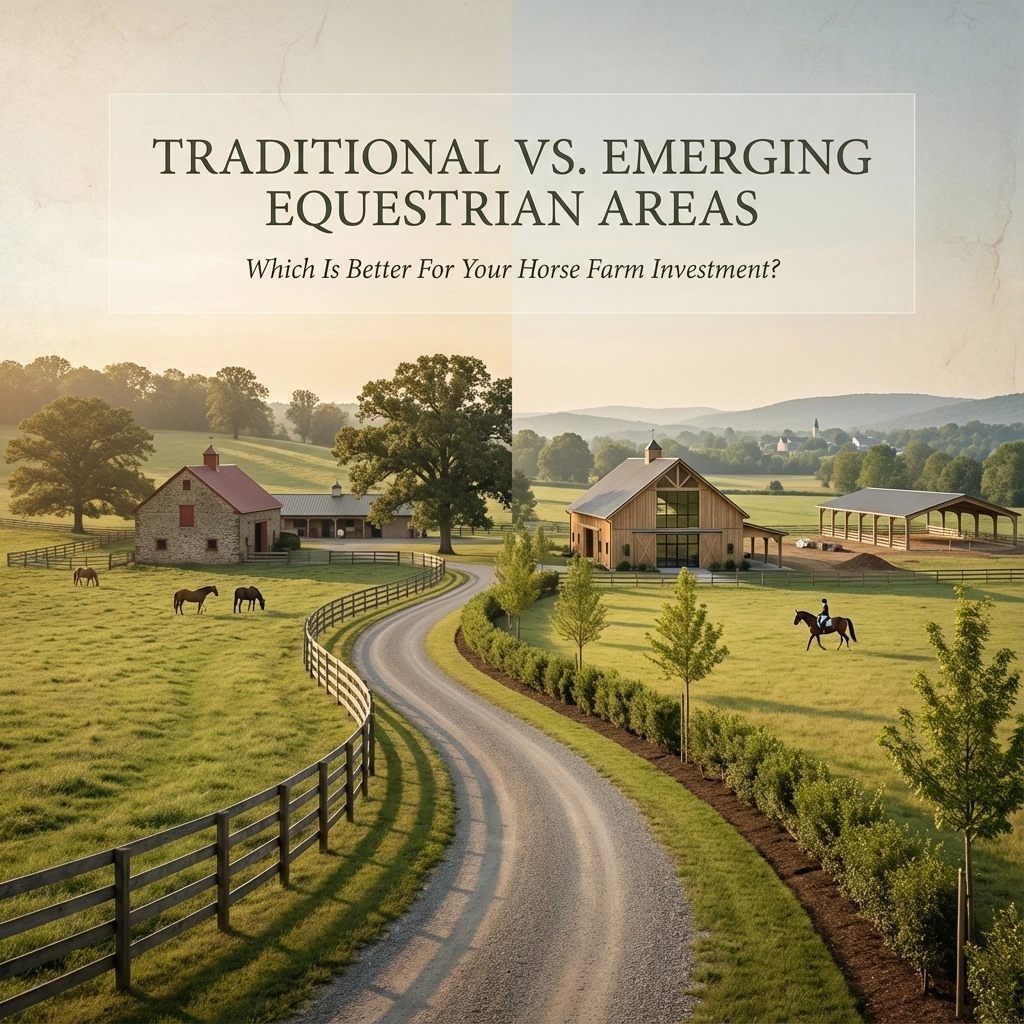
The equestrian real estate market presents two distinct pathways for horse farm investment: established traditional hubs with proven track records and emerging areas offering affordability with growth potential. Understanding the fundamental differences between these markets will determine whether your investment aligns with your long-term goals and financial capacity.
Defining Traditional vs. Emerging Equestrian Markets
Traditional equestrian areas represent decades of established infrastructure, concentrated wealth, and proven horse industry presence. These markets include renowned destinations like Lexington, Kentucky; Wellington, Florida; Middleburg, Virginia; and Aiken, South Carolina. These regions built their reputations through generations of horse breeding, training, and competition excellence.
Emerging equestrian areas encompass regions with growing horse populations, developing infrastructure, and typically more affordable land prices. These markets include areas like Idaho, portions of Wyoming, rural Texas, and expanding regions within established equestrian states where development is moving outward from traditional centers.

Traditional Equestrian Areas: Established Excellence
Infrastructure and Amenities
Traditional equestrian hubs offer unmatched infrastructure development. Wellington, Florida, transforms into the winter capital of the equestrian world, hosting the Winter Equestrian Festival and providing world-class facilities including covered arenas, professional-grade footing, and veterinary hospitals specifically designed for equine care.
Lexington, Kentucky, features the Kentucky Horse Park, Keeneland Race Course, and numerous breeding farms that have shaped the Thoroughbred industry for over two centuries. The region's limestone-rich soil provides natural calcium supplementation for developing horses, creating an inherent advantage that cannot be replicated elsewhere.
Middleburg, Virginia, known as the equestrian capital of the East Coast, hosts the prestigious Upperville Colt & Horse Show and maintains fox hunting traditions dating back to colonial times. The area offers hunt country atmosphere with rolling hills, stone walls, and meticulously maintained properties.
Market Stability and Appreciation
Land values in traditional markets reflect established demand and limited supply. Wellington properties command $50,000 to $150,000 per acre, while Middleburg ranges from $20,000 to $80,000 per acre. These premium prices correlate with consistent appreciation and strong resale markets.
Buyers in traditional markets typically possess substantial financial resources and view equestrian properties as lifestyle investments rather than purely financial decisions. This creates market stability during economic downturns, as affluent buyers often maintain their equestrian properties even when other investments decline.
Community and Competition Access
Traditional areas provide immediate access to high-level competition, training professionals, and established equestrian social networks. These regions host recognized competitions throughout the year, offering opportunities for horses and riders to compete without extensive travel requirements.
The concentration of equestrian professionals creates competitive advantages for horse development and training. Access to top-tier trainers, veterinarians, farriers, and other specialists allows for optimal horse care and performance development.
Emerging Equestrian Areas: Opportunity and Affordability
Cost Advantages and Land Availability
Emerging markets offer dramatic cost savings compared to traditional hubs. Idaho provides quality horse property for $5,000 to $10,000 per acre with a cost of living 4% below the national average. Sheridan, Wyoming, offers land from $8,000 to $30,000 per acre while maintaining access to Western riding disciplines and ranch work opportunities.
These price differentials allow buyers to purchase significantly larger acreage, enabling extensive pasture systems, multiple training facilities, and room for future expansion. A budget sufficient for 10 acres in Wellington could secure 50-100 acres in emerging markets.

Development Potential and Flexibility
Emerging areas provide opportunities to establish equestrian facilities according to personal preferences rather than adapting existing infrastructure. Buyers can design barn layouts, arena configurations, and pasture systems optimized for their specific disciplines and management approaches.
Many emerging regions qualify for agricultural classifications, providing tax advantages and development flexibility not available in established suburban equestrian communities. These classifications can significantly reduce property taxes while allowing agricultural activities that support equestrian operations.
Growing Communities and Future Appreciation
Emerging markets often experience rapid growth as equestrian enthusiasts seek affordable alternatives to traditional high-cost areas. This migration pattern creates potential for significant property appreciation as demand increases and infrastructure develops.
Western states particularly benefit from growing populations of equestrians interested in ranch riding, trail riding, and Western disciplines. These areas offer authentic ranch experiences and working cattle operations that appeal to riders seeking practical horsemanship rather than competitive show environments.
North Carolina's Unique Position
North Carolina represents a hybrid market combining elements of both traditional and emerging equestrian areas. The Tryon region gained international recognition hosting the 2018 World Equestrian Games and offers established infrastructure rivaling traditional hubs.
Areas surrounding Charlotte provide emerging opportunities with reasonable land prices, growing equestrian communities, and proximity to major metropolitan amenities. These regions offer the potential for traditional area appreciation while maintaining emerging market affordability.
The state's diverse geography supports multiple disciplines from Western pleasure to English hunt seat, creating broader market appeal than regions limited to specific riding styles. This diversity provides market stability and multiple exit strategies for future resale.

Investment Factors for Decision Making
Financial Capacity and Risk Tolerance
Traditional markets require substantial initial capital but offer proven appreciation and strong resale markets. These investments suit buyers with significant liquid assets who prioritize stability over maximum returns.
Emerging markets appeal to buyers seeking maximum land acquisition for available capital and willing to accept longer-term appreciation timelines. These investments require patience as community development and infrastructure improvements gradually increase property values.
Intended Use and Timeline
Buyers planning immediate competition participation benefit from traditional markets' established infrastructure and competition access. Those building long-term breeding or training operations may prefer emerging markets' flexibility and expansion potential.
Retirement planning influences market selection, as traditional areas provide established communities and services appealing to older equestrian enthusiasts, while emerging markets attract younger buyers building careers in the horse industry.
Exit Strategy Considerations
Traditional markets offer broader buyer pools and faster sale timelines due to established demand and financing availability. Properties in recognized equestrian areas appeal to multiple buyer categories including equestrian enthusiasts and general luxury property buyers.
Emerging markets may require longer sale periods and more specialized marketing to identify qualified buyers. However, properly developed properties in growing equestrian regions can provide substantial returns as markets mature.
Making the Strategic Choice
Consider traditional equestrian areas when immediate infrastructure access, established community participation, and proven resale values take priority over cost considerations. These markets suit buyers with substantial capital seeking turnkey operations and immediate competition access.
Choose emerging equestrian markets when affordability, development flexibility, and long-term appreciation potential outweigh infrastructure limitations. These markets reward buyers willing to invest time and resources in community development while building customized facilities.
Success in either market requires thorough due diligence regarding zoning regulations, water rights, soil quality, and local equestrian community dynamics. Partner with real estate professionals who understand equestrian property requirements and can navigate the complexities of horse farm transactions.
The optimal choice depends on aligning your financial capacity, timeline, and equestrian goals with market characteristics that support your long-term success. Both traditional and emerging markets offer viable paths to equestrian property ownership when properly matched to individual circumstances.
Ready to explore equestrian properties that match your investment goals and riding aspirations? Our team understands the unique requirements of horse properties across traditional and emerging markets throughout North Carolina. Contact Carolina Horse Farm Realty to discuss your equestrian property search and discover opportunities that align with your vision for horse farm ownership.
Leave a Reply