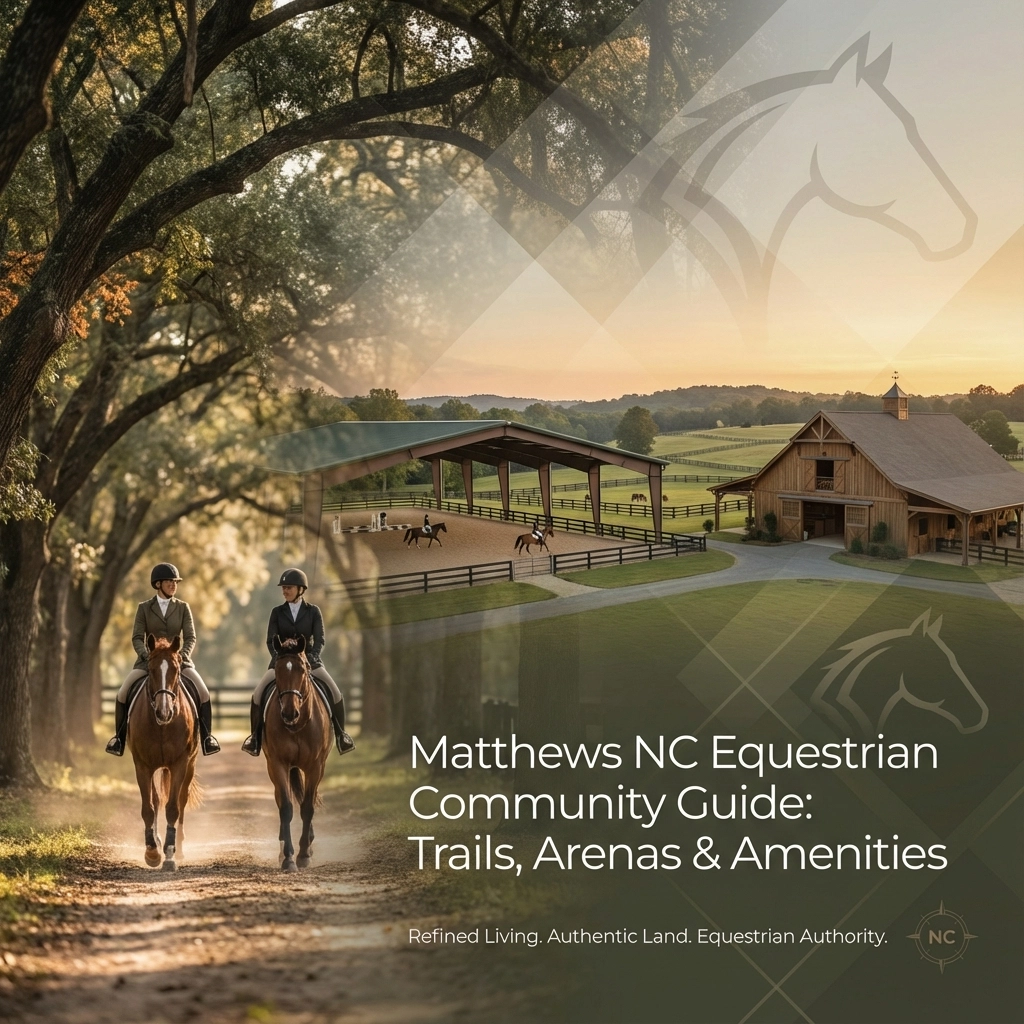
Matthews, North Carolina sits in the heart of the Charlotte metro area, where suburban convenience meets genuine horse country. As equestrians increasingly seek communities that balance accessibility with authentic agricultural living, this Union County town has emerged as a compelling destination for horse owners looking to establish roots in the Southeast.
Understanding What Makes an Equestrian Community Thrive
The best equestrian communities aren't just subdivisions with horse allowances: they're thoughtfully planned environments where every detail supports the horse-centered lifestyle. In the Matthews area, successful equestrian developments share several critical characteristics that separate genuine horse communities from rural real estate with equestrian marketing.
Integrated Trail Systems form the backbone of any serious equestrian community. These aren't afterthoughts carved around development: they're primary infrastructure planned from the beginning. Quality trail networks connect individual properties, provide varied terrain for conditioning, and create the social fabric that turns neighbors into riding partners.
Shared Amenities That Actually Get Used distinguish communities where horses are lifestyle from those where they're decoration. Indoor arenas that accommodate year-round riding, outdoor competition rings with proper footing, and communal round pens for training work represent the infrastructure that serious horse owners require.

Water Access and Management might be the most overlooked aspect of equestrian community planning. Streams, ponds, and wells aren't just scenic features: they're operational necessities. Communities that understand horses plan for both daily watering needs and emergency water access during drought periods.
The Critical Infrastructure Every Horse Owner Needs
When evaluating equestrian communities around Matthews, experienced horse owners look beyond the obvious. Pasture acreage and barn space matter, but the supporting infrastructure determines whether a community will enhance or complicate your horse operation.
Footing and Drainage separate communities that understand horses from those that simply allow them. Proper arena footing requires specific materials, drainage systems, and ongoing maintenance. Sand rings that turn to dust in summer and mud in winter indicate communities that haven't invested in proper equestrian infrastructure.
Fencing Standards and Maintenance reveal community priorities. Horse-safe fencing isn't optional: it's fundamental safety infrastructure. Communities with clear fencing standards, maintenance protocols, and violation procedures protect both horses and property values.
Veterinary and Farrier Access becomes crucial during emergencies. Communities that maintain relationships with local equine professionals, provide adequate truck and trailer access to every property, and understand the logistics of horse care demonstrate genuine commitment to equestrian living.

Manure Management and Composting Areas might seem mundane, but they're essential for sustainable horse keeping. Well-planned communities provide designated composting areas, pickup services, or partnerships with local farms: solving one of horse ownership's most persistent challenges.
Location Advantages: Why the Matthews Area Works
Matthews offers unique advantages for equestrian communities that many horse owners discover only after relocating. The town's position in Union County provides agricultural zoning opportunities while maintaining reasonable commutes to Charlotte's business centers.
Climate and Growing Season support year-round outdoor activities that northern relocating horse owners particularly appreciate. The extended growing season means longer turnout periods, reduced hay costs, and riding weather that spans nine months of the year.
Soil Composition and Topography in the Matthews area create natural advantages for horse keeping. The Piedmont's clay-based soils provide stable footing for arenas and trails, while gentle topography offers varied terrain without dangerous slopes.
Proximity to Equestrian Services concentrates around Charlotte's horse community. Feed stores, tack shops, equine hospitals, and training facilities cluster within reasonable distances, creating the support network that makes horse ownership practical rather than overwhelming.

Evaluating Trail Systems and Riding Access
Trail quality and maintenance reveal community management philosophy more clearly than any marketing materials. When evaluating Matthews-area equestrian communities, experienced riders assess trails with the critical eye of someone who'll use them regularly.
Trail Width and Clearing should accommodate two riders comfortably. Narrow trails that force single-file riding limit social opportunities and create bottlenecks during busy periods. Proper clearing means no low-hanging branches, stable ground surfaces, and sight lines that allow horses to see ahead.
Terrain Variety matters for horse conditioning and rider engagement. Flat trails are easy to maintain but limit training opportunities. The best community trail systems incorporate gentle hills, varied footing, and natural obstacles that keep both horse and rider engaged.
Seasonal Accessibility separates well-designed trail systems from fair-weather amenities. Trails that become impassable during wet weather or require extensive maintenance after storms indicate poor initial planning or inadequate ongoing investment.
Connection to External Trail Networks can exponentially expand riding opportunities. Communities that provide access to state parks, rail-trails, or connections to neighboring equestrian properties offer riding experiences that extend far beyond community boundaries.
Shared Amenities That Define Quality Communities
The amenities that matter most to horse owners aren't always the most photogenic. While grand clubhouses photograph well, working amenities determine daily quality of life for serious equestrians.
Arena Scheduling and Access policies reveal how communities balance individual needs with shared resources. Clear scheduling systems, fair access policies, and adequate arena time for all residents indicate thoughtful community management.
Equipment Storage and Tool Sharing might seem minor but affects daily operations significantly. Communities that provide secure storage for community equipment, tools for trail maintenance, and organized systems for sharing resources demonstrate attention to practical needs.

Wash Racks and Grooming Areas represent infrastructure that many communities overlook until owners need it. Shared wash facilities with hot water, adequate drainage, and proper lighting extend the useful season for outdoor horse care.
Competition and Event Support capabilities determine whether communities can host horse shows, clinics, and social events that build community bonds. Adequate parking for multiple trailers, announcer systems, and spectator areas transform communities from residential to truly equestrian.
What Horse Owners Need to Know About Matthews
Matthews offers specific advantages that make it particularly attractive to equestrians relocating from other regions. Understanding these benefits helps horse owners make informed decisions about community selection.
Zoning Flexibility in Union County allows agricultural uses that might be restricted in other Charlotte suburbs. This flexibility extends to home businesses, boarding operations, and training facilities that support the broader equestrian economy.
Property Taxes and Agricultural Exemptions can significantly impact the long-term cost of horse ownership. Understanding local tax policies, agricultural exemptions, and land use requirements affects both initial property selection and ongoing expenses.
Development Pressure and Future Planning influences long-term community stability. Communities with strong covenants, clear development plans, and commitment to maintaining equestrian character provide security for substantial horse facility investments.

Working With Equestrian-Focused Real Estate Professionals
Finding the right equestrian community requires working with professionals who understand both horses and real estate. Generic real estate agents often miss critical details that determine whether a community will support or frustrate your horse operation.
Questions About Daily Operations should be part of every community evaluation. How are trails maintained? Who manages arena grooming? What happens to manure? These operational details determine whether communities function smoothly or create ongoing friction.
Understanding Community Dynamics requires insight into both formal rules and informal culture. Some communities actively encourage horse activities and social events, while others simply tolerate horses as property accessories. The difference affects both lifestyle satisfaction and property values.
Long-term Investment Protection considers factors beyond current amenities. Communities with strong leadership, adequate reserves, and clear maintenance protocols protect property values even as equestrian markets evolve.
The Matthews area offers genuine opportunities for horse owners seeking communities that understand and support equestrian living. However, finding the right fit requires careful evaluation of infrastructure, management, and community culture. At Carolina Horse Farm Realty, we understand these nuances because we live this lifestyle ourselves.
Ready to explore equestrian communities that truly understand horses? Let's discuss what matters most for your specific needs and goals.
Leave a Reply