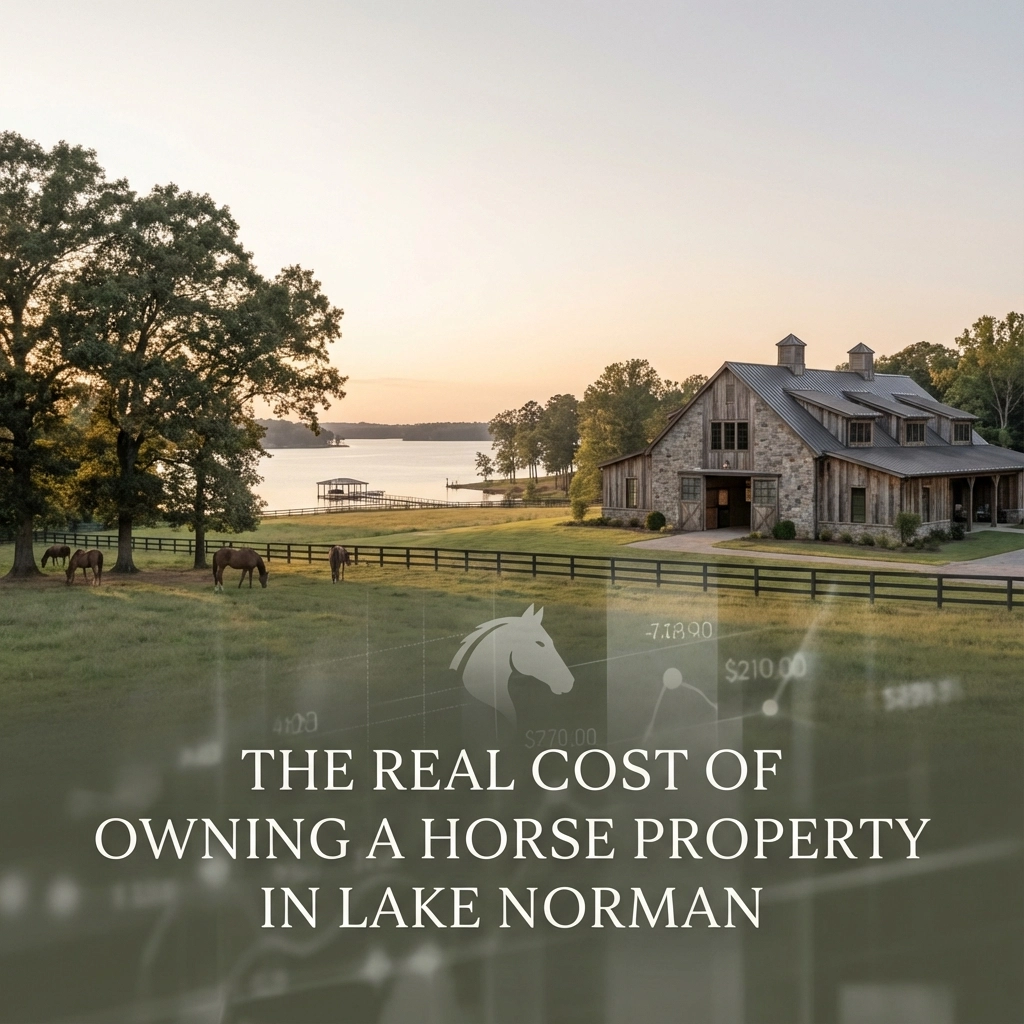
Lake Norman's rolling pastures and proximity to Charlotte make it one of North Carolina's most coveted equestrian markets. But beyond the initial purchase price, what does it truly cost to own and maintain a horse property in this prestigious region?
Understanding the complete financial picture is essential before you make the move to Lake Norman horse country. From property taxes to pasture maintenance, the ongoing costs can vary dramatically based on your property size, amenities, and horse management approach.
Property Acquisition Costs
Land and Home Investment
Waterfront equestrian properties in Lake Norman typically range from $1.2 million to $8 million, depending on acreage and amenities. Off-water horse farms offer better value, with quality properties starting around $650,000 for 5-10 acres with basic facilities.
The sweet spot for most serious horsemen falls between $800,000 and $1.5 million for 10-25 acres with existing barns, riding arenas, and quality pastures. Properties in Mooresville and Davidson command premium pricing due to excellent schools and infrastructure.
Due Diligence Expenses
Factor in $8,000-15,000 for comprehensive property inspections, including well and septic testing, soil analysis, and structural evaluations of existing equestrian facilities. Many buyers overlook arena footing analysis and pasture soil composition testing, which can reveal expensive future remediation needs.
Annual Property Carrying Costs
Property Taxes by Municipality
Lake Norman spans multiple counties with varying tax rates. Lincoln County offers the most favorable rates at approximately 0.57% of assessed value, while Mecklenburg County properties face rates near 1.05%. For a $1 million horse farm:
- Lincoln County: $5,700 annually
- Iredell County: $6,200 annually
- Mecklenburg County: $10,500 annually
Insurance Considerations
Standard homeowner's insurance runs $1,200-2,500 annually for most Lake Norman properties. However, equestrian liability coverage adds $800-1,500 yearly. Properties with riding instructors or boarding operations require commercial policies starting at $3,500 annually.
Umbrella policies become essential with horses on property. Most carriers recommend $2-5 million coverage, costing $400-800 annually.
Equestrian Infrastructure Maintenance

Pasture Management
Quality Lake Norman horse properties require 2-3 acres per horse minimum. Annual pasture maintenance includes:
- Fertilization: $75-100 per acre twice yearly
- Overseeding: $50-75 per acre annually
- Weed control: $40-60 per acre
- Soil testing: $25 per acre every three years
For a 20-acre property supporting 8 horses, budget $4,000-5,500 annually for proper pasture care.
Fencing Upkeep
Board fencing, popular in Lake Norman's estate communities, requires annual maintenance of $2-4 per linear foot. A typical 20-acre property with 3,000 feet of perimeter and cross-fencing needs $6,000-12,000 annually for painting, repair, and board replacement.
No-climb mesh fencing reduces maintenance to $0.50-1.00 per linear foot but lacks the aesthetic appeal many Lake Norman communities prefer.
Arena and Facility Maintenance
Sand arenas require $1,500-3,000 annual maintenance including footing replacement, dragging equipment upkeep, and sprinkler system maintenance. Indoor arenas add electrical costs of $200-400 monthly for lighting and ventilation.
Barn maintenance typically runs $500-800 per stall annually, including bedding area refreshing, water system maintenance, and routine repairs.
Ongoing Horse Care Costs
Veterinary and Farrier Services
Lake Norman's proximity to Charlotte provides excellent veterinary access. Annual costs per horse average:
- Routine veterinary care: $800-1,200
- Farrier services: $600-900 (every 6-8 weeks)
- Emergency fund recommendation: $2,000-3,000 per horse
Feed and Bedding
Quality hay in the Lake Norman area runs $4-7 per square bale, with most horses requiring 20-25 bales monthly during winter feeding. Annual feed costs per horse:
- Hay: $1,000-1,500
- Grain/supplements: $800-1,200
- Bedding: $600-900
Local feed stores in Mooresville and Davidson offer delivery services, typically adding $25-50 per delivery.
Utilities and Services
Water and Electrical
Horse properties consume significantly more water than typical residences. Automatic waterers, arena dust control, and pasture irrigation can triple normal usage. Budget $150-300 monthly for water during growing season.
Electrical costs increase with barn lighting, water heating, and ventilation systems. Expect $50-150 monthly increase over standard residential usage.
Waste Management
Manure management for 4-6 horses typically costs $100-200 monthly for pickup service. Larger operations may justify composting systems costing $3,000-8,000 initially but reducing ongoing expenses.

Seasonal and Weather-Related Expenses
Winter Preparation
Lake Norman's moderate climate still requires winter planning:
- Heated water systems: $200-400 installation, $30-80 monthly operation
- Additional hay storage: $500-1,000 annually
- Blanket cleaning and repairs: $150-300 annually
Storm Damage Preparedness
Insurance deductibles for storm damage typically range from $2,500-10,000. Many owners maintain emergency funds of $5,000-15,000 for immediate fence repairs and facility restoration.
Property Appreciation and Investment Returns
Market Performance
Well-maintained Lake Norman horse properties have appreciated 4-6% annually over the past decade, outperforming many residential markets. Properties with superior facilities and prime locations often exceed general market appreciation by 1-2%.
Rental Income Potential
Established farms with quality facilities can generate $300-600 monthly income per boarding horse. Training facilities and lesson barns in prime Lake Norman locations command higher rates but require additional insurance and infrastructure investment.
Tax Considerations and Benefits
Agricultural Exemptions
Properties qualifying for agricultural use valuation can reduce property taxes significantly. Requirements include:
- Minimum 10 acres in agricultural use
- $1,000 annual gross income from agricultural activities
- Three-year commitment to agricultural use
Properly documented horse operations can reduce taxable assessed values by 30-60%.
Business Deductions
Horse breeding, training, or boarding operations may qualify for numerous tax deductions including feed, veterinary expenses, equipment depreciation, and facility improvements. Consult qualified tax professionals familiar with equestrian enterprises.
Regional Cost Advantages
Feed and Supply Access
Lake Norman's location provides access to both local farms and major feed distributors. Bulk purchasing through area horse communities often reduces feed costs 10-20%.
Service Provider Competition
The concentration of horse properties creates competitive pricing for farriers, veterinarians, and maintenance services. Emergency veterinary coverage is excellent compared to more rural locations.
Planning Your Budget
Conservative Annual Estimates
For a modest 10-acre Lake Norman horse property supporting 3-4 horses:
- Property taxes and insurance: $8,000-12,000
- Utilities and services: $4,000-6,000
- Pasture and facility maintenance: $6,000-9,000
- Horse care and feeding: $8,000-12,000
- Total annual carrying costs: $26,000-39,000
Premium Property Considerations
Larger estates with extensive facilities may see annual costs of $50,000-100,000 or more, particularly with full-time staff, multiple horses, and competitive activities.
Making the Investment Work
The key to successful Lake Norman horse property ownership lies in realistic budgeting and understanding your specific goals. Whether seeking a private family retreat or developing an equestrian business, the region offers exceptional opportunities for those prepared for the financial commitment.
Many owners find that careful property selection, efficient management practices, and strategic use of agricultural exemptions can make Lake Norman horse country surprisingly accessible. The combination of lifestyle benefits, strong appreciation potential, and North Carolina's favorable horse industry climate continues attracting equestrians from across the country.
For those ready to join Lake Norman's vibrant equestrian community, understanding these costs ensures you can focus on what matters most: enjoying life with your horses in one of North Carolina's most beautiful settings.
Charlotte's Best Equestrian Neighborhoods: Where Horses and Luxury Meet

Charlotte's explosive growth hasn't diminished its appeal to serious horsemen, it's simply evolved the landscape of where equestrian excellence thrives. From established hunt country to emerging horse communities, the Queen City offers diverse options for luxury equestrian living.
Smart buyers understand that not all Charlotte-area equestrian neighborhoods offer the same advantages. Zoning protection, trail access, and community culture vary dramatically between developments. The key is matching your horsekeeping goals with neighborhoods that support long-term equestrian viability.
Waxhaw: Traditional Hunt Country
Established Excellence
Waxhaw represents Charlotte's most traditional equestrian culture, with properties dating back to working farms and tobacco plantations. The area maintains agricultural zoning protections that preserve large lot sizes and support active horse operations.
Providence Country Club's equestrian estates offer 3-10 acre lots with custom barns and riding facilities. Properties typically range from $800,000 to $3 million, with many featuring professionally designed dressage and jumping arenas.
Community Amenities
The Carolina Hunt Club maintains active trails throughout the region, providing members access to hundreds of acres for foxhunting and pleasure riding. Multiple boarding facilities offer training in hunters, jumpers, and dressage disciplines.
Waxhaw's feed stores, veterinarians, and farriers specifically serve the equestrian community, creating infrastructure that supports serious horse operations.

Lake Norman's Exclusive Enclaves
Waterfront Equestrian Estates
The Peninsula and Trump National areas feature equestrian properties combining water access with horse facilities. These exclusive communities often include 5-15 acre lots with private boat slips and professional-grade barns.
Properties start around $1.5 million for modest acreage and can exceed $8 million for premier waterfront estates with championship-level facilities.
Davidson and Mooresville Horse Communities
Established neighborhoods like Antiquity and Brawley School Road offer excellent horse properties within 30 minutes of uptown Charlotte. Many properties feature 5-20 acres with existing barns, arenas, and pastures.
The area benefits from excellent schools, making it popular with families seeking both equestrian lifestyle and educational quality.
South Charlotte's Emerging Markets
Weddington and Matthews
These rapidly developing areas offer newer equestrian communities with modern amenities. Developers increasingly include equestrian elements in luxury subdivisions, recognizing demand from horse-owning relocants.
Providence Plantation and similar communities feature 2-5 acre lots designed for horse keeping, though with more restrictive covenants than traditional farm areas.
Zoning Considerations
Buyers must carefully review deed restrictions in newer developments. Some communities allow horses but restrict commercial activities, breeding operations, or instructional programs.
Monroe and Union County
Agricultural Heritage
Monroe's surrounding areas maintain strong agricultural zoning, supporting larger properties at more accessible price points. Many 10-50 acre farms sell for $400,000-1.2 million, offering excellent value for buyers seeking substantial acreage.
The region supports active farming communities, creating natural demand for feed suppliers, large animal veterinarians, and agricultural services.
Investment Potential
Union County's proximity to Charlotte and lower property taxes create strong appreciation potential. Many buyers purchase larger properties anticipating future development opportunities while enjoying current agricultural benefits.
Mint Hill and Stallings
Suburban Horse Keeping
These areas offer compromise between urban convenience and rural space. Properties typically feature 2-8 acres with the ability to keep horses while maintaining suburban amenities.
Excellent access to Interstate 485 makes these locations attractive for commuters seeking equestrian lifestyle without extended travel times.
Gastonia and Lincoln County
Value and Space
Western Charlotte suburbs offer exceptional value for buyers prioritizing acreage over prestige addresses. Properties often include 15-50+ acres at prices 30-40% below comparable Lake Norman or Waxhaw properties.
Strong agricultural communities support diverse equestrian disciplines, from cattle work to competitive driving.
Huntersville's Horse Corridors
Zoning Protection
Huntersville maintains rural zoning along key corridors, preserving 5-20 acre properties suitable for horses. These areas offer excellent access to Charlotte while maintaining agricultural character.
Many properties feature existing barns and arenas, making them attractive to buyers seeking turnkey equestrian facilities.
Neighborhood Selection Criteria
Zoning Stability
Research municipal planning documents to understand long-term zoning intentions. Areas with agricultural overlay districts provide stronger protection against commercial development pressure.
Community Culture
Established equestrian neighborhoods often have informal networks sharing farriers, veterinarians, and boarding recommendations. This culture proves invaluable for new residents.
Trail Access
Properties near greenways, state parks, or hunt club lands offer expanded riding opportunities. Anne Springs Close Greenway in Fort Mill provides extensive trail systems accessible to nearby neighborhoods.
Infrastructure Considerations
Veterinary and Emergency Services
Proximity to equine hospitals and 24-hour emergency care becomes crucial during crises. Areas within 30 minutes of facilities like Carolina Equine Hospital provide peace of mind for serious horse owners.
Feed and Supply Access
Neighborhoods with established feed stores and tack shops typically indicate stable equestrian populations. These businesses often serve as community hubs providing local knowledge and services.
Price Range Expectations
Entry-Level Properties ($400,000-700,000)
Typically 2-8 acres in developing areas with basic facilities. Often require improvements to support serious horse operations.
Mid-Range Properties ($700,000-1.5 million)
Established properties with quality barns, arenas, and pastures. Usually 5-20 acres in desirable school districts.
Premium Properties ($1.5 million+)
Exceptional facilities, prime locations, extensive acreage. Often feature custom barns, multiple arenas, and professional-grade amenities.
Market Trends and Timing
Seasonal Patterns
Charlotte's equestrian market peaks in spring and early fall when properties show best and riders are most active in property searches.
Development Pressure
Areas closest to Charlotte face increasing development pressure. Buyers seeking long-term agricultural protection should focus on outer counties with stronger zoning protections.
Community Integration
Local Organizations
Most established equestrian neighborhoods support active hunter/jumper, dressage, or driving clubs. Participation in these organizations accelerates community integration and provides ongoing riding opportunities.
Show and Training Facilities
Access to quality trainers and competition venues often determines neighborhood desirability among serious riders. Areas supporting multiple disciplines typically maintain stronger property values.
Making the Right Choice
The best Charlotte equestrian neighborhood depends on your specific goals, budget, and horsekeeping requirements. Traditional areas like Waxhaw offer established culture and protection, while emerging markets provide modern amenities and potential appreciation.
Consider long-term plans carefully. Properties suitable for casual horse ownership may not support breeding operations or instructional programs. Conversely, large agricultural properties might exceed needs and budget for hobby horsekeepers.
Charlotte's diverse equestrian landscape ensures options for every level of involvement and investment. The key is matching your expectations with neighborhoods that support sustainable horse ownership while providing the lifestyle benefits that drew you to equestrian living in the Queen City.
Why Your Horse Farm Isn't Selling: 7 Critical Mistakes North Carolina Sellers Make
After months on the market, watching qualified buyers walk away can be devastating. Your farm represents decades of investment, memories, and careful development. Yet something isn't connecting with potential purchasers.
The North Carolina equestrian market is robust, but horse property sales require specialized knowledge that extends far beyond typical residential marketing. Buyers in this market have specific needs, concerns, and decision-making processes that differ dramatically from traditional real estate transactions.
Mistake #1: Pricing Without Understanding Market Fundamentals
The Acreage Valuation Trap
Many sellers calculate value by multiplying acreage by residential land prices, missing critical factors that drive horse property premiums and discounts. Not all acres are equal in equestrian markets.
Buyers discount heavily for steep terrain, poor drainage, or soil unsuitable for horses. Conversely, they pay premiums for quality pastures, proper fencing, and proven water sources.
Facility Depreciation Reality
That $100,000 barn built ten years ago isn't worth $100,000 today. Equestrian facilities depreciate faster than many sellers realize, particularly when maintenance has been deferred or design elements don't meet current buyer preferences.
Modern buyers prefer larger stalls (12×12 minimum), rubber matting, automatic waterers, and adequate ventilation. Older facilities often require substantial updates to attract premium buyers.
Mistake #2: Marketing to the Wrong Audience
Residential vs. Equestrian Marketing
Listing your horse farm on general real estate websites attracts browsers but rarely generates serious buyers. Horse property purchasers search specialized platforms and rely on referral networks within the equestrian community.
Professional marketing requires understanding buyer motivations: pasture quality, barn functionality, and riding access matter more than granite countertops or master suite size.
Geographic Market Confusion
North Carolina attracts equestrian relocants from specific regions, primarily Northeast suburbs, Florida developments, and California horse areas. Marketing that doesn't reach these target demographics wastes time and resources.
Successful campaigns focus on areas with high median incomes, established equestrian communities, and residents facing property tax increases or development pressure.
Mistake #3: Inadequate Property Preparation
Pasture Presentation Problems
Overgrazed, weedy, or poorly maintained pastures signal expensive remediation to knowledgeable buyers. Spring and fall property tours reveal pasture conditions that significantly impact buyer perception.
Simple improvements, overseeding, fertilization, and weed control, cost thousands but often return tens of thousands in perceived value improvements.
Facility Safety and Functionality
Buyers immediately notice safety hazards: protruding nails, broken boards, inadequate lighting, or poor footing. These issues suggest deferred maintenance and raise questions about overall property condition.
Professional pre-listing inspections identify problems before buyers discover them, allowing corrections that maintain negotiating position.
Mistake #4: Unrealistic Timeline Expectations
Seasonal Market Dynamics
Horse property sales peak during spring and fall when properties show optimally and buyers are actively searching. Winter sales require significant price adjustments as frozen pastures and bare trees fail to inspire buyer enthusiasm.
Plan listing timing around seasonal advantages. Properties listed in February often sit until May before generating serious activity.
Buyer Decision Processes
Equestrian property buyers typically require 3-6 months from initial interest to closing. Many are relocating from distant markets, coordinating job changes, and selling existing properties.
Rush timelines often eliminate qualified buyers who need reasonable time for due diligence and planning.
Mistake #5: Poor Professional Representation
Agent Experience Gaps
Residential agents often lack specialized knowledge for horse property transactions. They can't answer buyer questions about soil conditions, zoning protections, or facility functionality.
Buyers quickly lose confidence when agents can't explain agricultural exemptions, well capacity, or pasture management requirements.
Photography and Marketing Materials
Amateur photography fails to capture property scale and beauty. Horse farms require drone footage, professional lighting, and angles that showcase land use and facility relationships.
Marketing materials must highlight equestrian features first, residential amenities second. Many listings emphasize house features while treating horse facilities as afterthoughts.
Mistake #6: Inflexible Negotiation Approaches
All-or-Nothing Mentalities
Some sellers refuse to consider partial acreage sales, lease-back arrangements, or phased transitions that might attract more buyers while meeting seller needs.
Creative structuring often unlocks transactions that benefit both parties, particularly when buyers seek smaller properties or sellers need gradual transitions.
Inspection and Repair Expectations
Horse property inspections typically reveal more issues than residential properties due to facility complexity and agricultural systems. Sellers who refuse reasonable repair requests often lose buyers after significant time investment.
Understanding normal inspection findings versus major concerns helps maintain transaction momentum while protecting seller interests.
Mistake #7: Ignoring Regulatory and Legal Complexities
Zoning and Use Documentation
Many horse properties operate under grandfather clauses, agricultural exemptions, or conditional use permits that may not transfer to new owners. Buyers need clear documentation of legal operating parameters.
Undocumented improvements, septic modifications, or structures built without permits create title issues that can derail transactions.
Water Rights and Environmental Issues
Well capacity, water rights, and environmental regulations increasingly impact horse property values. Sellers who can't document water availability or address environmental concerns face substantial buyer discounts.
Professional environmental assessments identify potential issues before they become negotiation obstacles.
Market Realities for Successful Sales
Buyer Sophistication
Today's horse property buyers are generally well-educated, financially sophisticated, and experienced with equestrian facility evaluation. They recognize quality and identify problems quickly.
Attempting to hide issues or inflate capabilities typically backfires with this buyer demographic.
Competition Analysis
Multiple horse properties typically compete in any given market area. Buyers compare facilities, acreage, location, and pricing across available options.
Properties that don't compete favorably on key buyer criteria often sit indefinitely while buyers pursue better alternatives.
Positioning for Success
Professional Preparation Investment
Successful sellers typically invest 2-4% of expected sale price in professional preparation: pasture improvement, facility repairs, marketing materials, and expert representation.
This upfront investment often returns 3-5 times the cost through faster sales and higher net proceeds.
Realistic Expectations and Timing
Horse farms sell differently than residential properties. Understanding market dynamics, buyer processes, and seasonal patterns helps sellers make informed decisions about timing, pricing, and preparation.
Expert Guidance Value
Specialized equestrian real estate professionals bring market knowledge, buyer networks, and transaction experience that general agents can't match. Their expertise often makes the difference between successful sales and extended market time.
The North Carolina equestrian market offers excellent opportunities for properly positioned properties. Avoiding these common mistakes and working with experienced professionals dramatically improves both sale prospects and final outcomes.
Horse farms represent significant investments deserving professional marketing and transaction management. Sellers who recognize this reality and invest accordingly typically achieve their goals while preserving the financial and emotional value of their equestrian investments.
The Complete Guide to Horse Property Inspections in Charlotte Metro
Purchasing a horse property represents one of the largest investments most equestrians make. Unlike traditional residential inspections, equestrian properties require specialized evaluation of facilities, systems, and land features that directly impact horse safety and operational success.
Understanding what to inspect, which professionals to hire, and how to interpret findings can save thousands in unexpected expenses while ensuring your new property meets both current needs and future goals.
Pre-Inspection Planning
Assembling Your Inspection Team
Horse property inspections require multiple specialists beyond standard home inspectors. Essential team members include:
- Certified equestrian facility inspector
- Agricultural engineer or soil specialist
- Well and water system specialist
- Electrical contractor experienced with barn systems
- Structural engineer for large facilities
Timing Considerations
Schedule inspections during optimal conditions when possible. Spring and fall provide best pasture evaluation opportunities. Avoid winter inspections when frozen ground prevents adequate soil and drainage assessment.
Plan for multiple site visits spanning different weather conditions. Drainage patterns and facility functionality often vary significantly between dry and wet conditions.
Pasture and Land Evaluation
Soil Composition Analysis
Proper soil testing extends beyond basic pH levels to include:
- Compaction testing at various depths
- Nutrient analysis for pasture sustainability
- Heavy metal screening near former structures
- Drainage characteristics and water infiltration rates
Clay-heavy soils common in Charlotte area require specific management approaches. Sandy soils drain well but may need frequent fertilization.
Pasture Health Assessment
Evaluate grass species, weed populations, and grazing patterns. Healthy pastures support 2-3 acres per horse with proper rotation. Overgrazed areas indicate management problems or inadequate acreage.
Document bare spots, erosion patterns, and areas requiring reseeding. Factor remediation costs into purchase negotiations.
Fencing Inspection
Examine all fencing for structural integrity, safety hazards, and livestock suitability. Priority areas include:
- Gate hardware and alignment
- Post stability and spacing
- Wire tension and attachment methods
- Corner brace systems
- Electrical fence components where applicable
Board fencing requires annual maintenance costing $2-4 per linear foot. No-climb mesh offers lower maintenance but higher initial investment.
Water System Evaluation
Well Performance Testing
Critical testing includes:
- Flow rate measurement (minimum 5-10 GPM for horse properties)
- Water quality analysis including bacterial testing
- Static water level and drawdown rates
- Pump system condition and capacity
Charlotte area wells vary dramatically in performance. Properties in some areas require expensive water treatment systems or supplemental storage.
Distribution System Assessment
Inspect water lines, automatic waterers, and storage systems. Frozen pipe protection becomes essential for year-round operations. Underground lines require pressure testing to identify leaks.
Calculate total water demands including horse consumption, facility cleaning, arena dust control, and pasture irrigation.
Barn and Facility Inspection
Structural Integrity
Professional evaluation should examine:
- Foundation condition and settling
- Roof structure and covering integrity
- Ventilation adequacy and design
- Stall door hardware and alignment
- Aisle width and surface condition
Modern safety standards require 12-foot minimum stall widths and adequate ventilation rates. Older barns may need significant updates.
Electrical System Safety
Barn electrical systems face unique challenges from dust, moisture, and animal contact. Critical inspection points include:
- GFCI protection in all wet areas
- Proper grounding of all systems
- Light fixture condition and placement
- Feed room and tack room electrical adequacy
- Emergency lighting systems
Many older facilities require complete electrical updates to meet current codes.
Fire Safety Assessment
Evaluate fire detection systems, extinguisher placement, and emergency egress routes. Many insurance companies require specific fire safety measures for coverage approval.
Consider automatic sprinkler systems for high-value facilities. Installation costs typically range $3-8 per square foot but provide significant insurance premium reductions.
Arena and Training Facility Review
Footing Analysis
Arena footing quality dramatically impacts horse safety and performance. Professional evaluation should assess:
- Footing depth and consistency
- Drainage and moisture management
- Base material condition
- Dust control systems
Quality arena footing costs $2-8 per square foot installed. Factor replacement costs into long-term budgeting.
Drainage Systems
Proper arena drainage prevents costly footing problems and ensures year-round usability. Inspect:
- Surface grading and water flow patterns
- Underground drainage tile condition
- Perimeter drainage systems
- Irrigation system functionality
Environmental and Regulatory Compliance
Septic System Evaluation
Horse properties often stress septic systems beyond residential design parameters. Professional pumping and inspection should verify:
- System size adequacy for actual usage
- Drain field condition and absorption rates
- Distribution box functionality
- Baffle and outlet condition
Plan septic replacement costs of $8,000-15,000 for systems showing signs of failure.
Zoning Compliance Verification
Document all structures and uses for zoning compliance. Common issues include:
- Setback violations for accessory structures
- Unpermitted additions or improvements
- Agricultural exemption requirements
- Commercial activity restrictions
Non-compliant improvements can force expensive modifications or limit future use options.
Environmental Considerations
Assess potential environmental liabilities:
- Previous pesticide or chemical storage areas
- Underground storage tank history
- Wetland boundaries and restrictions
- Endangered species habitat designations
Environmental issues can delay closings and require expensive remediation.
Inspection Timeline and Logistics
Standard Inspection Period
Most horse property contracts allow 10-14 days for inspections. Complex properties may require extensions to complete all evaluations properly.
Coordinate inspector schedules efficiently to minimize property disruption and travel costs.
Seller Preparation Requirements
Sellers should provide:
- Utility system documentation
- Maintenance records for major systems
- Permits for improvements and structures
- Agricultural exemption documentation
- Insurance claims history
Cost Planning
Comprehensive horse property inspections typically cost $2,000-5,000 depending on property size and complexity. This investment often prevents much larger surprise expenses after closing.
Interpreting Results and Next Steps
Priority Classification
Categorize findings by urgency and safety impact:
- Immediate safety hazards requiring correction before closing
- Maintenance items affecting functionality
- Aesthetic improvements for future consideration
Focus negotiations on safety issues and major system problems rather than cosmetic concerns.
Professional Recommendations
Qualified inspectors should provide detailed remediation recommendations with cost estimates. Use this information for informed negotiation while maintaining transaction momentum.
Post-Inspection Negotiations
Successful negotiations focus on legitimate concerns affecting property value or safety. Reasonable sellers typically address major structural issues while buyers handle routine maintenance items.
Consider repair credits versus actual corrections. Cash adjustments often provide more flexibility for buyers to manage improvements according to their preferences and timing.
Regional Considerations
Charlotte Area Specific Issues
Local inspection priorities include:
- Red clay drainage challenges
- Seasonal water availability variations
- Storm damage susceptibility assessments
- Access to emergency veterinary services
Regulatory Environment
Understanding local building codes, agricultural zoning requirements, and environmental regulations helps identify potential compliance issues before they affect property use.
Investment Protection
Thorough horse property inspections protect significant investments while ensuring facilities support intended activities safely and effectively. Professional evaluation costs represent insurance against much larger surprise expenses and operational problems.
Working with experienced equestrian property inspectors familiar with Charlotte area conditions provides the specialized knowledge necessary for confident purchase decisions. Their expertise helps buyers understand not just current property condition but long-term maintenance requirements and improvement potential.
Moving to North Carolina for Horses: Your Complete Relocation Guide
North Carolina has emerged as America's premier destination for equestrian relocation, attracting horse families from high-tax states seeking better value, superior climate, and thriving horse communities. The state's combination of favorable business climate, diverse topography, and established infrastructure creates ideal conditions for every level of horse involvement.
Understanding the logistics, timeline, and considerations for equestrian relocation ensures your move supports both immediate needs and long-term goals. Success depends on coordinating property acquisition, horse transportation, and community integration while managing the complexities of interstate moving.
Why North Carolina Attracts Horse Families
Economic Advantages
Property tax rates significantly below northeastern states allow larger acreage purchases for equivalent monthly expenses. Many relocating families find they can afford 10-20 acres in North Carolina for less than their 2-3 acre properties cost elsewhere.
No state income tax on retirement income and reasonable overall tax burdens appeal to empty nesters seeking horse property for their later years.
Climate Benefits
Moderate temperatures support year-round riding with manageable seasonal variations. The growing season extends longer than northern states, reducing hay and feed costs while supporting better pasture productivity.
Hurricane risk affects coastal areas but interior regions face primarily thunderstorm and occasional ice storm challenges easily managed with proper preparation.
Industry Infrastructure
World-class equestrian facilities, from the National Horse Center in Lexington to the Carolina Horse Park, provide competition venues and training opportunities across all disciplines.
Established veterinary networks, specialized farriers, and feed suppliers create robust support systems for relocated horse owners.
Target Relocation Regions
Charlotte Metro Area
The Charlotte region offers urban amenities with rural access, attracting families seeking both career opportunities and equestrian lifestyle. Established hunt country in Waxhaw and emerging communities around Lake Norman provide diverse property options.
Major corporations headquartered in Charlotte facilitate job transfers for equestrian families maintaining professional careers.
Triangle Area (Raleigh-Durham-Chapel Hill)
Research Triangle's technology and medical industries attract educated professionals seeking horse-friendly communities. Areas like Cary, Apex, and Southern Wake County offer excellent schools and reasonable commutes to quality horse properties.
University presence creates cultural amenities and educational opportunities appealing to families with children.
Tryon and Foothills Region
International recognition as an equestrian destination makes Tryon attractive for serious competitors and horse professionals. The area's established infrastructure supports high-level training and competition across multiple disciplines.
Proximity to both asheville amenities and South Carolina markets provides lifestyle and economic benefits.
Pinehurst and Sandhills
Golf and equestrian communities create sophisticated lifestyle options with lower costs than similar amenities elsewhere. Many properties combine golf course access with horse facilities.
Eastern North Carolina
Larger properties at exceptional values attract families seeking substantial acreage for breeding operations or agricultural ventures. Areas near Aiken, South Carolina, benefit from that region's equestrian reputation while offering North Carolina advantages.
Property Selection Strategy
Climate Zone Considerations
North Carolina's varied geography creates different microclimates affecting horse management:
- Mountain regions require different facility design for cold weather protection
- Coastal areas need hurricane-resistant construction
- Piedmont region offers moderate conditions suitable for most operations
Soil and Terrain Analysis
Red clay soils common in central North Carolina require specific management for pastures and arenas. Sandy soils in eastern regions drain well but need more frequent fertilization.
Research soil conditions and topography before committing to properties, especially if specific disciplines require particular footing characteristics.
Water Rights and Availability
Well water predominates in rural areas. Test well capacity and quality during due diligence. Some regions face periodic drought restrictions affecting agricultural operations.
Understand water rights and restrictions before purchasing, particularly for properties near protected watersheds or municipal water sources.
Horse Transportation Planning
Professional Horse Shipping Services
Interstate horse transportation requires specialized carriers with proper insurance, USDA licensing, and health certificate management experience.
Book transportation well in advance, particularly during peak moving seasons (spring and fall). Quality carriers often schedule 2-4 weeks ahead.
Health Certificate Requirements
North Carolina requires current health certificates (within 30 days) and negative Coggins tests (within 12 months) for incoming horses. Some facilities may require additional testing.
Coordinate timing with your veterinarian to ensure documents remain current through transportation and arrival.
Quarantine Considerations
While North Carolina doesn't mandate quarantine for horses with proper health documentation, many boarding facilities require brief isolation periods for new arrivals.
Plan temporary boarding if your property isn't immediately ready for horse arrival.
Timeline and Logistics Coordination
Optimal Moving Seasons
Spring (April-May) and fall (September-October) provide ideal weather for both property shopping and horse transportation. Summer heat and winter weather create additional challenges.
Property Acquisition Timeline
Start property searches 6-12 months before intended move dates. Horse property transactions often require longer due diligence periods than residential purchases.
Consider lease-back arrangements or extended closing periods if seller flexibility supports your transition timeline.
Services Transfer and Setup
Establish relationships with essential service providers before arrival:
- Large animal veterinarians
- Farriers
- Feed suppliers
- Hay sources
Many providers have waiting lists for new clients, particularly highly regarded professionals.
Community Integration Strategies
Local Equestrian Organizations
Join hunt clubs, breed associations, or discipline-specific groups before arriving. These organizations provide immediate social connections and practical knowledge about local resources.
Training and Boarding Facilities
Visit potential trainers and boarding facilities during property shopping trips. Established relationships ease transition stress for both horses and families.
Show Venues and Competition Opportunities
Research local competition circuits and show venues. Understanding the competitive landscape helps maintain training programs and competition goals.
Financial Planning Considerations
Cost-of-Living Adjustments
While horse-related expenses often decrease in North Carolina, other costs may vary. Research utilities, insurance rates, and service costs for realistic budgeting.
Tax Implications
Understand state tax differences affecting your specific situation. North Carolina's favorable tax structure benefits many relocating families but individual circumstances vary.
Agricultural Exemptions
Research agricultural use valuation requirements and benefits. Proper planning can significantly reduce property tax burdens for qualifying operations.
School and Family Considerations
Educational Options
North Carolina offers excellent public schools in many districts popular with horse families. Research specific school systems during property selection.
Private schools with equestrian programs exist in major metropolitan areas, appealing to families seeking continued riding education for children.
Employment Opportunities
Major metropolitan areas provide diverse employment options. Many horse families successfully maintain professional careers while pursuing equestrian goals.
Research job markets and commute patterns during property selection to ensure long-term sustainability.
Common Relocation Challenges
Service Provider Availability
Popular areas may have limited availability for preferred veterinarians, farriers, or trainers. Establish relationships early and maintain flexibility regarding service schedules.
Property Preparation Timing
Coordinate property improvements with arrival dates. Simple projects like fence repairs or arena maintenance can delay horse arrival if not planned properly.
Regional Practice Differences
Management practices adapted to local climate and conditions may differ from previous locations. Remain open to learning local approaches to nutrition, healthcare, and facility management.
Long-term Success Strategies
Community Engagement
Active participation in local equestrian communities accelerates integration and provides ongoing support networks. Volunteer for local shows or organizations.
Property Improvement Planning
Develop realistic timelines for property improvements based on local contractor availability and seasonal considerations.
Professional Relationships
Invest time developing relationships with quality service providers. Recommendations from other horse families prove invaluable for finding trustworthy professionals.
North Carolina's welcoming equestrian communities, favorable economics, and excellent infrastructure continue attracting horse families from across the country. Successful relocation depends on careful planning, realistic expectations, and willingness to embrace local communities and practices.
The investment in proper planning pays dividends through smoother transitions, faster community integration, and ultimately more enjoyable equestrian lifestyle in North Carolina's exceptional horse country.
Tryon International: How World-Class Equestrian Events Impact Local Property Values
The transformation of Tryon into an internationally recognized equestrian destination has fundamentally altered the region's real estate landscape. Since the establishment of Tryon International Equestrian Center, property values, community dynamics, and market sophistication have evolved dramatically.
Understanding the economic impact of world-class equestrian facilities helps buyers and investors recognize opportunities while preparing for the realities of living in a premier horse destination.
The Tryon International Effect
International Recognition and Marketing
Hosting FEI World Equestrian Games 2018 placed Tryon on the global equestrian map permanently. The facility now attracts international competitors, trainers, and spectators year-round, creating sustained demand for local accommodations, services, and properties.
Television coverage and social media exposure showcase the region's natural beauty and equestrian infrastructure to worldwide audiences, generating interest from potential relocants and investors.
Economic Development Catalyst
The equestrian center drives significant economic activity beyond direct facility operations. Hotels, restaurants, shopping, and service businesses have expanded to serve the influx of visitors and new residents.
Employment opportunities in equestrian-related services, hospitality, and specialized retail create career paths for local residents while attracting skilled professionals from other regions.
Property Value Trends and Analysis
Residential Market Impact
Properties within 15 minutes of Tryon International have experienced appreciation rates 20-40% above regional averages since facility development began. Luxury homes and estates show particularly strong performance.
Short-term rental properties command premium rates during major competitions, with some owners generating $500-1,500 per night during peak events.
Equestrian Property Premiums
Horse properties with quality facilities benefit most significantly from the Tryon proximity premium. Buyers seeking high-level training access willingly pay substantial premiums for convenient locations.
Properties suitable for show horse operations, featuring large arenas, multiple stall barns, and trainer accommodations, often sell above appraised values due to competitive demand.
Commercial Real Estate Growth
Retail and commercial properties have appreciated substantially, driven by increased visitor traffic and expanded permanent population. Feed stores, tack shops, and equestrian service businesses particularly benefit.
Investment Property Performance
Investors purchasing properties for rental income find strong demand from visiting competitors, grooms, and equestrian tourists. Annual occupancy rates often exceed traditional vacation rental markets.
Market Sophistication Evolution
Buyer Demographics
The market now attracts international buyers, professional horsemen, and wealthy equestrian families seeking proximity to world-class facilities. This buyer pool typically exhibits higher price tolerance and specific facility requirements.
Many purchasers maintain multiple residences, using Tryon properties seasonally or for specific competitive periods.
Professional Services Growth
Increased demand has attracted specialized real estate professionals, attorneys familiar with equestrian law, architects experienced in barn design, and contractors capable of high-end facility construction.
This professional infrastructure supports more complex transactions and sophisticated property development.
Seasonal Market Dynamics
Competition Season Impact
Major competitions create temporary spikes in property interest and rental demand. Spring and fall events typically generate highest activity levels.
Serious buyers often visit during competitions, combining property shopping with competitive activities.
Off-Season Opportunities
Summer months and winter periods between major competitions often present better negotiating opportunities for buyers as seller urgency may increase.
Long-term Resident vs. Seasonal Buyer Markets
The market serves both permanent relocants seeking equestrian lifestyle and seasonal residents maintaining competition bases. These different buyer types have varying price sensitivities and property requirements.
Infrastructure and Development Pressures
Utility and Service Capacity
Rapid growth strains local infrastructure including water, sewer, and internet services. Some rural properties face challenges accessing high-speed internet essential for modern business operations.
Road and Traffic Impacts
Major competitions bring significant traffic increases to rural roads not designed for heavy volume. Some residential areas experience temporary access challenges during peak events.
Zoning and Development Regulations
Local governments balance growth accommodation with rural character preservation. New zoning restrictions may limit future development density in some areas.
Community Character Changes
Social and Cultural Evolution
The influx of international visitors and wealthy relocants has altered local social dynamics. Long-time residents report both positive economic impacts and concerns about affordability and community character.
Service Business Adaptation
Local businesses increasingly cater to sophisticated, well-traveled clientele with higher service expectations and different spending patterns than traditional rural customers.
Cost of Living Adjustments
Housing costs, restaurant prices, and service rates have increased substantially. Some long-time residents face affordability challenges while others benefit from property appreciation and business opportunities.
Investment Opportunity Analysis
Appreciation Potential
Properties positioned to benefit from continued equestrian growth show strong appreciation potential, particularly those suitable for high-end horse operations or luxury residential use.
Rental Income Prospects
Short-term rental properties generating income from equestrian tourists and competitors often achieve higher returns than traditional vacation rentals in similar rural markets.
Development Opportunities
Land suitable for equestrian subdivision or commercial development related to horse industry needs may offer significant returns, subject to zoning and infrastructure limitations.
Risk Considerations
Market Concentration Risk
Heavy dependence on equestrian activity creates vulnerability to changes in facility management, competition schedules, or industry trends.
Economic Sensitivity
Luxury equestrian markets typically show higher sensitivity to economic downturns as discretionary spending for horses and competition decreases.
Infrastructure Limitations
Rapid growth may outpace infrastructure development, potentially affecting property values if service quality declines.
Market Predictions and Trends
Continued International Growth
Tryon's establishment as a permanent international competition venue suggests sustained demand from global equestrian community.
Residential Development Expansion
Demand for luxury housing and equestrian estates likely continues driving development in surrounding areas with suitable topography and access.
Commercial Service Expansion
Sophisticated service businesses catering to equestrian clientele will likely continue expanding, supporting employment and economic growth.
Strategic Considerations for Buyers
Location Premium Analysis
Properties closer to Tryon International command premiums but also face higher traffic, noise, and activity levels during competitions.
Facility Quality Importance
Investment in quality equestrian facilities becomes more important in competitive markets where buyers have sophisticated facility evaluation skills.
Long-term Value Protection
Properties that can serve multiple purposes, residential estate, rental income, or commercial equestrian use, provide better protection against market shifts.
Regional Spillover Effects
Nearby Community Benefits
Columbus, Mill Spring, and surrounding communities benefit from proximity to Tryon International without experiencing the same intensity of development pressure.
Property Value Ripple Effects
Benefits extend throughout Polk County and into adjacent counties as buyers seek lower-cost alternatives with reasonable access to the equestrian center.
The Tryon International phenomenon demonstrates how world-class equestrian facilities can transform regional real estate markets. While creating substantial opportunities for appreciation and investment returns, the changes also bring challenges of rapid growth and market sophistication.
Buyers and investors who understand these dynamics can position themselves advantageously while preparing for the realities of living in an internationally recognized equestrian destination. The key lies in matching investment strategies with market trends while maintaining realistic expectations about growth sustainability and community evolution.
Smart Barn Design: 10 Features That Add Value to Your North Carolina Horse Property
Barns represent the heart of any horse operation, directly impacting both daily functionality and property resale value. Modern buyers evaluate equestrian facilities with sophisticated understanding of design elements that enhance horse welfare, operational efficiency, and long-term maintenance costs.
Strategic barn improvements often return 60-80% of investment costs while dramatically improving property marketability. Understanding which features provide greatest value helps prioritize renovation investments and new construction planning.
Feature #1: Proper Stall Sizing and Configuration
Modern Stall Standards
Today's buyers expect minimum 12×12 foot stalls for average horses, with 12×14 or 14×14 stalls preferred for larger breeds or breeding operations. Cramped 10×10 stalls signal outdated design and potential reconstruction needs.
Stall Door Quality and Hardware
Heavy-duty sliding doors with quality hardware demonstrate attention to safety and longevity. Features buyers appreciate include:
- Yoke latches or similar secure mechanisms
- Rounded door edges and corner guards
- Windows or bars allowing horse visibility
- Kick-resistant bottom construction
Flooring Innovations
Rubber matting over proper stone dust or concrete bases provides superior comfort while reducing bedding costs and maintenance time. Buyers increasingly expect quality flooring as standard rather than upgrade.
Feature #2: Advanced Ventilation Systems
Natural Ventilation Design
Ridge vents, cupolas, and strategically placed windows create airflow patterns that maintain air quality without drafts. Proper ventilation reduces respiratory problems and facility humidity.
Mechanical Ventilation Supplements
Exhaust fans and circulation fans provide additional air movement during hot, humid North Carolina summers. Automatic controls responding to temperature and humidity sensors appeal to tech-savvy buyers.
Health and Insurance Benefits
Superior ventilation reduces veterinary costs and may qualify for insurance premium discounts. Documentation of professional ventilation design adds credibility to value claims.
Feature #3: Integrated Water Systems
Automatic Watering Systems
Heated automatic waterers eliminate daily water tank filling while ensuring consistent access. Quality systems include:
- Freeze-proof operation to 20°F below zero
- Easy cleaning and maintenance access
- Adjustable water levels
- Backup manual operation capability
Water Quality and Pressure
Adequate water pressure throughout the facility supports efficient cleaning and emergency fire protection. Buyers evaluate water systems carefully as replacement costs can exceed $10,000-20,000.
Drainage Integration
Proper floor drainage around water points prevents ice formation and reduces facility humidity. French drains or similar systems protect foundation integrity.
Feature #4: Electrical System Excellence
Code Compliance and Safety
Modern electrical systems include GFCI protection in all wet areas, appropriate fixture ratings for barn environments, and professional installation meeting current codes.
Adequate Lighting Design
LED lighting systems provide excellent illumination while reducing operating costs. Features buyers value include:
- Motion-activated controls in aisleways
- Individual stall lighting controls
- Emergency lighting systems
- Outdoor security lighting integration
Convenience Outlets and Technology Ready
Adequate outlets support modern barn management tools including heated buckets, grooming equipment, and surveillance systems. Technology infrastructure for security cameras and internet access increasingly expected.
Feature #5: Climate Control Capabilities
Insulation and Temperature Management
Insulated barns provide better temperature control, reducing stress on horses and improving air quality. Spray foam insulation offers superior performance but requires professional installation.
Heating and Cooling Options
Radiant floor heating in wash areas prevents freezing while providing comfort during grooming. Ceiling fans improve summer comfort and reduce flying insect problems.
Humidity Control
Dehumidification systems protect equipment and reduce respiratory stress on horses. Particularly valuable in enclosed barns or those in humid locations.
Feature #6: Security and Monitoring Systems
Surveillance Capabilities
Security camera systems with remote monitoring appeal to buyers managing valuable horses or boarding operations. Features include:
- Night vision capabilities
- Remote smartphone access
- Motion detection alerts
- Cloud storage options
Access Control Systems
Keypad entry systems, security lighting, and alarm systems provide protection for valuable equipment and horses while offering insurance benefits.
Fire Detection and Suppression
Smoke detection systems with alerts to smartphones provide early warning capabilities. Automatic sprinkler systems, while expensive, offer substantial insurance premium reductions and peace of mind.
Feature #7: Efficient Storage Solutions
Feed Storage Design
Rodent-proof feed rooms with adequate ventilation protect expensive feed while reducing waste. Features buyers appreciate include:
- Sealed storage containers or bins
- Temperature and humidity control
- Easy access for delivery trucks
- Inventory management capabilities
Equipment Storage Integration
Dedicated storage for farm equipment, maintenance tools, and seasonal items keeps facilities organized while protecting valuable assets.
Hay Storage Efficiency
Proper hay storage protects feed value while reducing fire risk. Separate hay storage buildings or adequately ventilated barn areas with fire-resistant separation appeal to safety-conscious buyers.
Feature #8: Wash and Grooming Facilities
Professional Wash Stall Design
Enclosed wash stalls with hot water, proper drainage, and non-slip footing provide year-round grooming capabilities. Premium features include:
- Adjustable-height wash fixtures
- Heated wash stalls for winter use
- Professional grooming equipment storage
- Heated floors preventing ice formation
Grooming Area Amenities
Cross-tie areas with proper footing, adequate lighting, and storage for grooming supplies enhance daily horse care efficiency.
Feature #9: Arena Integration and Access
Direct Arena Access
Barns with direct access to riding arenas provide convenience during bad weather and security for valuable horses. Covered walkways or enclosed connections add significant value.
Spectator and Training Amenities
Viewing areas, sound systems, and trainer facilities integrated with barn design support training operations and increase property versatility.
Feature #10: Maintenance and Durability Features
Quality Construction Materials
Pressure-treated lumber, galvanized hardware, and quality roofing materials reduce long-term maintenance while demonstrating attention to durability.
Accessibility for Maintenance
Design features facilitating routine maintenance include:
- Adequate access for cleaning equipment
- Removable panels for equipment service
- Proper equipment placement for longevity
- Easy-clean surfaces and materials
Professional Design Documentation
Architectural plans, engineering specifications, and permit documentation demonstrate professional construction while supporting insurance and resale value claims.
Return on Investment Analysis
Value-Add Priorities
Features providing highest returns typically include:
- Proper stall sizing and safety features
- Automatic water systems
- Quality ventilation
- Electrical system upgrades
- Security systems
Market Positioning Benefits
Professional barn facilities position properties in premium market segments, attracting buyers willing to pay for quality and convenience.
Operational Efficiency Gains
Well-designed barns reduce daily labor requirements while improving horse welfare, appealing to buyers managing busy professional and personal schedules.
Regional Considerations for North Carolina
Climate-Specific Design
North Carolina's humidity and temperature variations require specific ventilation and moisture control considerations not necessary in all climates.
Local Code and Insurance Requirements
Understanding regional building codes and insurance requirements ensures compliance while maximizing available discounts and incentives.
Smart barn design represents a significant opportunity to enhance both property functionality and market value. Focusing investment on features that improve horse welfare, operational efficiency, and long-term durability typically provides best returns while creating facilities that support successful horse operations.
Working with experienced barn designers and contractors familiar with North Carolina conditions ensures that improvements meet both current needs and future resale requirements. The investment in quality barn features often distinguishes properties in competitive markets while providing years of improved functionality and enjoyment.
Water Rights and Horse Properties: What Every North Carolina Buyer Needs to Know
Water represents the most critical resource for successful horse operations, yet many buyers underestimate the complexities of water rights, availability, and regulatory requirements affecting equestrian properties. North Carolina's water laws and regional variations in availability create specific considerations that can dramatically impact property value and operational success.
Understanding water rights, testing requirements, and long-term availability helps buyers make informed decisions while avoiding expensive surprises after closing.
North Carolina Water Rights Framework
Riparian Rights System
North Carolina follows riparian rights doctrine for surface water, granting property owners reasonable use of water bodies adjacent to their land. However, "reasonable use" standards have evolved to consider environmental impact and downstream users.
Property owners cannot alter natural flow patterns significantly or pollute water sources affecting other users. Horse operations near streams or ponds must carefully manage runoff and waste to maintain compliance.
Groundwater Rights
Landowners generally possess rights to reasonable groundwater use beneath their property, but competing wells can affect availability. Large-scale irrigation or commercial operations may face restrictions during drought conditions.
Regulatory Oversight
The North Carolina Department of Environmental Quality regulates major water withdrawals, discharge permits, and environmental protection requirements. Properties near protected watersheds face additional restrictions affecting development and use.
Well Water Considerations
Well Capacity Assessment
Horse properties require significantly more water than typical residences. Minimum flow rates of 5-10 gallons per minute support basic horse operations, while larger facilities need 15-20+ GPM for optimal functionality.
Test well capacity during extended pumping periods, not just initial flow measurements. Many wells show good initial flow but cannot sustain adequate pressure during heavy use.
Water Quality Testing
Comprehensive water testing should include:
- Bacterial contamination screening
- Nitrate/nitrite levels (particularly important near agricultural areas)
- pH and mineral content affecting horse health
- Heavy metals and agricultural chemical residues
Poor water quality can require expensive treatment systems costing $3,000-15,000 or more depending on contamination types.
Well Depth and Geology
Shallow wells (less than 100 feet) in North Carolina often provide adequate flow but may be more susceptible to drought and contamination. Deep wells offer better reliability but cost more to drill and pump.
Research local geology and neighboring well performance during due diligence. Some areas require wells exceeding 300 feet for adequate flow.
Surface Water Rights and Responsibilities
Pond and Stream Management
Properties with existing ponds or streams provide excellent water sources but require proper management to maintain quality and quantity. Considerations include:
- Erosion control around water sources
- Vegetation buffers preventing contamination
- Aeration systems maintaining water quality
- Permits for dam modifications or stream alterations
Drought Restrictions
During drought conditions, surface water use may face restrictions affecting irrigation and livestock watering. Properties depending primarily on surface water should maintain backup sources.
Environmental Compliance
Horse operations near surface water must manage manure, chemicals, and facility runoff to prevent contamination. Violations can result in significant fines and mandatory remediation costs.
Regional Water Availability Patterns
Western North Carolina
Mountain regions typically provide abundant water from wells and surface sources. However, steep terrain can create access challenges and higher development costs for water systems.
Some areas near Asheville and resort communities face competing demand from development and municipal systems.
Piedmont Region
The Charlotte area and surrounding counties show variable water availability. Clay soils common in the region can affect well performance and drainage patterns.
Urban expansion increases demand on regional water supplies while potentially affecting rural well performance through competing withdrawals.
Eastern North Carolina
Coastal plain regions often provide excellent well water but may face saltwater intrusion in areas near the coast. Some agricultural areas show elevated nitrate levels requiring treatment.
Flat terrain simplifies water system installation but may create drainage challenges requiring proper facility design.
Water System Design and Infrastructure
Distribution System Planning
Horse facilities require water distribution to barns, arenas, pastures, and emergency fire protection. Proper system design includes:
- Adequate pipe sizing for flow requirements
- Frost protection in exposed areas
- Isolation valves for maintenance
- Emergency shutoff capabilities
Storage and Backup Systems
Water storage tanks provide backup during power outages and peak demand periods. Sizing recommendations include 1-2 days of total property water needs.
Emergency generators for well pumps ensure water availability during extended power outages common during summer storms.
Automatic Watering Systems
Heated automatic waterers prevent freezing while ensuring consistent water access. Quality systems cost $800-2,000 per unit but provide significant labor savings and horse welfare benefits.
Regulatory Compliance and Permits
Well Drilling Permits
New well construction requires permits and inspection by certified contractors. Costs typically range from $3,000-8,000 depending on depth and pumping equipment requirements.
Water Withdrawal Permits
Large facilities using over 100,000 gallons per day may require state permits for water withdrawal. Most horse operations fall below this threshold but commercial boarding facilities should verify requirements.
Septic System Interactions
Well locations must maintain adequate separation from septic systems and animal waste management areas. Minimum distances vary by local regulations but typically require 100+ feet separation.
Water Conservation Strategies
Efficient Irrigation Systems
Drip irrigation and efficient sprinkler systems reduce water waste while maintaining pastures and arenas. Smart controllers responding to weather conditions optimize water use.
Greywater Systems
Some properties can utilize greywater from facilities for irrigation, reducing demand on primary water sources. Local regulations may restrict certain applications.
Rainwater Harvesting
Collecting rainwater from barn roofs and other structures provides supplemental water for non-potable uses including arena dust control and facility washing.
Due Diligence Recommendations
Professional Water Testing
Hire qualified laboratories for comprehensive water testing during purchase negotiations. Testing costs of $200-500 can prevent much larger problems after closing.
Historical Performance Research
Research historical well performance, seasonal variations, and neighbor experiences with water availability. Local well drillers often provide valuable insights about area conditions.
Future Demand Planning
Consider long-term property development plans when evaluating water adequacy. Expansion of horse facilities, additional residences, or commercial operations significantly increase water requirements.
Problem Identification and Solutions
Common Water Quality Issues
- High iron content creating staining and taste problems
- Bacterial contamination requiring disinfection systems
- High mineral content affecting horse health and equipment
- Agricultural chemical contamination requiring filtration
Capacity Limitations
Properties with inadequate water capacity may require:
- Additional well drilling
- Storage system installation
- Water sharing agreements with neighbors
- Connection to municipal systems where available
Investment Protection
Water Rights Documentation
Maintain detailed documentation of water rights, well performance data, and any sharing agreements or restrictions affecting the property.
System Maintenance Programs
Regular well testing, equipment maintenance, and system inspections protect water system investments while ensuring continued adequate supply.
Insurance Considerations
Some insurance policies provide coverage for well replacement or water contamination issues. Review coverage options and consider additional protection for valuable water systems.
Water represents a fundamental requirement for successful horse operations that cannot be compromised. Thorough evaluation of water rights, availability, quality, and long-term sustainability protects significant investments while ensuring operational success.
Working with professionals experienced in water system evaluation and North Carolina regulations provides essential expertise for making informed property decisions. The investment in proper due diligence prevents expensive problems while ensuring your horse operation has the water resources necessary for long-term success.
Tax Benefits of Horse Farm Ownership in North Carolina: Agricultural Exemptions Explained
North Carolina offers substantial tax advantages for horse farm operations through agricultural use valuation and various business deductions. Understanding these benefits helps property owners significantly reduce carrying costs while supporting legitimate agricultural enterprises.
Proper documentation and compliance with agricultural use requirements can reduce property taxes by 30-70% while creating opportunities for business deductions that make horse ownership more financially sustainable.
Agricultural Use Valuation Overview
Present Use Value Program
North Carolina's Present Use Value (PUV) program allows agricultural properties to be taxed based on agricultural use rather than highest-and-best-use market value. This creates dramatic tax savings for horse farms in areas with high development pressure.
Qualification Requirements
To qualify for agricultural use valuation, properties must meet specific criteria:
- Minimum 10 acres in agricultural use
- $1,000 annual gross income from agricultural activities for three consecutive years
- Commitment to maintain agricultural use
Income Generation Strategies
Horse operations can qualify through various income-producing activities:
- Horse boarding and training
- Breeding operations
- Hay sales from property
- Agritourism activities
- Riding instruction
Even modest boarding or training operations easily exceed the $1,000 minimum requirement while supporting hobby-level horse ownership.
Property Tax Savings Analysis
Valuation Methodology
Agricultural use valuation bases taxes on productivity value rather than development potential. In high-growth areas like Charlotte suburbs, this can reduce assessed values by 50-80%.
Real-World Examples
- 20-acre property in developing area: Market value $800,000, Agricultural value $300,000
- Annual tax savings: $3,500-7,000 depending on local rates
- 10-year savings projection: $35,000-70,000
County Variations
Tax savings vary significantly by county based on local development pressure and assessment practices:
- High development areas (Mecklenburg, Wake): Maximum savings potential
- Rural counties (Lincoln, Cleveland): Moderate savings
- Mountain/coastal areas: Variable based on development pressure
Business Structure Considerations
Schedule F Farm Operations
Horse operations qualifying as businesses can deduct legitimate expenses on Schedule F of federal tax returns. Common deductions include:
- Feed, hay, and bedding costs
- Veterinary and farrier expenses
- Equipment and facility maintenance
- Insurance premiums
- Professional services
Hobby vs. Business Determination
The IRS applies specific tests to determine business vs. hobby status:
- Profit motive demonstration
- Professional operation management
- Time and expertise investment
- Income generation efforts
Depreciation Benefits
Legitimate horse businesses can depreciate barns, equipment, and breeding stock over specified periods, providing significant tax benefits during early operation years.
Expense Deduction Categories
Feed and Care Expenses
All costs related to horse feeding, health care, and routine maintenance qualify as business expenses when horses generate income or serve business purposes.
Facility Costs
Barn maintenance, arena construction, fencing repairs, and utility costs supporting horse operations provide deductible business expenses.
Equipment and Vehicle Deductions
Tractors, trailers, and vehicles used for horse operations qualify for depreciation and expense deductions. Farm trucks and equipment purchases can provide immediate depreciation benefits.
Professional Services
Veterinary fees, farrier services, training costs, and transportation expenses supporting business operations create legitimate deductions.
Estate Planning Benefits
Agricultural Land Transfer Benefits
North Carolina provides favorable estate planning options for agricultural properties including:
- Reduced estate tax valuations based on agricultural use
- Installment payment options for estate taxes
- Family succession planning benefits
Conservation Easements
Properties with conservation easements may qualify for additional tax benefits while preserving agricultural character permanently.
Compliance Requirements and Documentation
Record Keeping Essentials
Maintaining detailed records proves agricultural use and business legitimacy:
- Income and expense documentation
- Activity logs and time records
- Professional service receipts
- Equipment and facility improvement records
Annual Reporting Requirements
Counties typically require annual agricultural use certification with income documentation and land use verification.
Three-Year Commitment
Properties receiving agricultural use valuation commit to maintaining qualifying use for three years. Conversion to non-agricultural use triggers rollback taxes plus interest.
Common Qualification Challenges
Minimum Income Requirements
New operations may struggle to generate required income immediately. Strategies include:
- Hay production and sales
- Modest boarding operations
- Riding instruction
- Equipment rental to neighbors
Documentation Deficiencies
Poor record keeping creates qualification challenges and audit problems. Professional bookkeeping systems benefit both tax compliance and business management.
Mixed-Use Properties
Properties combining horse facilities with residential estates must carefully document agricultural vs. personal use areas and activities.
Professional Guidance Benefits
Tax Professional Consultation
CPAs experienced with agricultural operations provide essential guidance for maximizing benefits while ensuring compliance. Initial consultation costs often save thousands in proper planning.
Legal Structure Optimization
Attorneys specializing in agricultural law help structure operations for maximum tax benefits while protecting personal assets.
**Agricultural Extension
Leave a Reply