Category: Horse Farming Real Estate

  • Tryon Horse Country: Why It’s Still the Top Destination for Serious Equestrians in 2026

    Tryon Horse Country: Why It’s Still the Top Destination for Serious Equestrians in 2026

    When serious equestrians discuss relocation, one name consistently rises to the top: Tryon. And in 2026, the reasons have only multiplied.

    Nestled in the Blue Ridge Foothills where North Carolina meets South Carolina, Tryon Horse Country has transformed from a well-kept secret among hunt seat and eventing enthusiasts into a genuine world-class equestrian hub. But unlike destinations that peak and fade, Tryon's momentum continues to build, driven by infrastructure that actually serves horses and riders, not just spectators.

    The Tryon International Factor: Infrastructure That Delivers

    Let's address what everyone's thinking: yes, Tryon International Equestrian Center changed everything. But it's not just about hosting big shows. It's about what world-class facilities mean for the entire region's equestrian ecosystem.

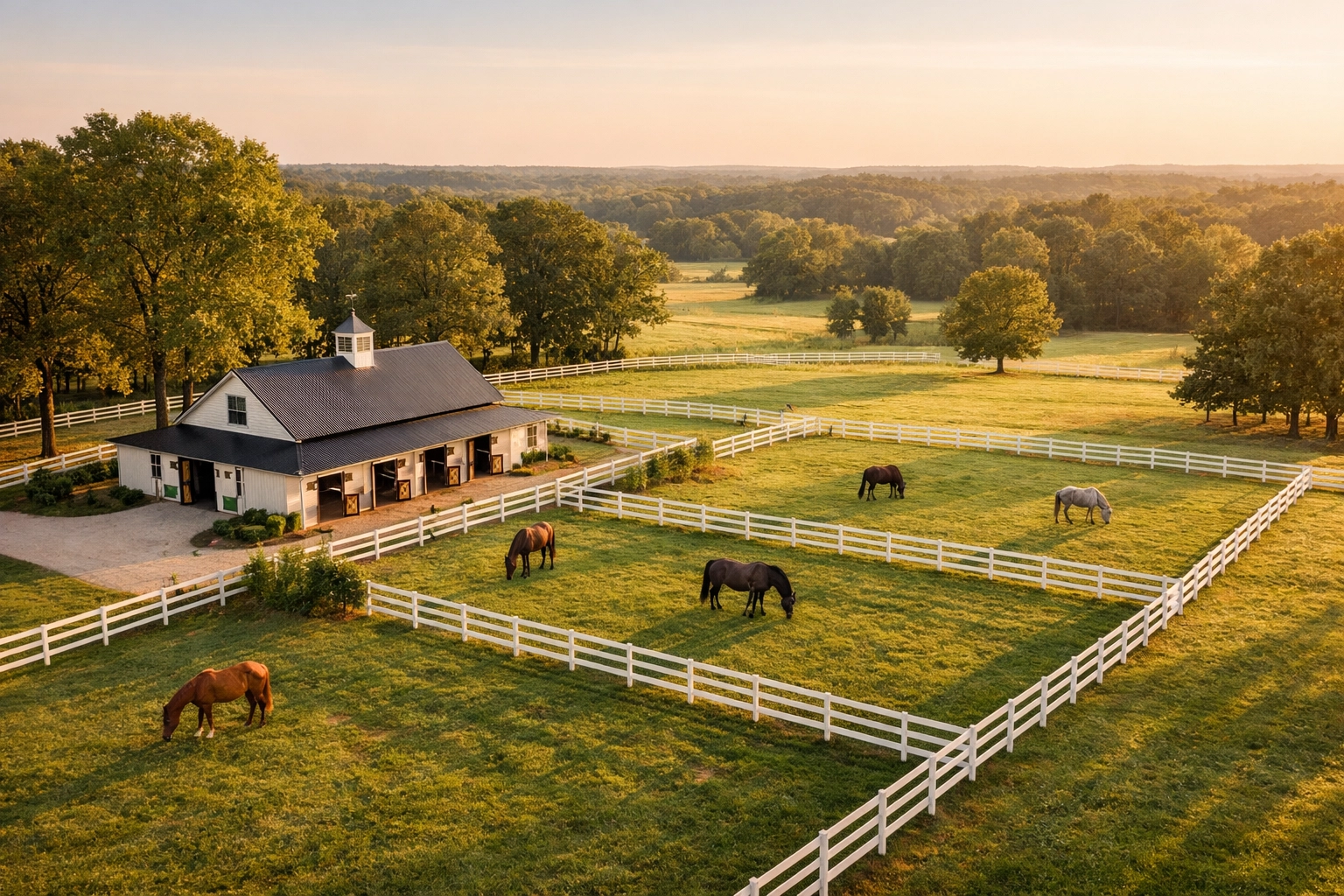
    Tryon International Equestrian Center aerial view showing competition arenas and stabling facilities

    The venue offers multiple competition arenas, extensive stabling designed by people who actually understand horse management, and integrated hospitality that recognizes competitors need more than a parking lot and porta-potties. The newly opened Overmountain Lodge provides on-site accommodations that understand the 4 a.m. braiding session and the post-competition collapse with equal hospitality.

    This level of infrastructure creates a ripple effect. Farriers, veterinarians, trainers, and specialized equine services gravitate toward areas with consistent, high-level activity. In 2026, Tryon offers the support network serious horse operations require without the congestion and cost of traditional equestrian centers.

    The 2026 Competition Calendar: Prestige Meets Accessibility

    The National Horse Show's relocation to Tryon International for October 21–25 and October 27–November 1 (pending USEF approval) represents a significant shift in American equestrian geography. This isn't just another horse show moving venues: it's one of America's oldest and most prestigious indoor competitions, with over 140 years of history, choosing Tryon as its new home.

    Add the IHSA National Championship (May 1–3, 2026) for Hunt Seat and Western disciplines, and you have a competition calendar that serves everyone from junior riders building their résumés to professionals maintaining their edge. The concentration of quality competitions within driving distance eliminates the exhausting travel circuit that drains both horses and bank accounts.

    For property owners and serious amateurs, this means regular exposure to top-level horsemanship without the disruption of constant cross-country hauls. Your horses stay home, maintain their routine, and you still access national-caliber competition.

    Beyond the Show Grounds: The Broader Tryon Region

    Here's what the glossy venue marketing doesn't tell you: Tryon's real strength lies in the surrounding countryside.

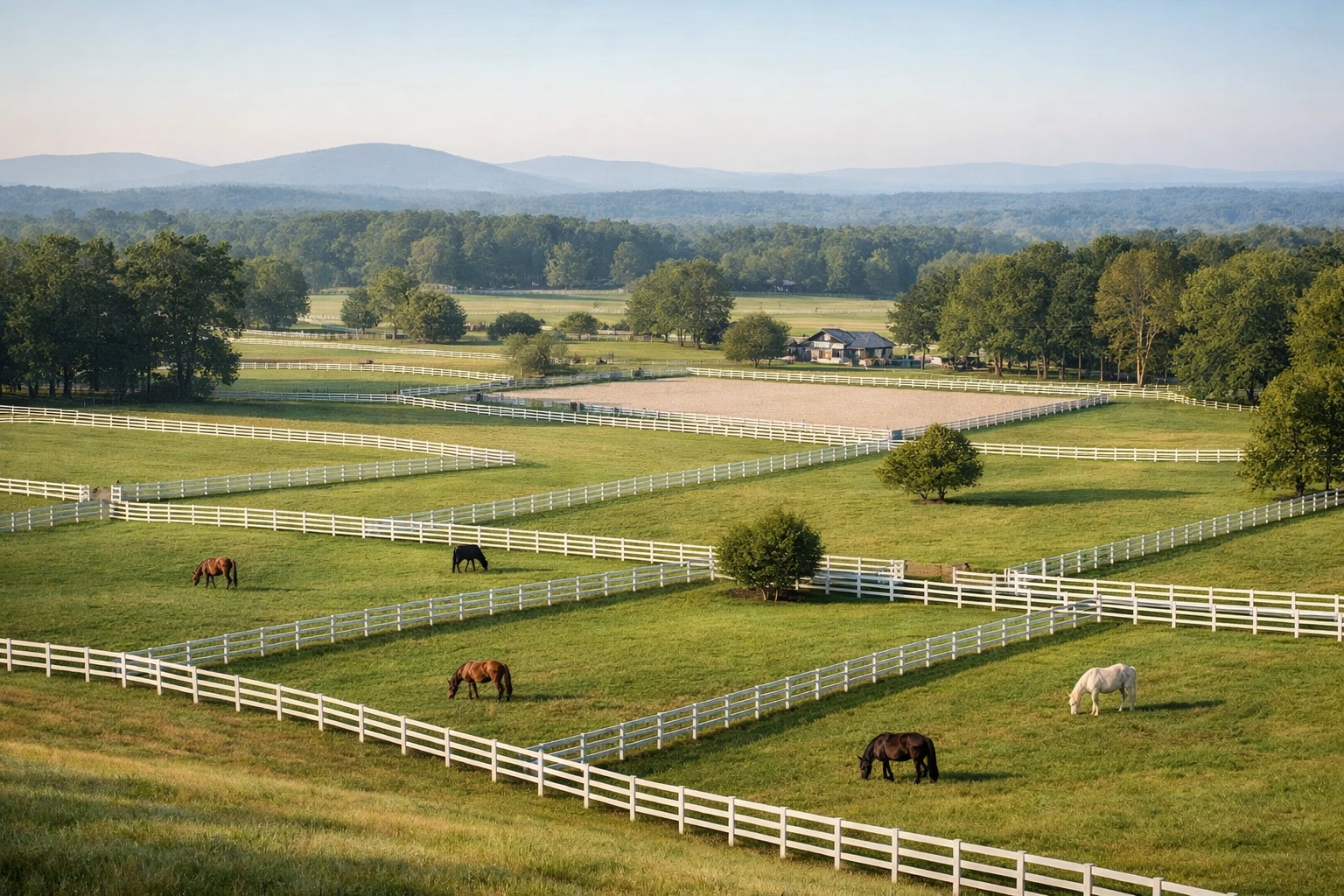
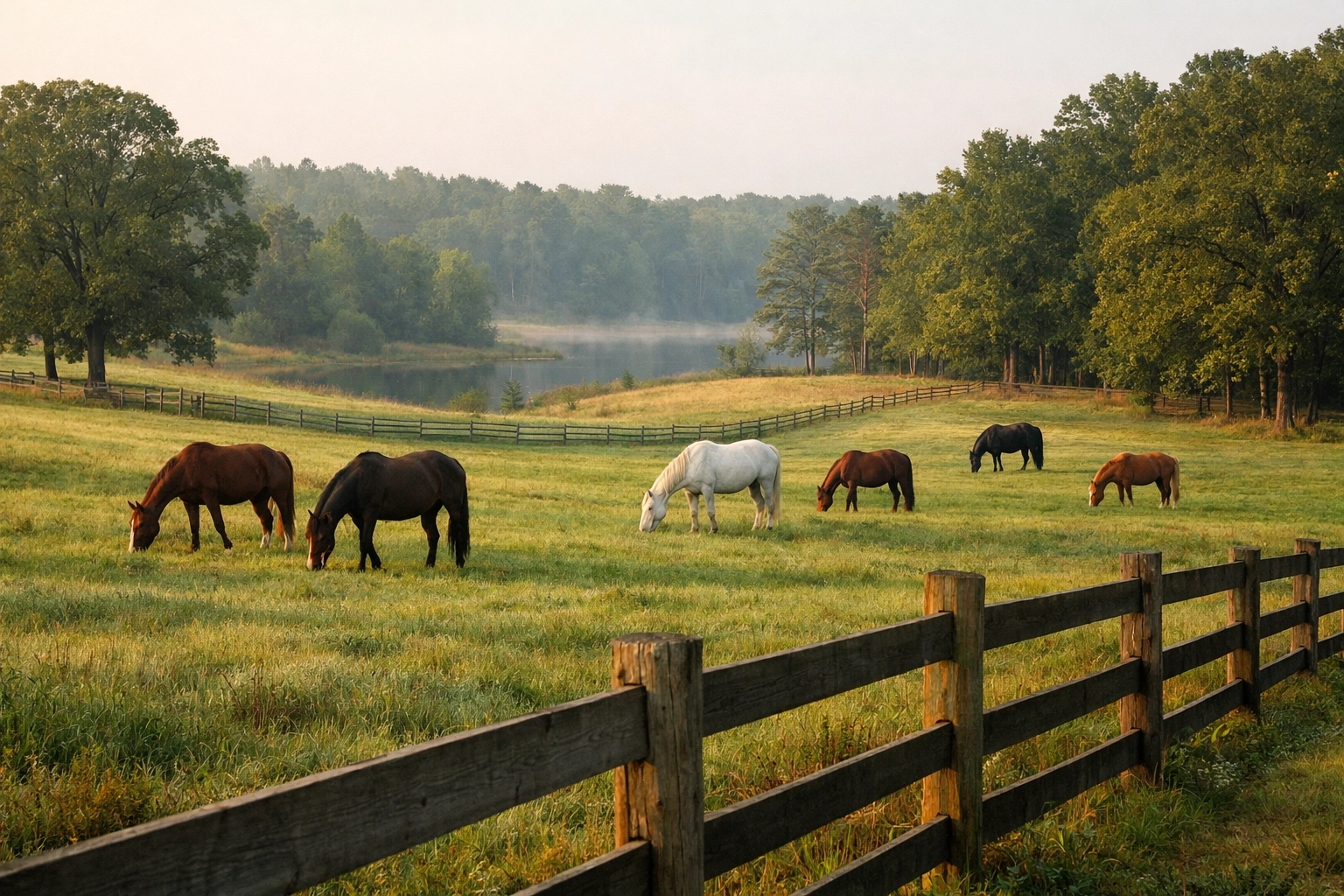
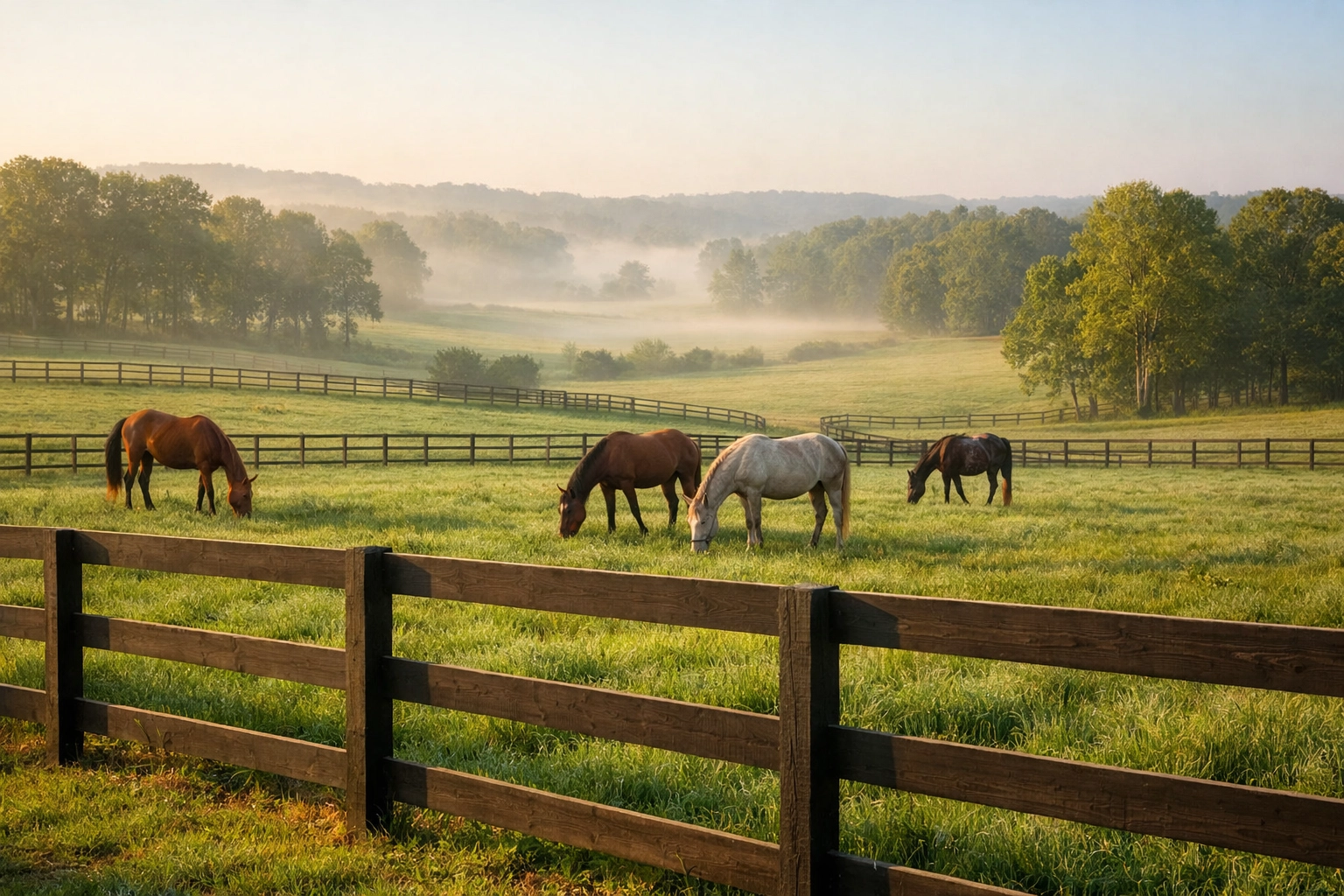
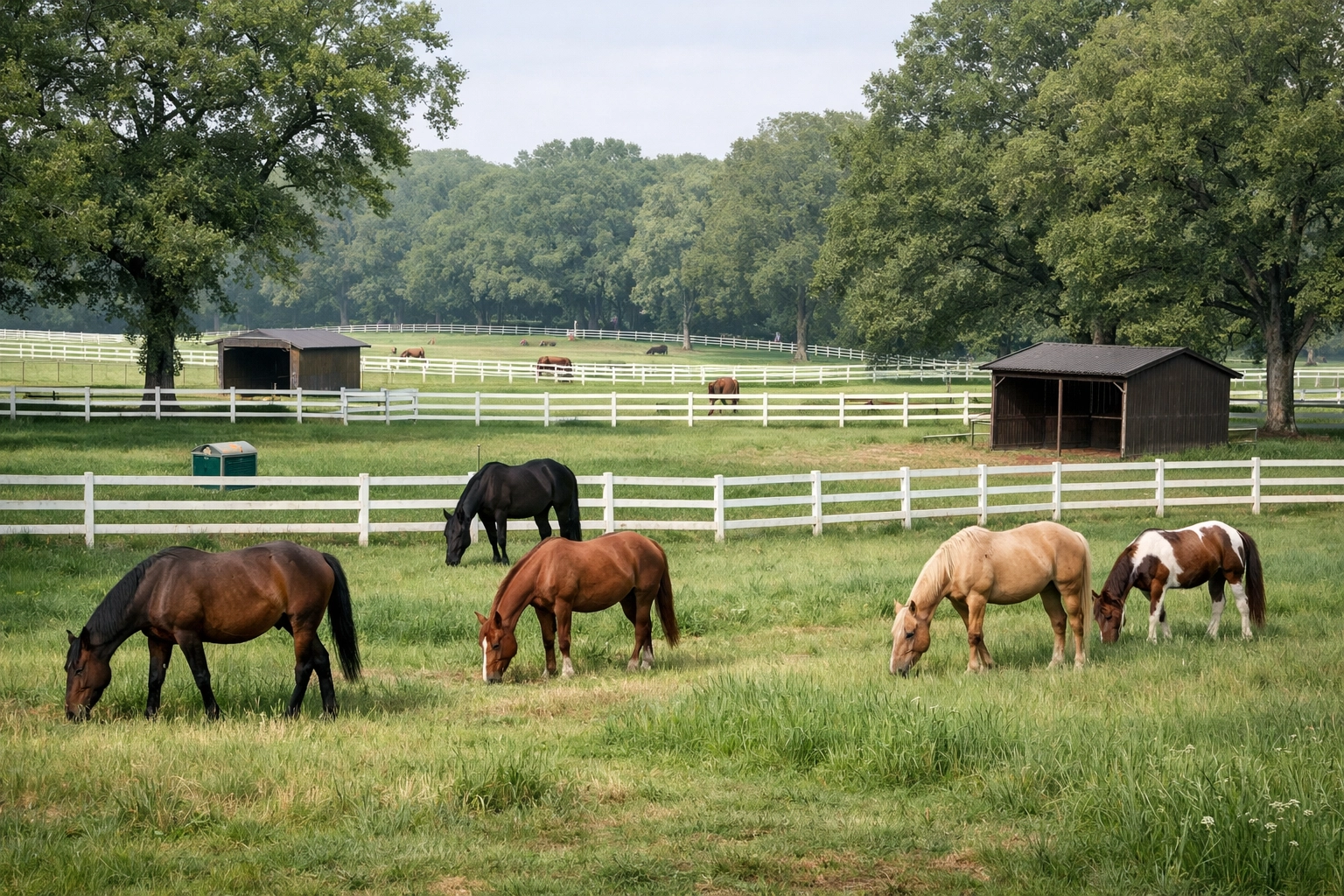
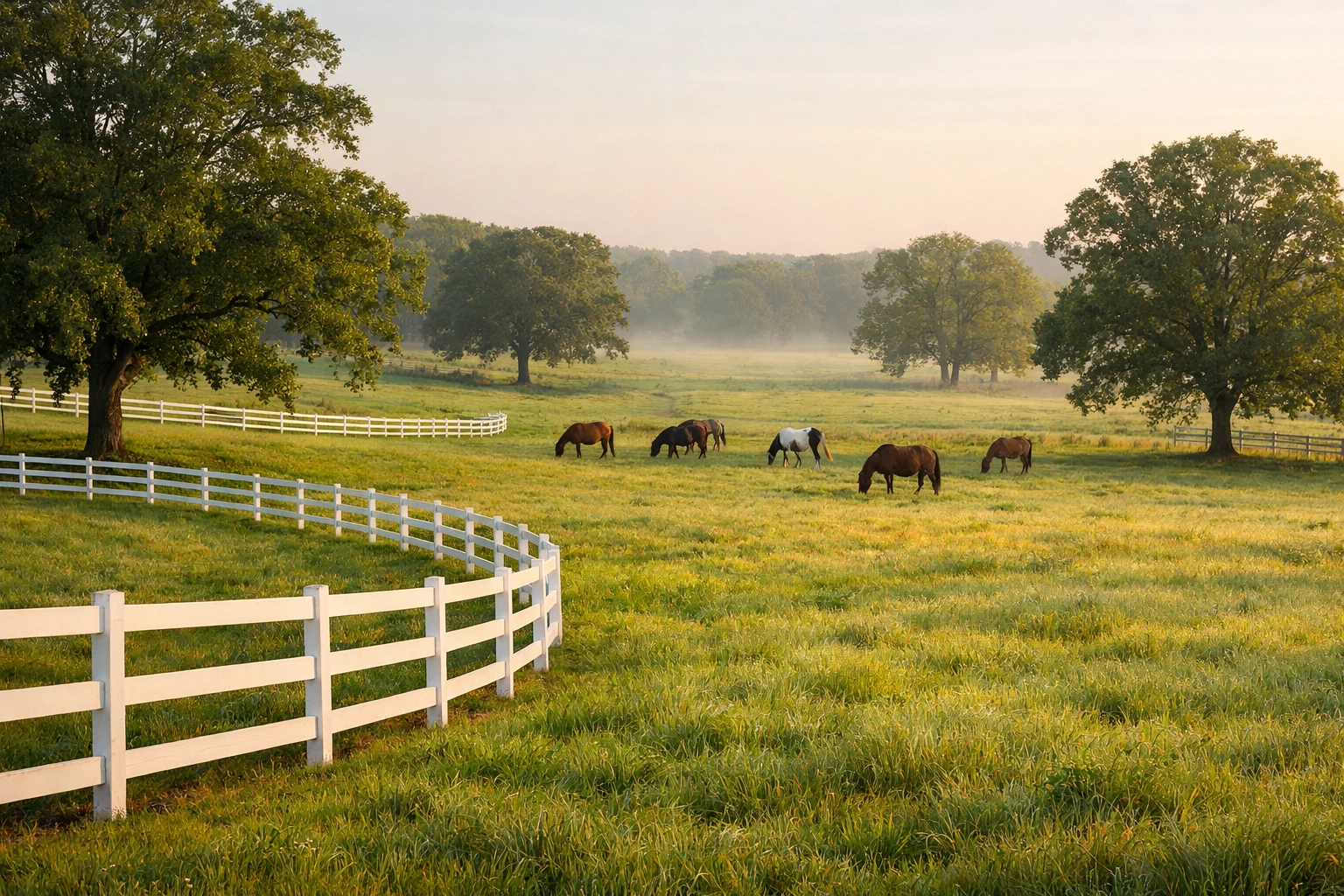
    Horses grazing on rolling pastures in Tryon NC with Blue Ridge foothills landscape

    The Foothills topography creates natural variation: rolling pastures that drain well, wooded trails that offer genuine riding diversity, and microclimates that extend your grazing season. The soil composition supports healthy pasture management without the constant amendment required in sandier regions or the clay problems that plague other parts of North Carolina.

    Property options range from turnkey training facilities with championship-level infrastructure to raw acreage where you can build exactly what you envision. Unlike areas where every available farm has been subdivided or developed, Tryon still offers properties with the acreage, water access, and privacy serious horse operations require.

    The equestrian heritage here runs deep: not manufactured for tourism, but rooted in generations of horsemen who chose this region for its natural advantages. Historic horse farms and established training centers create a community that understands the difference between weekend riders and those whose lives genuinely revolve around horses.

    Climate Considerations: The Practical Edge

    North Carolina's climate gets oversimplified in marketing materials, so let's be specific: Tryon's elevation (approximately 1,000 feet) in the Foothills moderates both summer heat and winter extremes.

    Summers remain warm but generally avoid the oppressive humidity of lower elevations. Horses can work comfortably with early morning or evening schedules. Winters bring occasional freezing weather and rare snow, but nothing approaching the prolonged freeze-thaw cycles that destroy footing and create management nightmares in northern states.

    This translates to year-round riding, predictable training schedules, and reduced wear-and-tear on both horses and facilities. Your outdoor arenas remain usable most days. Your horses stay in consistent work without weather-forced breaks that compromise conditioning.

    The Community Factor: Horse People, Not Tourists

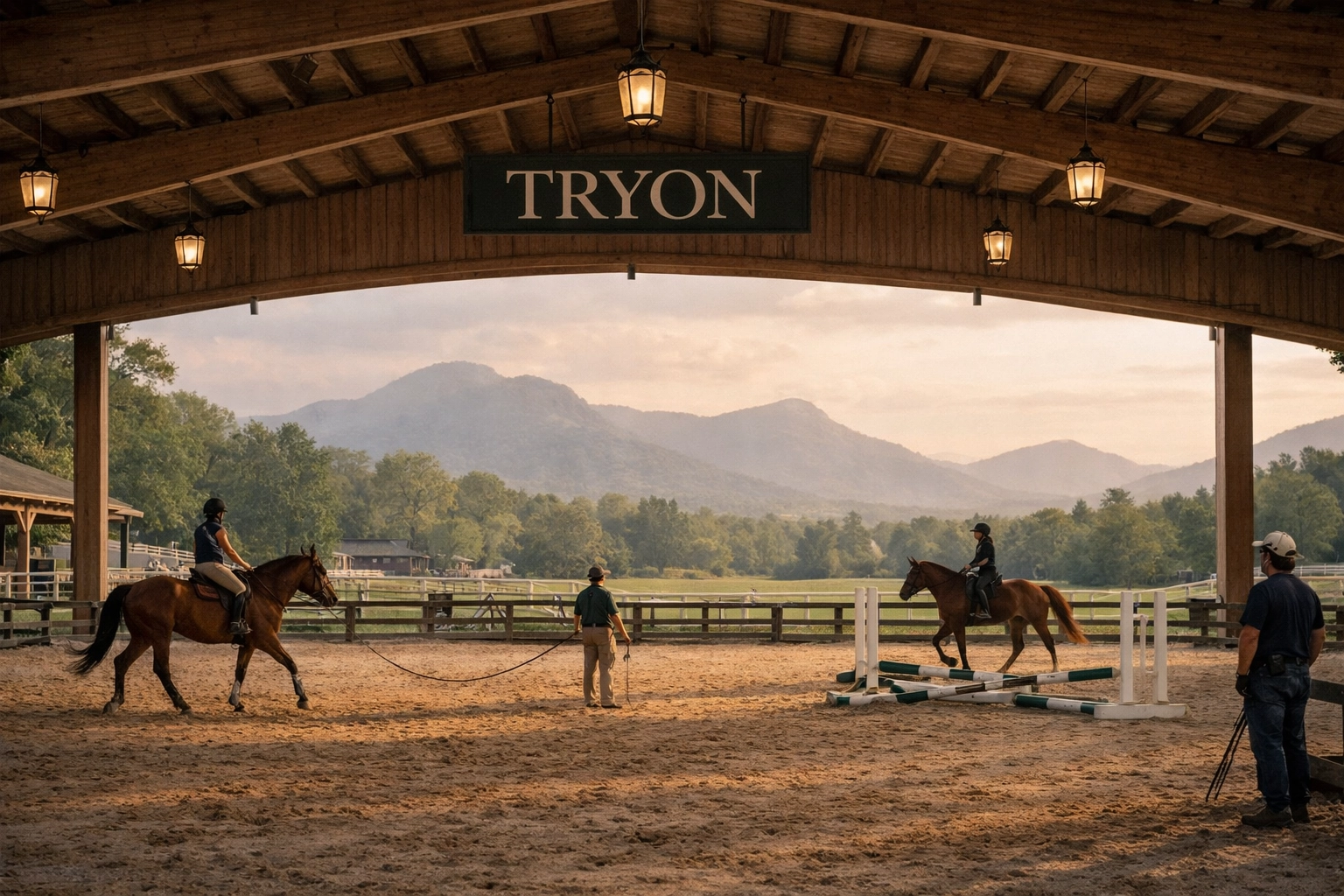
    Equestrian training facility in Tryon showing authentic horse farm lifestyle and barn

    Every "equestrian destination" claims authentic community. Tryon actually has one.

    The local feed store conversations revolve around footing preferences and veterinary recommendations, not property values and investment returns. Neighbors understand why you need that 5 a.m. feeding schedule and won't complain about arena lights at dawn. The infrastructure: from veterinary clinics to tack shops: exists to serve working horse operations, not weekend hobbyists.

    This matters more than many buyers initially recognize. Equestrian properties function differently than residential real estate. You need neighbors who understand why your property access requires width for trailers, why certain setbacks don't work with barn orientation, and why that "unused" field is actually your winter sacrifice area.

    Property Considerations for Serious Buyers

    If you're considering Tryon seriously, understand what you're actually buying: access to a complete equestrian ecosystem, not just acreage.

    Proximity to Tryon International matters, but so does proximity to quality veterinary care, reliable feed suppliers, and experienced farriers. The best properties balance show-ground access with the privacy and land quality your horses require daily.

    Zoning varies significantly between Polk County (NC) and the adjacent South Carolina areas. Some properties offer agricultural zoning that supports commercial training operations; others restrict business activity. Understanding these distinctions before you fall in love with a property saves considerable heartache.

    Water access, soil drainage, and existing infrastructure quality matter more than cosmetic appeal. That picture-perfect barn with inadequate drainage and poor pasture management will cost you more in three years than the dated facility with excellent bones and healthy land.

    Why 2026 is the Right Time

    Interest rates and market conditions fluctuate. Tryon's fundamental advantages remain constant.

    The infrastructure investment has stabilized. The competition calendar has matured. The support network has developed depth beyond the initial build-out phase. Properties that were speculative five years ago now have established track records.

    For serious equestrians evaluating relocation, Tryon in 2026 offers something rare: a proven destination still early enough in its development curve to offer genuine opportunities. The region hasn't peaked and settled into premium pricing across every property. Thoughtful buyers can still find exceptional value, particularly if you prioritize land quality and location over turnkey cosmetics.

    Finding Your Place in Tryon Horse Country

    Tryon's continued success stems from alignment between infrastructure, geography, and community. The facilities serve actual equestrian needs. The landscape supports healthy horse management. The community values horsemanship over performance theater.

    For buyers considering the region, the question isn't whether Tryon belongs on your list: it's whether your operation and goals align with what Tryon offers. If you're seeking serious training facilities, access to quality competition, and a community that understands horses as athletes requiring daily management, not weekend entertainment, Tryon deserves your thorough evaluation.

    Carolina Horse Farm Realty works extensively throughout the region and understands the specific requirements that make equestrian properties functional rather than merely attractive. Whether you're relocating a training operation or searching for your private equestrian estate, we can help you evaluate properties with the critical eye this investment requires.

    The Tryon Horse Country story continues to unfold. The question is whether you'll be part of the next chapter.

  • The Ultimate Guide to Horse Farms for Sale in Waxhaw, NC: Everything You Need to Succeed

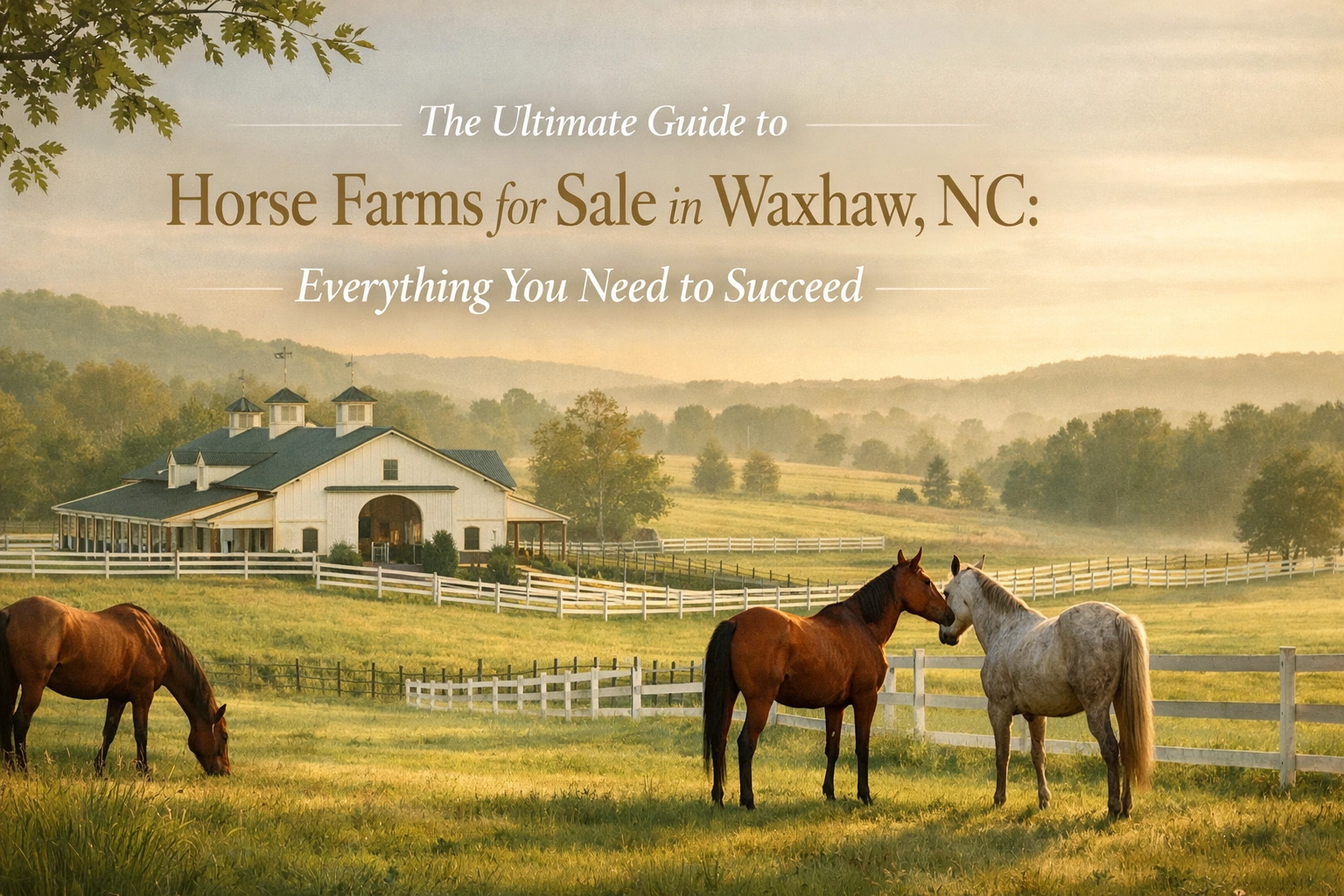
    The Ultimate Guide to Horse Farms for Sale in Waxhaw, NC: Everything You Need to Succeed

    If you've been riding the greenways and dreaming of something more: your own pastures, your horses at home, trails out the back gate: Waxhaw deserves your attention. This isn't a market guide written by someone who Googled "equestrian property." This is what you need to know before you buy land in one of the Charlotte Metro's most horse-friendly communities.

    Why Waxhaw Works for Horse Owners

    Waxhaw sits in Union County, just 25 minutes south of Charlotte, where small-town character meets genuine equestrian infrastructure. The soil drains well. The climate supports year-round turnout. And unlike some of the closer-in suburbs that are losing their agricultural character to development pressure, Waxhaw still has room to breathe.
    You'll find properties with existing barns, established pastures, and access to public trails: including Mineral Springs Greenway and the 1,100-acre Cane Creek Park system. This isn't pretend horse country. It's working horse country that happens to have excellent schools and reasonable proximity to Charlotte.

    Current market snapshot: 17 to 43 equestrian properties are actively listed depending on the platform, with average prices ranging from $539,000 to $570,917. Per-acre costs run between $50,005 and $51,660, which reflects Waxhaw's position as accessible but not bargain-priced.

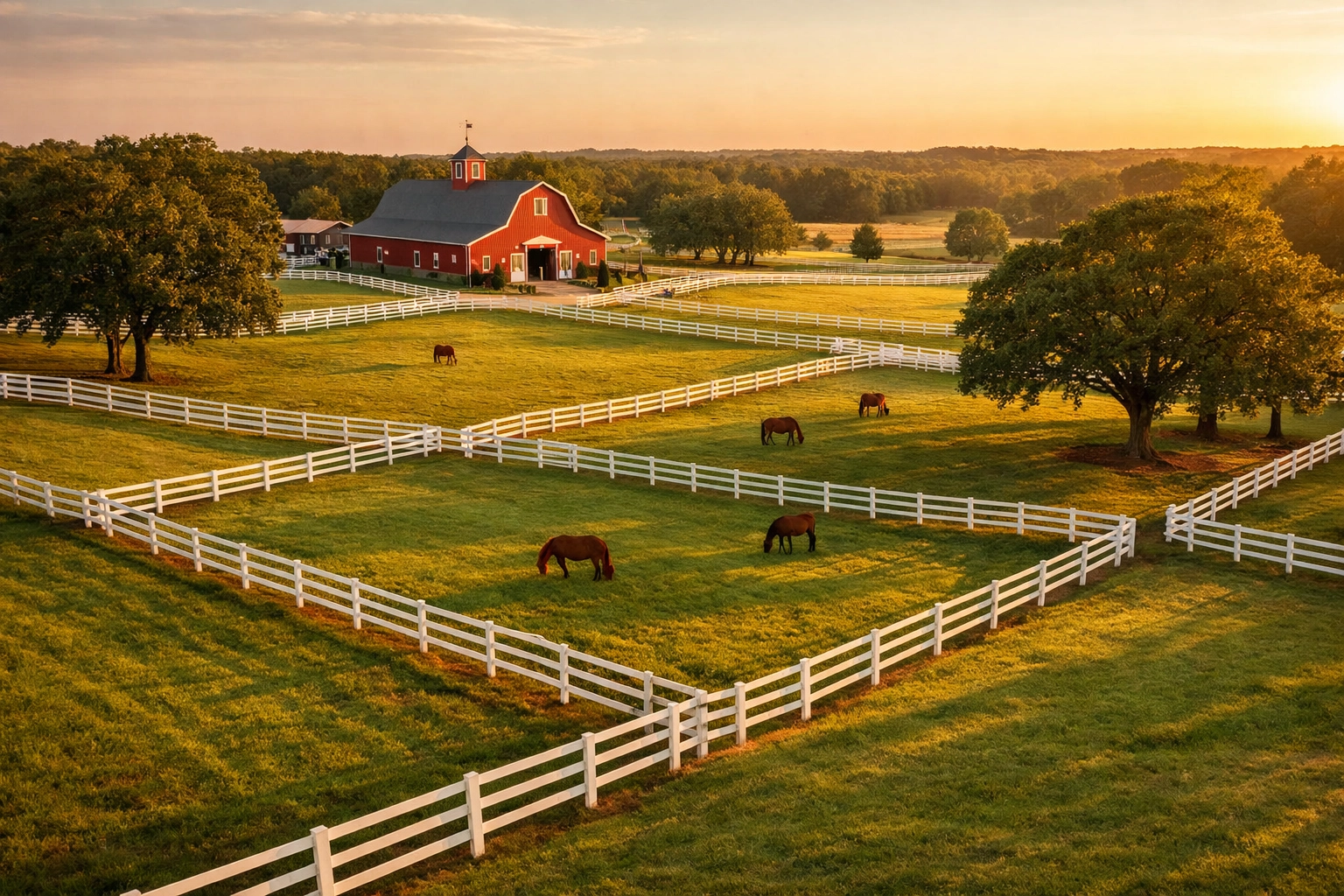
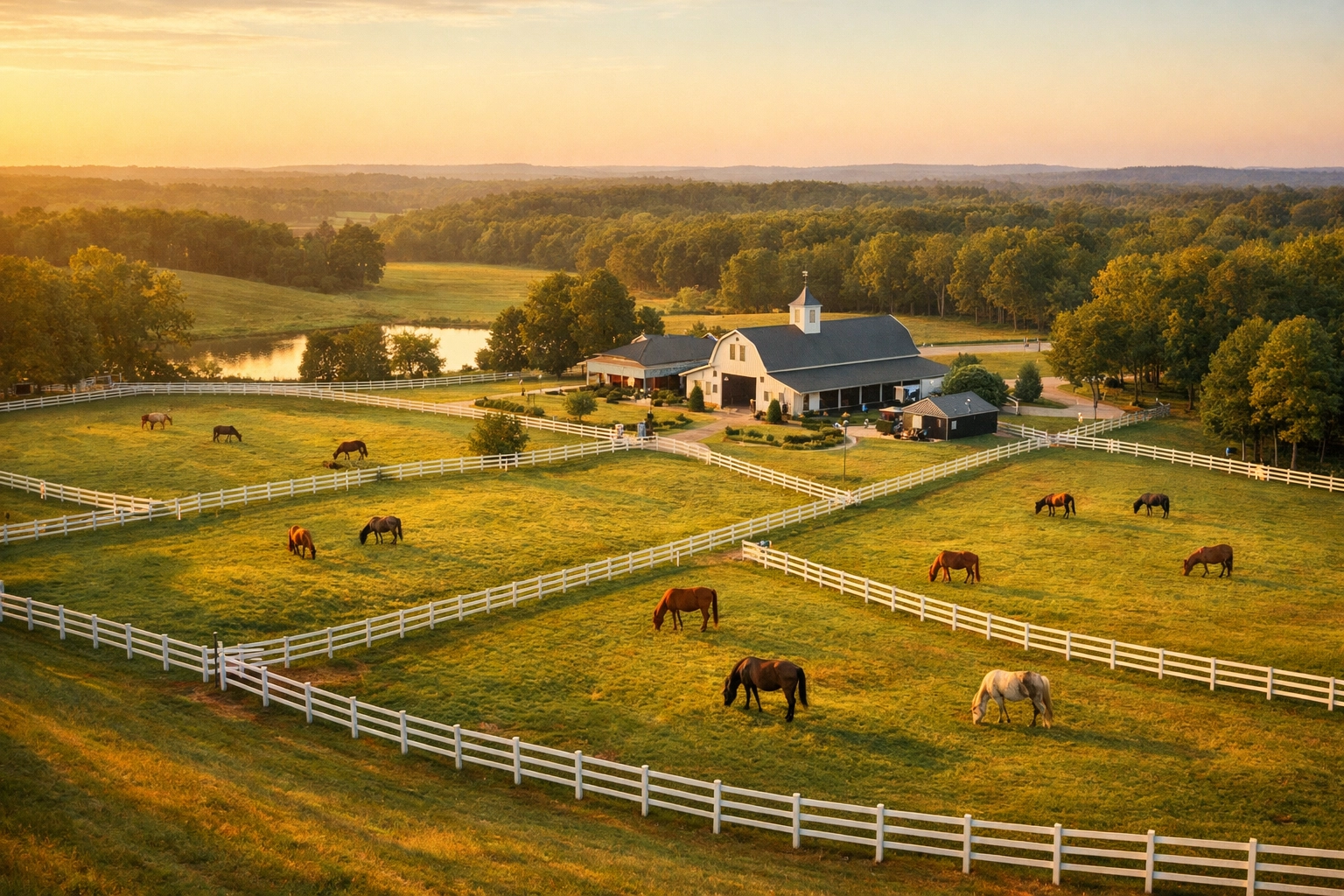
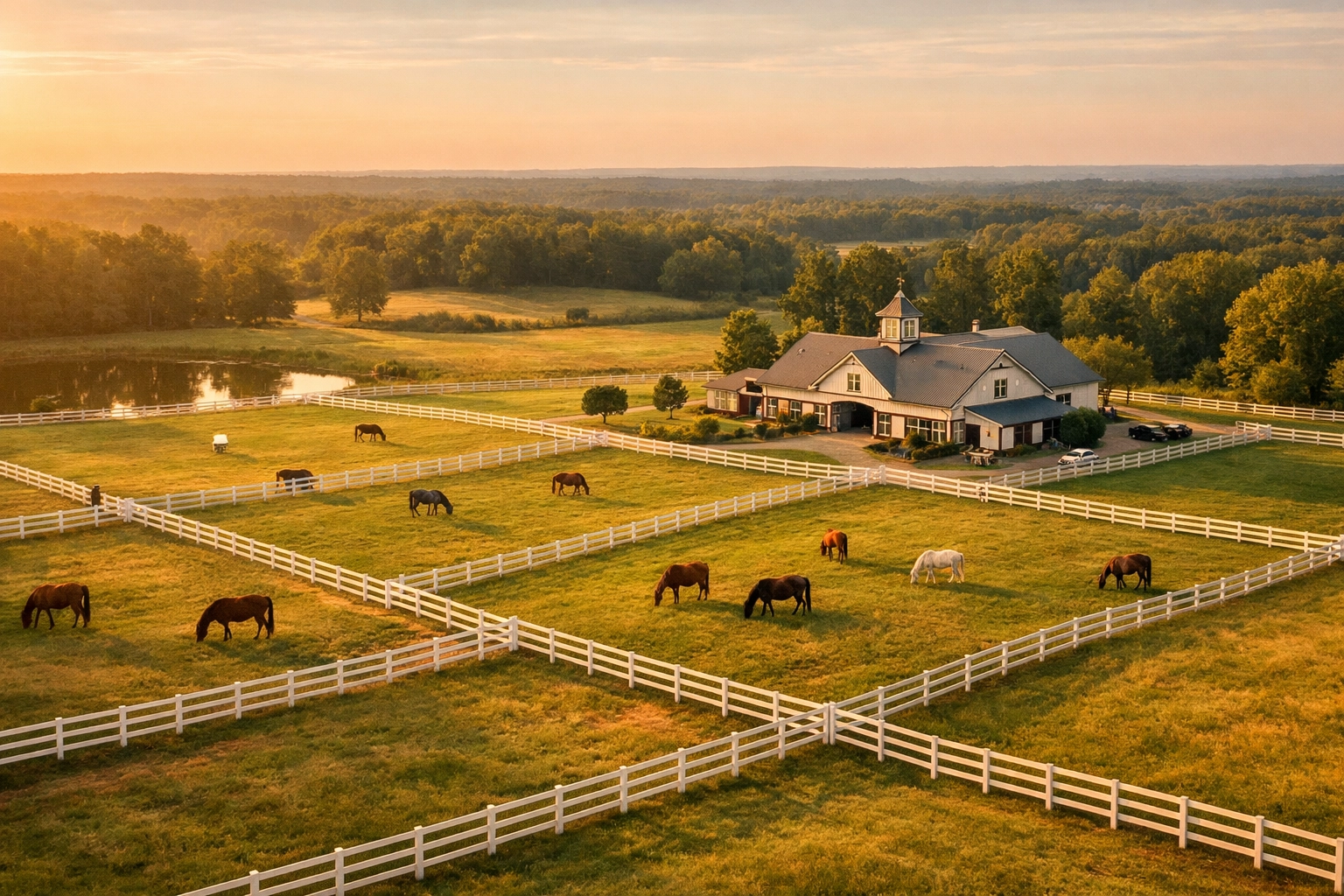
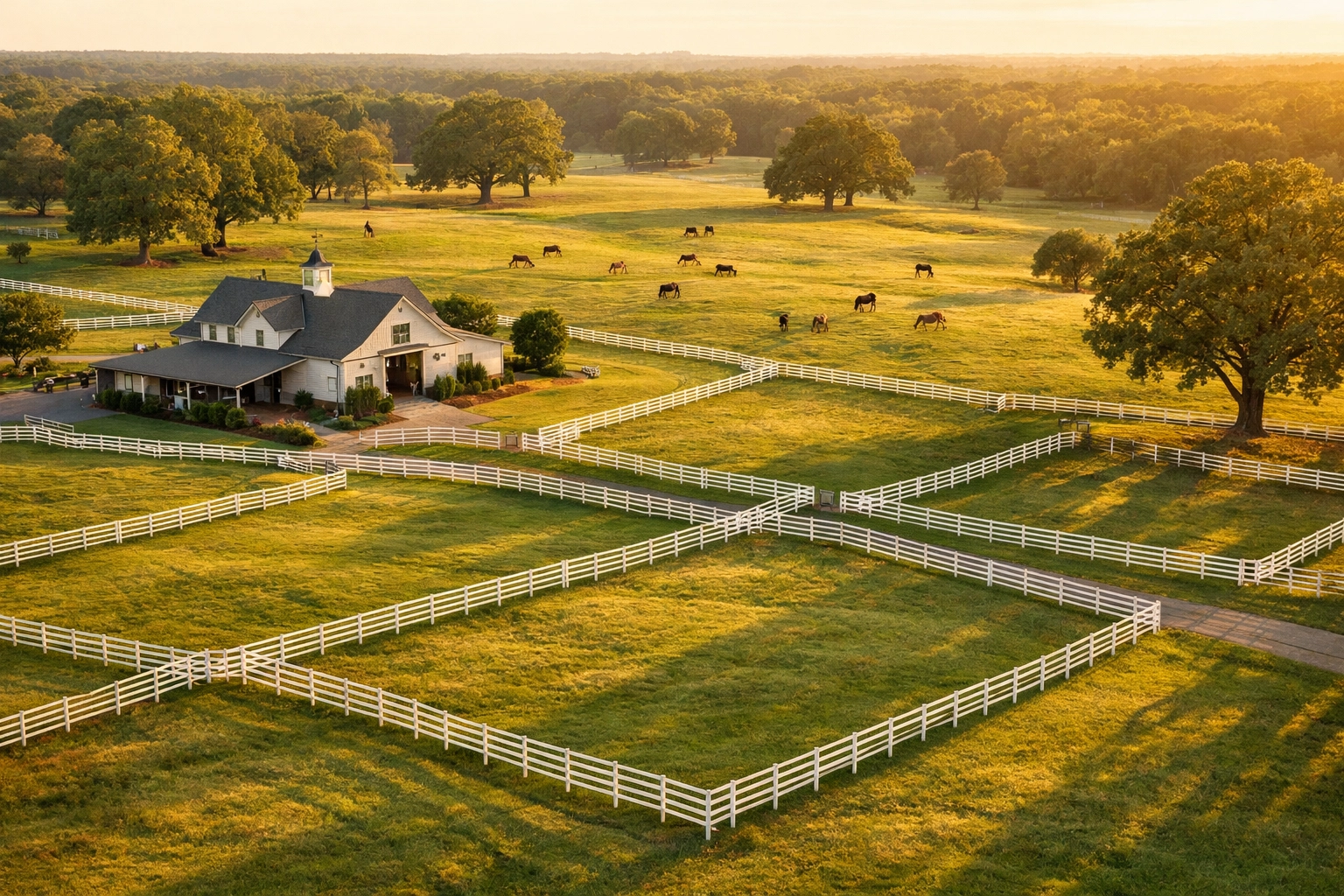
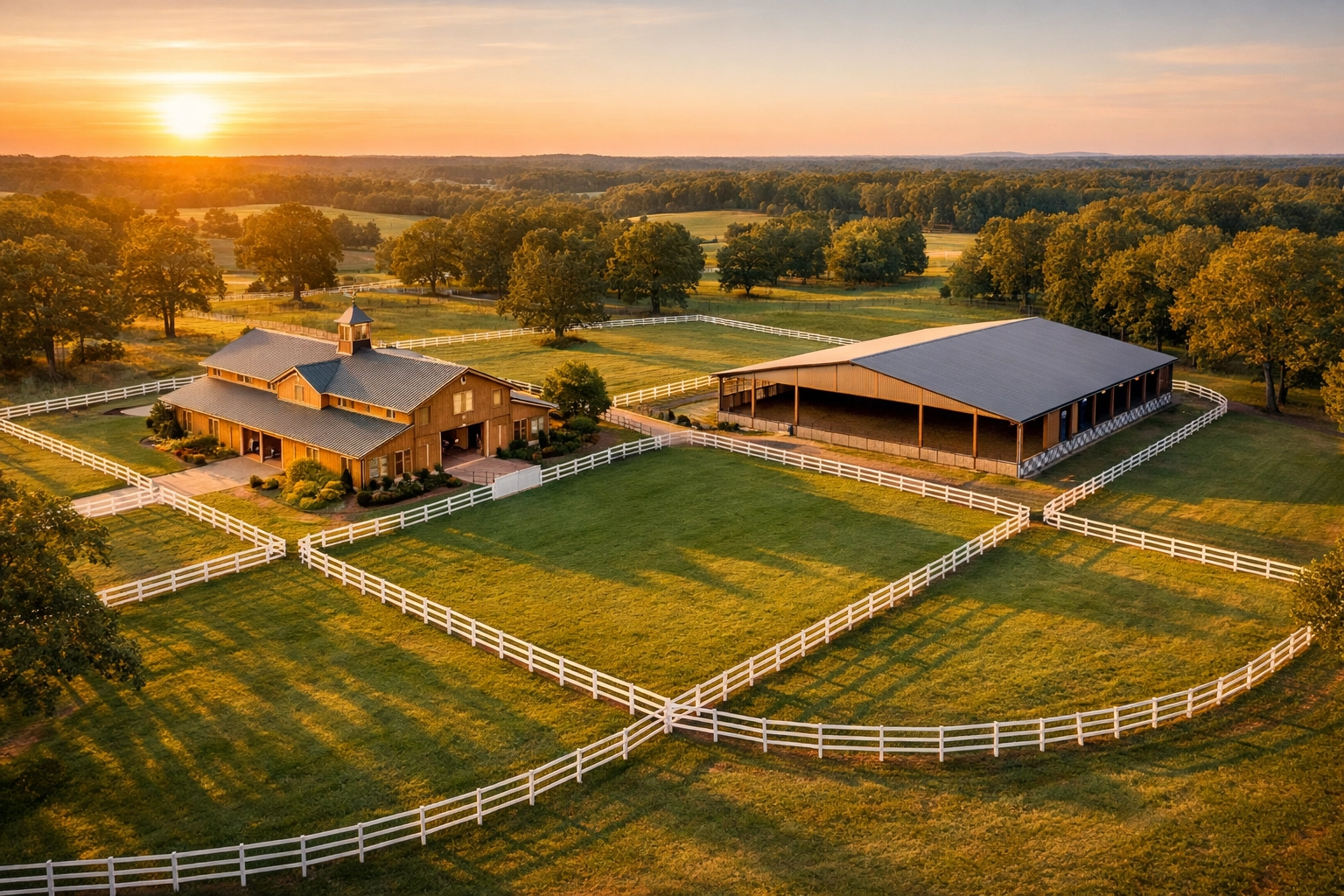
    Aerial view of horse farm for sale in Waxhaw NC with barn, arena, and white-fenced pastures

    What You're Actually Buying: Property Types in Waxhaw

    The Waxhaw market serves different equestrian needs. Understanding where you fit will save you months of looking at properties that don't match your management style or budget.

    Starter horse properties (2-5 acres): Enough land for two to four horses with rotational grazing if you manage it well. Typically includes a small barn or run-in shelter. You'll supplement hay year-round and need manure management protocols that work on limited acreage. These properties suit riders who want their horses home but aren't running a training operation.

    Mid-size equestrian estates (10-20 acres): The sweet spot for serious amateurs and small professionals. Properties like Break Away Farm exemplify this category: 10+ acres with a 4-stall center-aisle barn, multiple paddocks, a lit arena, and equipment storage. You can support four to eight horses depending on pasture quality, host clinics without overcrowding, and maintain some privacy between your residence and barn operations.

    Large training facilities (20+ acres): Rare in Waxhaw proper but available in the surrounding Union County area. These properties support commercial boarding, training programs, or breeding operations. Look for existing infrastructure including indoor arenas, wash stalls, multiple pasture complexes, and adequate parking for trailers.

    Luxury equestrian estates: High-end homes on acreage with custom barns, viewing rooms, and architect-designed details. These properties appeal to buyers who want both the horse lifestyle and refined residential finishes. Expect attached living quarters, stone or timber-frame construction, and amenities that blur the line between stable and estate.

    The Infrastructure That Actually Matters

    Walk properties with a horseperson's eye, not a homebuyer's checklist. The house can be renovated. The barn location, drainage patterns, and pasture layout are much harder to change.

    Barn considerations: A 4-stall barn with proper ventilation, matted stalls, and a center aisle will serve you better than an 8-stall barn with poor airflow and cheap materials. Look for adequate ceiling height (minimum 10 feet), proper electrical with GFCI outlets, and water hydrants that won't freeze. A hay loft is convenient but creates fire risk: many experienced buyers prefer separate hay storage.

    Arena quality: A 50' × 125' arena with good footing and lighting extends your riding season and training capability. Proper base construction matters more than size. A well-built small arena beats a large arena with drainage problems and compacted footing. Some Waxhaw properties include sprinkler systems for dust control: valuable during Carolina summers.

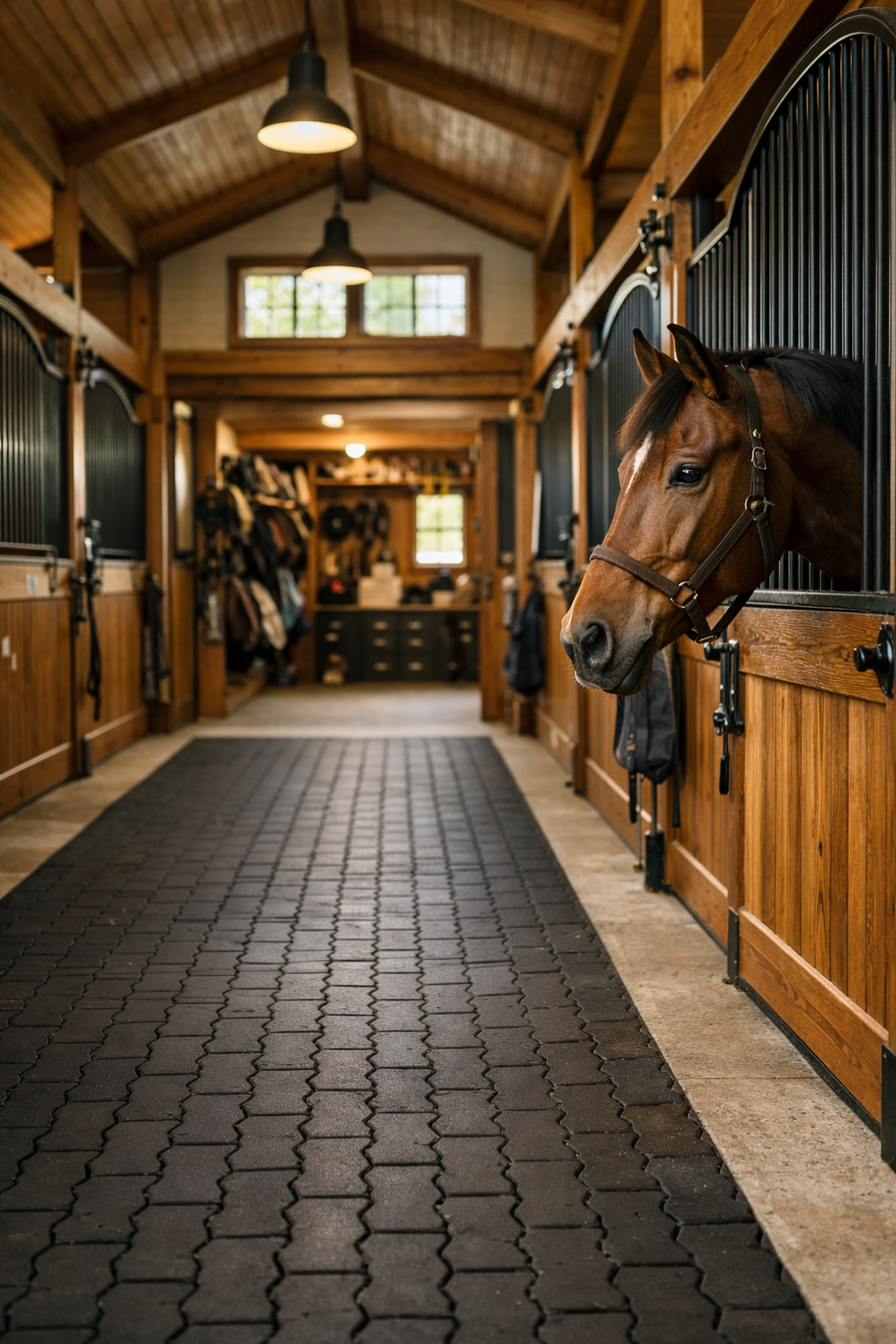
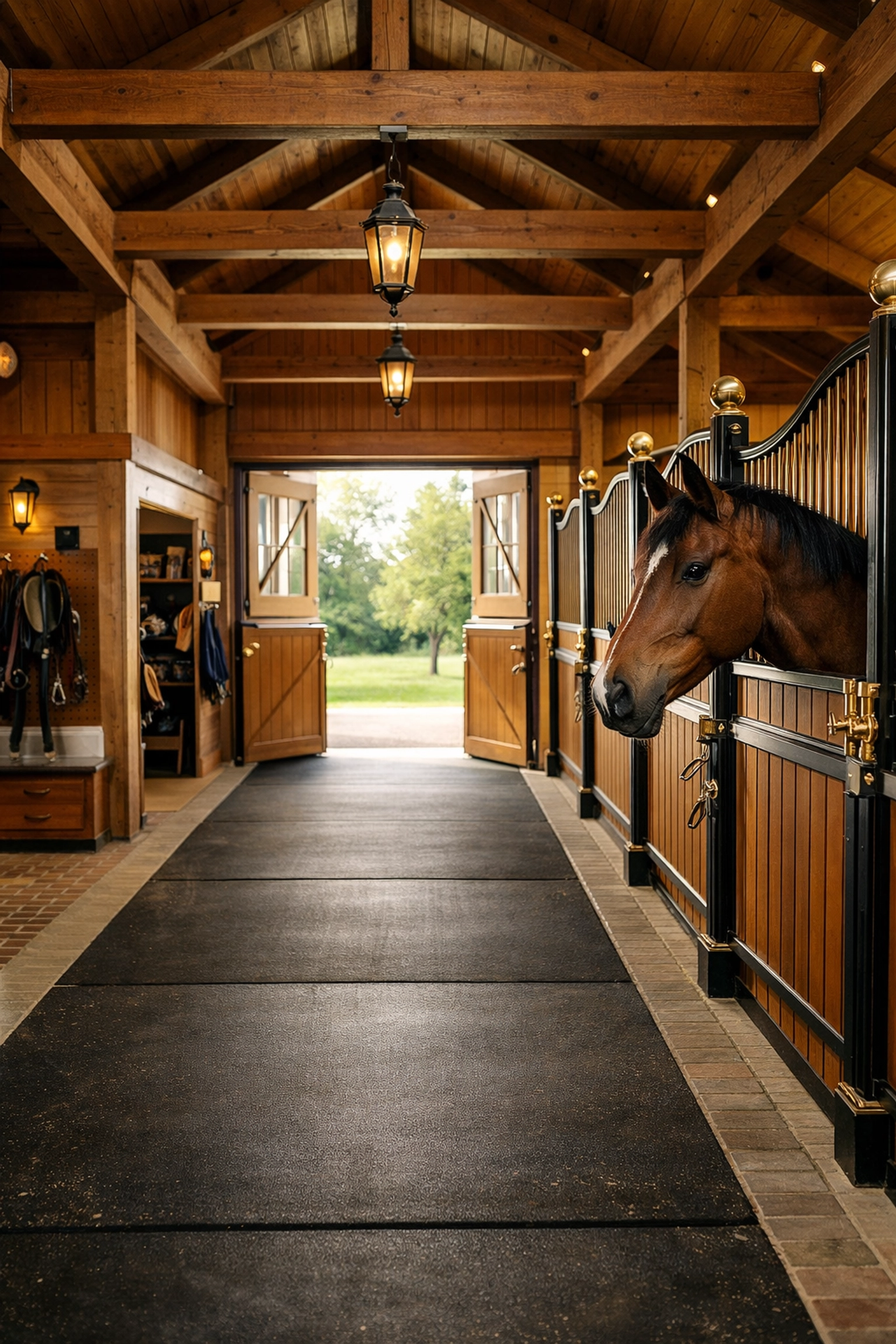
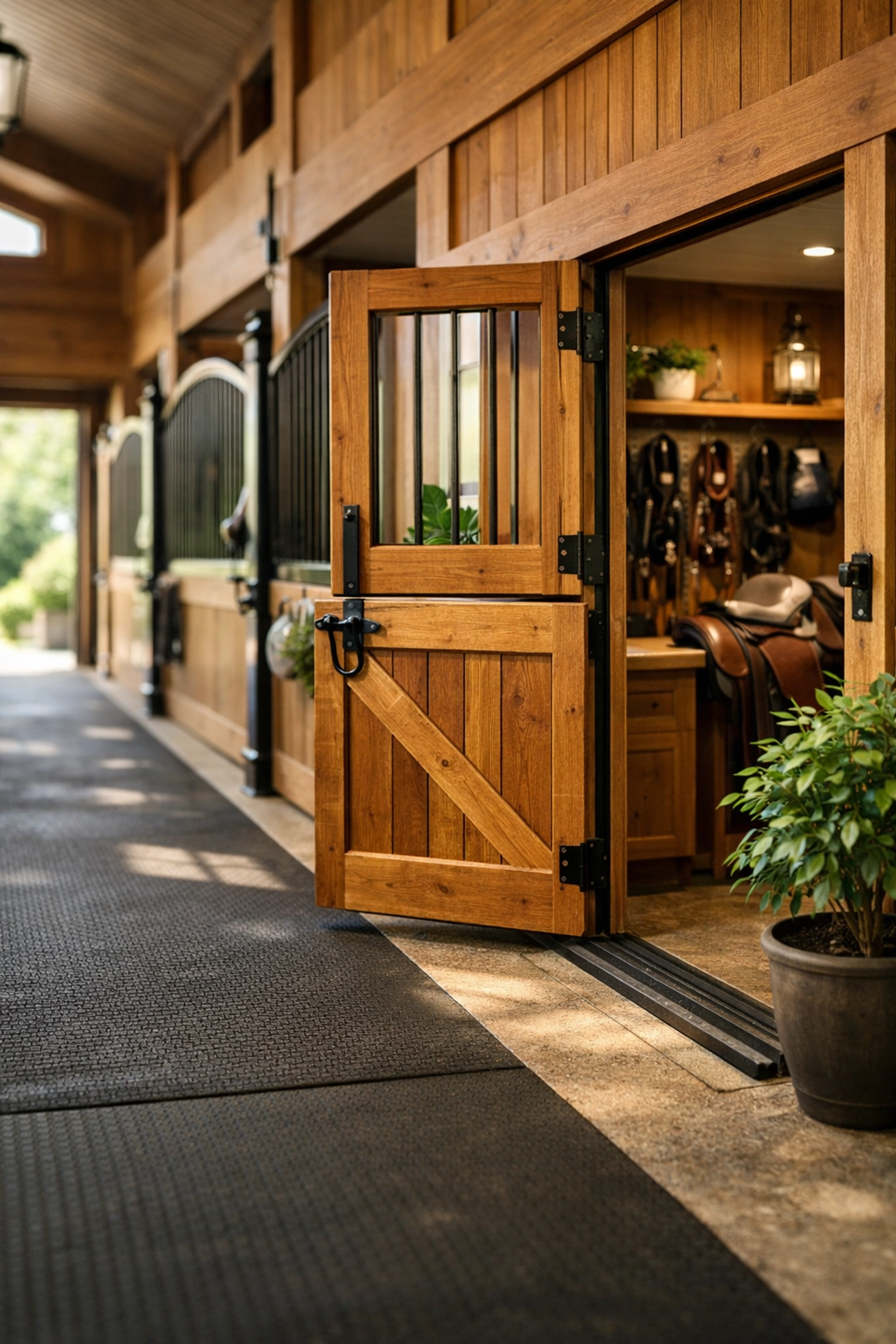
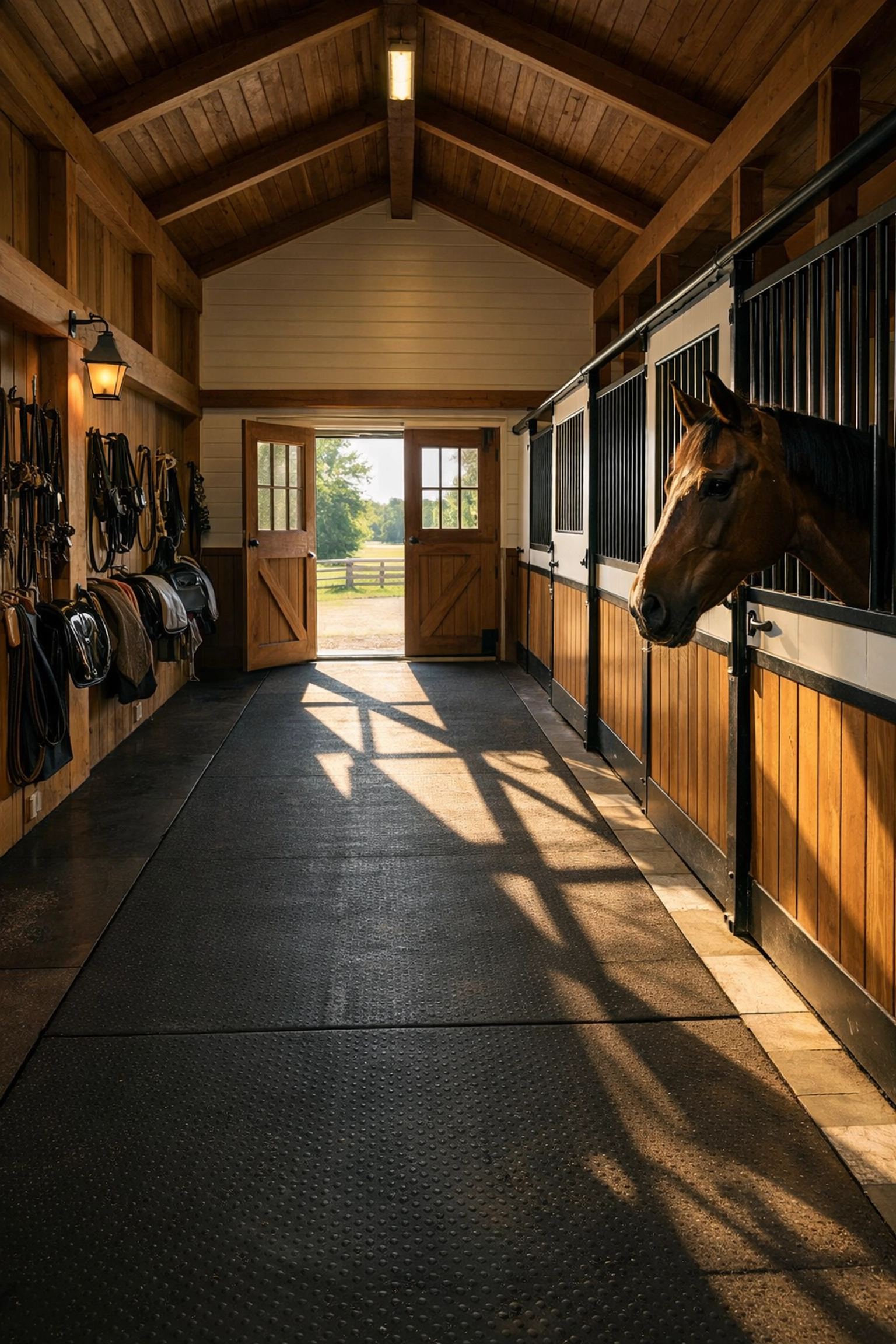
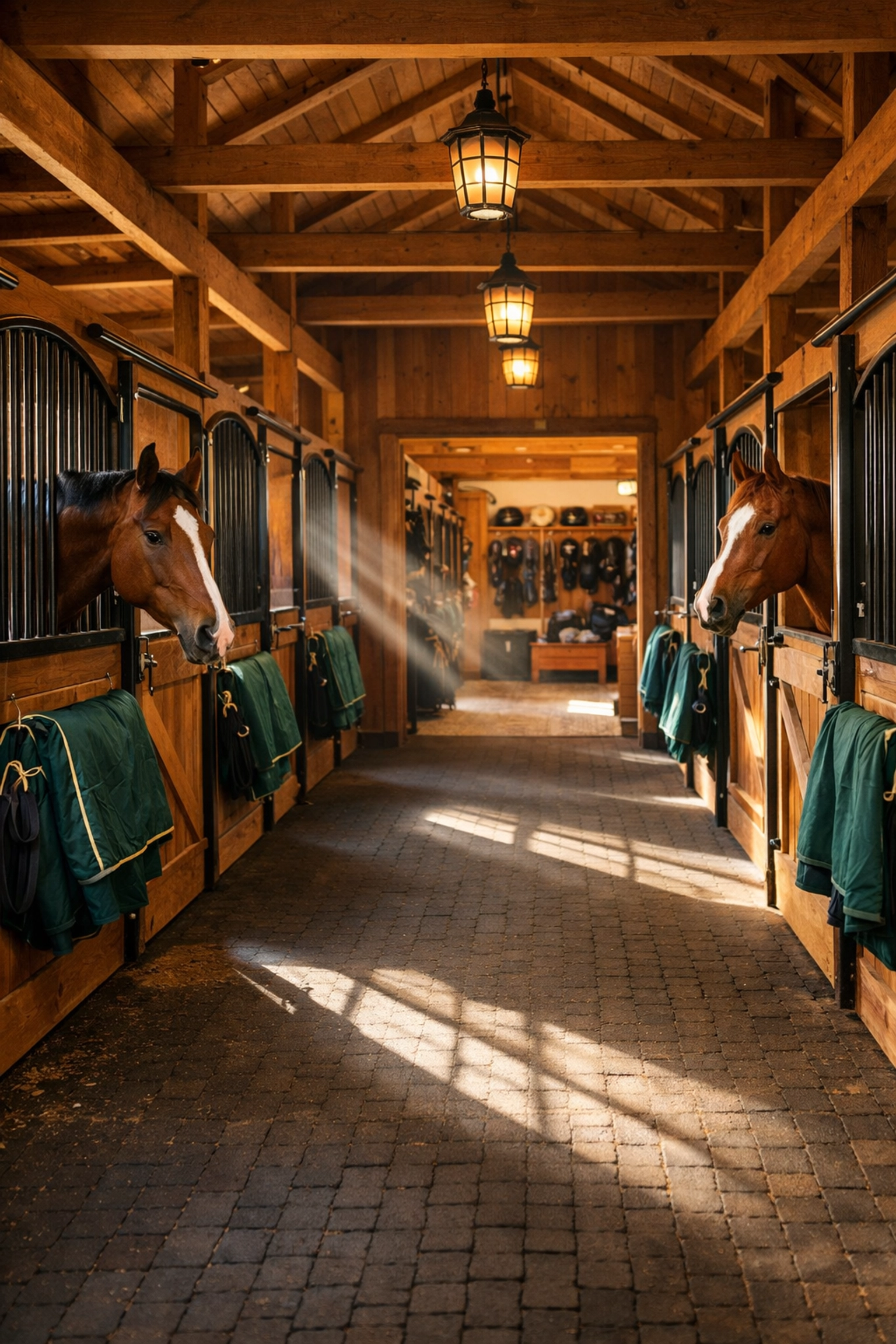
    Center-aisle barn interior with stalls and natural lighting at Waxhaw equestrian property

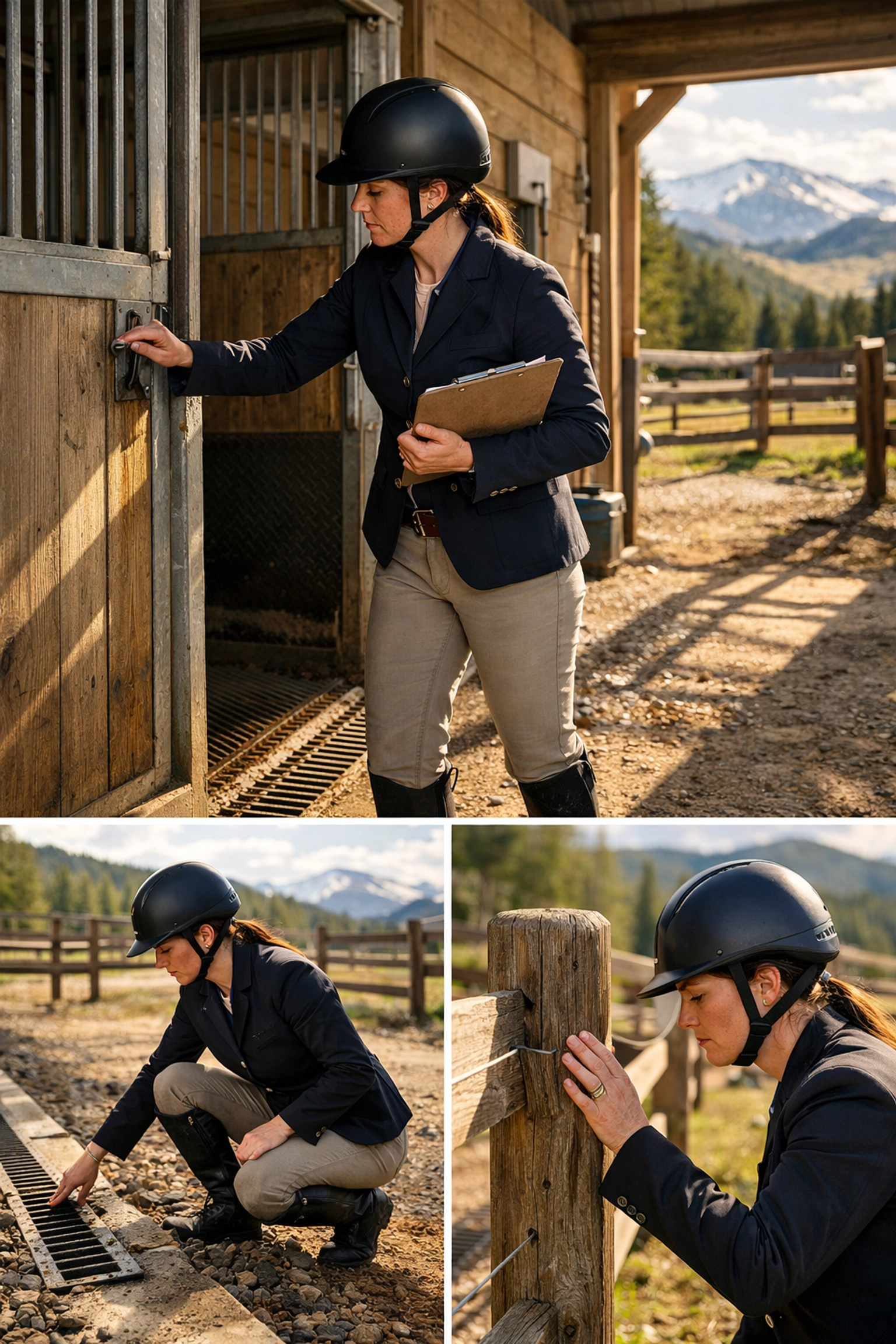
    Pasture assessment: Walk the fence lines. Check for dangerous wire, rotted posts, and inadequate gates. Evaluate pasture quality by what's growing: good grass species or mostly weeds? Properties with established pasture management (rotational grazing, appropriate stocking rates) indicate owners who understood horses, not just rural real estate.

    Water access: Multiple frost-free hydrants throughout the property are non-negotiable. Automatic waterers in paddocks reduce labor but add maintenance. Ponds can supplement watering but shouldn't be your primary source without reliable flow.

    Equipment storage: A 4-bay equipment shed protects tractors, mowers, and implements from weather. If a property lacks adequate covered storage, factor that cost into your offer.

    Union County Zoning and Practical Realities

    Waxhaw is part of Union County, where agricultural zoning generally supports equestrian use. Most horse properties fall under RA (Residential Agricultural) or similar designations that permit horses, barns, and related structures.

    Key considerations: Minimum lot sizes for horses vary by specific zoning district but typically require 1-2 acres. Setback requirements affect where you can build new barns or arenas. If you plan to board horses commercially, operate riding lessons, or host shows, verify that your intended use is permitted or requires a conditional use permit.

    Union County doesn't have the same density pressure as Mecklenburg County, but development is ongoing. Properties near schools and major roads face higher long-term subdivision risk. If preserving your rural setting matters, look for properties with conservation easements or in areas with larger minimum lot sizes.

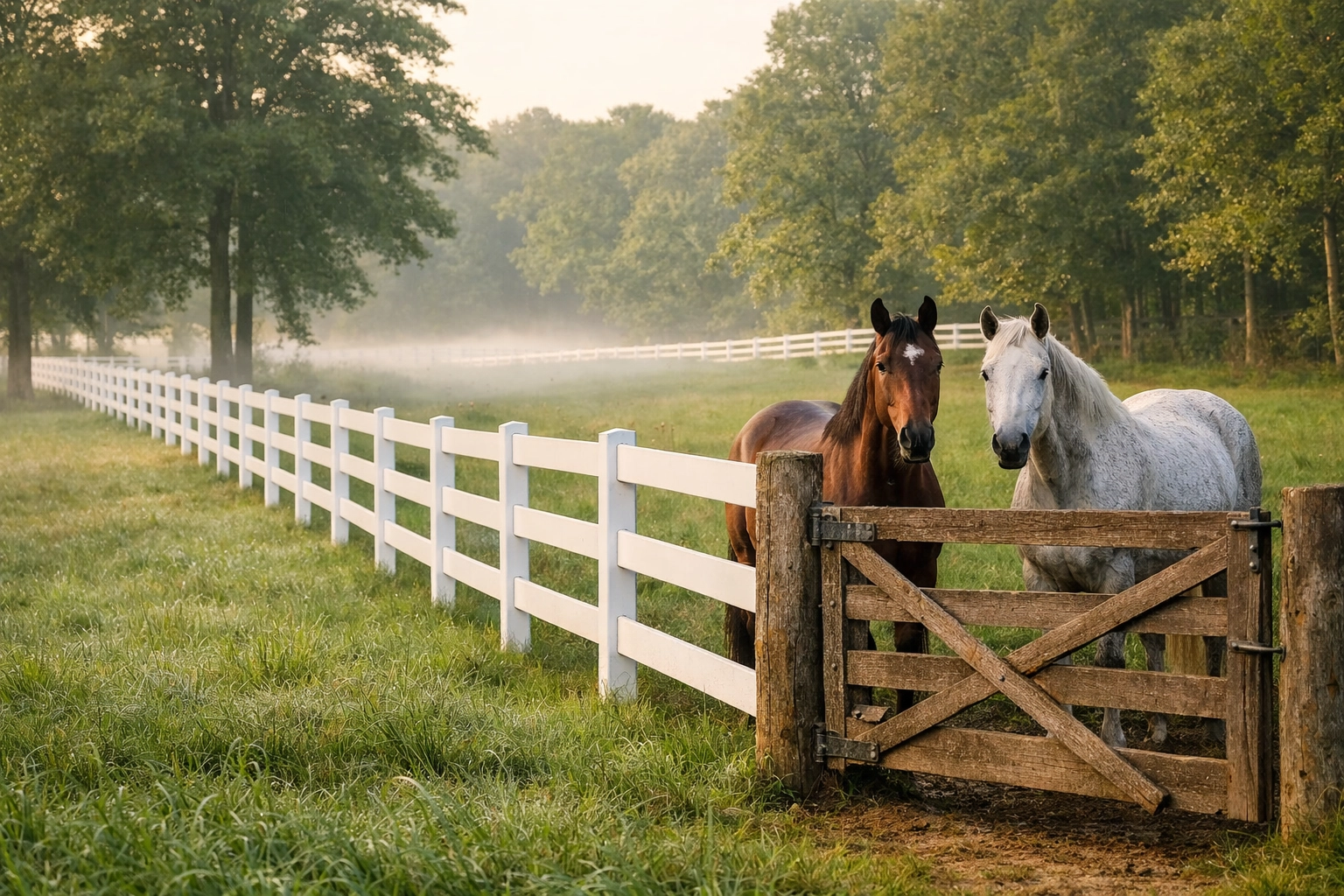
    White board fence and green pastures with grazing horses at North Carolina horse farm

    The Waxhaw Equestrian Community

    Beyond individual properties, you're buying into a community. Waxhaw supports multiple boarding facilities, riding instructors, farriers, and veterinarians who understand performance horses. The Cane Creek Park trail system connects properties throughout the area, creating a network that feels more like traditional hunt country than suburban sprawl.

    Local organizations including hunter/jumper barns, dressage facilities, and trail riding groups are active. You'll find clinicians who travel to the area regularly and a customer base that supports quality equine services. This infrastructure matters: especially if you're relocating from an established equestrian area.

    The village of Waxhaw itself maintains small-town character with local restaurants, shops, and a genuine community identity. You're not buying a house on acreage in a subdivision. You're buying into an agricultural community that takes horses seriously.

    Financial Considerations Beyond the Purchase Price

    Budget for property improvements even on turnkey facilities. Pasture renovation, arena maintenance, barn repairs, and fence upkeep are ongoing expenses. Properties with deferred maintenance may look like opportunities but calculate realistic renovation costs before you commit.

    Operating costs for a 10-acre property with four horses run $2,000-$4,000 monthly depending on your management style. This includes hay, feed, bedding, routine farrier and veterinary care, property maintenance, and utilities. Properties with older wells, septic systems, or electrical services may require upgrades to support equestrian operations.

    Consider tax implications. North Carolina offers agricultural tax benefits for qualifying properties, which can significantly reduce annual property taxes. Most horse properties in Waxhaw qualify if properly managed and documented.

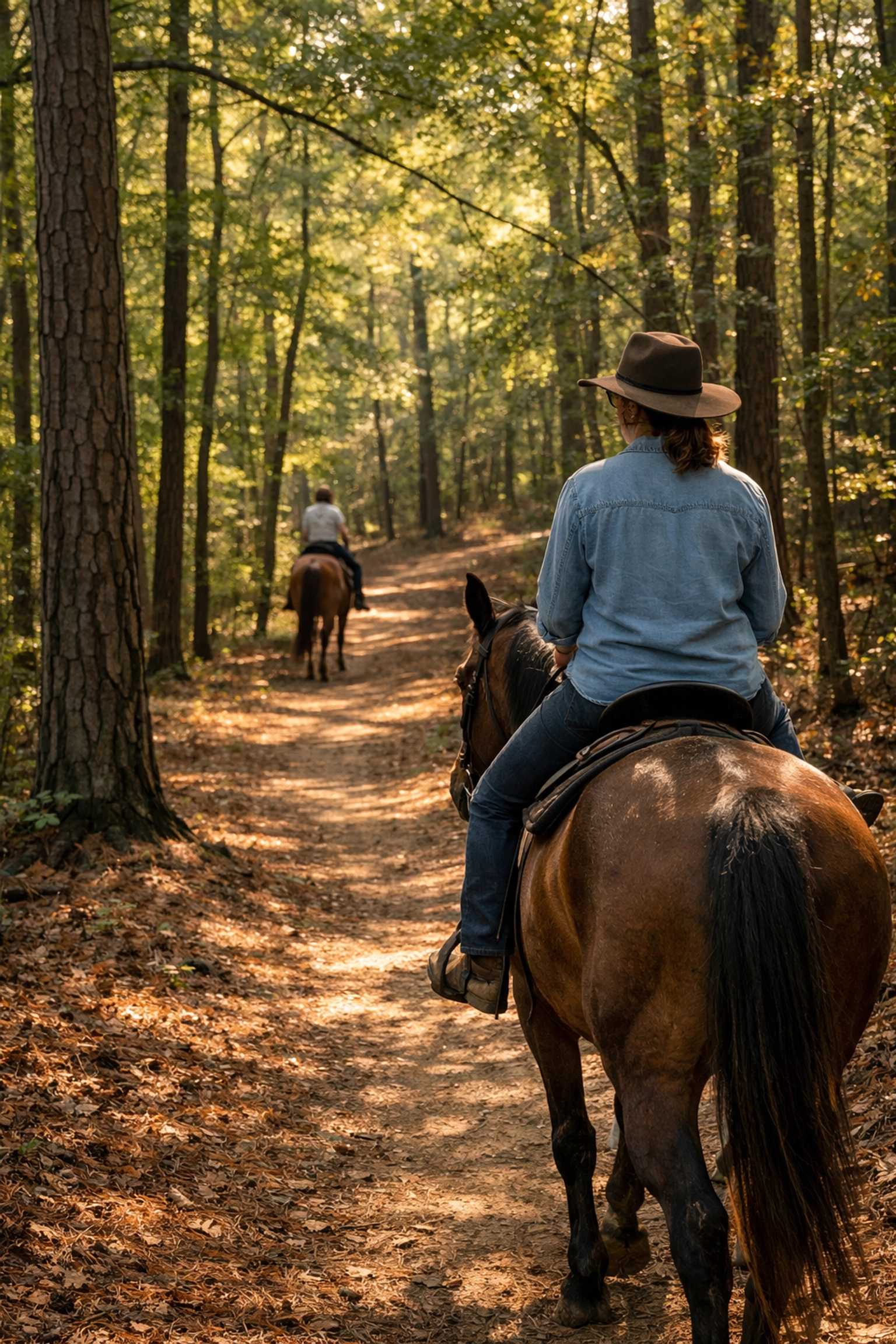
    Horseback rider on wooded trail at Cane Creek Park near Waxhaw NC

    Making Your Decision

    The best horse property isn't the one with the most impressive barn or largest acreage. It's the property that matches your management capability, riding discipline, and long-term goals. A well-maintained 5-acre property often outperforms a neglected 20-acre farm.

    Before you make offers, spend time in Waxhaw. Ride the trails. Visit local feed stores. Talk to farriers and veterinarians about their service areas. The property sits in a context: make sure that context supports your equestrian life.

    Work with agents who understand horses, not just rural real estate. The questions you need answered: about soil quality, water reliability, barn layouts, and pasture management: require someone who's mucked stalls and fixed fence, not someone who thinks "equestrian property" is a marketing category.

    Your Next Steps

    Waxhaw offers legitimate horse property options for buyers who know what they need. The market moves quickly for well-priced properties with quality infrastructure. If you're ready to explore what's available, view current listings or contact our team to discuss your specific requirements.
    This is about finding land that works for your horses first. Everything else follows from that foundation.

  • Tryon Horse Country: Why It’s Still a Top Destination for Equestrian Estates (And What You Should Know Before Buying)

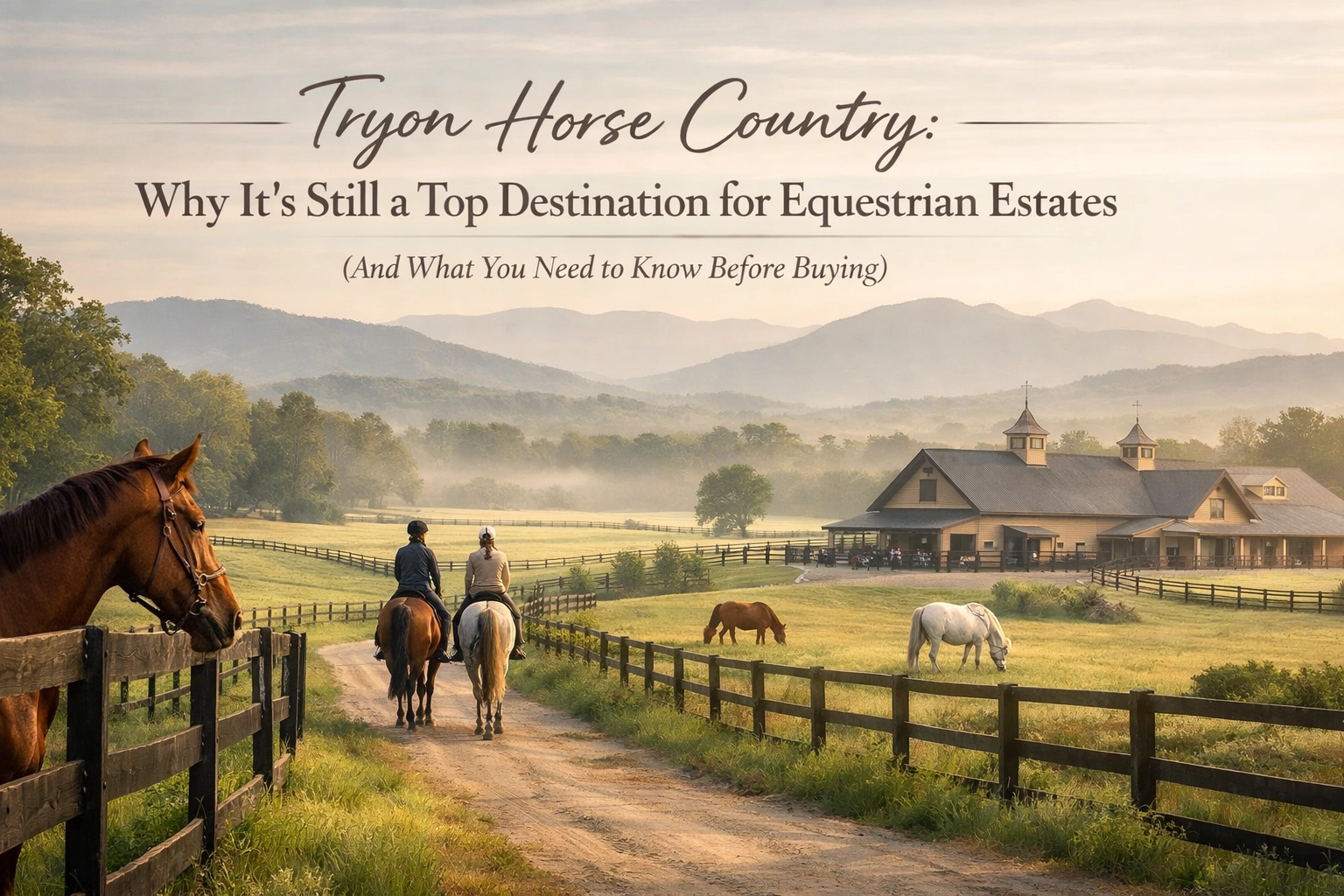
    Tryon Horse Country: Why It’s Still a Top Destination for Equestrian Estates (And What You Should Know Before Buying)

    When riders talk about world-class equestrian destinations in the United States, Tryon consistently rises to the top of the conversation. Nestled in the foothills of Western North Carolina, this region has transformed from a quiet horse community into a globally recognized equestrian hub: all while maintaining the authentic, horse-first culture that serious riders demand.

    If you're considering purchasing equestrian property in Tryon, you're not alone. The region attracts everyone from Olympic-level competitors to weekend trail enthusiasts, and for good reason. But before you start touring properties, there are critical factors that separate a smart investment from a costly mistake.

    Why Tryon Continues to Lead as an Equestrian Destination

    World-Class Infrastructure That Actually Serves Horse People

    The Tryon International Equestrian Center transformed the landscape when it opened, but the region's appeal extends far beyond one facility. What makes Tryon exceptional is the complete ecosystem it offers: experienced veterinarians who understand performance horses, farriers who can handle everything from barefoot trims to therapeutic shoeing, and barn builders who actually ride and understand proper ventilation, footing, and layout.

    This infrastructure didn't appear overnight. It developed organically over decades as equestrians recognized the region's potential and built businesses to serve the community. You're not moving to a place where you'll struggle to find qualified professionals: you're joining an established network where horse expertise is the baseline expectation.

    Equestrian facility in Tryon NC with barn, white-fenced pastures, and horses grazing in rolling hills

    Protected Trail Systems and Natural Terrain

    The rolling hills of Western North Carolina provide some of the most beautiful riding terrain in the Southeast. More importantly, Tryon offers access to protected trail systems that allow riders to explore miles of maintained paths without constantly navigating private property boundaries or roadways.

    For riders who prioritize trail access: whether for conditioning, pleasure riding, or simply mental breaks from arena work: this protected access represents significant value. Many equestrian communities promise trails but deliver fragmented access or poorly maintained paths. Tryon's trail network reflects decades of careful preservation and community investment.

    Year-Round Riding Without Compromise

    If you've ever dealt with frozen water buckets, snow-covered arenas, or months where outdoor riding becomes impractical, you understand the value of Tryon's mild foothills climate. The region supports year-round riding without the extreme heat of Florida or the harsh winters that limit northern equestrian communities.

    This extended season matters for serious training programs, young horse development, and maintaining fitness in competition horses. It also means you're not paying for facilities you can only use six months of the year.

    Protected forest trail system for horseback riding in Western North Carolina foothills

    The Affordability Advantage No One Talks About

    Tryon positions itself as one of the more affordable established horse communities in the country: a significant advantage when compared to markets like Wellington, Aiken, or Middleburg. According to recent data, Tryon's cost of living runs approximately 4.3% below the national average, with a median home value of $393,781.

    This affordability extends beyond initial purchase price. Operating costs for hay, shavings, feed, and routine maintenance tend to run lower than in more expensive equestrian markets. For buyers planning to maintain multiple horses or operate a small training business, these ongoing cost differences compound significantly over time.

    What You Must Evaluate Before Purchasing in Tryon

    Realistic Acreage Assessment

    One of the most common mistakes buyers make is underestimating their acreage needs or overestimating what they can manage. Before you fall in love with a property, calculate your requirements based on actual horse numbers, desired pasture rotation, and maintenance capacity.

    As a general guideline, plan for 1.5 to 2 acres per horse if you're implementing proper pasture management with rotation. If you're planning to keep horses in dry lots or sacrifice areas, you'll need less grazing land but more investment in footing, drainage, and hay storage.

    Consider your long-term plans. If you currently have two horses but might expand to four or five, or if you plan to breed or offer training services, build that growth into your acreage calculations now.

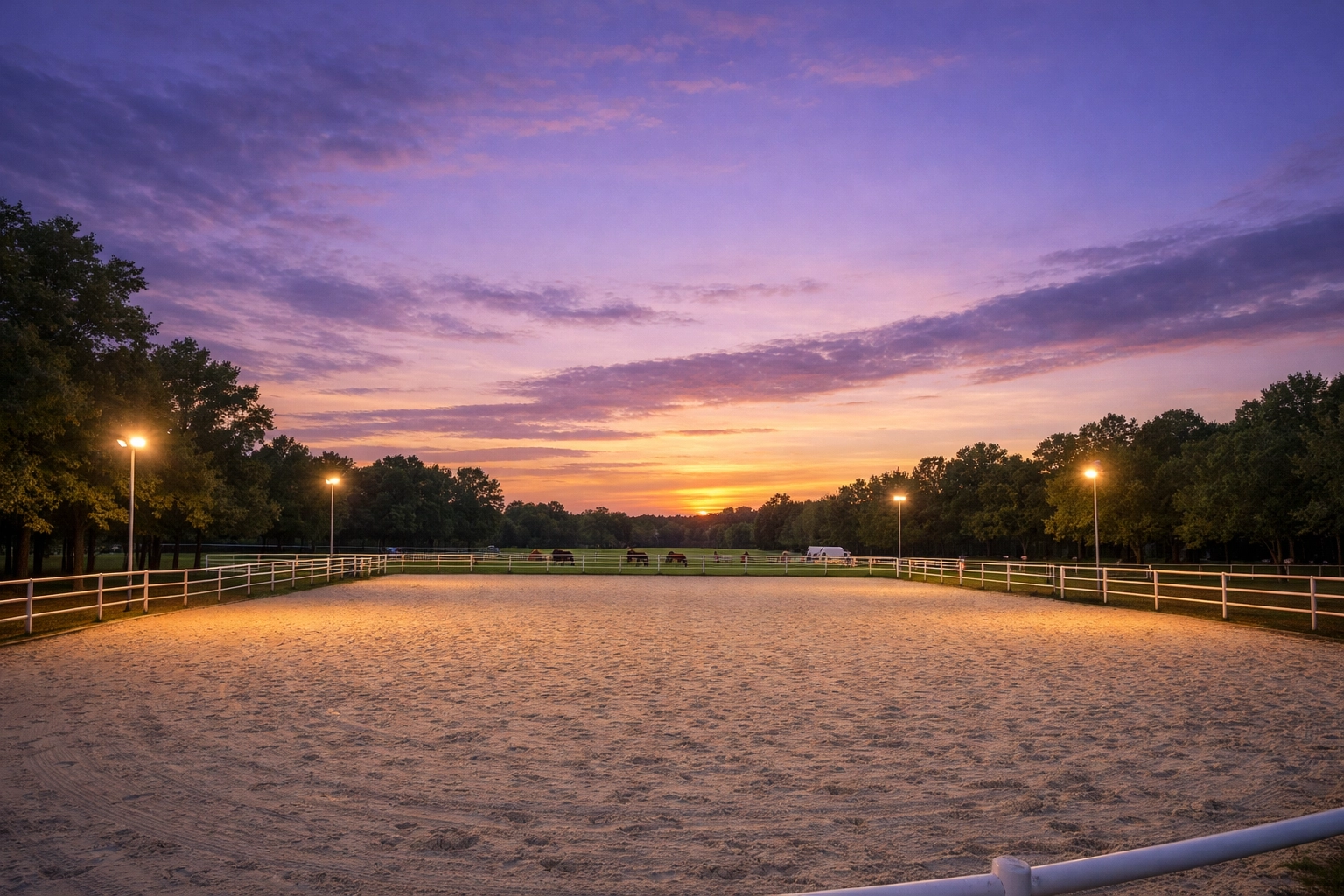
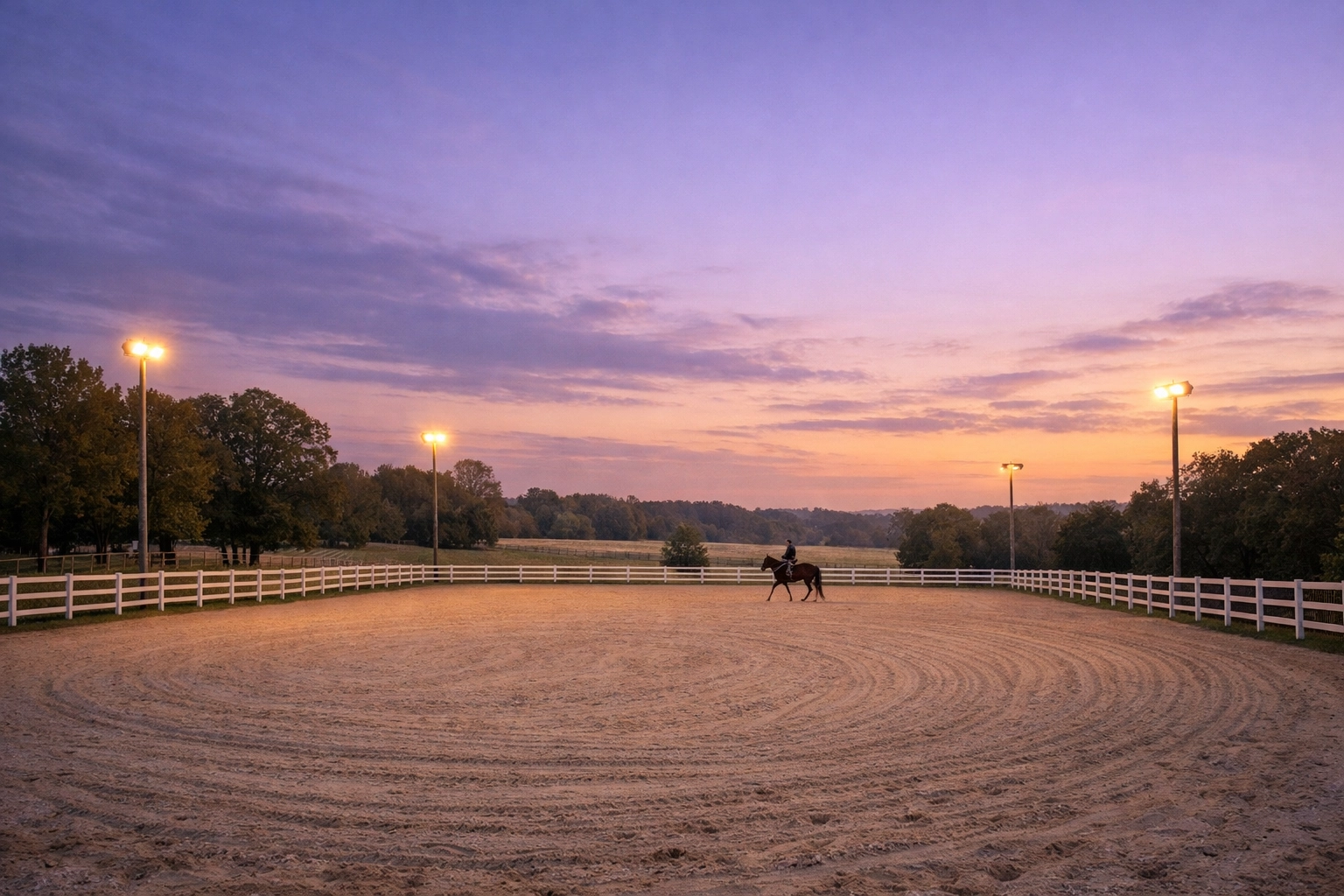
    Professional outdoor riding arena with quality footing at equestrian property in Tryon area

    Barn Specifications That Match Your Program

    Not all barns serve the same purpose. A breeding operation needs foaling stalls with cameras and excellent lighting. A dressage training facility requires adequate tack storage, grooming areas, and potentially wash stalls with hot water. A small private barn for pleasure horses might prioritize natural light and run-in access over stall count.

    Tour properties with a clear understanding of your barn requirements. Can the existing structure support your program, or will you need to invest in modifications or new construction? Understand local barn builders' timelines and costs before committing to a property that requires significant barn work.

    Arena Requirements and Riding Surface Options

    Decide whether you need an arena: and if so, what type. Many Tryon properties include outdoor arenas, but the quality of footing, drainage, and maintenance varies dramatically. An arena that looks presentable during a dry summer showing might turn into a mud pit during winter rains.

    If you're considering properties without arenas, understand the cost and timeline for installation. A properly constructed outdoor arena with quality footing, drainage, and appropriate fencing typically represents a $50,000 to $100,000+ investment depending on size and specifications.

    Indoor arenas add even more value: and cost: but in Tryon's climate, they're not always necessary for year-round riding. Evaluate whether your discipline and training schedule truly requires covered riding or whether a well-maintained outdoor arena meets your needs.

    Conservation Easements and Trail Access Rights

    Carefully review any conservation easements on properties you're considering. While easements can provide tax benefits and protect the rural character of surrounding land, they also place permanent restrictions on development, building placement, and sometimes even fencing.

    Verify trail access rights with documentation, not verbal promises. If joining the protected trail system is important to you, confirm that the specific property includes legal trail access and understand any associated fees or membership requirements.

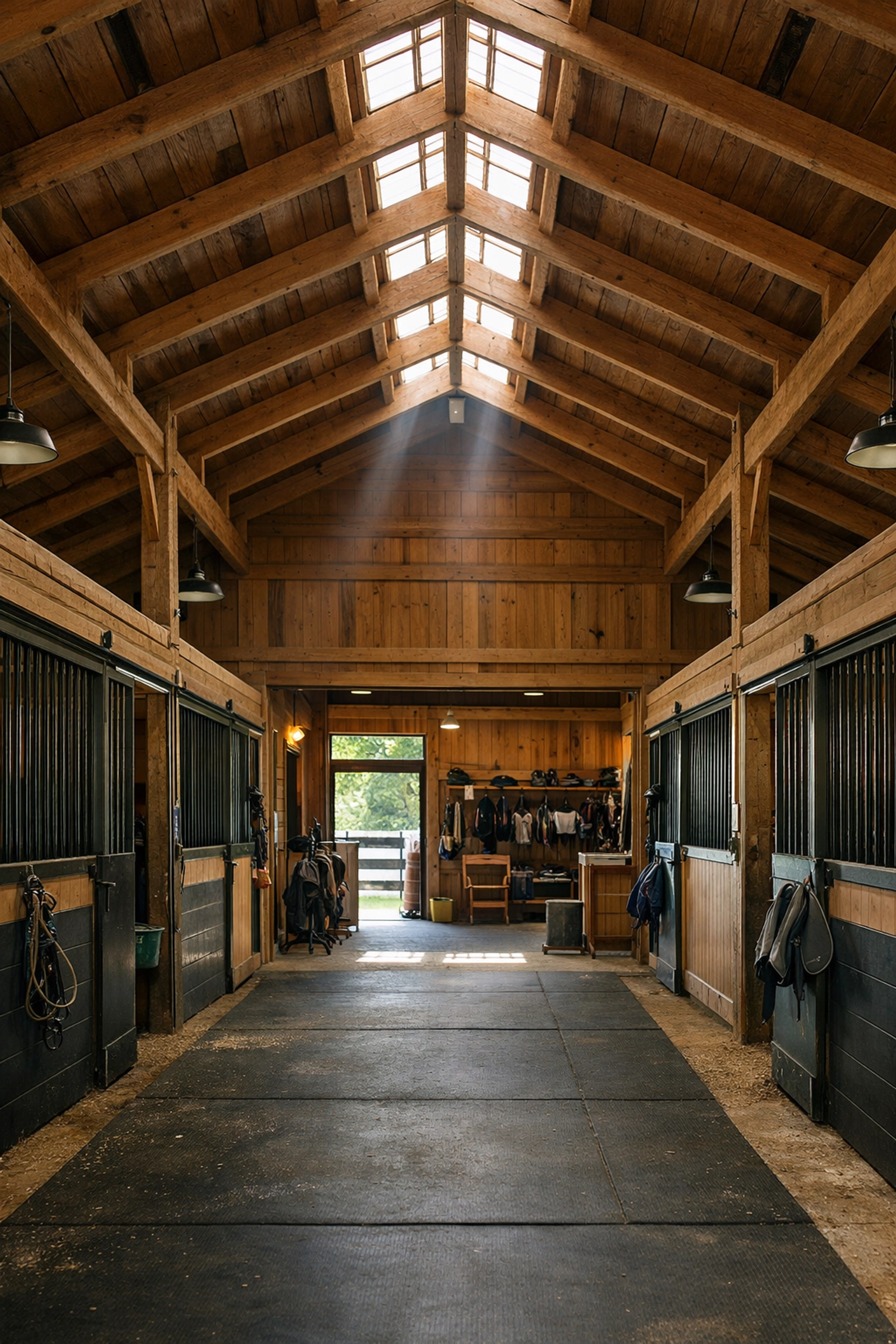
    Well-designed horse barn interior with center aisle, natural light, and organized stall layout

    Understanding the Current Tryon Market

    The Tryon equestrian market currently offers diverse options across price points. Recent listings show land parcels ranging from 6 to 11 acres priced between $170,000 and $430,122. Fully developed equestrian estates with homes, barns, and amenities range from approximately $600,000 to over $2.7 million depending on acreage, home quality, and equestrian infrastructure.
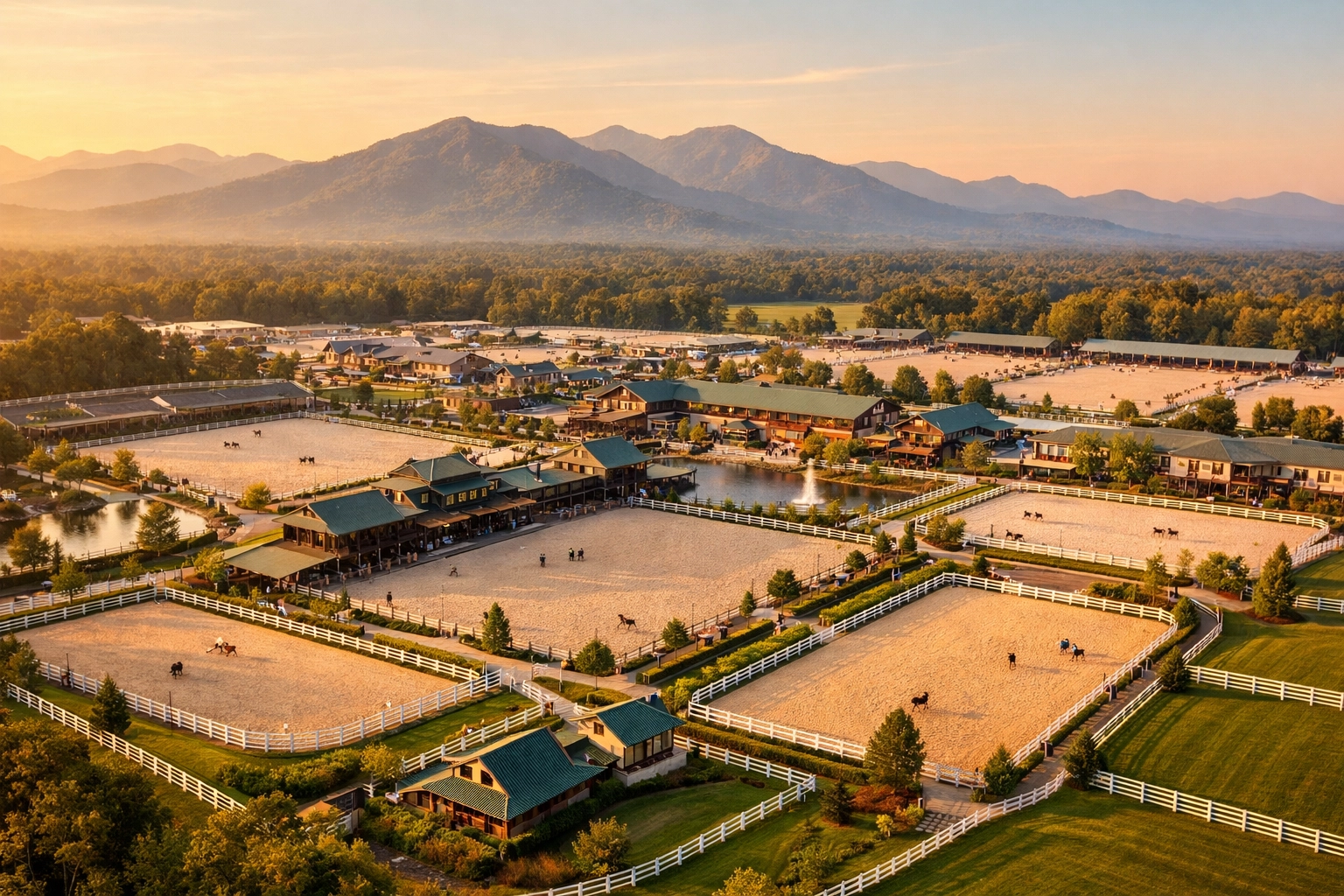
    This range reflects the market's diversity. You can purchase raw land and build exactly what you need, or move into a turnkey operation ready for immediate use. The best choice depends on your timeline, budget, and willingness to manage construction projects.
    Properties with established barns, quality fencing, and functional arenas typically command premium pricing: but they also eliminate years of construction headaches and allow you to start riding immediately.

    The Riding Culture Reality

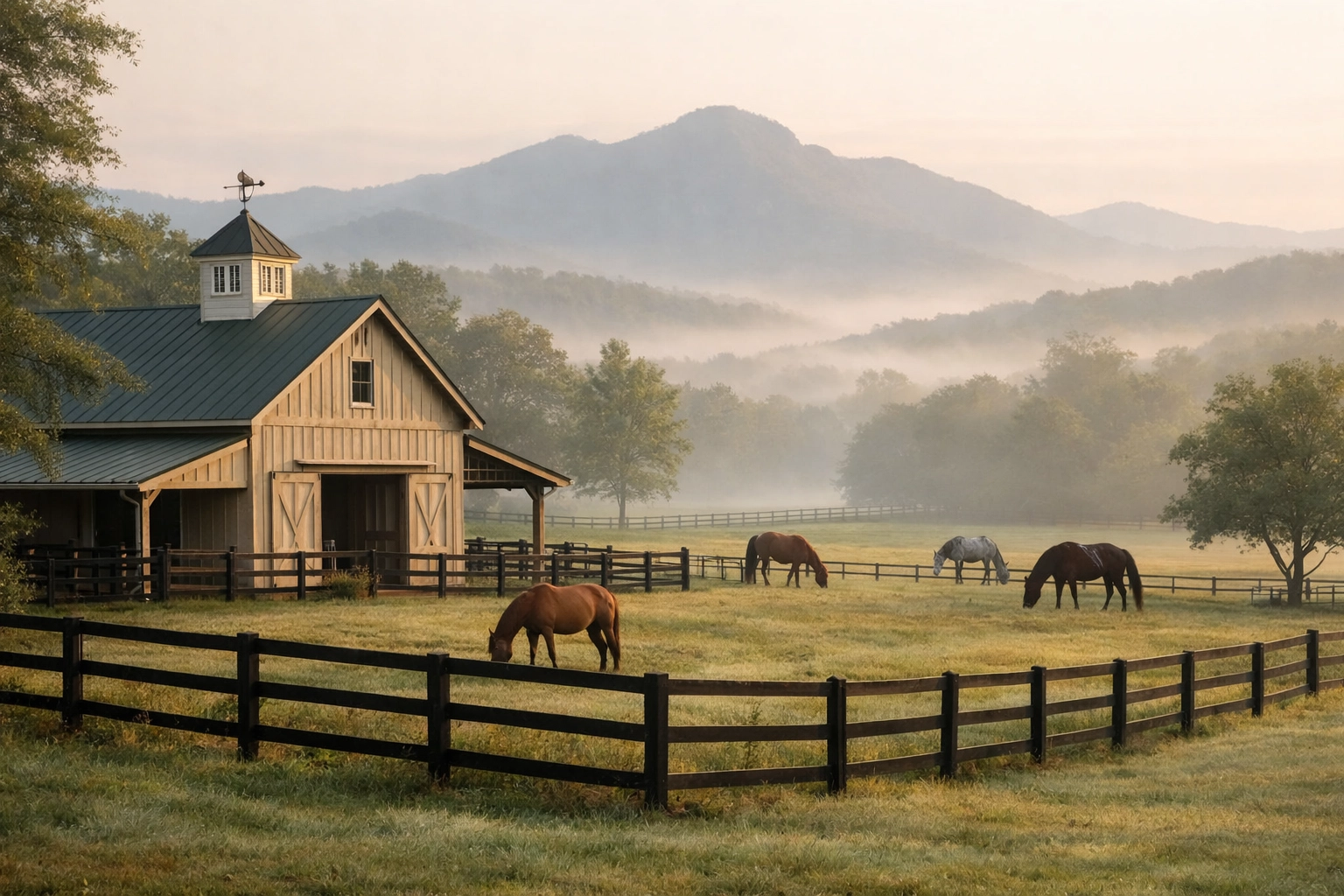
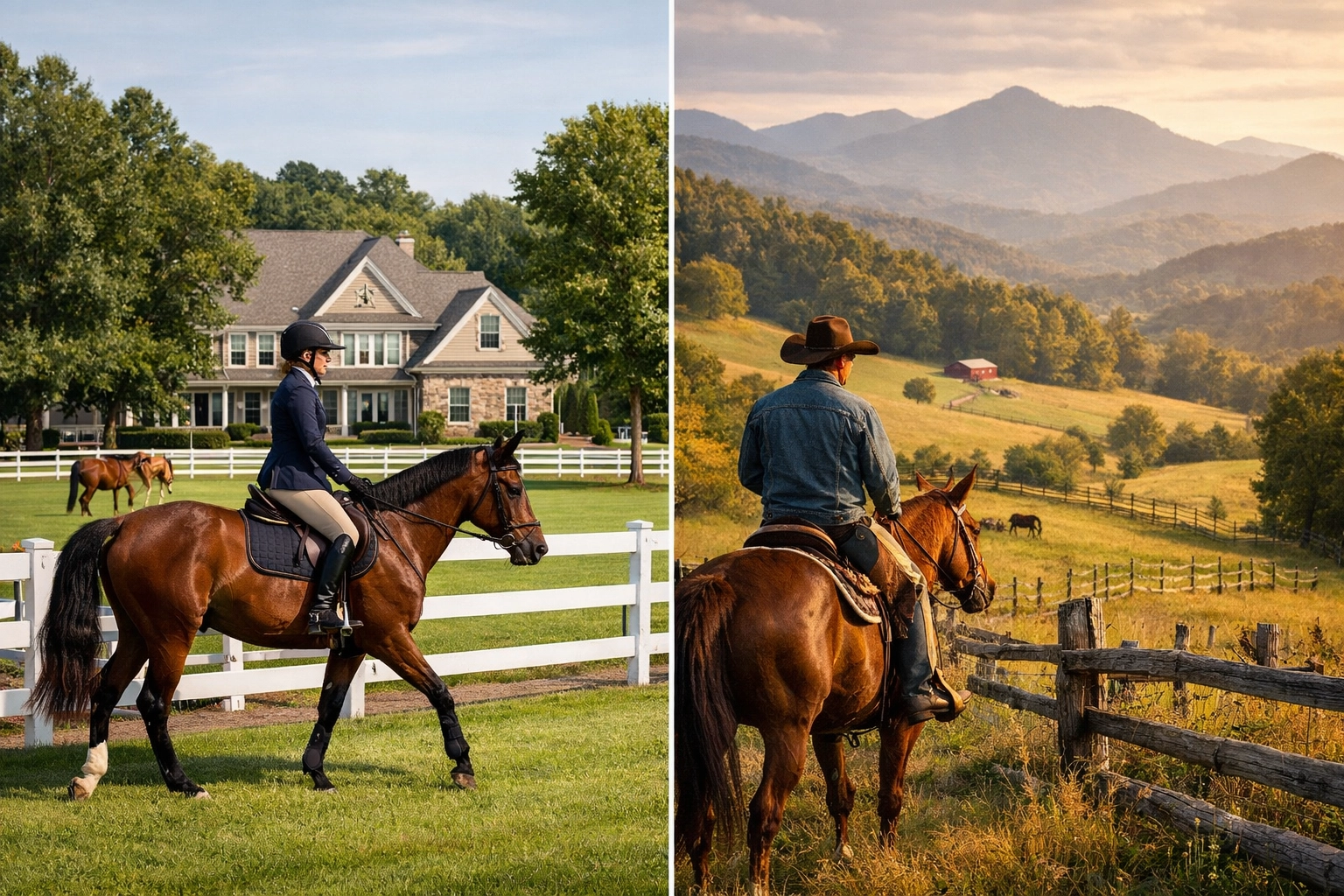
    One persistent misconception suggests Tryon caters exclusively to English disciplines or hunter/jumper competitors. The reality is far more diverse. The region supports dressage, eventing, western riding, endurance, and recreational trail riding with equal enthusiasm.

    This diversity strengthens the community. You'll find experienced professionals across disciplines, used equipment markets that serve varied needs, and a culture that respects different riding styles. Whether you're training young event prospects or enjoying weekend trail rides on your Quarter Horse, you'll find your people in Tryon.

    Moving Forward With Confidence

    Tryon Horse Country earned its reputation through decades of careful community building, infrastructure investment, and an unwavering commitment to serving horses first. The region continues to attract serious equestrians because it delivers on the fundamentals: quality land, professional services, protected trail access, and a riding culture built by people who actually spend time in the saddle.

    Before you purchase, work with a real estate professional who understands equestrian properties: not just residential sales. The right agent will help you evaluate drainage patterns, assess barn construction quality, understand local zoning regulations, and identify potential issues that generic home inspections miss.

    Our team at Carolina Horse Farm Realty specializes in equestrian properties throughout the Charlotte Metro area and Western North Carolina. We understand the unique requirements of horse property because we're horse people first. If you're ready to explore what Tryon has to offer, or if you're evaluating other equestrian markets in the region, contact us to discuss your specific needs. We're here to help you find property that serves your horses, supports your riding goals, and represents a sound long-term investment.

  • Pasture Management Secrets Revealed: Keeping Your North Carolina Soil Healthy (What Charlotte Experts Don’t Want You to Know)

    Pasture Management Secrets Revealed: Keeping Your North Carolina Soil Healthy (What Charlotte Experts Don’t Want You to Know)

    Let's clear something up right away: there aren't really "secrets" that Charlotte-area equestrian professionals are hiding from you. But there are fundamental pasture management practices that many horse farm owners overlook: often because they weren't taught them, or because they assume their property will maintain itself.

    If you've walked your pastures lately and noticed bare patches, invasive weeds taking over, or soil that turns to mud with every rain, you're not alone. North Carolina's climate presents unique challenges for maintaining healthy grazing land, and the difference between lush, productive pastures and depleted ground often comes down to a handful of management decisions.

    Whether you currently own a horse farm in the Charlotte Metro area or you're evaluating equestrian properties with an eye toward long-term land quality, understanding soil health isn't optional: it's foundational.

    The Foundation: Why Soil Testing Comes First

    You can't manage what you don't measure. Before you lime, fertilize, or plant a single seed, you need to know what your soil actually needs.

    Contact your local Soil and Water Conservation office or Southern States for soil testing. In most North Carolina counties, basic testing is free or low-cost. You'll receive a detailed analysis showing pH levels, nutrient deficiencies, and specific recommendations for amendments.

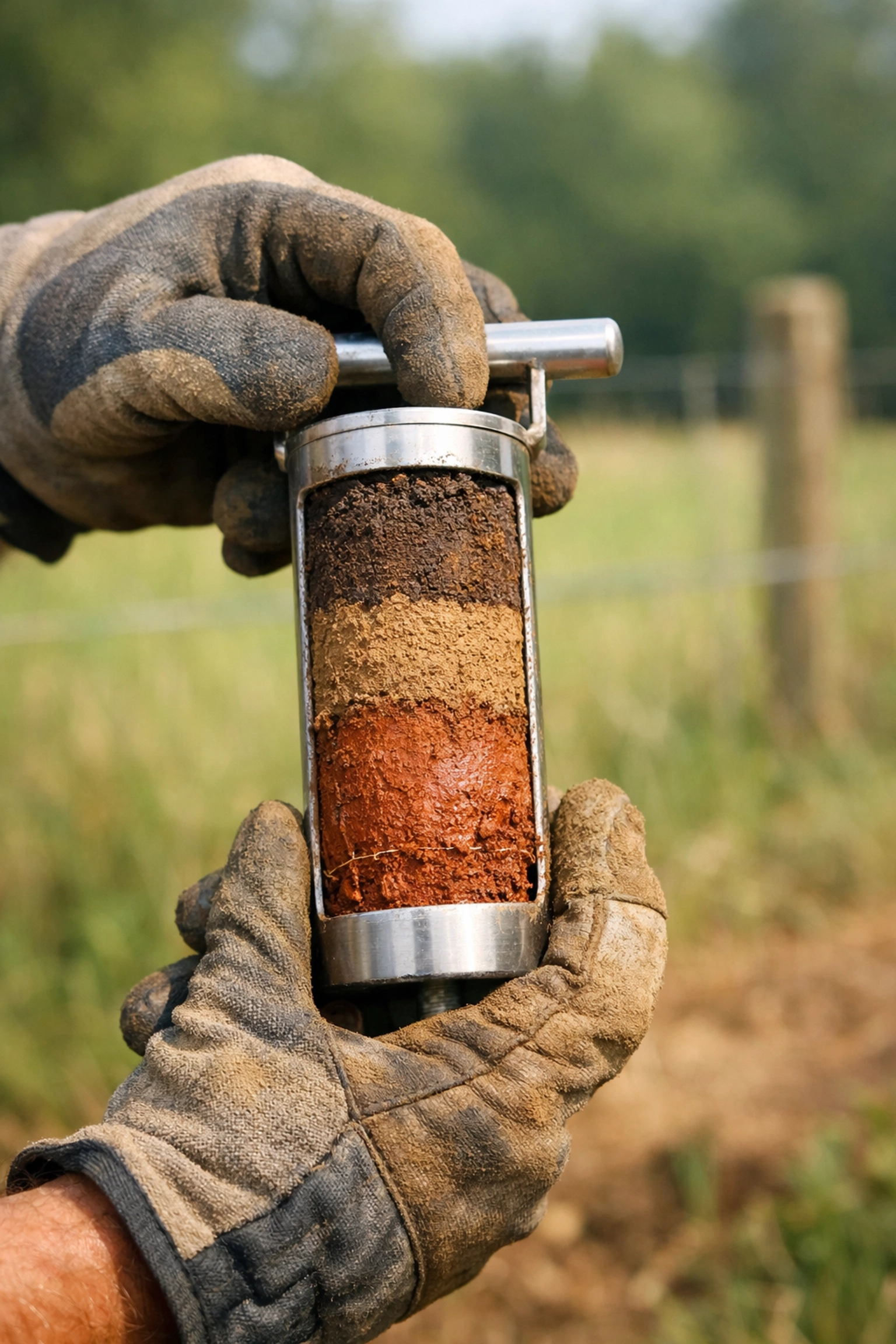
    North Carolina soils tend toward acidity, particularly in our region's clay-heavy areas. Without testing, you're essentially guessing: and expensive fertilizer applications won't help if your pH is too low for nutrient uptake. Testing takes the guesswork out of pasture management and gives you a baseline to track improvement over time.

    Test every three years minimum, and always test before purchasing a property if pasture quality matters to your operation.

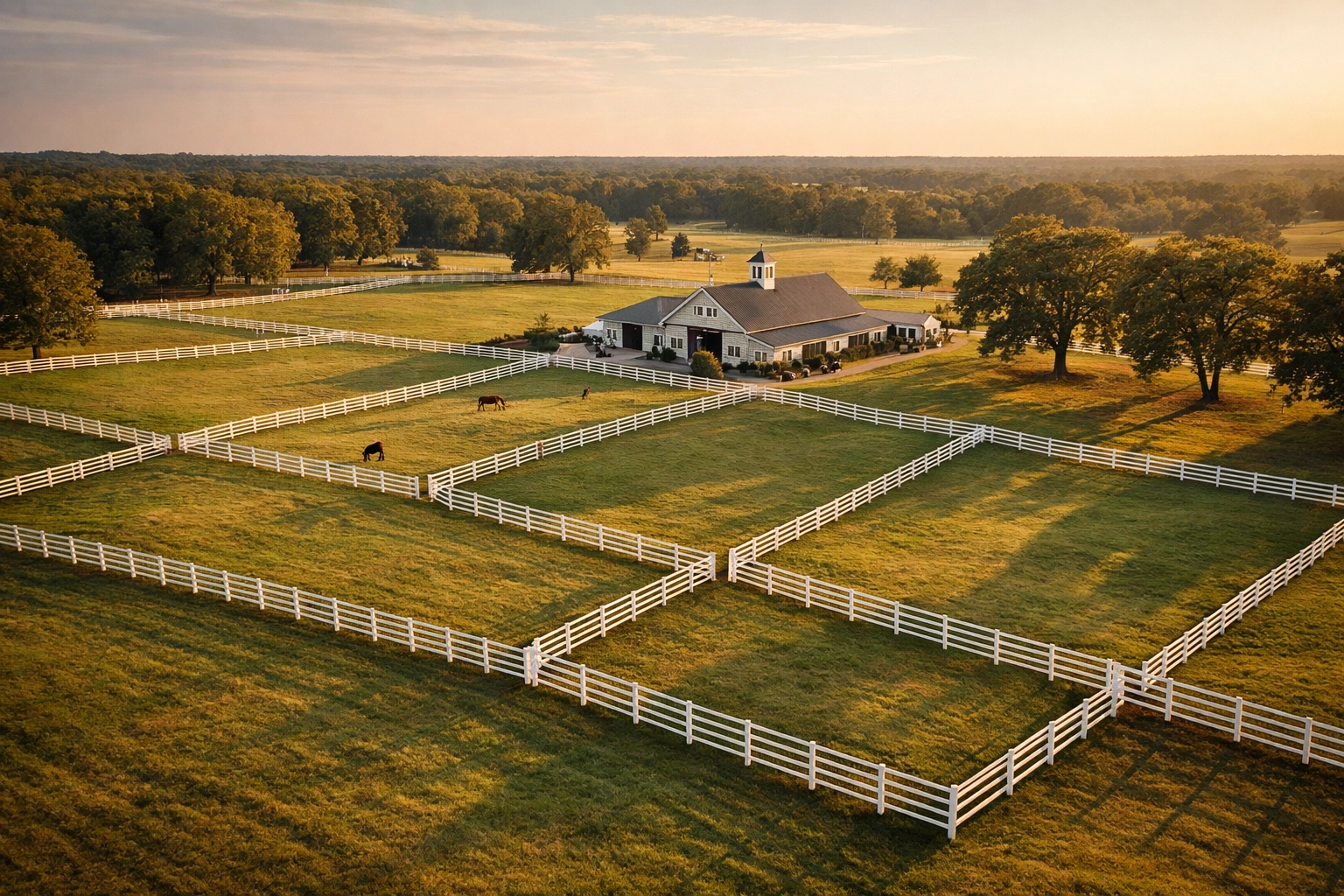
    Rotational grazing paddocks on North Carolina horse farm with divided pastures and white fencing

    Rotational Grazing: The Single Most Effective Practice

    If you implement only one practice from this entire article, make it rotational grazing. This simple system prevents overgrazing, maintains healthy root systems, and dramatically improves pasture productivity: yet many Charlotte-area farms still practice continuous grazing.

    The basic principle: Divide your grazing land into multiple paddocks and rotate horses through them systematically, allowing grazed areas to rest and recover.

    Even a simple two-paddock system outperforms continuous grazing. Turn horses into a paddock when grass reaches 6 to 8 inches tall. Remove them when it's grazed down to 3 to 4 inches: never lower. Then rest that paddock while horses graze the second section.

    More paddocks allow for longer rest periods and more precise grazing management, but you don't need a complex system to see results. Start simple and refine as you observe how your specific pastures respond.

    The math works in your favor: rotational grazing can support 50% more horses per acre compared to continuous grazing, while simultaneously improving soil health and reducing weed pressure.

    The Four-Inch Rule: Leave More Than You Think

    Here's where many well-intentioned horse owners go wrong: they graze paddocks down to dirt, thinking they're maximizing forage use.

    Always leave at least 4 inches of growth after grazing. This isn't wasteful: it's protective.

    Leaving adequate residual growth:

    • Protects developing meristems (the growth points of plants)
    • Results in deeper root systems and greater root mass
    • Keeps soil cooler during North Carolina's hot summers
    • Maintains photosynthetic capacity for faster regrowth
    • Prevents bare ground where weeds establish

    Think of it this way: the grass you leave behind is working capital, not waste. Those remaining leaves capture sunlight and drive the regrowth that will feed your horses through the next rotation.

    Bare ground is your enemy. Once you've grazed to dirt, you've damaged root systems, exposed soil to erosion and compaction, and created ideal conditions for invasive species like buttercup, thistle, and johnsongrass.

    Healthy pasture grass at proper 4-inch grazing height on North Carolina horse farm

    Seasonal Strategies for North Carolina's Climate

    Our climate presents specific challenges that require adjusted management throughout the year.

    Spring: This is both your best opportunity and biggest risk. Cool-season grasses like fescue and orchardgrass grow aggressively in March and April. The temptation is to turn horses out early and let them graze freely. Resist this. Spring is when you should be most disciplined about rotation and grazing height. Overgrazing during spring growth sets you up for failure during summer dormancy.

    Summer: Warm-season grasses thrive, but cool-season varieties go semi-dormant during heat and drought. This is when many Charlotte-area pastures deteriorate. Reduce grazing pressure during stress periods. Increase hay feeding and restrict pasture access to prevent damage. A few weeks of sacrifice now prevents months of recovery later.

    Fall: As temperatures cool, cool-season grasses rebound. This is your second growth period and an opportunity to build root reserves before winter. The last paddock you graze in fall should not be the first you graze in spring: it needs maximum recovery time before the next season's use.

    Winter: Limit traffic on wet, soft ground. North Carolina's freeze-thaw cycles combined with our clay soils create ideal conditions for compaction and mud. Consider sacrifice areas or drylots during particularly wet periods.

    Companion Planting: Grasses and Legumes Working Together

    A healthy pasture isn't a monoculture. The best North Carolina horse pastures combine cool-season grasses (tall fescue, orchardgrass, timothy) with legumes like clover.

    Legumes fix nitrogen naturally, reducing fertilizer needs. They also provide nutritional diversity and remain green during periods when grasses go dormant. A well-balanced stand naturally competes with weed seedlings, reducing herbicide requirements.

    When establishing or overseeding pastures, aim for roughly 70-80% grass and 20-30% legume coverage. This ratio provides stability, nutrition, and natural weed suppression.

    Comparison of healthy versus overgrazed horse pasture showing soil health differences

    Mowing: Not Just for Aesthetics

    Strategic mowing controls weeds, promotes dense growth, and prevents seedhead formation that reduces forage quality.

    Mow after horses rotate out of a paddock, cutting to about 4-6 inches. This clips off weed tops before they seed, forces grasses to tiller (produce additional shoots), and creates more uniform growth for the next grazing cycle.

    Avoid mowing during extreme heat or drought stress. And never mow lower than 4 inches: you'll damage plants and expose soil.

    Common Mistakes Charlotte-Area Farm Owners Make

    Overstocking: The number one soil health destroyer. Just because your property is zoned for a certain number of horses doesn't mean your pastures can sustainably support that many. Carrying capacity depends on soil quality, grass species, climate, and management intensity.

    Neglecting drainage: North Carolina clay doesn't drain naturally. Standing water and saturated soils kill grass roots and create compaction. Address drainage issues before they become pasture-wide problems.

    Applying products without testing: Lime and fertilizer are expensive. Random applications based on what your neighbor does waste money and potentially harm your soil ecosystem.

    Ignoring seasonal growth patterns: Managing pastures the same way year-round doesn't account for North Carolina's distinct growing seasons and stress periods.

    Waiting too long to address problems: Bare patches don't heal themselves. Weed infestations spread. Compacted areas worsen. Early intervention is always easier and less expensive than remediation.

    The Real Estate Perspective: Soil Health and Property Value

    When evaluating horse farms for sale in the Charlotte Metro area, pasture quality tells you volumes about how a property has been managed. Well-maintained pastures with thick grass coverage, minimal weeds, and good drainage indicate thoughtful stewardship. Depleted, weedy, or eroded pastures signal either neglect or overstocking: and represent significant restoration costs.

    If you're currently exploring equestrian properties, pay attention to pasture condition during your visits. Walk the fence lines. Note grass species and density. Look for bare areas, gullies, and standing water. These observations provide insight into both current condition and the investment required to bring pastures up to your standards.

    For sellers, investing in pasture improvement before listing pays dividends. Healthy pastures photograph beautifully, signal quality management, and command premium prices from knowledgeable buyers.

    Moving Forward with Your Land

    Soil health isn't complicated, but it does require attention and consistency. The practices outlined here: soil testing, rotational grazing, maintaining adequate residual height, and seasonal adjustment: work because they align with how pasture ecosystems naturally function.

    Whether you're managing an existing farm or searching for the right property to start your equestrian operation, understanding these fundamentals positions you for long-term success. North Carolina offers exceptional opportunities for horse farm ownership, and properties with well-managed pastures represent both lifestyle quality and sound investment.

    If you're evaluating horse farms in the Charlotte area and want guidance on assessing pasture quality and long-term potential, our team understands the intersection of land management and real estate value. We're horse people first, and we know what healthy Carolina pastures should look like.

    Contact us to discuss properties that match your equestrian vision: and the land to support it sustainably.

  • Charlotte Equestrian SEO Blitz: 30 Long-Tail Blog Post Ideas for Ranking & Engagement

    Charlotte Equestrian SEO Blitz: 30 Long-Tail Blog Post Ideas for Ranking & Engagement

    Why Long-Tail Keywords Matter in the Charlotte Equestrian Market

    The Charlotte Metro equestrian market operates differently than traditional real estate. Horse people don't search for "homes for sale", they search for "barn with 12 stalls and indoor arena near Tryon" or "20-acre pasture property with run-in sheds in Waxhaw." These specific, intent-driven searches represent buyers and sellers who know exactly what they want.

    Long-tail keywords, phrases containing three or more words that target specific queries, convert at significantly higher rates than generic terms. When someone searches "horse property financing options NC," they're further along in their buying journey than someone searching "houses for sale." This specificity creates opportunity for equestrian-focused content that serves genuine needs while building search authority.

    The following 30 blog post ideas target the exact questions, concerns, and desires of horse owners throughout the Charlotte Metro region. Each topic addresses real pain points while positioning your brand as the definitive equestrian real estate resource in North Carolina.

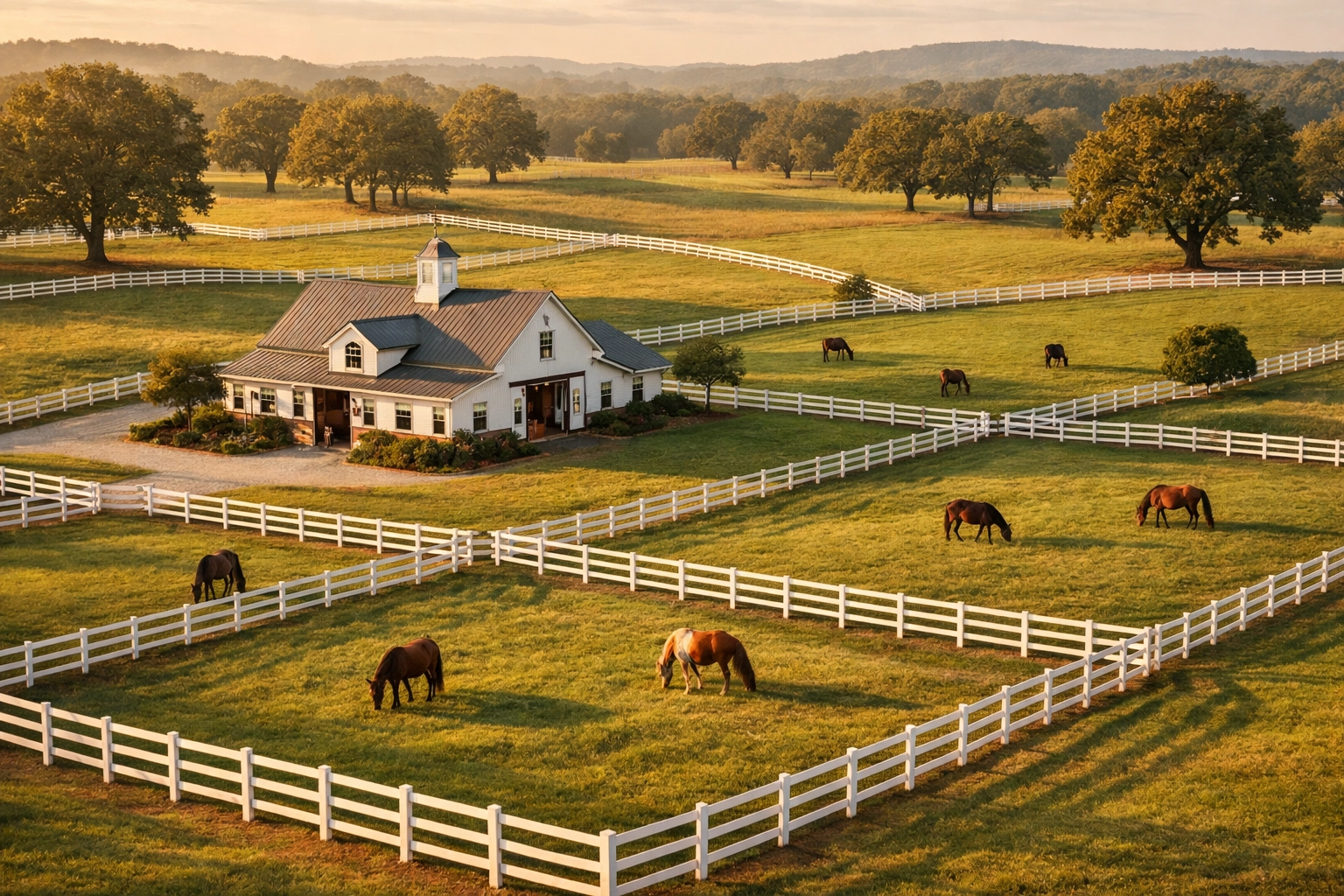
    Aerial view of Charlotte Metro horse farm with white fencing and barn surrounded by green pastures

    Location-Specific Property Guides (Posts 1-10)

    1. The Ultimate Guide to Horse Farms for Sale in Waxhaw, NC
    Waxhaw sits at the epicenter of Charlotte's equestrian culture. This comprehensive guide covers everything from average acreage costs and zoning regulations to the local horse show scene and veterinary resources. Include neighborhood comparisons, school districts for equestrian families, and proximity to major training facilities.

    2. Why Weddington is the Perfect Spot for Your Equestrian Estate
    Weddington offers the rare combination of excellent schools, manageable lot sizes, and horse-friendly zoning within 30 minutes of Uptown Charlotte. Focus on the lifestyle appeal, professional equestrians who need city access without sacrificing barn time.

    3. Luxury Living: Equestrian Properties in Marvin, NC
    Marvin properties represent the high end of Charlotte equestrian real estate. This post targets buyers seeking custom barns, designer tack rooms, and homes where architectural elegance matches stable quality. Emphasize privacy, acreage, and the understated luxury that defines serious horsemen's estates.

    4. Exploring York County, SC: A Haven for Horse Lovers
    South Carolina's lower property taxes and agricultural exemptions make York County increasingly attractive. Cover the practical benefits, tax savings, land costs, zoning flexibility, while highlighting the strong equestrian community and access to Carolina Horse Park.

    5. Finding Your Dream Horse Property in Mooresville
    Mooresville combines waterfront living with equestrian amenities. Address the unique considerations of lakefront horse properties: drainage, pasture management near water, and how to evaluate properties with dual recreational appeal.

    6. Tryon Horse Country: Why It's Still a Top Destination
    Tryon represents the pinnacle of Carolina equestrian living. This post serves both buyers seeking show access and sellers who need their property marketed to the right international audience. Focus on TIEC's continued influence, training opportunities, and long-term property value appreciation.

    7. Huntersville Equestrian Real Estate: Space Close to the City
    For equestrians who can't sacrifice career accessibility, Huntersville offers legitimate horse facilities within commuting distance. Address the compromise thoughtfully, these properties won't offer 50-acre pastures, but they provide functional barn setups with suburban convenience.

    8. Hidden Gems: Horse Farms for Sale in Davidson, NC
    Davidson's college-town atmosphere and historic charm attract a different equestrian demographic. Target families who want cultural amenities alongside their horse facilities, plus access to excellent public and private schools.

    9. Why Harrisburg, NC is Growing for Equestrian Families
    Harrisburg's rapid development hasn't eliminated horse-friendly properties. This post helps buyers navigate new construction versus established farms, and how to evaluate developing areas for long-term equestrian suitability.

    10. Large Acreage and Privacy: Monroe's Best Horse Properties
    Monroe offers what's increasingly rare in Charlotte Metro, true acreage at manageable prices. Target buyers prioritizing land over location, particularly breeding operations, retirement facilities, or owners who value seclusion.

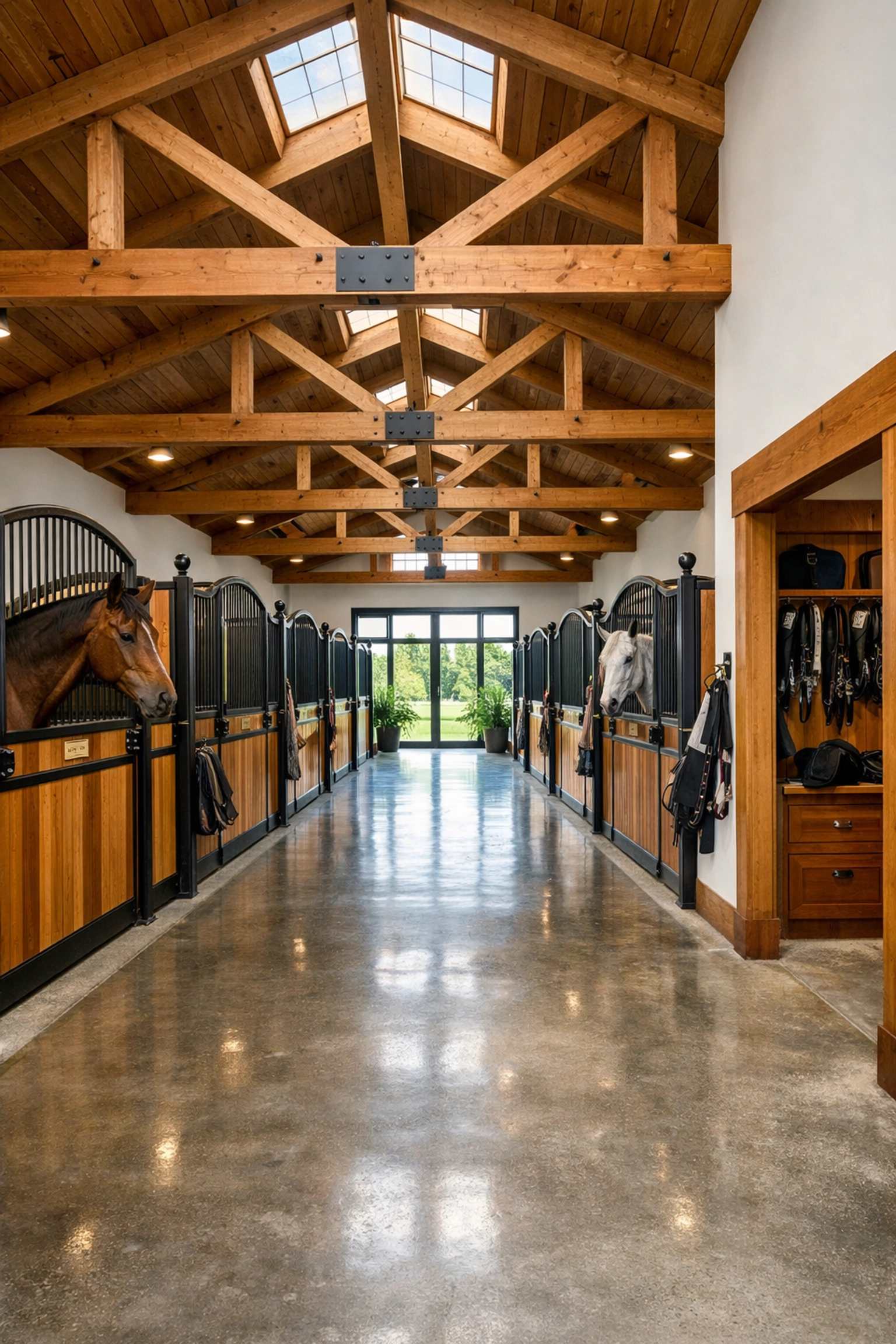
    Luxury barn interior with center aisle, horse stalls, and natural light for equestrian properties

    Facility & Infrastructure Education (Posts 11-19)

    11. Must-Have Feature: Why an Indoor Riding Arena Changes Everything
    Every serious equestrian understands indoor arena value, but not every buyer factors in construction costs, maintenance requirements, or resale impact. Provide detailed analysis of size considerations, footing options, and when an indoor justifies the investment versus covered alternatives.

    12. Barn Layouts 101: Designing for Efficiency and Horse Safety
    Center aisle versus shedrow, Dutch doors versus full stall fronts, feed room placement, wash rack considerations, this post serves both buyers evaluating existing barns and sellers considering pre-sale improvements. Focus on practical workflow and safety rather than aesthetic preferences.

    13. Pasture Management: Keeping Your North Carolina Soil Healthy
    North Carolina's red clay and variable rainfall create specific pasture challenges. Cover rotational grazing, fescue toxicity awareness, appropriate stocking rates, and seasonal management strategies. This positions your brand as knowledgeable about land quality, not just structures.

    14. The Essentials of High-End Stable Design in Charlotte
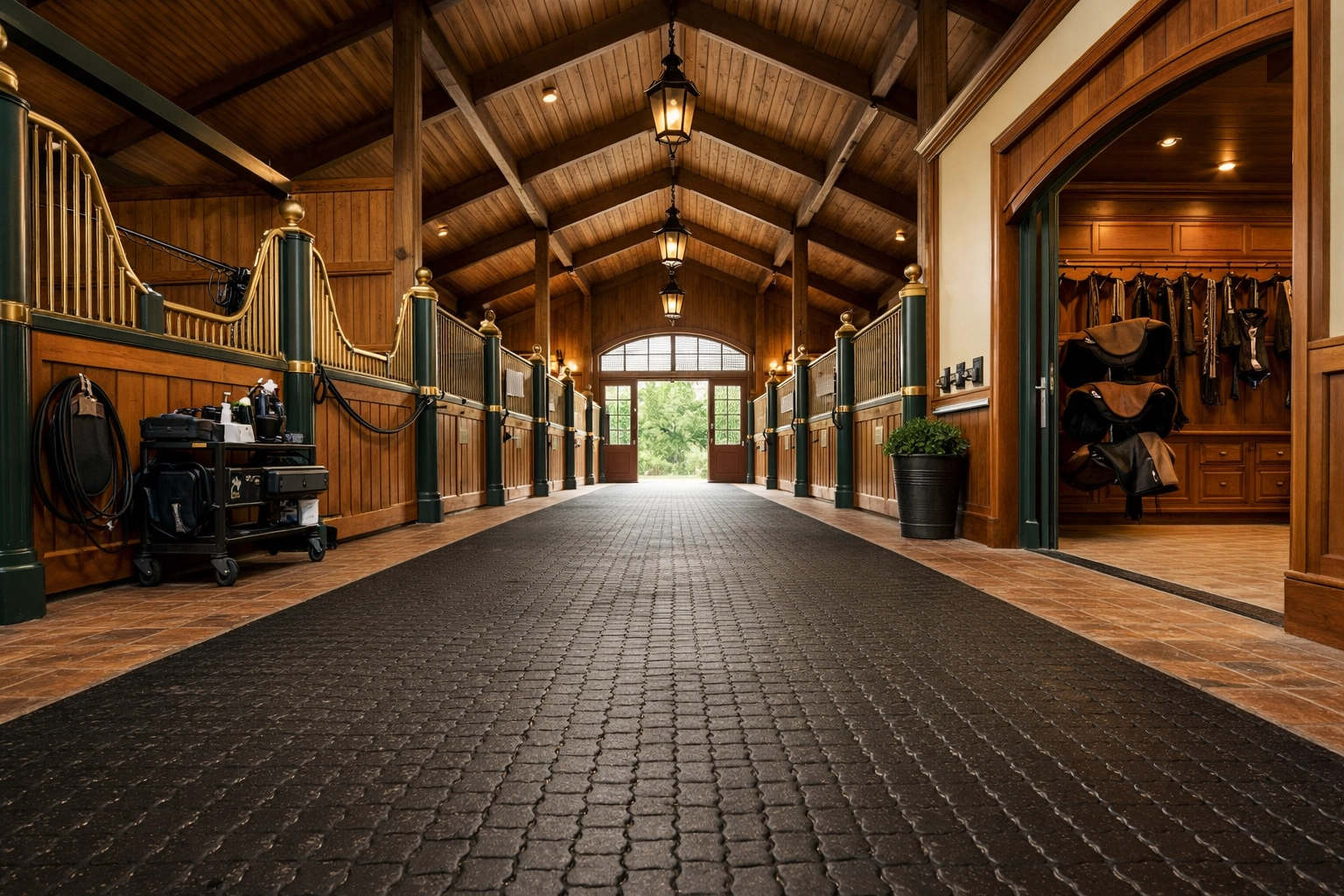
    Luxury barn buyers expect heated tack rooms, rubber pavers, automatic waterers, and sophisticated ventilation systems. Detail what separates functional barns from exceptional facilities, helping high-end buyers evaluate properties accurately.

    15. Fencing Options for NC Horse Farms: Safety Meets Style
    Board fence looks beautiful but requires maintenance. Wire mesh offers durability but limited aesthetics. Discuss cost-benefit analysis of fencing types, local contractor recommendations, and how fencing quality affects property value and insurance rates.

    16. Manure Management: Best Practices for Small and Large Farms
    Unglamorous but critical. Address composting systems, pickup service options, environmental regulations, and how property design affects manure handling efficiency. Sellers preparing properties need this information; buyers evaluating farms need to ask these questions.

    17. Drainage Solutions for Your Equestrian Property
    Poor drainage destroys pastures, creates mud management nightmares, and costs tens of thousands to correct. Teach buyers what to look for during property walks and help sellers understand when drainage improvements increase marketability.

    18. Tack Room Goals: Organizing Your Equestrian Gear
    This lighter lifestyle content showcases beautiful tack room organization while subtly marketing properties with well-designed storage solutions. Include before-and-after transformations and product recommendations that demonstrate your understanding of daily barn life.

    19. Preparing Your Hay Storage for the North Carolina Seasons
    Humidity, heat, and hay quality concerns specific to the Southeast. Cover proper storage building requirements, when to buy local versus import from other regions, and cost considerations for year-round feeding programs.

    Horses grazing in well-maintained pasture with board fencing on Charlotte equestrian property

    Buyer & Seller Transaction Guidance (Posts 20-30)

    20. The Best Public Riding Trails Near Charlotte, NC
    Lifestyle content that attracts engaged readers while demonstrating community knowledge. Include trail etiquette, trailer parking information, and how proximity to quality trails affects property desirability and value.

    21. First-Time Horse Farm Buyer? Here's Where to Start
    De-mystify the process without oversimplifying. Cover financing differences, property inspection considerations unique to farms, and common mistakes first-time buyers make when transitioning from boarding to ownership.

    22. Navigating Zoning Regulations for Horses in Mecklenburg County
    Mecklenburg's increasing development pressure creates complex zoning situations. Provide actionable guidance on minimum acreage requirements, permitted use applications, and how to verify a property's legal equestrian status before purchase.

    23. Union County Zoning: What Equestrian Buyers Need to Know
    Union County offers more favorable agricultural zoning than Mecklenburg. Detail the specific regulations, agricultural exemption qualifications, and how zoning affects everything from arena construction to boarding operations.

    24. Staging Your Horse Farm: How to Sell Faster and for More
    Empathetic seller-focused content. Address barn cleanliness, pasture presentation, and how to showcase property potential without major capital investment. Emphasize quick wins that improve showing experiences.

    25. 5 Things to Look for During a Horse Property Home Inspection
    Standard home inspections miss critical equestrian infrastructure issues. Educate buyers on barn foundation concerns, electrical capacity for farm operations, well water quality testing, and septic systems sized for farm use.

    26. Financing Your Dream: Specialized Loans for Equestrian Estates
    Conventional mortgages often don't accommodate hobby farms or properties with commercial barn facilities. Explain USDA loans, portfolio lenders familiar with equestrian properties, and how different property classifications affect financing options.

    27. The 2026 Charlotte Equestrian Market: Trends to Watch
    Current data-driven analysis positioning your expertise. Cover inventory levels, average days on market for equestrian properties, price trends by area, and emerging buyer demographics entering the Charlotte market.

    28. Tax Benefits of Owning a Working Horse Farm in NC
    Present Value Use agricultural classification, business expense deductions, and depreciation schedules. Recommend consultation with qualified tax professionals while demonstrating your understanding of financial considerations serious farm owners face.

    29. From Pro to Retirement: Finding the Right Training Facility
    Serve the professional trainer market seeking client-appropriate facilities. Address barn layout for lesson programs, multiple ring requirements, client parking and amenities, and proximity to show venues.

    30. Why Soil Testing is a Must Before Buying Land in Charlotte
    Soil composition affects everything from pasture productivity to septic system placement. Explain testing procedures, interpretation of results, and how soil quality impacts long-term farm viability and operating costs.

    Implementing Your Content Strategy

    These 30 posts form the foundation of a comprehensive Charlotte equestrian SEO strategy. Each topic addresses genuine informational needs while naturally incorporating location-specific and feature-specific long-tail keywords. Published consistently over six months, this content establishes search authority, demonstrates specialized knowledge, and attracts both buyers and sellers at various decision stages.

    The key lies in execution: every post must serve the reader first, search engines second. Horse people recognize authentic expertise immediately: and dismiss superficial content just as quickly.

    Ready to explore equestrian properties throughout Charlotte Metro? Our team understands these topics intimately because we live this life daily. Connect with specialists who speak your language and understand what makes a property work for horses( not just humans.)

  • Financing Your Dream: Specialized Loans for Equestrian Estates in Charlotte (Easy Guide for 2026)

    Financing Your Dream: Specialized Loans for Equestrian Estates in Charlotte (Easy Guide for 2026)

    The traditional mortgage process wasn't designed with equestrian properties in mind. When your dream property includes 40 acres, a 12-stall barn, an outdoor arena, and run-in sheds scattered across pastures, most conventional lenders start backing away from the conversation. The home might represent only 30% of the total property value: a deal-breaker for standard residential financing.

    For horse property buyers in the Charlotte Metro area, understanding specialized agricultural and equestrian financing options can mean the difference between compromising on your vision and securing the right property for your program.

    Why Traditional Mortgages Fall Short for Equestrian Estates

    Conventional mortgage underwriting relies on comparable residential sales, typical home-to-land value ratios, and standardized appraisal methods. None of these work when you're purchasing property where the value lies in usable pasture acreage, quality fencing, covered arena square footage, and barn infrastructure.

    Standard lenders evaluate risk through a residential lens. They don't understand why an indoor arena adds $200,000 in value to your operation, or why well-draining pastures with established grass matter more than an extra bedroom. When the home represents less than 50% of the purchase price, conventional financing typically won't approve the loan.

    Schedule F farm income: the kind generated by boarding operations, training programs, or breeding businesses: gets dismissed or heavily discounted by traditional underwriters who don't recognize legitimate agricultural revenue streams.

    Elegant horse barn interior with planning documents for equestrian property financing

    Farm Bureau Bank: Designed for Equestrian Operations

    Farm Bureau Bank offers Equestrian Property Loans structured specifically for riders, trainers, and equine business owners. Their underwriting team understands the economics of horse properties and evaluates value differently than residential lenders.

    Flexible Property Parameters:

    • Financing available for 5 to 160+ acres
    • Up to three dwellings permitted on a single parcel
    • Multiple non-contiguous parcels can be included in one loan
    • Home value can be as low as 30% of total property value
    • Schedule F agricultural income accepted and properly evaluated

    This flexibility matters enormously in the Charlotte market, where quality equestrian properties in Waxhaw, Weddington, and southern Union County often include guest houses or farm manager residences. Properties with productive agricultural use generate legitimate income that Farm Bureau recognizes in their underwriting process.

    The ability to finance multiple non-contiguous parcels opens opportunities for buyers who want to purchase a main farm property plus additional acreage down the road for expanded pasture or hay production: common scenarios in growing equestrian areas like Harrisburg and northern Mecklenburg County.

    Farm Bureau membership is required, but joining is straightforward and often provides additional benefits including property insurance options tailored to agricultural operations.

    Horizon Farm Credit: Comprehensive Equine Financing

    Horizon Farm Credit serves the Mid-Atlantic region including North Carolina with specialized agricultural lending that covers the full spectrum of equine facility needs. Their loan packages extend beyond simple property purchase to encompass operational and development financing.

    Coverage Areas Include:

    • Land acquisition and development
    • Barn construction and facility improvements
    • Arena construction (indoor and outdoor)
    • Equipment purchases including tractors, mowers, and farm machinery
    • Horse purchases for breeding or training programs
    • Operating capital for seasonal business needs

    What distinguishes Horizon Farm Credit is their team's specialized training in arena and stable construction lending. They understand construction timelines, material costs, and the phased approach often required when building or expanding equestrian facilities. This knowledge translates to realistic loan structures that match actual project costs and timelines.

    Covered riding arena construction financed through specialized equestrian loans

    Their flexible repayment terms accommodate the seasonal income patterns common in equestrian businesses. Many training operations see revenue peaks during show season and quieter periods in winter months. Boarding facilities might experience vacancy fluctuations. Horizon structures repayment schedules that maintain healthy cash flow throughout these natural business cycles.

    For buyers planning significant improvements to an existing property: adding an indoor arena to a Mooresville farm, upgrading barn systems on a Weddington estate, or expanding pasture infrastructure on acreage in Monroe: this operational financing capability proves essential.

    AgCarolina Farm Credit: Regional Agricultural Expertise

    AgCarolina Farm Credit serves 46 counties across central, eastern, and southeastern North Carolina, covering the Charlotte Metro area with deep regional knowledge of North Carolina agricultural operations. Their loan officers understand local soil conditions, pasture management requirements, and the specific considerations affecting equestrian property values in our region.

    As part of the Farm Credit System: a nationwide network of borrower-owned lending institutions: AgCarolina operates as a cooperative. Borrowers become member-owners, and the cooperative structure means their interests align with yours. Profits get returned to members through patronage dividends, effectively reducing borrowing costs over time.

    AgCarolina's rural home loan products serve buyers purchasing equestrian properties for personal use rather than commercial operations. These loans recognize that a property with barn facilities, fenced pastures, and agricultural improvements holds value beyond the residence itself, even when no business income is generated.

    Their regional focus means loan officers are familiar with the Charlotte equestrian market, understand zoning variations between Mecklenburg, Union, and York Counties, and can efficiently evaluate properties across our area without the learning curve that comes with out-of-region lenders.

    USDA Rural Development Financing

    USDA Rural Development loans provide another avenue for qualifying buyers, particularly first-time purchasers or those with limited down payment capacity. These government-backed loans can finance properties in designated rural areas with minimal or zero down payment requirements.

    Many desirable equestrian areas in the Charlotte Metro qualify as rural under USDA definitions, including portions of Union County, northern Mecklenburg County, and areas of York County, South Carolina. Properties must meet specific rural criteria and borrowers must meet income limitations, but for qualifying buyers, USDA financing offers exceptional terms.

    The property must include a residence: vacant land doesn't qualify: but agricultural improvements including barns, fencing, and pastures are accepted as part of the property package. For buyers seeking smaller equestrian properties in the 5-20 acre range with modest improvements, USDA financing can open doors that conventional loans keep closed.

    North Carolina horse farm with white fencing and grazing horses near Charlotte

    Key Differences That Matter

    Specialized agricultural and equestrian lenders evaluate properties through a fundamentally different lens. They recognize that property value in equestrian estates derives from multiple factors beyond the residence:

    Productive Acreage: Quality pasture land with appropriate soil, drainage, and established grass carries quantifiable value. Lenders understand the difference between 40 acres of prime grazing land and 40 acres of wooded terrain requiring extensive clearing.

    Infrastructure Quality: Well-constructed barns with proper ventilation, appropriate stall dimensions, and quality materials represent real value. The same applies to properly designed arenas with appropriate footing depth and drainage systems.

    Income Potential: Properties configured for boarding, training, or breeding operations generate legitimate business income. Specialized lenders evaluate this income appropriately rather than discounting it arbitrarily.

    Operational Flexibility: Multiple structures, guest houses, farm manager residences, and equipment storage buildings all contribute to a property's functionality for equestrian operations.

    This evaluation approach means properties that conventional lenders consider "over-improved" or "too specialized" receive proper valuation from agricultural lenders who understand the market.

    Preparing Your Application

    Approaching specialized lenders prepared strengthens your application and streamlines the approval process. Documentation requirements differ somewhat from conventional mortgages, particularly for buyers including business income in their qualification.

    Essential Documentation:

    • Three years of tax returns including Schedule F if applicable
    • Current profit and loss statements for equestrian businesses
    • Business plan for new operations or expansions
    • Property information including acreage, improvements, and intended use
    • Details on existing horses, planned capacity, or program scope

    Buyers planning significant construction or improvements should prepare preliminary plans, cost estimates from contractors, and timelines showing phased development. This preparation demonstrates serious intent and helps lenders structure appropriate financing.

    For properties generating agricultural income, maintain clear separation between personal and business finances. Dedicated business accounts, proper bookkeeping, and professional financial statements strengthen applications considerably.

    Financial planning documents for horse property loan application preparation

    Timeline and Process Expectations

    Agricultural loan processing typically requires more time than conventional mortgage approvals. Specialized appraisals take longer to schedule and complete, particularly in areas with limited comparable equestrian sales. In the Charlotte Metro market, allow 60-90 days for the complete process from application to closing.

    Properties requiring environmental assessments, wetland determinations, or agricultural use evaluations add time to the process. However, this thoroughness protects buyers by ensuring complete understanding of the property's characteristics and constraints before purchase.

    Working with real estate agents who understand equestrian property transactions helps manage timing expectations and coordinates necessary inspections, surveys, and assessments efficiently. Experience with agricultural financing means fewer surprises and smoother transactions.

    Making Your Decision

    The right financing structure depends on your specific situation, property type, and long-term plans. Buyers purchasing turn-key facilities for personal use face different considerations than those planning commercial operations or significant development.

    Properties in the $500,000-$1,500,000 range: typical for quality equestrian estates in Waxhaw, Weddington, and Union County: often benefit most from specialized agricultural financing. The flexible underwriting, appropriate property valuation, and acceptance of agricultural income make deals possible that conventional financing cannot support.

    First-time buyers and those new to equestrian property ownership should prioritize lenders offering guidance throughout the process. The education provided by experienced agricultural lenders proves invaluable when navigating property assessments, agricultural use considerations, and operational planning.

    At Carolina Horse Farm Realty, we've guided buyers through equestrian property financing across the Charlotte Metro area. We understand which properties match specific loan programs, how to position applications for success, and what documentation lenders need to move efficiently toward closing.

    Couple viewing their equestrian estate at sunset after securing farm financing

    Finding the right property starts with understanding your financing options. Explore our current listings or contact our team to discuss how specialized equestrian financing can help you secure your ideal Charlotte-area horse farm.

  • Hidden Gems: 7 Horse Farms for Sale in Davidson, NC You’ve Never Thought Of

    Hidden Gems: 7 Horse Farms for Sale in Davidson, NC You’ve Never Thought Of

    When most equestrians think Charlotte Metro horse country, Davidson rarely tops the list. Waxhaw gets the spotlight. Tryon has the legacy. But Davidson? It's that college town by the lake: not exactly where you'd expect to find serious equestrian properties.

    That's precisely what makes it interesting.

    Davidson's equestrian market flies under the radar, which means less competition, more negotiating room, and properties that haven't been picked over by every buyer with a pre-approval letter. With only eight equestrian properties currently on the market and an average listing price of $2.19 million, this isn't bargain-basement territory: but it is surprisingly accessible for what you get.

    Let's look at seven types of horse properties in Davidson you've probably never considered.

    1. The Lake-Adjacent Properties with Riding Access

    Davidson sits on Lake Norman's shores, and while waterfront equestrian estates are rare, there's a handful of properties within riding distance of the lake. These aren't marketed as "equestrian waterfront": they're listed as estates with acreage that happen to accommodate horses.

    The advantage? You're getting lake access without the premium waterfront price tag. Your horses get quality pasture on higher ground with better drainage, while you get weekend lake access. Some properties even feature natural trails that connect to larger acreage networks, giving you riding options beyond your fence line.

    Horse farm near Lake Norman Davidson NC with pastures and lake views

    2. Historic Farm Conversions Near Downtown Davidson

    Davidson's historic district extends beyond Main Street. There are century-old farm properties on the town's outskirts: original homesteads with mature trees, established fencing, and that old-farm character you can't replicate.

    These properties typically feature original tobacco barns that previous owners never converted. For the right buyer, that's not a liability: it's an opportunity. A structurally sound tobacco barn can become a stunning center-aisle stable with exposed beams, original wood siding, and character that costs $200 per square foot to fake.

    You're also getting proximity to Davidson's village amenities: coffee shops, restaurants, private schools: without sacrificing acreage or privacy. It's the rare combination of authentic rural character with genuine walkability.

    3. The High-Ground Parcels North of Davidson College

    Head north from Davidson College on Highway 115, and the topography changes. You'll find elevated parcels with rolling terrain: not the flat pasture land typical of Mecklenburg County, but varied ground that drains naturally and provides interesting riding.

    These properties often feature mature hardwood stands, seasonal creeks, and enough elevation change to create natural wind breaks for your horses. The soil composition is different too: more Piedmont clay-loam than the sandy-loam closer to the lake, which means better natural grass growth if you manage it correctly.

    Most buyers overlook these because they're looking for flat, open fields. But if you understand pasture rotation and prefer varied terrain for conditioning horses, these parcels offer something special.

    Historic tobacco barn converted to horse stable in Davidson North Carolina

    4. Estate Properties with Existing Equestrian Infrastructure You Can Actually Use

    Not all horse properties are created equal. Davidson has several estates where the previous owner was a serious equestrian: meaning the infrastructure isn't cosmetic. We're talking engineered run-in sheds with proper footing, cross-fenced pastures with quality fencing materials, and arena spaces with actual base material, not just cleared dirt.

    One property currently listed features a custom training facility overlooking a one-acre pond: the kind of setup that would cost $300,000+ to build from scratch. When you factor in construction costs, timeline, and the learning curve of building equestrian infrastructure for the first time, buying a property where someone else has already figured it out makes financial sense.

    Look for listings that mention specific details: brand names of fencing systems, measurements of arena spaces, descriptions of barn layouts. That specificity usually indicates an owner who invested seriously in equestrian infrastructure.

    5. Larger Acreage Parcels in Davidson's Rural Preservation Areas

    Davidson has Rural Area Preservation (RAP) zoning in certain areas, which limits density and protects agricultural use. Properties in these zones often come with conservation easements or deed restrictions that keep the area rural.

    For equestrian buyers, this is an advantage. Your neighbors can't subdivide and build six houses on five acres. The area maintains its agricultural character. And because these restrictions can complicate development, land prices per acre run lower than comparable properties without restrictions.

    You're trading some future flexibility (you can't subdivide either) for long-term protection of the rural character that made you want a horse farm in the first place. For buyers planning to stay long-term, that trade-off makes sense.

    Rolling horse pastures with varied terrain in Davidson NC equestrian property

    6. Properties with Separate Guest Houses or Caretaker Quarters

    Several Davidson estates include separate living quarters: originally built as guest houses but perfect for live-in farm help or adult children managing the property. This is less common in newer equestrian developments where every structure requires extensive permitting.

    Having separate quarters solves multiple problems: you can hire quality farm managers and offer competitive compensation packages that include housing, you can have adult children help with daily management while maintaining everyone's independence, or you can generate rental income to offset property costs.

    These properties often sit longer on the market because buyers don't immediately see the value in "extra" living space. But anyone who's managed horses knows that having reliable help on-site changes everything.

    7. The "Just Outside Davidson" Properties with Davidson Mailing Addresses

    Here's an insider detail: several properties in northern Mecklenburg County and southern Iredell County have Davidson mailing addresses despite being outside town limits. These properties offer more acreage per dollar while maintaining Davidson's prestigious address.

    You're typically getting 10-15 acres versus the 3-5 acres closer to town, with the same school access and proximity to Charlotte. The trade-off is a slightly longer drive to downtown Davidson's restaurants and shops: but if you're spending most of your time in the barn anyway, does that matter?

    These properties also tend to have newer equestrian infrastructure. Buyers purchased raw land in the 2000s and 2010s and built from scratch, meaning barns have modern wiring, proper ventilation, and efficient layouts.

    Why Davidson's Market Deserves a Second Look

    With an average cost of $175,340 per acre, Davidson's equestrian properties sit between Waxhaw's premium prices and Monroe's rural affordability. You're paying for location and quality of life, but you're not paying the Waxhaw tax.

    Davidson offers something increasingly rare in the Charlotte Metro area: genuine small-town character with big-city access. You can ride in the morning and be at a Charlotte Symphony concert by evening. Your kids can attend excellent schools without the 45-minute bus ride. You can find a farrier and a sushi restaurant within ten miles.

    Aerial view of equestrian facility with riding arena and fencing in Davidson NC

    The equestrian community here is smaller but established: people who chose Davidson deliberately, not because it was the only option. You'll find dressage riders, eventers, and pleasure riders, but not the concentration of any single discipline that sometimes creates competitive pressure in larger equestrian communities.

    Finding These Hidden Opportunities

    These properties don't always have "equestrian" in the listing headline. They're often marketed as estates, farms, or simply large acreage. You need to know what to look for: mentions of run-in sheds, fencing, cleared pasture, agricultural zoning.

    Working with a real estate professional who understands equestrian properties makes the difference between finding these opportunities and missing them entirely. Someone who knows Davidson's zoning, understands property drainage, and can evaluate existing equestrian infrastructure will save you time and potentially costly mistakes.

    Preserved horse farm with open pastures in Davidson NC conservation area

    The Davidson equestrian market won't stay hidden forever. As Charlotte continues expanding and traditional equestrian areas become increasingly expensive, buyers with vision will discover what's been here all along: quality horse properties with the character, location, and infrastructure serious equestrians need.

    If you're ready to explore what Davidson offers beyond the obvious choices, start by looking at current equestrian properties or reach out to discuss what you're really looking for in your next horse property. Sometimes the best opportunities are the ones no one else is talking about.

  • The Ultimate Guide to Horse Farms for Sale in Waxhaw, NC: Everything You Need to Succeed

    The Ultimate Guide to Horse Farms for Sale in Waxhaw, NC: Everything You Need to Succeed

    Why Waxhaw Continues to Draw Serious Equestrians

    There's a reason seasoned horse people keep returning to Waxhaw when they're ready to find their forever property. This isn't just another bedroom community with a few backyard barns: it's a genuine equestrian enclave where the infrastructure, community, and land quality align in a way that's increasingly rare in the Charlotte Metro area.

    When you drive through Waxhaw, you'll notice something different. The roads open up. Properties have actual setbacks. And most tellingly, you'll see horses grazing in properly managed pastures, not squeezed into undersized paddocks as an afterthought. This is horse country that still functions like horse country, with the bonus of being 30 minutes from uptown Charlotte.

    The Current Market: What You Need to Know

    As of early 2026, Waxhaw offers between 17-45 active equestrian property listings depending on your search parameters and acreage requirements. The average listing price sits at $539,000-$570,000, with land costs averaging $50,000-$51,660 per acre for equestrian-suitable parcels.

    These aren't abstract numbers. They represent real value in a market where quality horse property within commuting distance of a major metro area commands premium pricing: and holds it.

    Aerial view of horse farm for sale in Waxhaw NC with white fencing and barn

    What makes these figures particularly relevant is that Waxhaw pricing often delivers more functional horse acreage for the dollar compared to closer-in areas like Weddington or Marvin. You're not paying for the address alone; you're investing in land that works for horses first.

    The Infrastructure That Makes Waxhaw Work

    Trail Access Without the Trailer

    One of the most undervalued aspects of Waxhaw horse properties is proximity to legitimate riding trails. Cane Creek Park's 1,100 acres feature dedicated equestrian trails that accommodate everything from conditioning rides to casual hacks. The Mineral Springs Greenway offers additional options for riders who value trail access without the constant need to trailer.

    If you've ever calculated the time and fuel costs of trailering to ride, you understand why having trail systems within reach fundamentally changes your daily horse life. This isn't a luxury feature: it's a practical consideration that affects how often you actually ride versus how often you plan to ride.

    The Community You Can't Manufacture

    Waxhaw's equestrian community exists because enough horse people live here to support boarding facilities, veterinary services, farriers, and tack shops without driving 45 minutes. There's a critical mass that creates actual community rather than isolated hobby farms.

    This matters when you need a weekend barn sitter, a recommendation for a specialized vet, or simply neighbors who understand why you're mucking stalls at 6 AM. The social infrastructure of horse ownership is as important as the physical infrastructure, and Waxhaw has built both organically over decades.

    Horse and rider on wooded trail at Cane Creek Park near Waxhaw NC

    What to Look for in a Waxhaw Horse Property

    Barn Configuration and Functionality

    Properties in this area typically feature 4-12 stall barns with varying levels of finish and functionality. The question isn't whether a property has a barn: it's whether that barn serves your program.

    Look for:

    • Proper ventilation systems (critical in North Carolina humidity)
    • Adequate hay storage with separation from stall areas
    • Functional wash stalls with hot water capability
    • Tack room security and climate considerations
    • Feed room design that prevents pest access

    A well-designed 6-stall barn with thought-out workflow beats a 12-stall showcase barn with poor functionality every time. Think about your daily routine: feed prep, stall cleaning, grooming, tacking up. The barn layout should support efficiency, not fight it.

    Pasture Quality and Management Systems

    Waxhaw's red clay soils present both opportunities and challenges. Properties with established pasture rotation systems and proper drainage demonstrate previous owners who understood horse land management.

    Evaluate:

    • Pasture subdivision for rotation capability
    • Water access in each turnout area
    • Fencing condition and appropriateness for horses
    • Sacrifice lot or dry lot availability for wet season turnout
    • Run-in sheds or shelter in pastures

    Properties showing careful pasture management typically indicate owners who invested in the land long-term rather than simply maintaining the minimum. This history affects soil health, parasite loads, and your future management costs.

    Well-designed horse barn interior with organized stalls and tack room

    Arena and Riding Facilities

    Whether you need an arena depends entirely on your discipline and goals, but in Waxhaw's climate, covered or lighted arenas significantly extend your riding season and daily riding window. Properties featuring these amenities command premium pricing because they're expensive to add after purchase.

    Quality arena facilities include:

    • Proper base and footing (not just cleared dirt)
    • Adequate drainage (crucial in our rainfall patterns)
    • Appropriate dimensions for your discipline
    • Lighting systems for year-round usability
    • Cover or roofing for weather protection

    If a property lacks arena facilities but has appropriate space for addition, factor construction costs of $40,000-$150,000+ depending on size and finish level.

    Understanding Your Investment Parameters

    Beyond the Purchase Price

    Smart horse property buyers calculate total facility costs, not just land and home values. A $550,000 property with functional barns, established pastures, and working arenas represents different value than a $550,000 property requiring $200,000 in infrastructure development.

    Consider:

    • Immediate facility needs versus future additions
    • Property tax implications (Union County rates)
    • Ongoing maintenance budgets for fencing, footing, and facilities
    • Utility costs for barn operations
    • Insurance requirements for equestrian liability

    Waxhaw horse pastures with rotational grazing system and white board fencing

    The Zoning Question

    Union County zoning generally accommodates equestrian use, but specific properties may carry restrictions through HOAs, deed restrictions, or conditional zoning. Properties within established equestrian communities often provide clearer paths for horse-related activities including boarding or training operations if future income generation interests you.

    Always verify:

    • Permitted number of horses for property size
    • Commercial activity allowances (boarding, lessons, training)
    • Outbuilding and arena restrictions
    • Fencing requirements and setbacks

    Making Your Move in Waxhaw

    The Waxhaw equestrian property market moves differently than typical residential real estate. Serious horse properties attract serious buyers who understand what they're evaluating. These aren't impulse purchases: but when the right buyer finds the right property, decisions happen quickly.

    Working with professionals who understand equestrian property evaluation makes the difference between finding a property with horses and finding a property for horses. There's a substantial gap between those two categories.

    If you're beginning your search for Waxhaw horse property, start by understanding your non-negotiables: acreage requirements, facility must-haves, and program needs. Properties that check every box are rare. Properties that check your specific boxes exist: they just require patience and proper guidance to find.

    Covered riding arena at equestrian property in Waxhaw North Carolina

    Your Next Step

    The Waxhaw equestrian property market rewards buyers who understand both horse management and real estate fundamentals. Whether you're relocating to the Charlotte area or finally ready to stop boarding and bring your horses home, Waxhaw deserves serious consideration.

    We've worked with enough horse property buyers to recognize the questions behind the questions. If you're evaluating Waxhaw options, explore current equestrian property listings or reach out directly to discuss what you're really looking for: not just what's listed, but what would actually work for your program.

    Horse property decisions require both emotional connection and practical evaluation. We help clients navigate both.

  • Huntersville Equestrian Real Estate: How to Find Space Close to the City (Without Compromise)

    Huntersville Equestrian Real Estate: How to Find Space Close to the City (Without Compromise)

    You shouldn't have to choose between a 45-minute barn commute and settling for inadequate turnout. The right property gives you both, space for your horses and reasonable access to Charlotte's amenities, veterinary specialists, and employment opportunities.

    Huntersville has quietly become one of the Charlotte Metro area's most practical solutions for equestrians who refuse to compromise on either proximity or property quality.

    Why Huntersville's Location Solves the Proximity Problem

    Huntersville sits 14 miles north of Charlotte's center, positioned along I-77 with direct access to the city while maintaining genuine rural character in its northern and western sections. This isn't suburban horse-keeping with neighborhood complaints about manure piles. Properties here offer legitimate acreage with the infrastructure horses actually need.

    The Lake Norman corridor provides a buffer, development concentrated near the water leaves the interior areas available for agricultural use. You'll find properties ranging from 10 to 98 acres, with the larger parcels often bordering protected land or state parks that ensure your pastoral views remain intact.

    Morning feed can happen at 6 AM, and you can still make an 8:30 AM meeting uptown. Evening rides don't require negotiating rush hour for an hour each direction.

    Aerial view of Huntersville horse farm with pastures and Charlotte skyline in distance

    Current Market Reality: What's Available and What It Costs

    As of early 2026, Huntersville maintains an active inventory of 8-12 equestrian properties at any given time. This isn't Tryon with its concentrated horse community, but it's enough selection to be viable without the feeding frenzy of more limited markets.

    Pricing spans from approximately $389,500 to $2,350,000, reflecting the range from starter farms to established estates. Land costs average $76,000 to $236,000 per acre depending on improvements, location within Huntersville, and existing facilities.

    Current listings include options like a 10-acre setup with a 9-stall barn, suitable for a small breeding operation or training facility, and a 98-acre estate that borders South Mountain State Park with extensive trail access. The variety means you're not forced into a property that's either too small for your program or unnecessarily large for your needs.

    The market here moves at a measured pace. Properties stay listed long enough for proper due diligence, soil testing, facility inspections, zoning verification, without the pressure of same-day decisions common in hotter markets.

    What Separates Adequate Properties from Actual Horse Farms

    Not every property with a barn and fence qualifies as functional equestrian real estate. Horse people know the difference immediately.

    Drainage and topography matter first. North Carolina receives 43 inches of annual rainfall. Properties with poorly planned paddocks become mud lots from November through March. Look for natural slope, French drains near high-traffic areas, and sacrifice lots that can handle winter turnout without destroying your pastures.

    Pasture quality indicates management history. Drive the property and identify the grasses. Fescue-dominant pastures require supplemental hay and careful grazing rotation. A mix that includes orchard grass, timothy, or clover suggests previous owners understood forage management. Bare spots, erosion channels, and weed overgrowth tell you exactly how much work awaits.

    Barn layout reveals whether previous owners actually kept horses or just liked the aesthetic. Stalls should be 12×12 minimum, with dutch doors or top openings for ventilation. Tack rooms placed between barn sections rather than tacked onto the end show thoughtful design. Hay storage separated from the main barn reduces fire risk. Wash racks with proper drainage, hot water access, and cross-ties mean someone planned for actual horse care, not just photo opportunities.

    Fencing type and condition matter more than cosmetic property appeal. Board fencing looks elegant but requires constant maintenance and replacement. Well-installed flex fence or coated wire provides safety and longevity. Check corner bracing, gate functionality, and whether fence lines follow safe contours rather than creating dangerous angles.

    Horse at paddock gate showing proper drainage and pasture management on NC horse farm

    The Commute Calculation: Charlotte Access Without the Daily Grind

    Huntersville's position along I-77 provides direct southern access to Charlotte, but the real advantage shows in the road network for equestrian necessities.

    Veterinary access: Multiple equine veterinary practices serve the Lake Norman area, with emergency clinics reachable within 20-30 minutes. NC State's College of Veterinary Medicine in Raleigh sits two hours east, far enough to be inconvenient, close enough to be accessible for specialty referrals.

    Feed and supply runs: Southern States and Tractor Supply locations throughout northern Mecklenburg County mean you're not driving 40 minutes for quality hay or emergency supplies. Local feed mills deliver to the area regularly.

    Trainer and farrier logistics: The concentration of equestrian properties in Union County and southern Mecklenburg means many professionals already include Huntersville in their regular routes. You're not the isolated client requiring special trip charges.

    Show and event access: Venues like the Carolina Horse Park (1.5 hours), Tryon International (1.75 hours), and the Virginia Horse Center (4 hours) remain accessible for weekend competitions without requiring overnight stays for closer shows.

    The commute only works, however, if you're realistic about your schedule. Working from home several days weekly makes Huntersville feasible. A five-day office schedule with unpredictable late hours presents complications unless you have staff or cooperative barn partners.

    How to Actually Find These Properties

    Generic real estate searches miss the nuanced details that separate horse-friendly properties from actual equestrian facilities.

    Start with specialist platforms. HorseProperties.net filters specifically for equestrian amenities in Mecklenburg County, eliminating properties that merely have "land" but lack proper infrastructure. Realtor.com's horse stable filter currently shows limited inventory, two properties, but updates regularly as new listings arrive.

    Work with agents who understand horse property requirements. A residential agent may show you a beautiful property with a picturesque barn that lacks adequate water pressure for barn use, insufficient electric service for heated water buckets, or property lines that create landlocked pastures. Equestrian specialists recognize these issues immediately and eliminate properties that won't function for your program.

    Drive the area before scheduling showings. Huntersville's equestrian properties cluster in specific pockets. Understanding which areas provide the rural character you want versus which have encroaching development helps narrow your search efficiently. Northern and western sections of Huntersville generally offer more agricultural zoning and larger parcels.

    Rural road through Huntersville countryside with horse farms and white fencing

    The Zoning and Regulation Consideration

    Mecklenburg County zoning regulations permit horses but include specific requirements that affect property functionality.

    Most equestrian properties fall under RA (Rural Area) or R-40 (Residential, 40,000 sq ft minimum lot) zoning. These classifications generally allow horses by right, but confirm the specific parcel's zoning before writing an offer. Some transitional properties near residential development may have restrictions or require special use permits.

    County regulations typically require one acre per horse for the first two horses, then one acre per two additional horses, less stringent than some areas but still requiring adequate space for proper turnout and pasture rotation.

    Manure management regulations exist but remain reasonable. You'll need a plan for proper storage and disposal, but small operations can typically handle this through composting and field application. Larger facilities may require contracted removal services.

    Well water is common in rural Huntersville. Budget for water testing and potential treatment systems. Verify well capacity can handle both household and barn use: inadequate water pressure becomes expensive to remedy after closing.

    Making Huntersville Work: The Practical Reality

    Huntersville equestrian properties offer a genuine middle ground for horse owners who need city proximity without sacrificing proper facilities. This isn't the idyllic isolation of Tryon or the concentrated horse community of Weddington, but it provides functional solutions for specific situations.

    You'll still drive to UPS stores and specialty shopping. Your neighbors may include residential development a half-mile away rather than nothing but farms. Internet service can be inconsistent in some areas: critical if you work remotely.

    What you gain is measurable: 30-minute vet response time instead of 90 minutes, reasonable commutes to Charlotte employment, and properties large enough for proper horse management without the premium pricing of closer-in areas.

    Horse at fence with equestrian service vehicle on Huntersville farm driveway

    The properties exist. The infrastructure functions. The location provides access without forcing compromise on space or facilities. For horse owners who've spent years convinced they needed to choose between their career and their horses, Huntersville presents a third option worth serious consideration.

    If you're ready to explore what's currently available or want guidance on which sections of Huntersville match your specific equestrian program needs, reach out to our team. We work with horse people looking for properties that actually function( not just properties with a barn in the photos.)

  • Pasture Management for North Carolina Horse Farms: 7 Mistakes You’re Making (and How to Fix Them)

    Pasture Management for North Carolina Horse Farms: 7 Mistakes You’re Making (and How to Fix Them)

    You bought the property for your horses. The barn is exactly what you envisioned, the paddocks are well-fenced, and you've finally got the space you needed. But six months in, you're noticing the pastures aren't quite what they were, bare patches developing, weeds taking over, and that lush green grass you expected isn't bouncing back the way it should.

    North Carolina's climate is exceptional for pasture growth when managed correctly. Our long growing season, adequate rainfall, and mild winters give us advantages many regions don't have. But those same conditions also make certain management mistakes costly, both to your land and your budget. After years of working with equestrian properties across the Charlotte Metro area, I've seen these seven mistakes repeatedly, even among experienced horse owners who know their animals inside and out.

    Mistake #1: Guessing at Stocking Density Instead of Calculating It

    The most common misconception is that "a couple of acres per horse" works everywhere. The reality is more nuanced. Under light management conditions in North Carolina, you need 2-4 acres per horse to maintain healthy pasture without intensive intervention. When you increase stocking density beyond this ratio, you don't just need more management, you need significantly more.

    The Fix: Calculate your actual usable pasture acreage (excluding the barn area, sacrifice lots, and woodlands), then honestly assess your management commitment. If you're planning to keep horses on smaller acreage, commit to proper seeding, regular fertilizing, and structured rotation from day one. Intensive pasture management isn't optional at higher densities, it's the only thing standing between you and a dirt lot.

    Aerial view of rotational grazing paddocks on North Carolina horse farm with fenced pastures

    Mistake #2: Skipping Soil Testing Because "The Grass Looks Fine"

    Fertilizing without soil testing is like cooking without tasting. You might get lucky, but you're probably wasting money and potentially creating imbalances. North Carolina soils vary significantly even within the same county. What works on a property in Waxhaw might be completely wrong for land in Mooresville.

    The Fix: Contact your local Soil and Water Conservation office or Southern States cooperative. Many offer free or low-cost soil testing that reveals exactly what your soil lacks, and what it doesn't need. Test pH levels alongside nutrient content. North Carolina tends toward acidic soils, and most pasture grasses prefer a pH between 6.0 and 6.5. Without proper pH, even adequate nutrients won't be available to your plants. Retest every 2-3 years, as conditions change with use.

    Mistake #3: Managing Grazing Height by Eye Instead of Measurement

    "The grass looked ready" isn't a management strategy. Horses are selective grazers who repeatedly target the most palatable grasses, grazing them close to the ground while ignoring less desirable areas. This pattern depletes the energy reserves in preferred plants, eventually killing them and leaving you with exactly the grasses you don't want.

    The Fix: Implement the 6-10 inch rule. Allow pasture to reach 6-10 inches before turning horses out, then rotate them off when it's grazed down to 3-4 inches. This height management maintains forage quality while allowing plants to store enough energy in their roots for regrowth. Those extra inches matter more than you think, they're the difference between a pasture that bounces back and one that declines year over year.

    Soil testing kit with pH meter and samples for horse farm pasture management

    Mistake #4: Treating Rotational Grazing as Optional

    Continuous grazing made sense when horses roamed thousands of acres. On modern horse farms, it's a recipe for pasture destruction. Horses naturally re-graze the same areas, preventing plant recovery and depleting root reserves. Even a basic two-paddock rotation system dramatically improves pasture health compared to continuous access.

    The Fix: Start simple. Even dividing one large pasture into two sections and alternating weekly makes a measurable difference. As you become more comfortable with the system, you can add complexity. The goal is rest periods that allow grasses to restore energy reserves through tillering, the process that creates those thick, healthy stands everyone wants. At higher stocking densities, rotational systems shift from helpful to essential. Your pastures need time away from hooves and teeth.

    Mistake #5: Fighting Weeds Instead of Understanding Why They're Winning

    Herbicides treat symptoms, not causes. When weeds dominate a pasture, they're telling you something about your management. Overgrazing, soil compaction, poor fertility, or inadequate grass competition create opportunities for weeds to establish. Spraying alone won't solve the underlying problem.

    The Fix: Build a healthy, competitive stand of desirable grasses and legumes first. Dense, vigorous pasture naturally suppresses most weeds. When herbicides are necessary, consult with local extension agents about products safe for horses, some common pasture herbicides are toxic to equines. Regular mowing at 8-10 inches prevents seed spread while you address the root causes. Remember that bare ground is never the goal; something will grow there, and you want to choose what that something is.

    Healthy pasture grass at ideal grazing height on North Carolina horse property

    Mistake #6: Inconsistent Mowing and Maintenance Practices

    Letting pastures become overgrown, then cutting them severely disrupts growth patterns and encourages uneven stands. Similarly, ignoring manure accumulation creates nitrogen-overloaded patches where horses won't graze, effectively reducing your usable acreage.

    The Fix: Bush hog or mow when the tallest grass reaches 8-10 inches. This prevents the development of stemmy, unpalatable growth while encouraging tillering and denser stands. Regular dragging, ideally 2-3 days after rain when manure breaks up easily, distributes nutrients evenly and reduces parasite loads. Consider chain harrowing or pasture aerating annually to prevent soil compaction, especially in high-traffic areas near gates and water sources. Compacted soil can't support healthy root systems, regardless of how much you fertilize.

    Mistake #7: Expecting Pasture to Carry Horses Year-Round Without Support

    North Carolina's growing season is generous, but it's not twelve months. Expecting pasture to provide adequate nutrition during dormancy, drought, or early spring when growth hasn't begun puts tremendous pressure on your land. Horses kept on inadequate pasture create more damage than horses supplemented with hay in a sacrifice area during low-growth periods.

    The Fix: Plan for seasonal supplementation. Calculate how many pounds of hay you'll need during dormant periods and budget accordingly. Establish a sacrifice area, a designated lot where horses spend time when pastures need rest or during excessively wet conditions. This single area takes the wear instead of your entire property. Yes, you'll need to manage that space differently, but the tradeoff is pastures that remain productive for decades instead of years.

    Two-paddock rotational grazing system with horses on well-maintained NC equestrian farm

    The Long View

    Pasture management isn't about perfection. It's about understanding the relationship between stocking rate, rest periods, soil health, and grazing pressure. North Carolina gives us natural advantages: adequate rainfall, long growing seasons, and forage varieties that thrive in our climate. But those advantages only work when we manage with intention rather than assumption.

    The difference between a property that maintains its value and one that requires expensive restoration comes down to daily decisions made over years. Whether you're managing an existing farm or evaluating equestrian properties, understanding these principles helps you see past the immediate aesthetics to the underlying health of the land.

    When you walk a property and see consistent grass height, diverse plant species, minimal bare ground, and horses grazing contentedly across well-maintained pastures, you're seeing the result of someone who got these fundamentals right. That's the property that holds its value, reduces operating costs, and keeps horses healthy.

    Want to learn more about finding and managing quality equestrian properties in the Charlotte Metro area? Our team at Carolina Horse Farm Realty understands these details because we live them. Every property we represent gets evaluated through a horseperson's eyes first: from soil quality to pasture potential to long-term sustainability.