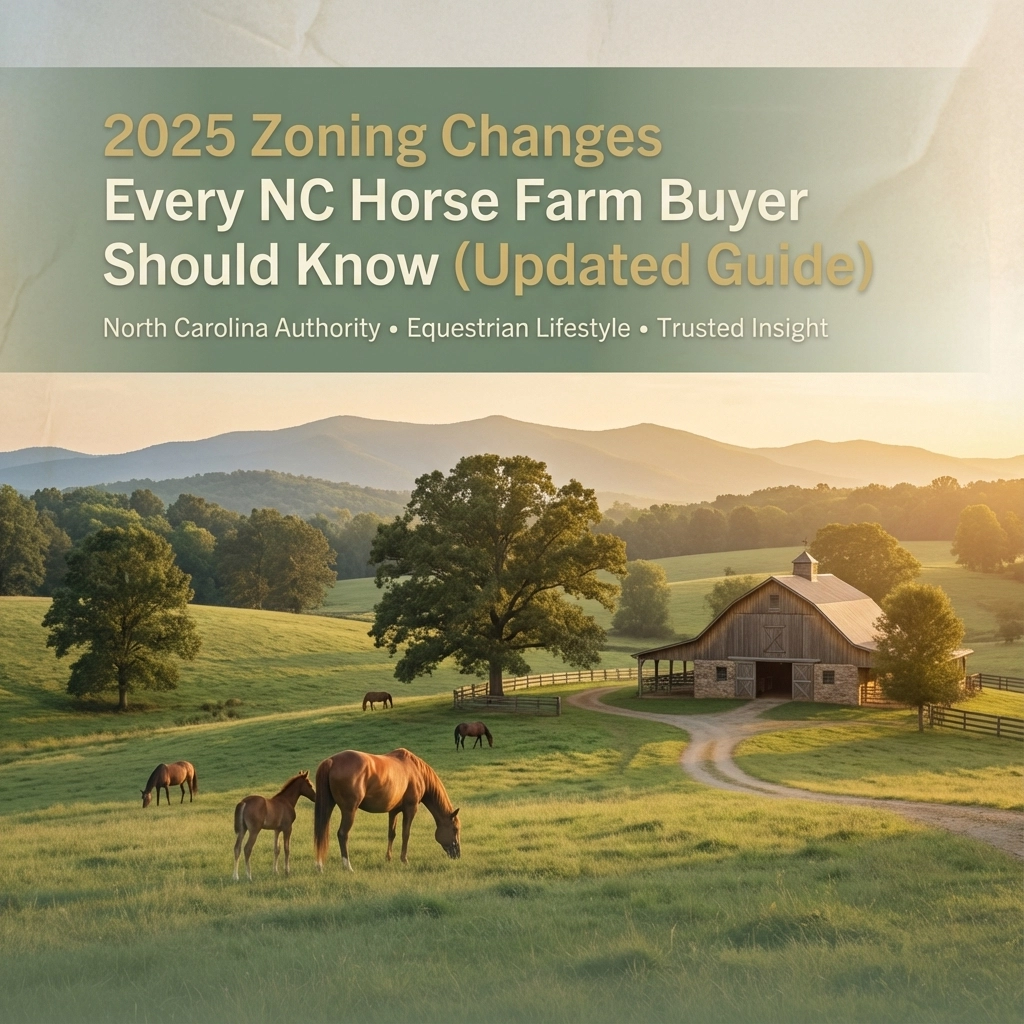
North Carolina's evolving agricultural landscape brings significant zoning updates that directly impact horse farm purchases, operations, and long-term property values. The 2025 legislative session introduced comprehensive changes through the North Carolina Farm Act of 2025, fundamentally altering how equestrian properties navigate local zoning requirements and development pressures.
Understanding these changes isn't just about compliance: it's about protecting your investment and ensuring your equestrian dreams remain viable for decades to come. Whether you're purchasing your first horse farm or expanding an existing operation, these updates reshape everything from building permits to neighbor relations.
The North Carolina Farm Act of 2025: A Game Changer
Senate Bill 401, officially known as the North Carolina Farm Act of 2025, represents the most comprehensive agricultural protection legislation in recent years. This legislation directly addresses mounting pressures facing rural properties as suburban development encroaches on traditional farming communities.
The Act specifically recognizes the unique challenges horse farm owners face when balancing agricultural operations with increasing regulatory oversight. Key provisions protect existing farm operations while providing clearer pathways for expansion and improvement projects.
Timeline and Implementation
The legislation took effect January 1, 2025, with most provisions applying immediately to new permit applications and zoning decisions. Counties have until July 1, 2025, to update their local ordinances to comply with state requirements, creating a transitional period where buyers should verify current local interpretations.

Special Use Permit Protections: Enhanced Defense Against Development Pressure
The most significant change for horse farm buyers involves strengthened protections around special use permit denials. Previously, neighboring property owners could more easily challenge agricultural operations through vague "undue negative impact" claims.
New Denial Restrictions
Under the updated law, permit denials based on "undue negative impact on agricultural production" face strict limitations. Specifically, denials cannot occur when:
- The challenging property has been owned by a business entity for less than three years
- The primary purpose involves construction of buildings subject to the North Carolina Residential Code
- The agricultural operation predates surrounding residential development by five or more years
These provisions protect established horse farms from newcomers who purchase nearby properties and subsequently challenge existing agricultural activities like early morning feeding schedules, training operations, or outdoor arena usage.
Practical Implications for Buyers
When evaluating potential horse farm purchases, buyers should document the timeline of surrounding development. Properties with established agricultural histories gain stronger protection against future zoning challenges, making them more valuable long-term investments.
This protection extends beyond traditional farming to include equestrian-specific activities like:
- Indoor and outdoor riding arena construction
- Horse trailer and equipment storage facilities
- Boarding operations and lesson programs
- Competitive events and training clinics
Subdivision Buffer Requirements: Protecting Agricultural Boundaries
The 2025 Act introduces mandatory vegetative buffer requirements between new residential subdivisions and protected farm tracts. This provision directly impacts horse farms with agricultural conservation easements or those considering easement enrollment.
100-Foot Buffer Mandate
When a subdivision boundary abuts a protected farm tract: defined as land subject to an agricultural conservation easement: developers must reserve a vegetative buffer of at least 100 feet between the shared boundary and residential lots that would otherwise directly abut the protected farmland.
This buffer requirement serves multiple purposes:
- Reduces noise complaints from equestrian activities
- Provides visual separation between residential and agricultural uses
- Creates natural screening for farm operations
- Potentially increases property values for both uses

Conservation Easement Considerations
Horse farm owners considering agricultural conservation easements gain additional protection through these buffer requirements. The easement classification triggers automatic buffer protections, making the property more attractive to buyers who value operational security.
The buffer requirement also influences property valuation. Farms with easements may see increased interest from buyers specifically seeking properties with built-in development protections.
Building Code Exemptions for Therapeutic Riding Facilities
The legislation creates specific building code exemptions for farm buildings related to equine therapeutic riding facilities. This change recognizes the growing importance of therapeutic riding programs and reduces regulatory barriers for property owners developing these specialized operations.
Qualifying Criteria
Buildings exempt from state building code requirements must meet specific conditions:
- Primary use for equine therapeutic riding activities
- Location outside municipal building-rules jurisdictions
- Compliance with basic safety and accessibility standards
- Registration with appropriate state agencies overseeing therapeutic programs
These exemptions reduce construction costs and permit timelines for specialized equestrian facilities, making therapeutic riding operations more financially viable on horse farms.
Market Impact
Properties suitable for therapeutic riding operations gain competitive advantages through reduced development costs and simplified permitting processes. Buyers with interest in therapeutic programs should prioritize farms meeting the geographic and zoning criteria for these exemptions.

Right to Farm Law Strengthening
North Carolina's Right to Farm law receives additional reinforcement through the 2025 updates, providing enhanced nuisance protections for established agricultural operations, including horse farms.
Operational Change Protections
The strengthened law prevents courts from considering certain operational changes as "fundamental changes" that might warrant nuisance claims. This protection proves critical as horse farm operations naturally evolve over time.
Protected operational changes include:
- Expansion of existing horse boarding capacity
- Addition of training programs or riding instruction
- Introduction of complementary livestock operations
- Seasonal event hosting and competition activities
Neighbor Dispute Resolution
The enhanced Right to Farm protections establish clearer frameworks for resolving neighbor disputes without costly litigation. Property owners with documented agricultural operations receive stronger presumptions of reasonableness in their farming practices.
County-Level Implementation Variations
While state legislation provides overarching frameworks, individual counties maintain authority over specific zoning interpretations and additional requirements. The transitional period through July 2025 creates opportunities and challenges for horse farm buyers.
Research Requirements
Prospective buyers should verify how their target county interprets new state requirements. Some counties may implement more restrictive local ordinances within state guidelines, while others may provide additional protections or streamlined processes.
Key research areas include:
- Local setback requirements for equestrian facilities
- Permit fees and timeline expectations
- Agricultural classification criteria and tax implications
- Specific restrictions on commercial equestrian activities

Strategic Considerations for 2025 Purchases
These zoning changes create both opportunities and considerations for horse farm buyers entering the market in 2025 and beyond. Strategic buyers can leverage these protections to secure properties with enhanced long-term viability.
Premium Properties
Farms with existing agricultural classifications, established operational histories, and conservation easement eligibility command premium values due to enhanced zoning protections. These properties offer greater certainty for long-term equestrian operations.
Due Diligence Priorities
Enhanced due diligence should focus on:
- Documentation of existing agricultural use and timeline
- Verification of protected farm tract status or eligibility
- Assessment of surrounding development patterns and future plans
- County-specific implementation of new state requirements
Investment Protection
The strengthened regulatory framework provides additional investment protection for horse farm purchases. Properties benefiting from these protections demonstrate reduced regulatory risk and enhanced operational security.
Looking Ahead: Long-Term Implications
The 2025 zoning changes represent a fundamental shift toward stronger agricultural protections in North Carolina. This trend suggests continued legislative support for equestrian operations and rural lifestyle preservation.
Future buyers should consider these protections as permanent features of the regulatory landscape, making current purchases under these enhanced frameworks particularly attractive for long-term equestrian goals.
The legislation also signals North Carolina's commitment to maintaining its position as a premier equestrian destination, supporting property values and operational viability across the state's diverse horse country regions.
Understanding these changes positions buyers to make informed decisions that align with both current opportunities and future regulatory trends. The enhanced protections create a more secure foundation for equestrian property investments throughout North Carolina's evolving agricultural landscape.
For personalized guidance navigating these zoning changes and their impact on your horse farm purchase, our team brings deep knowledge of North Carolina's equestrian property market and regulatory environment. Visit our website to connect with specialists who understand both the land and the law protecting your equestrian dreams.
Leave a Reply