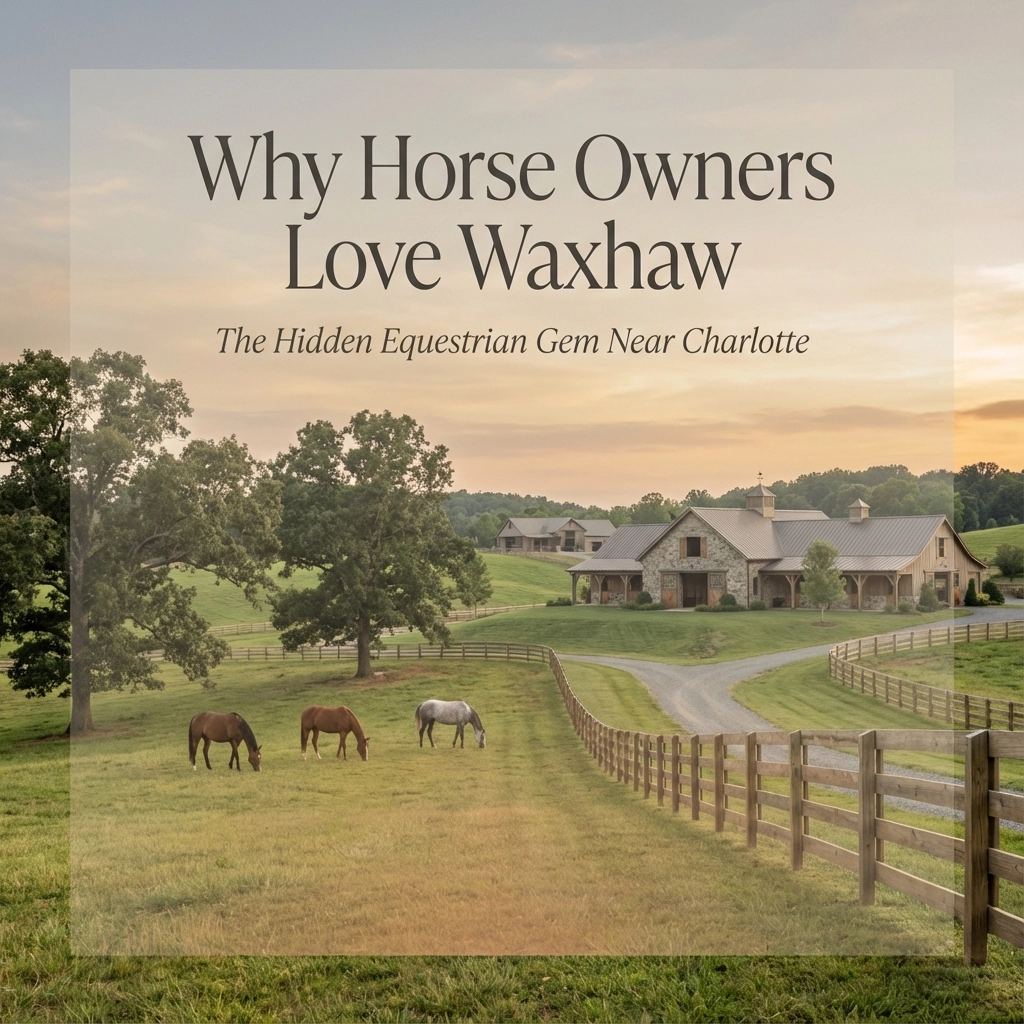
Twenty miles south of Charlotte's hustle, Waxhaw offers something increasingly rare: authentic horse country that hasn't been swallowed by suburban sprawl. While everyone talks about Wellington or Aiken, smart equestrians are discovering this quiet corner of Union County where century-old farms neighbor modern training facilities, and you can still find 50-acre parcels with good bones.
The Sweet Spot Between Country and Convenience
Most horse owners face an impossible choice: proximity to amenities or genuine rural living. Waxhaw solves this dilemma by sitting perfectly positioned along the North Carolina-South Carolina border, close enough to Charlotte for veterinary specialists and feed deliveries, yet far enough out to maintain that small-town agricultural character.
The drive to Presbyterian Hospital's equine program takes thirty minutes. Quality hay from local farms costs half what you'd pay closer to the city. Your farrier actually shows up when scheduled because he's not fighting traffic for two hours. These practical realities matter when you're managing multiple horses or running a training operation.

A Thriving Equestrian Infrastructure That Actually Works
What sets Waxhaw apart isn't just the available land: it's the established equestrian community that's been quietly building for decades. McNeely Farms Equestrian Center anchors the area with full-service training and boarding in their 20-stall facility, while Silver Hill Farm has developed one of the region's most respected Hunter/Jumper programs.
Providence Equestrian Center offers comprehensive lesson programs that actually produce competent riders, not just weekend warriors. Cedarhill Farm combines traditional boarding with specialized dressage clinics that draw riders from across the Carolinas. This isn't a collection of backyard barns: it's a legitimate equestrian community with the facilities to support serious horsemanship.
For those seeking a different approach, Horseshoe Lodge maintains 100 acres of pristine trails perfect for the rider who prefers quiet trail time over arena work. Sugaree Ranch offers pasture boarding across 210 acres where horses can actually live like horses, not prisoners in stalls.
Land That Understands Horses
The terrain around Waxhaw tells the story of why horses thrive here. Gentle rolling hills provide natural drainage while avoiding the extremes that plague other regions. The clay-based soil with good organic content supports healthy pastures without the sandy challenges of coastal areas or the rocky complications of mountain regions.
Water access runs deep, literally. Most properties tap into reliable aquifers that have sustained agriculture for generations. Creek frontage appears on many farms, providing natural water sources that reduce infrastructure costs while creating the scenic beauty that makes coming home a pleasure every evening.

The growing season supports year-round grazing with proper management. Native grasses thrive with minimal intervention, and established pastures show the kind of maturity that takes decades to develop. When you're evaluating properties, look for the telltale signs: old fence lines following natural contours, mature trees providing strategic shade, and the kind of grass that's been grazed by generations of horses.
A Community That Gets It
Perhaps most importantly, Waxhaw's equestrian community operates on principles that have been lost in many horse markets. Neighbors actually help each other during emergencies. The local veterinarians know your horses by name. Feed stores extend credit during tough months and remember your usual order.
Mitey Riders therapeutic riding center has operated here for over 25 years, demonstrating the community's long-term commitment to accessible horsemanship beyond just competitive pursuits. This isn't a place where horse ownership is a status symbol: it's a working agricultural community where horses serve real purposes in people's lives.
The local horse community includes working cattlemen, competitive riders, therapeutic programs, and families who simply want space for their horses to live naturally. This diversity creates a stability missing from areas dominated by any single equestrian discipline.

Market Intelligence for Serious Buyers
The Waxhaw horse property market operates differently than Charlotte's suburban sprawl or the Tryon area's resort pricing. Properties here trade based on agricultural utility rather than speculative development potential. A well-maintained 25-acre farm with decent fencing and a functional barn sells for land value plus improvements: not some fantasy about future subdivision potential.
This creates opportunities for buyers who understand horses over those who simply want acreage as an investment hedge. The best properties often sell quietly between horse people who recognize value beyond what appears on MLS listings. These transactions happen because sellers trust buyers who speak their language and understand what makes a farm function.
Recent buyers include families relocating from Florida's congested horse areas, Pennsylvania riders seeking year-round turnout weather, and local professionals who've finally found properties that justify the commute from Charlotte.
The Practical Realities That Matter Daily
Beyond the romantic appeal of owning horse property, Waxhaw delivers on the practical requirements that determine whether horse ownership becomes a joy or a burden. Reliable electric service that doesn't fail during storms. Road access that accommodates trailer traffic without requiring special permits. Zoning that protects agricultural uses rather than treating them as temporary obstacles to development.
Local contractors understand farm infrastructure. The equipment dealer services what he sells. Your hay supplier actually grows what he's selling rather than brokering from distant sources. These seemingly minor details compound into major quality-of-life improvements for serious horse owners.

Weather Advantages That Compound Over Time
The Piedmont climate around Waxhaw offers genuine advantages for horse management. Winters rarely require significant weather protection beyond basic run-ins. Summers, while hot, lack the crushing humidity of coastal areas. Spring arrives early and fall extends late, maximizing turnout time and reducing heating costs.
This climate allows for management practices that reduce both labor and expenses. Horses can live outside year-round with appropriate shelter. Pastures provide nutrition for longer seasons. Water systems rarely freeze for extended periods. These advantages accumulate into significant savings and improved horse welfare over time.
Looking Beyond the Obvious
The families and professionals choosing Waxhaw for their horse properties aren't following trends: they're making calculated decisions based on long-term fundamentals. They understand that authentic horse country requires more than just available acreage. It demands infrastructure, community, suitable climate, and market stability that supports the equestrian lifestyle rather than merely tolerating it.
For those ready to move beyond the compromises of suburban horse keeping or the inflated costs of resort equestrian areas, Waxhaw offers something increasingly rare: a genuine horse community with room to grow.
If this vision resonates with your plans for horse property ownership, quiet conversations about available farms and emerging opportunities happen regularly. The best properties in established equestrian communities often find their next owners through relationships rather than public marketing.
Leave a Reply