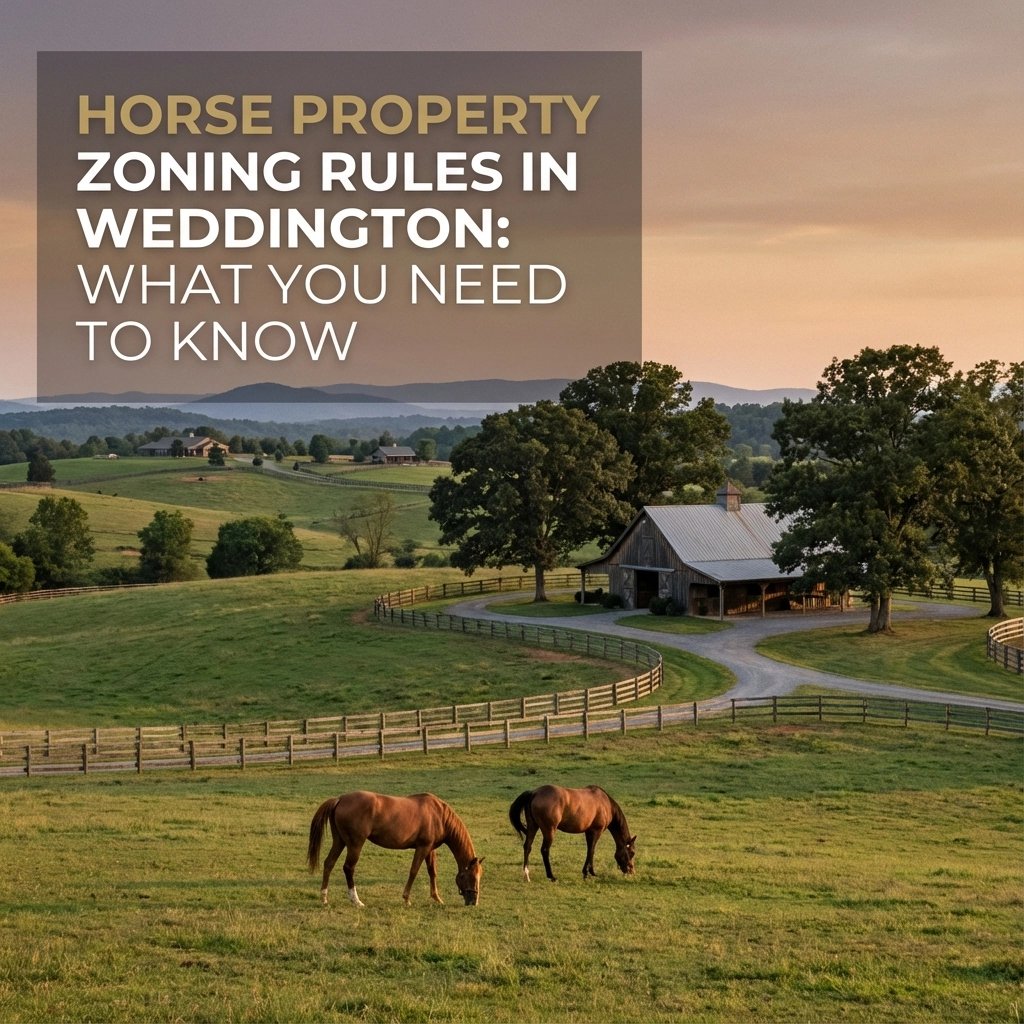
Weddington's equestrian zoning regulations determine exactly how many horses you can keep on your property: and getting it wrong could cost you thousands in compliance issues or force you to relocate your horses entirely.
Understanding Weddington's Horse Density Standards
Weddington operates under a tiered system that directly correlates your property size to the number of horses you can legally maintain. These regulations aren't suggestions: they're enforceable zoning requirements that every horse property owner must follow.
Standard Horse Allowances by Property Size
One Horse Maximum: Your property must contain a minimum of 40,000 square feet of contiguous fenced land area. This translates to just under one acre, making it accessible for many residential properties in Weddington's established neighborhoods.
Two Horse Maximum: Properties supporting two horses require a minimum of 80,000 square feet of contiguous fenced area: approximately 1.8 acres. This threshold represents the practical limit for most suburban equestrian properties.
Three or More Horses: Any property housing more than two horses automatically transitions into the "Horse Farm or Academy" classification, requiring a minimum of 5 acres. This isn't just a zoning technicality: it represents a fundamental shift in how your property is regulated and taxed.

The Five-Acre Threshold: Why It Matters
Weddington's planning commission established the five-acre minimum for multiple horses based on practical land management principles. As Vice-Chairman Dow explained during zoning discussions, "When you get a lot of hooves in a small piece of property," the municipality cannot effectively regulate individual property care standards.
This threshold protects both horse welfare and neighborhood compatibility by ensuring adequate pasture rotation, manure management space, and environmental sustainability. Properties below this threshold simply cannot support intensive equestrian use without creating potential conflicts with surrounding residential areas.
Miniature Horse Regulations: A Different Standard
Weddington recognizes that miniature horses require different space considerations than full-sized horses, creating separate regulations that acknowledge their smaller environmental impact.
Miniature Horse Density Allowances
On properties with less than 5 acres but meeting the 80,000 square foot minimum, you may maintain:
- Up to 4 miniature horses exclusively
- 1 standard horse plus up to 2 miniature horses
These allowances reflect the reduced pasture requirements and lower environmental impact of miniature horses while still maintaining reasonable density limits. The mixed allowance (1 standard + 2 miniature horses) provides flexibility for families who want both riding horses and smaller companions.

Defining "Miniature Horse"
Understanding exactly what qualifies as a miniature horse under Weddington's regulations is crucial. While the zoning code references miniature horses specifically, property owners should verify the exact height and registration requirements with the planning department to ensure compliance. Different organizations define miniature horses with varying height limits, typically ranging from 34 to 38 inches at the withers.
Setback Requirements and Property Layout
Weddington's setback requirements ensure that equestrian facilities maintain appropriate distances from neighboring properties while providing flexibility for basic horse-keeping infrastructure.
Structure Setback Standards
60-Foot Minimum: All structures housing horses must be positioned no closer than 60 feet from any property line. This includes barns, run-in sheds, and any enclosed shelter where horses spend regular time.
Corral Exemptions: Open corrals and fenced exercise areas are exempt from the 60-foot setback requirement. This exemption recognizes that fencing and open paddocks create minimal impact on neighboring properties compared to enclosed structures.
Strategic Property Planning
These setback requirements significantly impact how you can develop your equestrian property. A 60-foot setback from all property lines means you need substantially more land than just the minimum acreage to create a functional barn and paddock layout.
For example, on a narrow lot that meets the minimum square footage requirements, you might find that the setback requirements make it practically impossible to position a barn while maintaining adequate pasture space. This is why working with professionals who understand both zoning regulations and practical equestrian property design is essential.

Zoning Classification and Property Rights
Understanding how your intended horse property use affects your zoning classification helps you make informed purchasing decisions and avoid costly surprises after closing.
Residential vs. Agricultural Classifications
Properties maintaining one or two horses typically remain within residential zoning classifications, preserving their character as family homes with equestrian amenities. This classification usually means:
- Standard residential tax rates
- Compatibility with neighborhood covenants
- Easier financing through conventional mortgages
- Lower insurance requirements
Horse Farm Classification Implications
Properties classified as Horse Farms or Academies enter a different regulatory environment that brings both opportunities and obligations:
- Agricultural tax benefits may become available
- Commercial activity regulations may apply if offering services
- Different insurance requirements for liability coverage
- Potential conflicts with residential deed restrictions
Practical Compliance Strategies
Successfully navigating Weddington's horse property regulations requires understanding both the letter of the law and practical implementation strategies.
Pre-Purchase Due Diligence
Before committing to any horse property purchase in Weddington, verify that your intended use aligns with current zoning regulations. This includes:
Confirming actual usable acreage: Not all land on your property may count toward the zoning requirements. Wetlands, steep slopes, and areas within setbacks may not qualify as "usable" land for horse-keeping purposes.
Understanding fencing requirements: The regulations specify "fenced" land, meaning you'll need to budget for appropriate perimeter and internal fencing that meets both zoning requirements and practical horse management needs.
Evaluating existing structures: If purchasing property with existing barns or shelters, ensure they meet current setback requirements. Grandfathered structures may exist, but modifications or rebuilding could trigger compliance with current standards.

Working with Local Officials
Weddington's planning department can provide definitive answers about specific property applications, but approaching them with the right questions and documentation streamlines the process:
- Bring accurate property surveys showing all boundaries and structures
- Prepare specific plans showing proposed horse facilities and fencing
- Understand that interpretations may vary, so get official determinations in writing
Beyond Basic Compliance: Best Practices
Meeting minimum zoning requirements represents just the starting point for successful horse property ownership in Weddington. Thoughtful property management enhances both compliance and long-term enjoyment.
Environmental Stewardship
Proper pasture management, manure composting, and water source protection not only demonstrate good neighborliness but often exceed zoning requirements in positive ways. These practices help ensure your property remains a community asset rather than a source of conflict.
Community Integration
Understanding that your equestrian property exists within a broader residential community helps maintain positive relationships with neighbors and local officials. This includes managing noise during appropriate hours, maintaining attractive fencing and facilities, and being responsive to any legitimate concerns.

Making Informed Property Decisions
Weddington's horse property regulations reflect a community committed to balanced growth that preserves both equestrian traditions and residential character. Success requires understanding these regulations as part of a comprehensive property strategy rather than simple compliance obstacles.
The complexity of zoning regulations, combined with the significant financial investment in equestrian property, makes professional guidance essential. Every property presents unique opportunities and constraints that require careful evaluation beyond basic zoning compliance.
Carolina Horse Farm Realty specializes in navigating these exact challenges for horse property buyers throughout North Carolina. Our deep understanding of local regulations, combined with practical equestrian experience, ensures your property purchase supports both your immediate goals and long-term equestrian lifestyle.
Ready to explore horse properties in Weddington that meet your specific needs? Let's discuss how current zoning regulations align with your equestrian goals and identify properties that offer both compliance and opportunity.
Leave a Reply